All change

In my posting in July I mentioned that I had asked my wonderful consultant about referring me to The Royal Marsden hospital’s sarcoma team for my follow up surveillance.

At 2pm today I had my first consultation appointment with the sarcoma team at The Royal Marsden. The waiting room was absolutely packed and I waited nervously for my name to be called.

I was concerned that they wouldn’t take my case on but that I had sort of ‘discharged myself’ from my previous consultant’s care. I was worried that they would perhaps think I was over anxious about follow up scans or perhaps that they would recommend I stay with my existing hospital. I was concerned that although they are a centre of excellence for sarcoma in the UK, that the person I was assigned wouldn’t know about Phyllodes – after all there are over 70 different sub-types of sarcoma.

So despite my waiting only a very short time, I was more than a little anxious. Had I made the right decision in asking my lovely consultant to refer me? Would he take me back if I hadn’t? What would I do if they didn’t take me on as a patient? What would I do if they changed my follow up surveillance schedule in a way that worried me more?

Phew, I’ve been called.

I first met with the nurse who explained what would happen and who I would be seeing. She then left me in the little consulting room whilst I waited for the Registrar. Seemed like ages and once again all my anxieties were kicking in. The Registrar then arrived and ran through my medical history and also asked about my siblings, parents and grandparents’ medical history. She also told me that my case had been discussed at today’s MDT (multi-disciplinary team) meeting in detail.

And then, she asked the question that I was most worried about answering… why was I here and what did I want from the Royal Marsden? So I told her why (see previous post) but I also told her about our Facebook “Phyllodes Support Group” and what I’ve been doing with Living Beyond Diagnosis. She asked a few more questions and then said she’d return with the consultant.

I was then left in the little consulting room on my own… and yes the little voice in my head was once again telling me that they wouldn’t have me as a patient etc etc.

I was terrifically grateful when the door opened once more and the Registrar came back into the room accompanied by a consultant. He introduced himself and we spoke briefly about me, my medical history, why I requested the referral and my previous care.

He then asked more about the Phyllodes Support Group and was terrifically impressed with the number of members, the information and experience sharing, the documents and reference papers that have been collated and also the polls and data that we were collecting and sharing within the group. He also said that he felt that should we, as a group, wish for some assistance or input for the group, then I should just ask and he would try to facilitate this for us.

I was also able to tell him about the report that is currently being finalised containing a section about Phyllodes from the contact I have met at two Cancer data conferences in the UK. He would love to see a copy of this when published.

It goes without saying that I will be looking at what input will be useful from RMH and also what we can provide to RMH from the group… certainly it would be fabulous to have a medical facility, who specialises in sarcoma, to take an active interest in the group members and their health. Watch this space!

We then returned to my health and monitoring for recurrence or metastases from the excised malignant phyllodes tumours. We agreed that my previous consultant had done an excellent surgical job in removing both of the tumours and then ensuring that sufficient clear margins were obtained. He agreed with the advice that I should not have any adjuvant radiotherapy at this time. He also agreed that the screening regimen implemented in my previous hospital was the best to quickly identify any local recurrence (together with my own personal checks). We then spoke about any requirements for any additional screening/surveillance for possible metastases, particularly with regard to the malignancy and mitoses of the excised tumours. He suggested and has requested that I have a 6-monthly chest x-ray at the same time as my existing scans ie annual mammogram with intervening 6 monthly ultrasound of both breasts.  This chest x-ray will be looking for any traces of naughty cells in my lungs.

I left RMH this afternoon feeling that I had made the right decision to ask to be referred. Perhaps I should have made the request at an earlier stage and saved myself some levels of anxiety along the way.  But I also know that I couldn’t have managed to do that before now.

I am, of course, sorry that I won’t be hearing my, now previous, lovely consultant refer to me as ‘Miss Lumpy Bumpy’ again but I’m so very grateful for his care up until now and can only say that whoever the patient is who gets my slot on his busy schedule is a very very lucky lady.  Perhaps I shall pop in with a box of biscuits for him and the team when I’m next passing my old hospital.

So that’s it. Next scans/checks are in January. Between now and then I’ve got a number of cancer conferences to attend, not least the annual Sarcoma conference which this year is in Italy. They were asking for patient advocate attendees to speak at the conference and I’ve put my name forward.  I would love the opportunity to tell them all about our Phyllodes Support Group and also about Phyllodes itself, in the hope that perhaps more medics and researchers will be more aware and knowledgeable.

Whoohooo, the results are in and it’s good!

I can’t tell you how sick I felt today going to the hospital. Why? I should be used to it by now. … shouldn’t I? The anxiety levels were through the roof as I tried to find a parking space in the car park. As I was cutting it fine, arriving only a minute before my appointment time, I decided to only buy 1 hours car parking (at a mere cost of £2.20/hr). Rushing across the lengthy car park and nearly coming a cropper as I missed a pavement, I rather launched myself into the clinic!

After checking in, I settled down and waited. And waited.

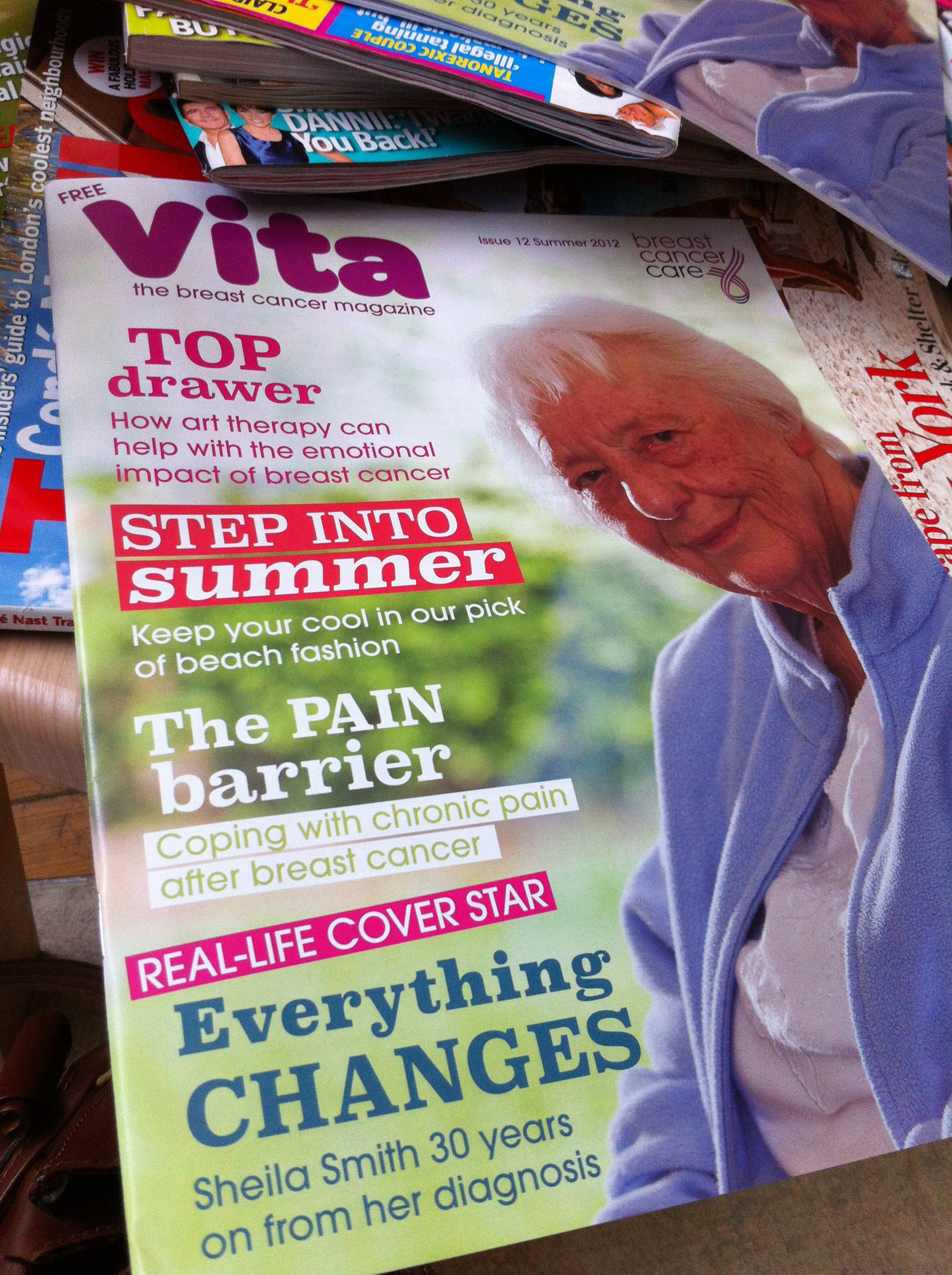
I realised though that actually I’d been spending far less time in this particular clinic of late… well there were magazines I’d not read, so that’s got to be a good sign. Right? They even had the latest Vita, which is a magazine produced by Breast Cancer Care and a wonderful source of information and support for anyone with primary or secondary breast cancer (and their carers).


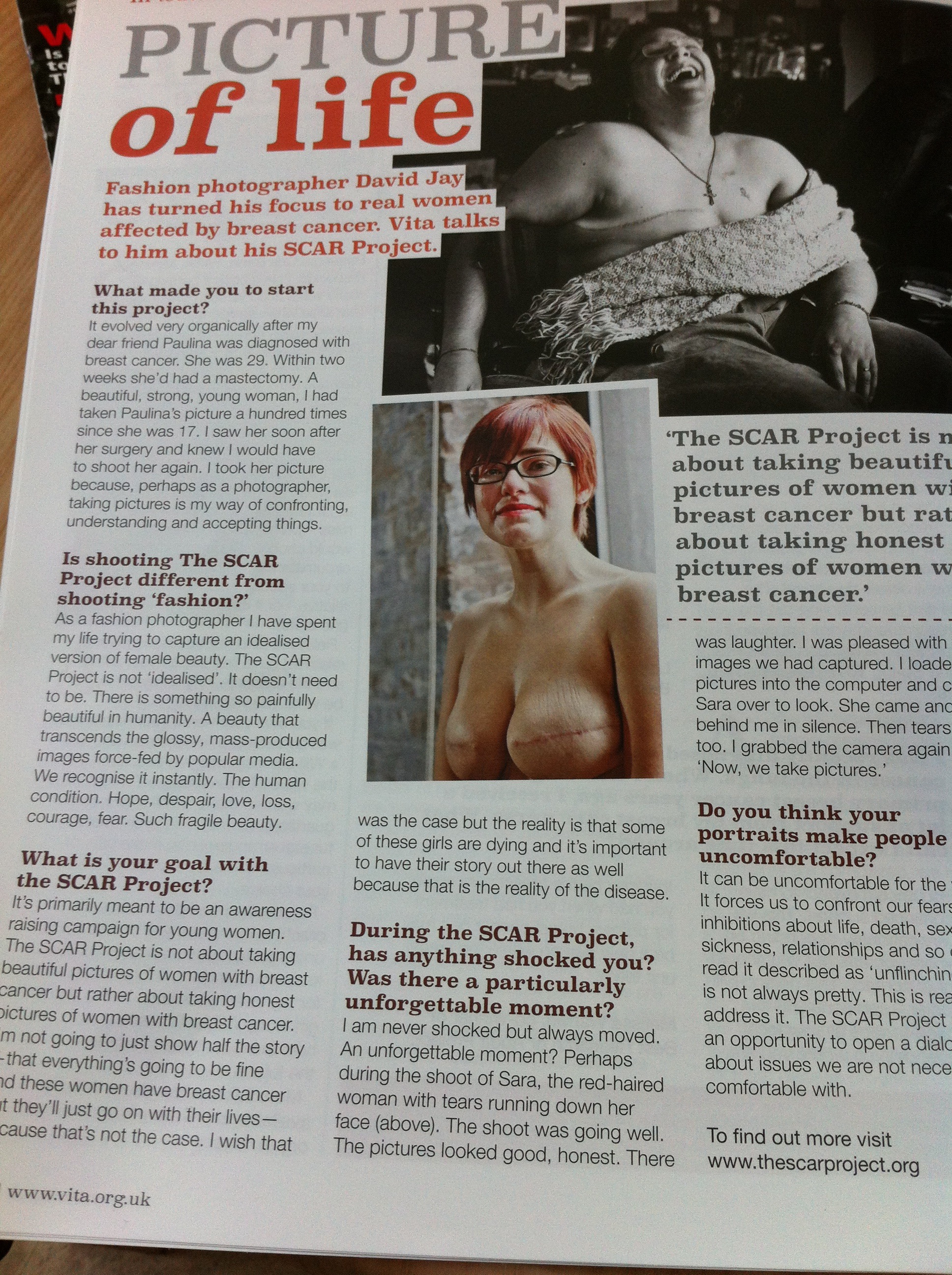
I was also super-chuffed that there was an article about David Jay and The Scar Project. Love that project and am so honoured to have known Jolene and others who have taken part and shared their journey through the images. Incredible.

After an hour, I rushed out to put more money in for another hour parking…. And of course half way across the car park the heavens opened!

Seriously though, the cost of car parking in hospitals is absolutely mental and for those of us who have to visit hospitals regularly, is a real cost burden. As I made my way back to clinic in the rain, I thought I’ve probably had over 50 hospital appointments since 2009 and each of them cost roughly £4, that’s £200 I could have spent on champagne!!! (Oh I mean saved for a rainy day)

Anyway I think the trip to the car and my attempts at mathematics helped me get some perspective about my appointment. It wasn’t long afterward that I was called in to see the consultant and get my results.

I was shown into the ‘good room’ (ie not the room of doom), which helps enormously. A few minutes later, my consultant appeared with a smiley face and welcomed me warmly. Seriously, if there are any medics reading this, you could really learn from this man – how much easier is an appointment and our anxiety levels when someone is genuinely warm and welcoming?

We had our usual little chat, he told me I was looking well (another point for the medics!). Although to be fair, I’ve also learnt that I need to make the effort when I’m anxious.. always matching underwear, shoes, nails, hair done and make up applied.

We then talked some more about Phyllodes, what it is, what I’d learnt, what he’s learnt and what he’s telling his trainees. It’s always so encouraging to think that by my diagnosis and it being weird and rare, he’s taken that (and with my encouragement) and ensuring that there are going to be some medics of the future that know a little bit about it. I always hope that they get eager to learn more.

Next the manual examination. Once again I could commend him on his surgical handywork. The scar tissue is getting less and the excision site becoming more even. We talked about ‘evening up’ by surgery and it’s good to know the offer is there and he’d do a fabulous job… but I’m not ready for surgery again anytime soon.

Then I broached the ‘difficult subject’. As you will all know from reading my blog, I can’t be any happier with the way my consultant has looked after me, managed my case and helped me through this, supporting me every step of the way. However there have been the blips with the radiography department where they don’t necessarily understand about Phyllodes nor feel checks are necessary (or as has been mentioned “it’s not as if you’ve got breast cancer”!).

Anyway, the bottom line is that as someone diagnosed with Phyllodes, a rare soft tissue sarcoma, my case should have been referred to a sarcoma specialist to manage. However I’ve always been more than a little anxious to leave the fabulous care of my consultant. I still am.

But today I asked him if I could be referred to the Royal Marsden in London for my follow up regimen. I explained why I thought it was important to be with a sarcoma team and also a team that I know have other Phyllodes patients and understand them and the best treatment etc. I also told him that I was sorry I couldn’t still be seen by him sometimes! It does seem right though that I move on and my place in the breast cancer unit is indeed filled with a breast cancer patient. He’s a truly wonderful consultant and surgeon and whoever fills my slot in his busy schedule is indeed a very fortunate person.

He agreed that this was probably the best thing. However has said that if ever I’m worried or he can help in anyway, then to give him a call.

As I left, he put his hand out to shake mine and then laughed and said he felt it more appropriate to give me a hug!

On the way home in the car I shed a tear or two. I’m not sure if it’s because I’m scared if I’ve done the right thing. Am I leaving someone who I knows cares about my wellbeing and health and stepping into the unknown or am I leaving him but going to a more specialist unit that will be able to add Phyllodes expertise as well as care?

I hope I’ve done the right thing.

A friend in need

Today I woke early and headed out to get the bus into Chelsea.  I’d had a somewhat sleepless night anxiously running through all the things I needed to say this morning.  As the bus slowly made it’s way down the Kings Road I will still mentally making notes.  This time though the notes and things to remember weren’t for my own ‘consultant Q&A session’.  I was meeting up with a lady that I’d ‘met online’ a few weeks ago.  She posted on a forum a question about Phyllodes and had concerns there was nothing out there nor anyone else diagnosed.  Her comment appeared in the many different internet search mechanisms I have set up and we became acquainted.  Over the past few weeks we have corresponded by email regularly and I have been able to introduce her to the ‘Phyllodes Support Group’ on Facebook.

Like so many of us diagnosed with Phyllodes, we can’t find information or resources easily accessible.  If you go on to many cancer sites or into information centres there is never (or very rarely) any mention of it.  Just in that moment, it can feel even more frightening and isolating than ever.

Today was a consultant appointment that I had encouraged.  The lady had many questions and her own hospital didn’t seem to know or understand Phyllodes.  Therefore a consultation at the Royal Marsden with sarcoma specialists we hoped would help her get answers.  The lady had been up tremendously early to make the journey to London and we met (with her adult daughter) in a coffee shop around the corner.  Because of delayed trains we only had about 30 minutes.  But enough time to walk and talk on our way to the hospital, run through the questions she’d got written down and importantly, I believe, enough time for her to meet me and know that we do survive Phyllodes!

I left them at the hospital as they were called in for the appointment, we hugged and I wished them luck.  The lady then handed me a card.

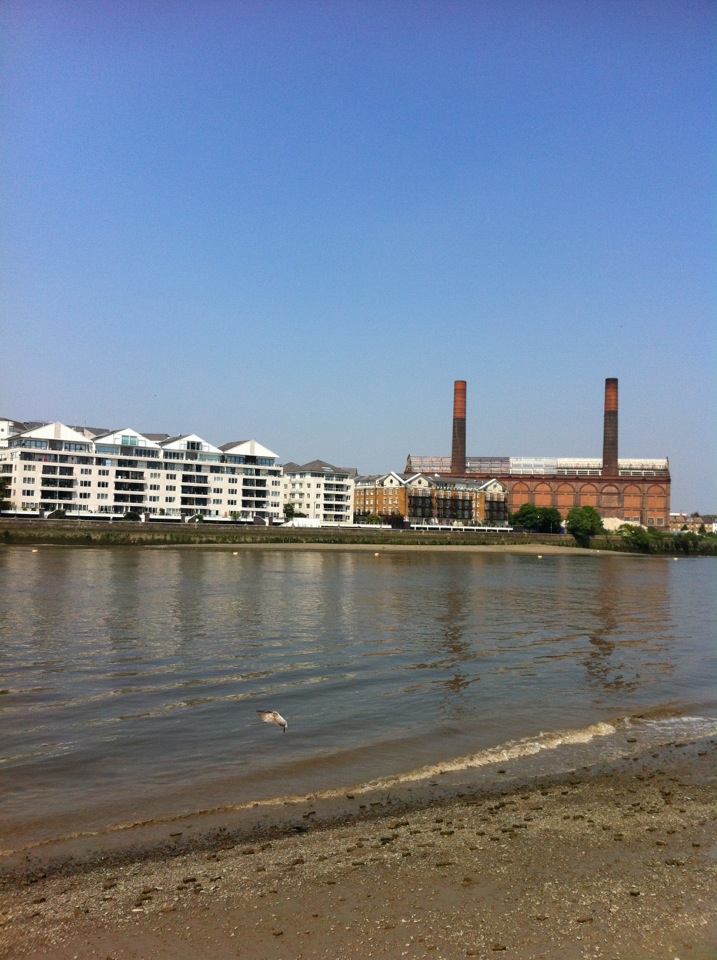
The sun was shining so I decided that, for once, I really did have enough time to walk home and set off along the Fulham Road and to the river pathway.  Just past Battersea I found a bench sheltered from the now very hot sunshine and stopped for a minute.  My phone blipped with a text from the lady letting me know they’d just left the hospital and would email fully later.  I, of course, (and you’d expect nothing less) suggested that she and her daughter enjoy the sunshine somewhere fabulous for lunch with a glass of bubbles… !!!  

I then opened the card.  The front was a picture of a baby elephant.  Inside the words:

“They say that ‘Elephants never forget’… well neither will I Anna!  I will never forget all the support you have given me this last month – giving me links and pointing me in the right direction.

It’s official…. “You are a Star AnnaGoAnna!”

There might have been a tear that snuck out and rolled down my cheek… or it could have just been the sun getting in my eyes!

I walked home wondering what it would have been like had there been a ‘Me’ around when I was diagnosed.

Questions and Answers

Today I’m anxious and I’m quite sure my blood pressure is through the roof.  I can’t help but wonder if the pathology is in and if I’m going to meet with a new consultant to hear results that I don’t want to hear.  I know that my head has been in a terrible place this past few weeks but is my head right?  I left heaps of time to get to the hospital and arrived in South Kensington over an hour and a half before the appointment was due. 

South Kensington/Chelsea was a little bit of my stomping ground many years ago and a lot of stories/memories (fortunately) have been long forgotten about those times.  I wandered slowly towards the Royal Marsden past Pond Place, where I had my 25th birthday party in a basement bar – what a fantastic night (remember? – Jax/Melissa/Mark/J.  Sadly the bar is long closed and in fact there are weeds trailing down the steps and if it hadn’t been freezing and icy, I’m quite sure I would have heard the tumble weed roll down the roadway (instead of the ‘Oi – I fink it’s closed’ from the workman the other side of the road!).  I looked back up the road and remember evenings at The Collection or lunches at PJs with the med teams of the Chelsea & Westminster on Sundays… ooh so many good times.  

I haven’t mooched around this area of years and it was with mixed feelings whilst looking back upon some wonderful times/memories and looking/hoping that there’s a future which will enable me to create more wonderful memories. 

After a short wait in the hospital waiting area of the ‘Wallace Wing’ (errr did they name it in anticipation of my arrival?), I was taken into a consulting room and left to strip off to my waist and put on one of those gorgeously sexy hospital gowns! After an examination I was told by this Snr Consultant that she was extremely impressed with my surgeon’s handiwork and was satisfied from this ‘manual’ exam that there was no worrying lumps or bumps.  She did also confirm my anxiety about there being a difference in size after the two operations but that could be fixed at a later stage, if I wanted.

She then asked what questions I had and looked a little askance when I pulled out my folder and notebook!  When I apologised about having the questions it was wonderful to hear her say that I should ask questions and should make sure that I have the answers and should research Phyllodes tumours and should take control and own my health.  Having a rare cancer has taught me that I cannot sit back and take comfort in previous cases or well-trodden medical  surgeries or treatment paths – there are none.

So for other Phyllodes survivors the answers I got were:

Sufficient clear margins – There is currently no recommended measurement of sufficient clear margins however the margins that were taken she believes are adequate.  4mm with a clean surgical removal is sufficient.

Hormone negative receptors, do they have any bearings on whether a recurrence will appear? –  I discussed that I had read that there may be a link between survivors with negative hormone receptors (ER-/PR-) being at higher risk of a Phyllodes tumours.  My consultant advised that, for Phyllodes, she is unaware in the UK of this being researched and pathology is not tested for hormone receptors.  However she will pass this information to the research teams and suggest that any Phyllodes pathology is tested to see if there may be a link. (There are links with other breast cancers and hormone receptors)

Pathology – I neglected to ask if my pathology had in fact been re-examined however am satisfied that should they have felt it necessary they would indeed have ensured it had been.

Stabbing/pinching pains, why? – My concern was that the pains I’ve been experiencing are sharp and similar to the pains I was getting when I had the tumour (although the skin isn’t hot to the touch now).  I was worried, of course, that the tumour was back and growing again.  Or that I may, as other Phyllodes sister had been told that I had ‘Mondor’s Disease‘ which although sounds scary will pass in time with massage and pain relief.  However the consultant told me something that I really didn’t know – breast tissue is similar to a memory foam mattress (my interpretation not hers!).  Apparently breast tissue will remember what a feeling/pain was like and mimic this at a later stage.  In my instance where the tissue is reshuffling and the scar tissue shrinking, the most recent memory feeling it has is the pain I had during the tumour growing and therefore has learnt to replicate that pain.  Apparently women who breastfeed can often experience the feeling of breastfeeding many years later.  For me and I’m sure others who have undergone soft tissue surgery, it’s worth remembering and although it doesn’t negate the need for vigilance to check for recurrence, it may be just remembering the sensation of pain.

Pain also in the left breast – The consultant was able to assure me that there were no lumps or bumps to be concerned by (from the manual examination) and perhaps the pain is simply hormonal or the left breast has gone out in sympathy with the right!

Recurrence – We discussed the potential of a recurrence given that I had a malignant Phyllodes tumour.  What are the odds and are there any details on how long I may have before a recurrence occurs.  The consultant said that the first two years were the highest risk and therefore we would ensure that there was an adequate follow up program in place to pick up any oddities quickly and also put my mind at rest that I’m not waiting long.  She also assured me that should I feel worried by pain, lumps or generally, then I should call them immediately and would be bought in for consultations and testing urgently.

Radiotherapy – We discussed further my thoughts on pursuing radiotherapy at this point.  Since my original request for this to be considered I have researched this further and also spoken at length with the radiotherapy consultant. 

One very interesting point that I had not been aware of is that radiation on a soft tissue sarcoma may induce further recurrence.  There are no stats for this but it is believed to be a concern therefore I’m now not convinced that this really would give me a 20% better chance.  I have chosen to leave radiation until I really need it and to consider further surgery, more drastic surgery, before any radiotherapy is undertaken.  

Grading of malignancy – In the US Phyllodes tumours are graded, in the same way that other breast cancers are graded, however in the UK I have found no grading or staging.  I asked what grade/stage my malignant Phyllodes tumour was and if this classification may have any bearing on any potential recurrence.  I was told that grading/staging is not done in the UK.

Metastasing – In the UK they believe that there is a very low risk of a Phyllodes tumour metastasing to other soft tissue areas of the body.  Sadly, I do know Phyllodes survivors in the US who have cancers in other areas however wonder if these cancers are related to metastasing.  With the regular checkups and me being vigilant I am hopeful that this will not affect me.

Tamoxifen – There is a school of thought that Tamoxifen may assist with Phyllodes survivors (or other soft tissue sarcomas) to reduce the risk of recurrence.  This is a drug used regularly for breast cancer survivors.  We discussed this as a potential option for treatment for me however there are a number of side affects including blood related issues.  I weighed up the potential reduced odds of recurrence -v- my concerns about having any more blood clots and decided that the risk, for me, was too high to try for a maybe.  However for others this may be of interest.

Is 10/mm2 mitotic count high? – The mitotic count in the pathology of the first excision indicated that it was 10/mm2.  My research identified that this was high and in data received from Australia indicates that once again this may be an indicator of high chance of recurrence or early mortality.  I was assured that this wasn’t the case as far as the UK are aware and satisfied that, once again, with close surveillance and regular checkups I wasn’t going to let it either!

Did the reconstruction during surgery 1 create a new network for the Phyllodes tentacles? – In short No.  It was the right decision by my surgeon and has meant that the cosmesis is retained as best as possible.

Mastectomy or more surgery – No further surgery is required at this time (unless I chose an elective mastectomy).  However should there be a recurrence or any concern about my future prognosis then I should, as well as I can, prepare myself for a mastectomy.  I was ‘warned’ that if anything was discovered I would be whipped in and my breast whipped off before I could blink, therefore it is advisable for me to consider what I would do, how I would handle it etc etc and to be prepared.  I believe that I’ve done all the preparation I can do until it actually happens.

NHS classifications for Phyllodes – I discussed my concern that the NHS does not classify Phyllodes within its database and more particularly that we surely can’t confidently say this is a rare cancer or doesn’t affect many in the UK if there’s no way of recording or reporting on it. I mentioned that I had established the coding in the International Classification of Diseases and wondered if/how I go about getting it considered for inclusion in the NHS coding.  My consultant agreed that this was a ridiculous situation and would do her best to ensure that the NHS were provided with the correct coding and include this as soon as possible.  I will, of course, ensure that my medical notes are updated to reflect the code as soon as it is within the NHS database.

M9020/0 – Benign – D24
M9020/1 – NOS – D48-6
M9020/3 – Malignant – C50-

I was also able to advise the consultant that I was to attend the Conference in Atlanta and she was keen that I should feed back to her anything I felt of interest/research/investigation from the Conference or my own research/enquiries. I would like to think that I can bring back to the UK information from the US and that this information is disseminated to medical staff so that the awareness of Phyllodes is raised.  If more Phyllodes tumours were diagnosed quickly, patients may only need one surgery (instead of the standard two) and more research may be given to this type of tumour.  She also advised that she would email me with any information she finds in her efforts.

I left the Royal Marsden with a spring in my step and feeling positive about my future.  Nothing had changed since my going in but I had been able to ask questions, be given honest answers and then to formulate my own decisions based on good advice.  I knew when I left the hospital that I cannot say I’m cured or I’ve got the all clear but what I can say is that I’m in control of my future and my care management.  I have the support and, I believe, high regard of the medical teams that I’ve met – to me this is important as it has meant that my concerns are taken seriously and they know that I don’t panic about my diagnosis and prognosis but rather want the evaluate and understand my health plan.

If nothing else, I would like to think that my journey and inquisitive approach to my diagnosis has, in some way, helped raise awareness, reporting, data and research but also provide a supportive hand to others.