Pan London Event: Survivorship and Cancer

Hosted by the Kings Fund in their wonderful building in Cavendish Square the Pan London Event was well attended.  Currently the approach to follow-up for cancer survivors is centred around routine outpatient appointments.  The purpose of this event is to look at developing and testing new approaches to follow up care for those living with and beyond cancer.

The agenda for the day looked to tackle many of the areas and the speakers are experienced and experts in their fields.  However I was a little scared (and rightly as it turned out) about the amount of content for the day. Most of the speakers had between 15 and 30 minutes for their presentations!  I wonder if it would have been better to tackle half the amount of subjects and to have a further event or perhaps make it a two day event.  Sadly, in my opinion, I do feel that for many of the speakers they barely had time to scratch the surface and therefore negated the power of the event.

A link to the full agenda is Pan-London-Survivorship-conference-25th-November-2011.

I won’t go into great detail as a great many of the points made I have previously discussed in this blog.  However bullet points for thought, discussion and response:

  • Cancer incidence is rising.
  • Cancer mortality is falling.
  • We NEED to action a survivorship programme (with funding and holistically) for the increased quantity of people requiring it.
  • We need to put these plans into action NOW as the increase will be unmanageable before we know it.  (Although personally I feel it is already here!)
  • Within the Cancer Reform Strategy there are 4 new partnership initiatives:
    • NAEDI – Awareness and early diagnosis
    • NCSI – Survivorship
    • NCEI – Inequalities
    • NCIN – Intelligence
  • We need to ensure that each of these 4 partnerships work collaboratively but not in competition with eachother.
  • Cancer practice needs to be reviewed to be personalised for each person affected.  We can no longer treat a 17 year old with breast cancer in the same way as a 70 year old!  One size does not fit all and considerations need to be made with changes to the pathways and personalisation at the fore.
  • When we refer to ‘Living with and Beyond Cancer’, there are many considerations and organisations that should be involved – COLLABORATIVELY:
    • Information and communication
    • Psychological support
    • Supportive and palliative care
    • Clinical Nurse Specialists (we need more of these not less!)
    • Cancer Patient Experience Survey Programme.  Many areas need improvement and this survey is a great way of measuring these.  Should be run regularly and measurable penalties be applied.
    • National Cancer Survivorship Initiative.  Working with all third sector organisations to ensure that this initiative is actionable.
  • In 2010 the NCSI-Vision-Document document was published.  This document details the five shifts required in the vision, the priority areas and a general iterative process to achieve this vision.
  • We have a long way to go but at least survivorship is now firmly on the agenda and there’s barely a meeting when it’s not discussed… we just need to make sure that firm plans are in place for anyone living with and beyond a cancer diagnosis.
  • A presentation from Macmillan Cancer Care identifying the cancer care pathway and also crunching numbers of people and stages – this focused on London and despite having heard these numbers plenty of times, it still comes as a shock that they’re so high and rising!
  • Natalie Doyle of The Royal Marsden presented about why Holistic Needs Assessment is so vital in patient care.  A holistic health and social care assessment is undertaken in order to identify supportive and palliative care needs of an individual and to trigger any specialist assessment that may be required.  For instance, home help, nursing staff visiting at home, transport to and from hospital, psychological support, social and occupational needs and spiritual needs.
  • Holistic Needs Assessments should be carried out at a number of points and revised accordingly:
    • Around the time of diagnosis
    • Commencement of treatment
    • Completion of the primary treatment plan
    • The point of recognition of incurability
    • The beginning of end of life
    • The point at which dying is diagnosed
    • At any other time that the patient may request
    • At any other time that a professional carer may judge necessary
    • Each new episode of disease recurrence.
  • We know that often nurses are under a great deal of time pressure and there are cutbacks affecting the number of CNS available.  However this should not affect whether an assessment is carried out.  It should take no more than 30 minutes.
  • The holistic needs assessment and/or treatment summary should be sent from the hospital team to the GP surgery.  The GP should then assist in ensuring that any additional care is implemented and managed locally.
  • We had three presentations fro Cancer Networks showing the sort of projects that had been undertaken within London with reference to breast follow ups, supporting people with brain cancer at work and a cancer transition programme.
  • A presentation regarding the Late Effects work being undertaken at the Royal Marsden.  A critical piece of work that is looking at the long term effects on surviving cancer patients.  In the past life expectancy has meant that many of these effects of treatment (chemotherapy, surgery or radiotherapy) haven’t come to light  However more particularly for people being treated at a younger age, this research is imperative to allow them to survive WELL as well as survive.
  • Pawan Randev spoke about the impact of survivorship on GPs and primary care.  He referred us to the November 2011 edition of the British Journal of General Practice – Cancer Survivorship.

A few other reference points would be to the HSJ Supplement from April 2011 –  HSJ_survivorship_supplement

A further tool book – The Cancer Survivor’s Companion.


NCRI Conference 2011, Liverpool

I’m currently in Liverpool at the NCRI (National Cancer Research Institute) Conference as a lay person and representing the various committees, boards and support groups that I am part of.  As with all cancer related conferences I hope to glean positive information that can be shared in the many places and in a relevant way.

My main interests, as always, relate to Phyllodes and sarcoma research and also to survivorship and late-effects of treatment in survivors.  The agenda of the event over the three days interested me greatly in that there are a number of plenaries and workshops on the topics of interest.  I registered several months ago and managed to get a sponsored place at the event with accommodation and costs covered by the NCRI.

However if I’m honest in the past few weeks I’ve been struggling enormously with a whole host of things in my own life that has left me exhausted, anxious and tearful.  Some of it I could explain and some of it, or the triggers, I don’t know where to begin or how to address… so added to the above, coming to the conference has also been an anxiety for me in the past few days.  Ridiculous really, as it was me who sought out the opportunity and applied for a place!

The end of day one has just passed and I’m writing this note.  My tears are close and I DO know why.  This afternoon’s plenaries have been very exciting.  Looking at new advancements in clinical research, DNA and molecular cell structure and mutation of genetics in oncology patients.  However following this was a 10 minute talk by an artist Harriet Barber talking about her artwork, following her own breast cancer diagnosis, of breast cancer patients called “Breast Cancer LIFE”.  Why so difficult, you may ask when I’m such a huge advocate for The Scar Project?  I know and understand a great many of the pictures.  I see the beauty in the individuals posing on canvas and photograph.  I believe their stories and feel their pain.  Jolene and Erin were photographed for the Scar Project… I know them and know their journeys.  All of this you know from my blog and all of this I know because i have found myself revisiting those thoughts with every glance at the pictures.  The truth is though, there was something more in those 10 minutes of hearing Harriet speak that struck a chord.  Nobody has seen me naked since my operations.  Nobody has seen my imbalanced boobs or my scars (well except medics and they don’t count in this!).  For 2 years (as my second operation was 2 years ago yesterday), I’ve hidden away.  Shied away from any potential opportunity for a relationship or even a fumble (sorry if that offends!).  For all my blarney about being OK, being able to cope, being able to move on and ‘survive’… I’m not, if I can’t even look at myself in the mirror.  I don’t even think I’ve done that… I mean really look, not just walk past a mirror.  How can I possibly think about moving on, meeting anyone and being intimate in any way when I can’t even look at myself?

“No statements about the cancer.  Only about Now and about Life.”  – Harriet Barber

St Paul D’Aria – talk by Lauren Pecorino

The Paul’s Cancer Support Centre, based near Clapham Junction in South West London offer a range of services for people affected by cancer, for the diagnosed but also for carers, family members and friends. Several of my friends have attended their Healing Journey course and found it enormously helpful to get through the emotional and psychological impacts of being diagnosed with cancer. They offer a great many more services at the Centre but also via webinars.

However tonight I attended the Centre to hear Dr Lauren Pecorino speak about ‘Lifestyle choices that may reduce cancer risk: evidence based recommendations’.

She has written a book ‘Why Millions Survive Cancer: The Successes of Science’ which goes into more detail about the improvements worldwide in survival rates for many cancers and she believes that these improvements mean that “our attitude towards cancer now needs drastic change”.

As someone diagnosed with a rare cancer and indeed meeting so many more people diagnosed with different cancers, the subject of ‘is it my fault I have cancer?’ or ‘is it my lifestyle that gave me cancer?’ or ‘could I have avoided cancer?’ often come into discussions. Mostly at the darkest of hours and at a time when there’s the blame game discussion.

I get truly frustrated when I read articles in many publications (medical and non-medical) that imply that by eating, drinking or doing something you have in some way made a choice to have cancer. Some of the same publications then produce articles saying that the same things will in fact cure cancer! Just for a laugh have a look at this page http://kill-or-cure.heroku.com/

But the same applies for healthy living… if you have a sedentary job or perhaps work night shifts, you are also putting yourself at risk of cancer. Errr hellooo?

So tonight, Tish and I decided to pootle along to this lecture in the hope that we could come away with something conclusive. Was there in fact a food stuff that should be INCLUDED in our diet or one that should be EXCLUDED?

Sadly the lecture really was much of the same. Generalist in approach and undefined in advice.

She touched on the importance of ‘personalised medicine’ (a terrifically fabulous idea in principle but very hard to administer in the current thinking). She also spoke of components of some fruit and vegetables actually turning on genes that help protect you against cancer… but only in a general way and not all cancers nor for everyone!

I guess I felt a little cheated. I wanted some facts. I wanted an ‘expert’ to say X or Y will work with to reduce occurrence or recurrence of cancer B or C. I know it’s never likely that they’ll tell me anything about Phyllodes or indeed for Tish about Ovarian – the joys of rare cancer diagnosis – but I had hoped there’d be something new that I can share with others who are seeking hope and ‘informed choice’.

In conclusion I should add that there are many many pieces of research into healthier eating and lifestyle choices. This research is for all sorts of medical conditions, including cancer. I hope in the future this research is going to allow more personalised medicine and treatment. I would like to see ‘personalised medicine/stratified medicine’ (current buzzwords) to also include lifestyle advice as well as drugs prescribed. I believe there must be a more holistic approach to health generally.

I also know that, for many, the idea of eating 5 a day of fruit and veg or taking up running, just isn’t going to happen… however encouraging and motivating people to be more interested in what they put in their bodies and how they use their bodies must surely be the way forward. I would love the media to use encouragement and motivation instead of the current method of blame – particularly people who only have 4 a day or eat the occasional takeaway or didn’t go for a brisk walk today… it doesn’t mean they WANT to get cancer!

I also know many people who are gym bunnies and have been all their lives. They eat right. They exercise regularly. They don’t drink. They’ve never smoked. And still they are diagnosed with cancer.

It breaks my heart when I hear a cancer patient ask if they have caused their cancer because they liked milkshakes too much or a takeaway every Sunday night. I think they’ve enough to handle being diagnosed without feeling that they are in some part responsible!

I’ve not read Dr Lauren Pecorino’s book “Why Millions Survive Cancer” and I’m sure there are some fabulous tips and tricks for a healthier lifestyle. However I didn’t feel there was enough substance during the lecture to compel me to buy it. Have you read it?

Macmillan Voices Conference

As a patient advocate I often get asked to attend conferences and meetings.  Part of my role as a patient advocate is to share my learnings both as a patient and subsequent to treatment.  The piece that is invaluable to organisations is that patients can work independently of any charity or company mandate.  By this I mean we are able to speak our minds and say what we think or what we have learnt without needing to be loyal to the green of Macmillan or Pink of Breast Cancer or Yellow of Sarcoma.

Macmillan Voices are a scheme set up for patients and carers to have a ‘voice’ within Macmillan and help shape future services by their involvement.  It is often by way of focus groups on particular subjects (I’ve done many of these for them) or by completing surveys or reviewing leaflets and documents before publication.  The Macmillan Voices Conference is an annual event where the Voices get the chance to get together.  Throughout the 2-day conference there are workshops and networking groups.

There is clearly a great deal of investment from Macmillan in the Conference and I truly hope that the work we, the Voices, are doing during the Conference is used effectively.  I’m acutely aware that this is funded by people’s hard earned money donated via some fundraising event.

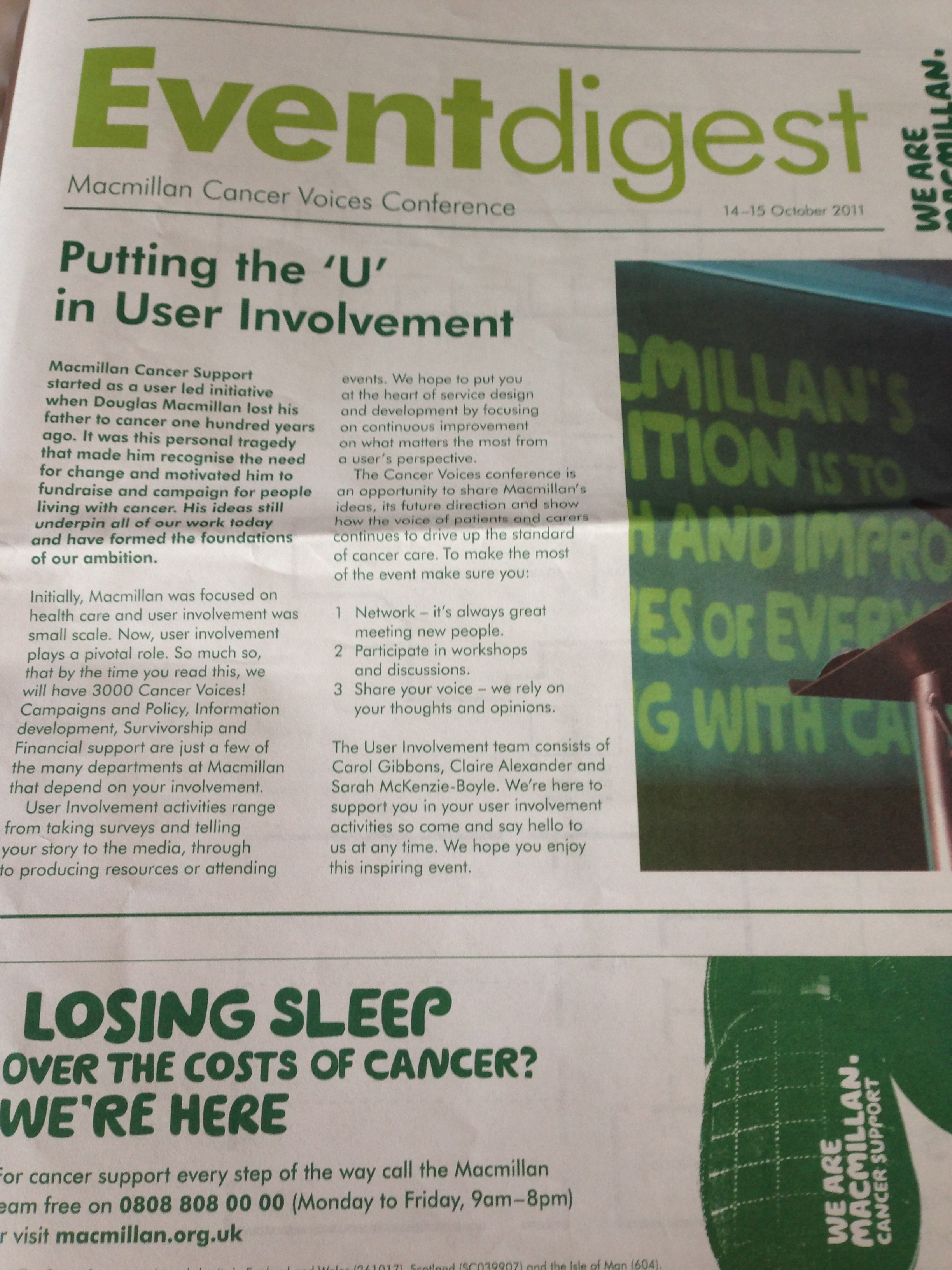
IMG_6647Our Conference Newspaper/Programme

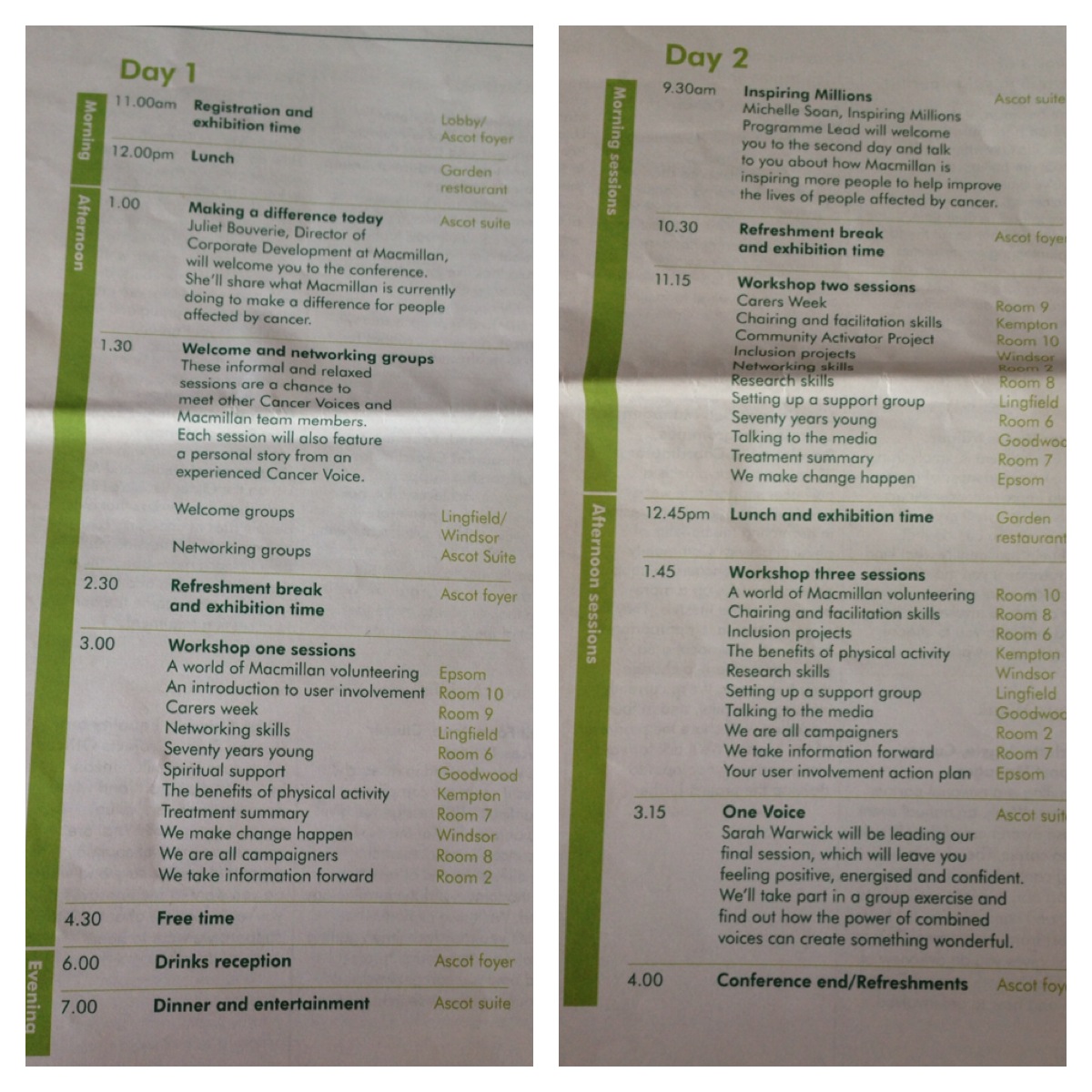
IMG_6654We are welcomed to the Conference during the opening plenary by Juliet Bouverie, Director of Corporate Development at Macmillan.

Juliet introduces herself (she’s new to the role) and tells us a little about why she’s passionate about her role in Macmillan.  She also talks a great deal about the fundraising at Macmillan, some of the events that have happened and how grateful they are for all the monies raised. (Sadly to me, this came across as another plea for money and since we’ve all given up our time to be here and are Cancer Voices doing many things for Macmillan it feels insulting to ask for more!).

Juliet then gave us some facts and figures about fundraising, numbers raised, spent and people living with cancer.

This last year £137m has been raised of which £97m was spent on cancer support.

In 2030 Macmillan believe that the numbers living with cancer will be double that of today.  Currently 2m people living with cancer.  In 2030 they estimate 4m people living with cancer.

There is an urgency not only for a cure for cancer but to ensure there is support and assistance for those living with and beyond a diagnosis of cancer.  Often the emotional and psychological aspects are overlooked in favour of the physical.  All three aspects need addressing and supporting.

Juliet also spoke briefly about a Macmillan project to run training courses for all Boots pharmacists.  Clearly they have a corporate deal with Boots but I’d like these courses to be offered to all pharmacists no matter which company they’re employed by.  Personally I rarely see the pharmacist in a large Boots chemist but am more likely to chat to the pharmacist in a small chemist and aware that they often have more time for me too!

IMG_6650

Networking Group

Within our first Networking group we heard a story from another Voice about her experience of surviving cancer.  This led to a group discussion about survivorship and where people had found support and information.  We discussed the survivorsforsurvivors website, the Cancer Survivor’s Companion book, support groups within Facebook and Twitter and of course charity-led online forums.  As also discussed how to ensure that any late effects from cancer treatment, particularly from childhood cancer treatment, was also supported.

I think it’s so important that doors are left ajar for people who have gone through a cancer diagnosis at any age.  Many people ‘just get on with’ cancer and then are left floundering some months/years later when they think about what they’ve experienced.  Or that side affects take very different forms and are at very different times in ones life but still need addressing and supporting when they manifest themselves.  There shouldn’t be a time limit on getting support.

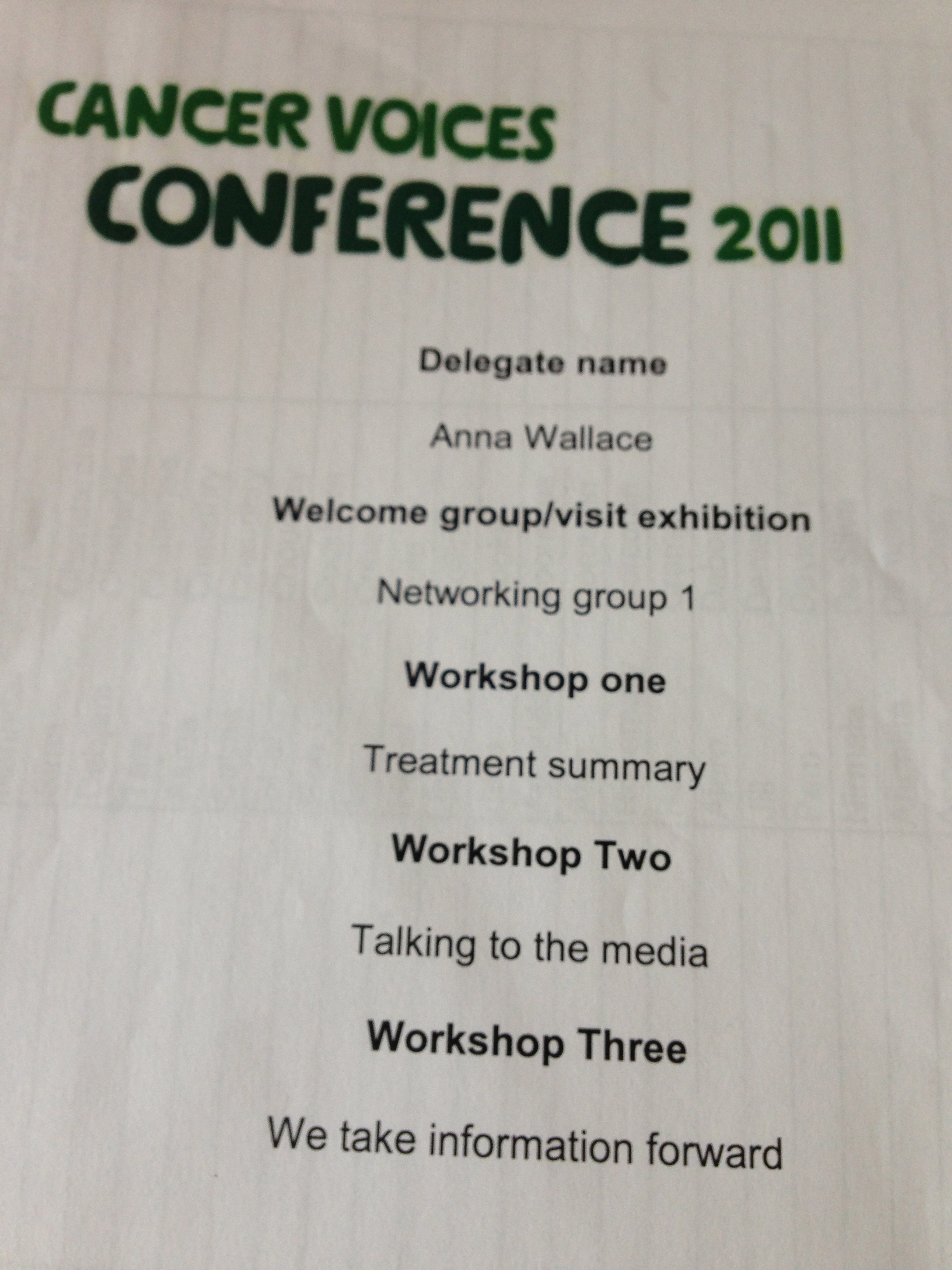
After lunch we headed off to our Workshop One sessions.  I had chosen ‘Treatment Summary’.

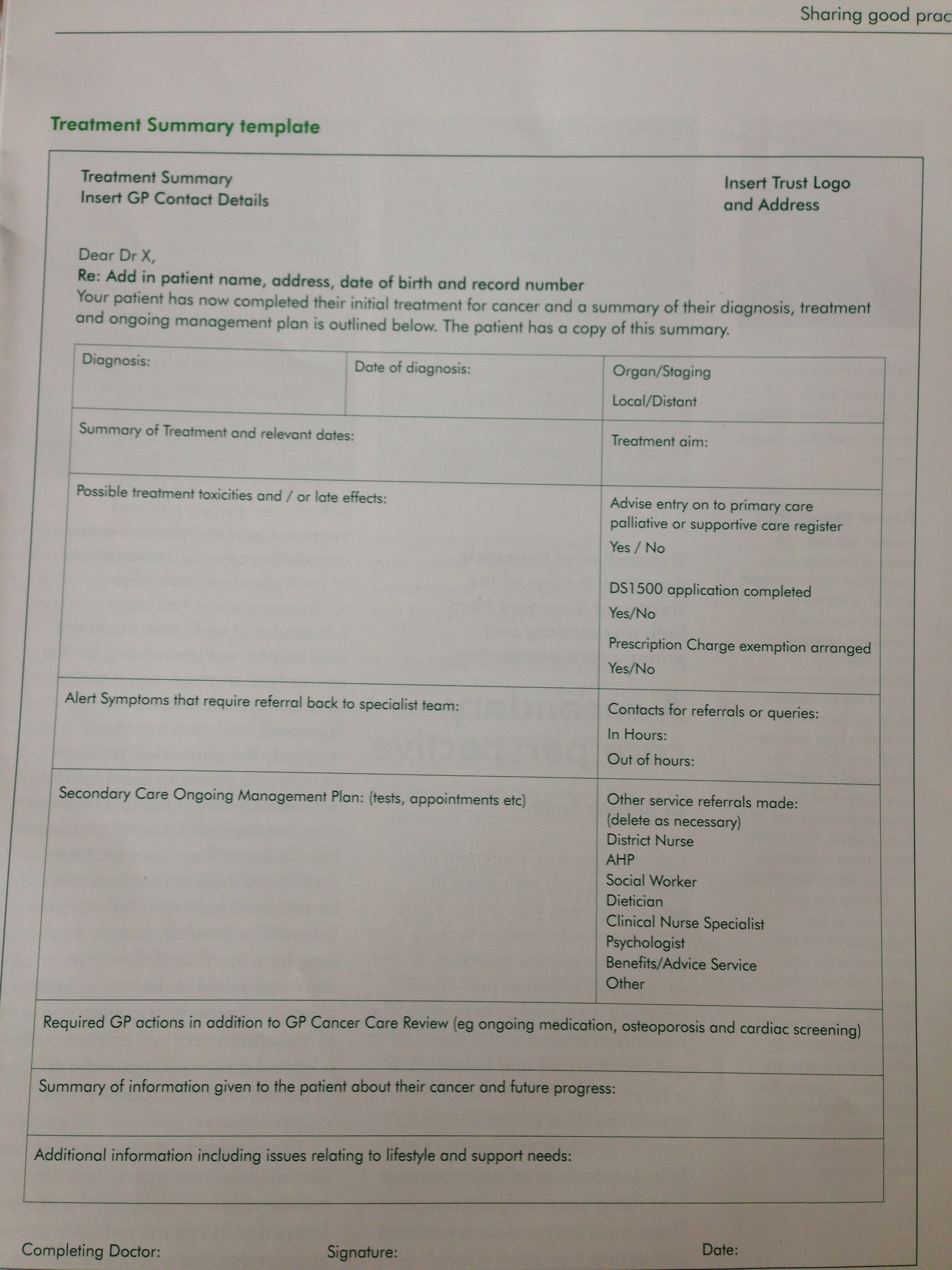
IMG_6651Treatment Summaries are a fascinating beast and once that has had much airtime of late.  Essentially ‘Treatment Summary’ or ‘Patient Passports’ are a brief medical history of a patient’s journey with cancer.  They are much like the ‘red book’ that parents were given when I was born and that documented all vaccinations, Dr visits etc until I was 16.  Every parent managed to keep these books safe and take them with them on every medical visit their child made.

What the Treatment Summary/Patient Passport is aiming to do is to keep a full record of the medical journey in one place.  As a patient I am all too familiar with having to constantly ‘remind’ or tell my history with cancer, every date and every detail.  The problem with this is that I may forget some detail or having not understood the medical importance of a piece of information, have missed it out.  This then leads to problems.  For the old/infirm or (err) unwell this is even harder to manage.  Particularly if they have different family members or carers present at different consultations.

Macmillan have devised the Treatment Summary template

IMG_6655

All very valuable information and is a great idea.

The barriers to this would simply be asking the medical team who are already stretched, to complete yet another form, ask them more questions and then to organise a method to send these treatment summaries to the GP (in addition to any usual paperwork).

Another barrier may be that each Trust/Hospital/Clinician may require slightly modified forms or information.  Then if the Treatment Summaries appeared in different formats at the GP office, they becoming confusing and laborious to read meaning that they may end up in a file unread.

BUT equally disappointing was that Macmillan (Juliet Bouverie was present in this workshop) appeared to be completely unaware of the other organisations, charities and hospitals that had been working on their own Treatment Summaries.  We have been discussing it on committees that I’m involved with at the Royal Marsden, NW London Cancer Network, SW London Cancer Network, C&W LinK for quite some time and I’ve seen the results of other people’s work.

The Patient Passport (very similar to the Treatment Summary) is now live and working well for many.  There are ones by Royal Marsden, Chelsea & Westminster, West Middlesex, East Cheshire, NWLondon/Imperial and many more.  Some of these are ‘advertised’ as being required for vulnerable patients but can and are used for many more than just the ‘vulnerable.  There are also private companies who sell ‘Patient Passports’ allowing the patient to keep a summary of all their treatment records and to take these with them to any medical appointment.  Much like our parents did when we were children.  Juliet seemed genuinely surprised that anyone else had thought of the idea of Treatment Summaries and promised to investigate.

I’ve heard the argument that we would lose our patient passports.  How many parents lost their red books?

The difference between a Patient Passport -v- a Treatment Summary is that the patient/carer is responsible for their own information.  This is in addition to the information shared between health organisations in the ‘normal way’ but adds another level of information easily accessible and digestible that the patient/carer can produce at every medical appointment… and update at the appointment too.

What frustrated me about today’s workshop was the complete lack of awareness of any other organisation or NHS Trust work in this area.  Macmillan have spent, I’m sure, a great deal of money on this project without consultation with others.  As it is there are perhaps already too many Treatment Summaries out there.  A GP in West London could well get sent 4 different types from the list of those already published.  How on earth are they meant to know the differences on each?  Most urban GPs will have 6,000 patients in their practice of which approximately 200 will be living with cancer.

Dinner

In the evening of the first day of Conference there is a dinner to which all attendees are invited.  Always a good opportunity to meet new people and catch up with some old faces too.

———-

Day 2

———-

Our day begins in the main hall with a presentation by Michelle Soan, Inspiring Millions Programme Lead.  She spoke to us about a new project called ‘Inspiring Millions’ as a way that we can spread the word about Macmillan and the reasons everyone should be inspired to fundraise for Macmillan.  I can’t help but feel that since we’re all Voices attending the Conference the ‘hard sell’ is overkill but hey ho!  Here’s their video explaining Inspiring Millions.

Workshop Two – Talking to the Media

IMG_6652

This workshop was aimed at those of us who are often asked to talk about our experience, particularly with reference to the TV, newspapers and radio.  Many people in the workshop were able to share their own experiences of working with the media.  For many it went well but for others they explained what had happened when they had been put on the back foot or perhaps hadn’t been briefed about the discussion properly.  Many also spoke of the emotional aspect to share your story.  It’s wonderful for others to hear and understand they are not alone in their own diagnosis but there’s a warning that often bringing up your own story brings with it memories or feelings that you’ve long since buried.

Some hints and tips from this workshop:

  • Media is often very reactive to what’s happening in the world.  Therefore you may be asked to participate with little or no notice.  Always be prepared.
  • Some TV/radio can be pre-recorded and edited.  Be aware that punchy shorter statements are more likely to make it into the final version and not on the cutting room floor.  Therefore word your important messages well.. and briefly.
  • Always ask, when first contacted, if the piece will be live or recorded.  If live, how long will you have to speak.  Prepare accordingly.
  • If your being asked to be interviewed for a written piece, ask to read it before it goes live in case of any inaccuracies.
  • Ask what sort of questions you may be asked and if there are any you can see before the interview.
  • Ask for a copy of the finished film, feature, interview or piece.  It’s not always possible but if you can retain a copy for yourself, it will be useful.
  • You don’t have to be an expert on the issue at hand but rely on your experiences and signpost to experts you are aware of such as Macmillan.
  • Its useful to have 3 key things you want to get across during the interview.  Then if you get stuck with a question you can guide it to one of these points.
  • Have some water to hand so you don’t get dry throat.
  • During filmed interviews always look at the reporter not the camera.
  • Be aware that you may feel you have been cut short during a live interview.  This is because of time restrictions not something you’ve said.
  • Try to smile a little.  Even on the phone or radio you can ‘hear’ a smile.
  • Take a deep breath and relax.

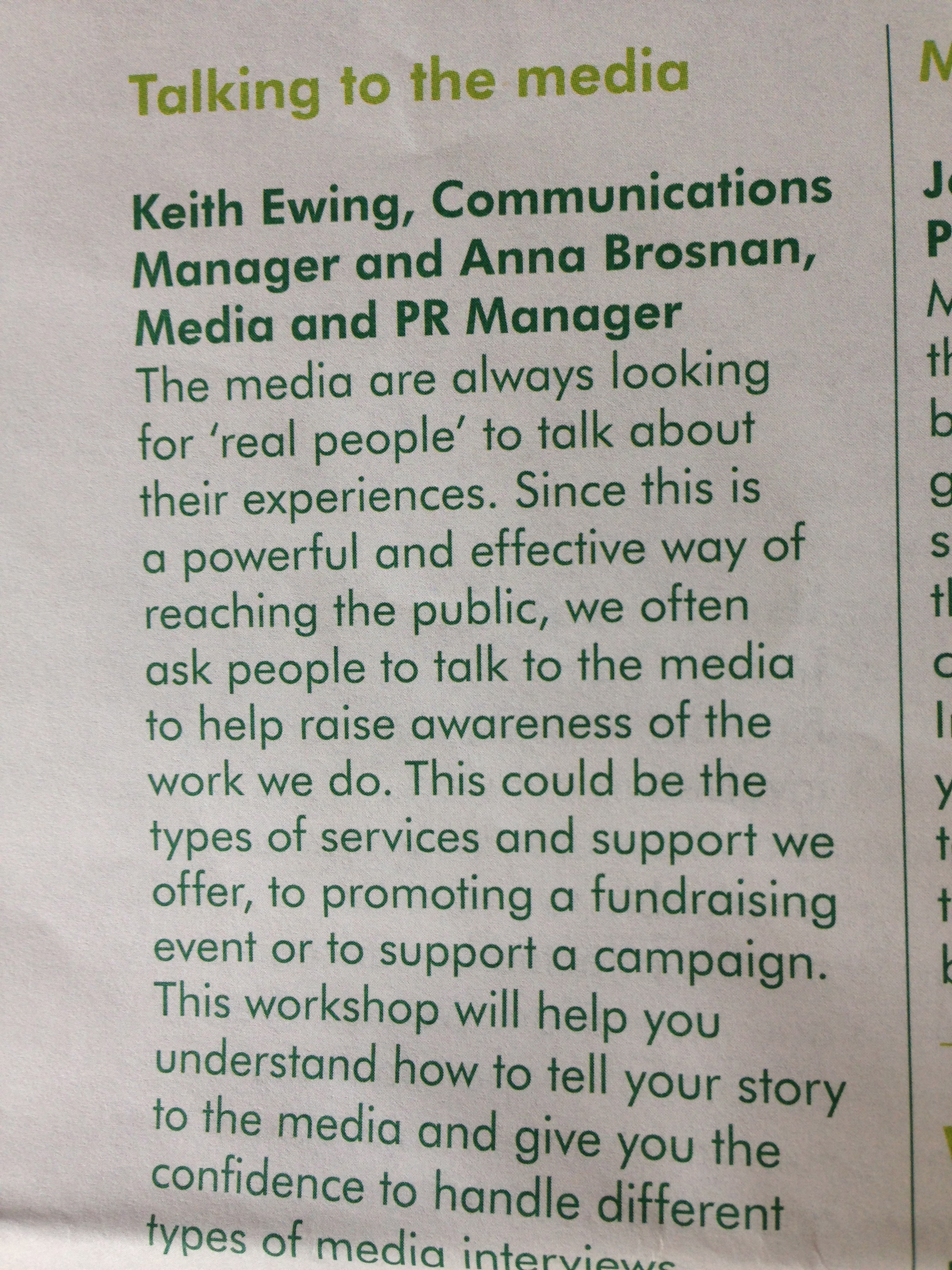
Workshop Three – We take information forward

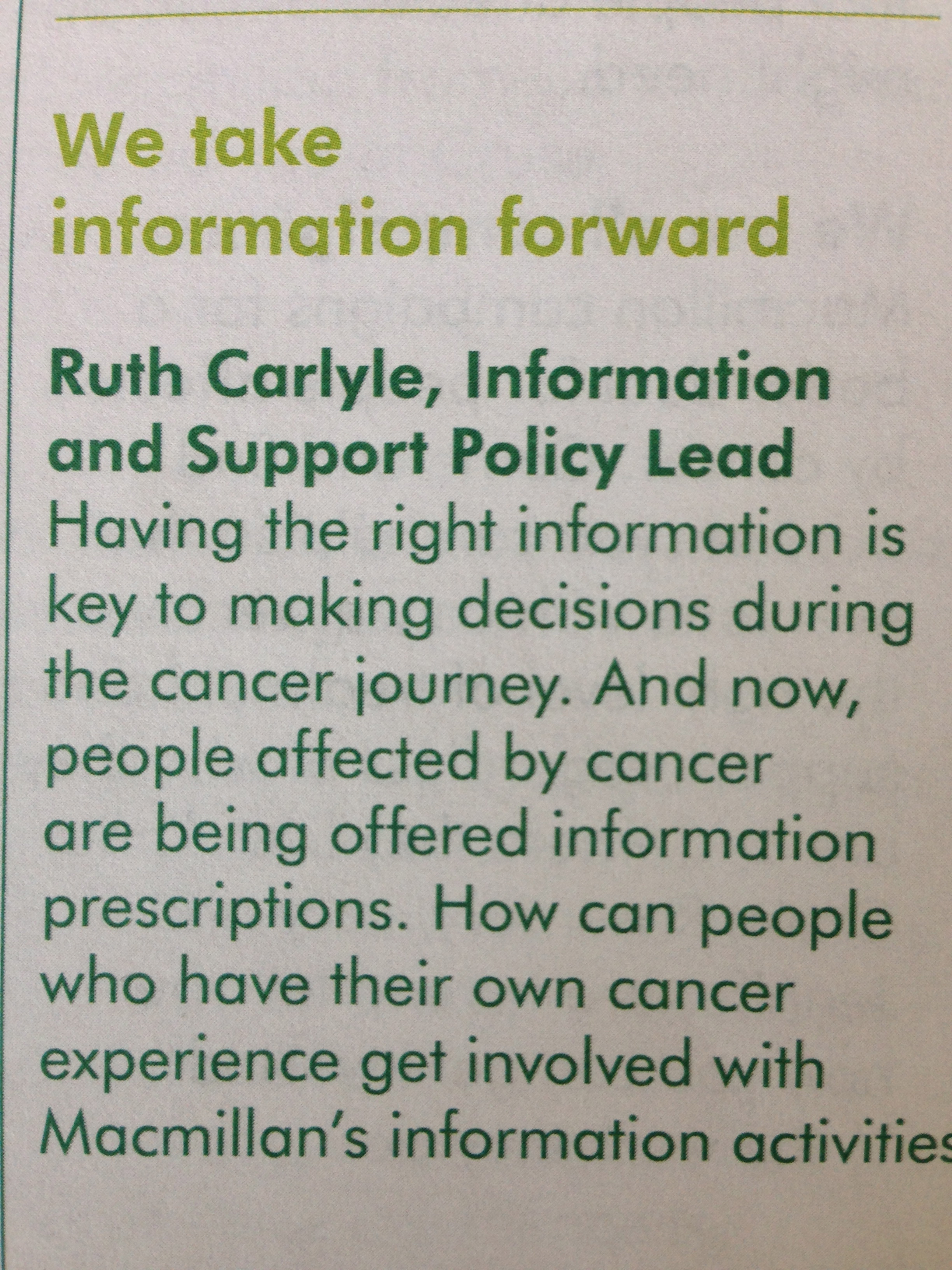
IMG_6653This workshop related to a number of information resources:

Promoting Information Prescriptions – This system that was created and started by NCAT.  You may recall that I spoke of my involvement as a patient reviewer here.  My mention of it from the NCIN conference and my speaking at the recent Learn and Share event.

So this was where the project had got to… Macmillan had taken it over.  No wonder why the wonderful reviewer system had broken down.  How incredibly sad that NCAT had a host of trained volunteers who were ready willing and able to review, write and process the information quickly and efficiently.  So that many information pathways can be put into the system and accessible to people needing it at a time when they need it.  Why on earth wasn’t this aspect of the project taken forward and at the very least these trained volunteers asked if they’d like to continue the project for Macmillan instead of NCAT?

During the workshop we have a walkthrough of the system and I’m astounded at the level of basic information there now is for cancer.  It all appears generic and I know that there is little hope of getting any information about any rare cancers or support for them from the system.  Have a look here.

Getting involved in Information & Support Services – Macmillan run over 140 cancer information and support services across the UK.  In hospitals, libraries, community centres and hospices.  The services offered range from information about specific cancers, treatment options, signposting to relevant clinical, social care or obtaining travel insurance, understanding the information or simply having time to talk.  Each centre is run by a team of people including an Information Specialist and trained volunteers.  Cancer Voices are encouraged to volunteer.

Getting Involved in reviewing books – Macmillan use reviews by people affected by cancer to help compile a list of suggested books for use in public libraries and information centres.  Reviews are also added to Macmillan Cancer Support website.  A link to a review of the wonderful Lisa Lynch’s book ‘The C-Word’ here.  Cancer Voices regularly get asked to review books.

Promoting core book list in libraries – Macmillan have put together a list of core books that are recommended to librarians about cancer.  This list should allow them to make informed judgements about which books to stock, how to select and appropriate range of materials and when to replace books.  This guide will also enable to librarians to recommend specific books when asked by the general public.  Cancer Voices are being urged to get involved by working with Macmillan to contact libraries local to them.

The Conference closed with a session entitled ‘One Voice’.  The programme said this would leave us “feeling positive, energised and confident.”  Sarah Warwick who hosted this session asked the group to stand, dance, move and sing.  An interesting ask and very isolating for those that were in wheelchairs, crutches or unable to move easily.  Even harder for those with a tracheostomy.  As I watched the group of attendees cautiously attempt to follow the instructions, I also noted a trail of people heading for the door and home.  I shortly followed them out.  Furious on behalf of all those who ended a two day conference where they had volunteered their time, energy and commitment to Macmillan to leave feeling humiliated that they couldn’t participate in the closing session.  I’m quite sure, like me, they didn’t leave feeling any kind of positive, energised or confident.


Information Prescriptions Learn & Share Event

I’m very nervous about this.  I’ve had sleepless nights of late thinking about this.  I need to do it though.  I’m perfectly placed as I’ve been a Patient Reviewer on the Information Prescription (AKA Information Pathways) and also as a patient who sought information.

I’ve been asked to speak at a training event for nurses and staff that will be using the system first hand.  It’s part of a phased rollout project and there’s been lots of negative comment about the system from users that feel it’s yet another thing that they’re being asked to do when they’re already short of time.  Sadly one aspect of the rollout that I believe was missing was to supply IT equipment and printers to users – a small cost in the big scheme of things and one that is so essential!  In many locations the nurses are writing down the names of forms and papers and then asking patients to print them in the Cancer Information Centres or at home.  I can’t imagine, as a patient, doing this or feeling looked after doing it myself!

I joined the delegates at lunchtime and heard the presentation from David Manning of NCAT talk about the content and where it’s at.  (Sadly as a patient reviewer, I know that we’ve not reviewed any documents for quite some time!).

Then there was a short presentation from nurses using the system.  Telling us some of the quick wins they’d discovered whilst using the system, feedback from patients about the information and also highlighting a few of the hurdles they have had to overcome.

My turn next.  I was so terribly nervous.  I firstly introduced myself as a patient, user, survivor, patient advocate and many other titles!  An introduction to a brief summary of my cancer journey.  Finding the lump, Mum’s funeral, the interaction with primary care, introduction and immersion into cancerland and.. well you know the rest of the story from here.  I ended with a short piece about the Information Prescription system.  Why I thought it was invaluable.  Although it is something else that the nurses have to do (and I appreciate how much they already have do) it is about patient care.

In my view it is important to look after a patient holistically.  If a patient’s needs are met and reviewed regularly, have a system that they can refer to and find reliable information, then wouldn’t their lives actually be made easier as the patient would become more self-managing!

At the end of the day I was so pleased that so many people came up to me to thank me for telling my story.  They told me of parts that they’d not really thought about before.  I hope it’s made a difference.

(***UPDATE*** at the following Cancer Network meeting the Nurse Director pulled me to one side and told me that my talk had been the most influential.  She said since that date, she’d heard nurses discussing it and discussing how they can improve things.  WOW – the impact of a patient story.)

NCIN conference – Liberating Information, Improving Outcomes

Notes from my attending the NCIN conference – Liberating Information, Improving Outcomes – 15,16 & 17 June 2011

[Update – 23/08/11 – www.ncin.org.uk/news_and_events/conferences/2011.aspx for all the slides and presentations from the conference.]

NCIN (National Cancer Intelligence Network) – great source of data information relating to cancer. However worth noting that although they’re leading the way in collating cancer statistics (worldwide) we still have some way to go in order to feel we have complete information. For example, they can collect details about radiotherapy but not chemotherapy (a project to pull this info from relevant sources is underway).

Number of tools at http://www.ncin.org.uk/cancer_information_tools/eatlas.aspx (not all available to the public as need reporting tools however plenty to pull together!)

Very interesting Data Briefings reports including one about screen-detected breast cancer (Apr 2011) and one that means more to me regarding soft tissue sarcomas… but there’s plenty there.

There’s also a very useful booklet that NCIN have prepared (and you can ask to be sent to you via enquiries@nicn.org.uk) called ‘What cancer statistics are available, and where can I find them?’ or I’ve found the download at www.ncin.org.uk/view.aspx?rid=664

I saw a number of presentations by members of the South West Public Health Observatory and also chatted to them at their stand. Some very valuable and useful information in their ‘hubs’, worth promoting and also spending time rummaging for info, resources, profiles, data etc etc The Skin Cancer Hub, there are links to all sorts of other info and hubs, and early diagnosis info, stats etc at www.swpho.nhs.uk/ Their End of Life Care info is also really in depth.

~~~~~~~~~~~~~~~~
DAY 1

Plenary session: Improving outcomes for cancer
Chair: David Ardron, Chair, NCRI Consumer Liasion Group

Paul Burstow MP – Minister of State for Care Services
(personally I have a lot of time for Paul – he’s a straight-talker, knows his stuff and quite obviously cares about improving things too!)
UK are still behind the rest of Europe for cancer services and outcomes… however this has narrowed for breast cancer and it was felt that this was due, in part, to more awareness and campaigning by the BC community – so well done all!

Equity & Excellence Paper quite clearly showed in 2010 the need for an information revolution within the NHS and it was good to know we are some way there!
The paper also looked at:

  • Linking information between health organisations, primary and secondary care, hospital episodes etc etc
  • Recognising information to deliver improved quality of care
  • Guaranteeing access to your own information
  • Supporting patient, carer AND choice

We know that presenting cases via A&E ie worst diagnostics at primary care lead statistically to a poorer survival rate. Therefore one of the main areas we can change this is in education of the general public to be ‘body aware’ AND to present early to GPs but also to ensure that the primary care ie GPs are also aware of symptoms, tests, diagnostic tools etc.

There is also a piece about ’empowering’ patients to push forward if they know something isn’t right to ensure that if the GP sends them away with a ‘don’t worry’ that they go back or seek a 2nd opinion!

Data collection is now captured for metastatic disease in England. This is an area that previously we didn’t know about and one that will aid enormously with understanding the long term ‘survival’ requirements for our growing population and also how to manage the metastisised disease. (Again something that England lead on!)

Paul also spoke about evidence of equalities within cancer and producing data for cancer equalities that look at age, demographic, socio-economic, ethnic etc groups and the ability to slice and dice the data so that specific areas of inequality can be addressed head on.

~~~~~~~~~~~~~~~~

Mike Birtwistle – MD MHP Health Twitter @mbirty
He presented the ‘Brian Cottier Invitatio Lecture‘ I won’t summarise as the slides are in themselves v useful but if you need any more insight, give me a yell.

He also spoke about accounting for quality to the local community – http://www.kingsfund.org.uk/publications/quality_accounts.html
And also mentioned Joanne Rule and her patient review on patient experience. I found this and thought you may find this ‘interview‘ useful.

~~~~~~~~~~~~~~~~

Harpal Kumar, CEO, Cancer Research UK
Harpal spoke about where we need to be with regard to saving lives. He said that the Reform bill refers to improving our statistics to save a further 5,000 lives from cancer. However as he points out, if we were to do that, we would still only be at an ‘average’ within Europe which wasn’t good enough.. so in fact we need to save 10,000 lives to match the best. He also said that of course those countries will also be trying to save more lives so we should aim much much higher than that also!

He spoke about spearheading stratified medicine in the NHS and I’ve found a link on the Cancer Research UK site which explains a little more about what is meant by this. The diagram is key to understanding how the data and information for each and every patient can go toward ensuring we’re improving and the flow of the study and patient details.

Currently it will cover 9,000 people within the 6 main tumour types however it is intended that by 2015 all cancer patients and all tumour types will be included.

~~~~~~~~~~~~~~~~

Dr David Forman, Head of Cancer Information Section, IARC

Global cancer statistics – http://globocan.iarc.fr/
David spoke about his role and what he and IARC do with regard to cancer information and global comparisons.
In the UK:
310,000 new cases each year – 156,000 cancer related deaths each year
Globally:
12.7m new cases each year – 7.6m cancer related deaths each year

Prediction for 2030 (based on growth and ageing of population)
In the UK:
400,000 new cases each year (29% increase) – 210,000 cancer related deaths each year (26% increase)
Globally:
21.4m new cases each year (69% increase) – 13.1m cancer related deaths each year (72% increase)

Within the developing world the increase is 81% whereas in the developed world it is 34%

2011 UN summit on non-communicable diseases – he spoke about cancer being focussed on at this summit. WHO Global status report

He also spoke about their data collection tool CanReg5 being used in multiple languages to obtain the information needed.

~~~~~~~~~~~~~~~~

Workshop 1 – Less Common Cancers

This workshop was hosted by Simon Davies of Cancer52. Cancer52 is so named because of UK cancer statistics… 52% of UK cancer deaths are from the less common cancers – bet you didn’t know that? Do also take a minute to look at Cancer52’s website and promote and support them whenever you can… they do a fantastic job with very very little funding. Simon also heads up the Teenage Cancer Trust.

As those of you know I was diagnosed with a rare cancer, Cystosarcoma Phyllodes, in 2009 of which there is very little information, clinical or medical data or indeed a path upon which to travel or guidance on surgery or treatment. Rare cancer is therefore of particular personal interest…

So to the workshop…
Simon spoke about the incidence of rare cancers decreasing however the mortality due to rare cancers is increasing. Surely this should be investigated? Why would mortality increase and incidence decrease unless we’re simply not investing enough in research and trials?

This statistic is also somewhat surprising as Cancer of an Unknown Primary (“CUP”) was also not being recorded until 2008. This is a huge improvement in the collation of data to know that CUP is now being recorded (and ranks 2nd on the list of less common cancers) as this will once again be able to highlight the importance of investigation and research into CUP cases to perhaps better identify how/what/when/where the cancer can be classified.

I was also a little surprised to hear that only 20% of research funding and clinical trials is invested in less common cancers. This seems particularly low given that the incidence and mortality rates aren’t reflected in this investment. However perhaps this is due to each and every one of the rare/less common cancer organisations and individuals working for much smaller numbers and perhaps being a smaller voice in the shout for funds/trials! This is really where an organisation such as Cancer52 can help. Joining all the smaller charities and organisations together in order to have a voice has got to be the way forward and one that I thoroughly endorse.

~~~~~~~~~~~~~~~~

Chris Carrigan of NCIN

Chris spoke about their Cancer e-Atlas This tool allows you to select different areas in England, the cancer type, incidence, mortality, survival and then to compare with other areas in England. This tool and the data therein are being used to assess local prevalence of cancers and could again be used for commissioning in the locality. In addition the data for mortality will also be used and compared as this may give indicators about specific areas needing further help/assistance/specialist cancer hospitals or perhaps better emergency service responses!

This tool should be used in conjuction with the Cancer Commissioning Toolkit which is accessible by many listed medical groups including GPs and other health professionals.

Chris also spoke about a GP Practice profile. This tool is aimed at both GP practices themselves but also the PCT/Cancer Network GP Practice Profile/Audit Leads to be able to drill down to a practice level and see what that practice is doing with regards to cancer patients. They will also be able to compare themselves to other practices within their area and it is hoped will be able to identify areas of weakness that perhaps can be addressed by training or other initiatives. An example GP report

Once again the subject of good data arose… we need to get all health professionals entering data about patients into their systems accurately and completely. As well all know from our own lives, sometimes its easier to keep things in your head or scribble a note down however if the information is recorded accurately this will then allow organisations like NCIN, Thames Registry and others to collect, collate and analyse that data and to utilise the results in making a better health service for all.

However really exciting is that they’re collectively working toward getting all the information together into one Cancer Registry (ENCORE) with a target date of complete data by 2012/2013. Not a small task but one that is acknowledged by all as being crucial to tackling cancer head on.

~~~~~~~~~~~~~~~~

Ovarian Cancer Surgery by Specialists in Specialists Centres
John Butler, Dept of Health and Carolynn Gildea, Trent Cancer Registry

Ovarian Cancer is another that is grouped as a less common cancer however the incidence -v- mortality rate are shockingly bad. Last year 6,000 new cases were diagnosed with 4,000 deaths! Often these deaths are due to late diagnosis and emergency admissions rather than via GP practices. I know from friends diagnosed with this rare cancer that they had to return to their GPs on a number of occasions and ended up being diagnosed after presenting to Accident & Emergency. If you don’t know what the symptoms are, please take a minute to look at Target Ovarian or Ovacome.

John and Carolynn’s presentation was on the use of specialist surgeons for Ovarian cancer and more particularly whether the recommendation of “Surgery for ovarian cancer should be carried out by specialised gynaecological oncologists at cancer centres” in ‘Improving Outcomes in Gynaecological Cancers (DH, 1999) does lead to better outcomes for ovarian cancer patients.

Using data collected from 2000-2007 they presented a great deal of statistical information to support this finding however with one caveat… how is a ‘specialist gynaecological oncologist’ defined! It appears that some oncology surgeons are ‘adopting’ this title as they have performed this surgery regularly and have in turn being specialist in their medical facility. What their evidence showed however was that the there was an optimum amount of cases that a specialist surgeon does in order for the outcomes to improve and therefore a ‘specialist gynae oncologist’ who only performs this surgery a few times in his medical facility may not in fact be the best person to be seen whereas a specialist with many cases in a specialist hospital would be preferable as they not only do the work regularly but also have additional knowledge and back up in their medical facilities. John and Carolynn did however acknowledge that further investigation and perhaps classification should be undertaken so that anyone seeking information or guidance with regard to where to have surgery will have all the facts to hand.

But to summarise – they felt that a patient receiving surgery from a specialist gynaecological oncologist & in a specialist medical facility had a better outcome (and this was reflected in the statistics).

~~~~~~~~~~~~~~~~

Defining Soft Tissue Sarcomas
Matthew Francis, West Midlands Cancer Intelligence Unit

I was really buoyed to hear that West Midland’s Cancer Intelligence Unit is the lead registry for sarcoma in the UK.

Matthew’s presentation was particularly about the epidemiology of soft tissue sarcomas. Looking at how they are classified and also the process involved in their classification and use. He spoke about the importance of educating those parties responsible for data entry to ensure that when a sarcoma is identified they are classified correctly, leading to better reporting, analysis and it’s hoped outcomes. Matthew spoke of the importance of morphology codes to be used in addition as there are so many soft tissue sarcomas that could fall within one ICD-10 category. He also mentioned that most sarcomas are entered as C49 codes.

Particular interest to me as the classification codes that I was told Cystosarcoma Phyllodes had were M9020/0 D24 – Benign; M9020/1 D48-6 – NOS; M9020/3 C50- Malignant. So there’ll be no mention of either ICD-10 nor C49 in those codings! I will be following this up with Matthew and obtaining a list of soft tissue sarcoma classifications in the UK.

One thing that I learnt from Matthew’s presentation was simply that there were so very many different types of sarcoma but also that the importance of accurate data input and classification was crucial if we are going to see improvements in this growing area of rare cancers.

~~~~~~~~~~~~~~~~

Specialisation of Treatment of Bone Sarcomas in England (2000-2008)
Sally Vernon – West Midlands Cancer Intelligence Unit
Sally was asked to speak about the guidelines in the Improving Outcomes Guidance that recommend sarcoma care be managed in specialised units.

In short, what Sally found from her research and investigations is that there isn’t enough, up to date or accurate data in order to analyse if a patient diagnosed with a bone sarcoma has a better outcome by being treated in a specialist centre. From the figures she was able to ascertain she believes that approximately 40% have no record of being treated in a specialist centre however believes that the figures are inaccurately recorded and therefore analysed. Sally said that a great deal of patients aren’t diagnosed correctly or indeed treated as they often will be from a more elderly population or perhaps have a ‘fall’ and a break is recorded rather than a bone sarcoma identified at an early stage.

The learning therefore from Sally’s presentation was that, once again, we need better, more timely and complete recording in order to assess the value of specialist centres for bone sarcomas.

Predictors of Use of Orthotopic Bladder Reconstruction after Radical Cystectomy for Bladder Cancer: Data from a pilot study of 2414 cases 2004-2010
Luke Hounsome, South West Public Health Observatory
I won’t go into the presentation in length… but suffice it to say that we need better, more accurate, timely and correct data in order to analyse this well!

One final point that was mentioned during this session:
NCIN for patients and the public – are currently recruiting for new consumer members for their Site Specific Clinical Reference Groups – could you help?

~~~~~~~~~~~~~~~~

DAY 2

Plenary Session: Innovation
Chair – Dr David Brewster, Director, Scottish Cancer Registry

A new single registration system for England
Dr Jem Rashbass, National Director for Registry Modernisation
Jem spoke about work which is underway to pull together all cancer statistics into one system in a quick, accurate and efficient way. He also spoke of the importance of this information and that information is key to moving forward and finding answers.

“We need near real-time, cost effective and comprehensive data”

  • consistent data (including staging)
  • central data-sets
  • Real-time QA
  • Expandable
  • Improved data access and timely feedback
  • Seamless links to cancer screening

He spoke further about ENCORE the central registration system and that this will provide timely feedback to clinical teams along the patients entire pathway. AND that this data in and information out must be two-way.

Information collection data retrieval

He also spoke about the many ways that this information will be retrievable and the importance of being able to pull out reports in many different ways and at different reporting levels… I was very pleased to hear that these are all being considered and consulted upon in the build/implementation phase.

~~~~~~~~~~~~~~~~

Ciarán Devane, Chief Executive, Macmillan Cancer Support
Ciarán spoke about the patient experience. Something that I believe in so much is patient choice and patient experience, so my ears were pinned back!
[Although I did have to have my own little giggle when the Andrew Lansley quote was wheeled out ‘No decision about me, without me’… which was said at a time when the new health reform was announced… without proper patient consultation!!]
I’m going to bullet point some of the highlights from Ciarán’s talk:

  • National Cancer Patient Experience Survey 2010 identified that the patient experience for those diagnosed with rare cancers were the worst.
  • Evidence that if a patient has a Cancer Nurse Specialist assigned to them, their overall patient experience was better.
  • There are 2m people living with and beyond cancer in 2010. On an assumption that this compounds at 3% per annum, this will mean that by 2030 we will have over 4m people living with and beyond cancer in the UK. Therefore the urgency of getting effective data and in a scalable way accurate and timely way, will assist patients and health professionals to manage to growing cancer population.
  • We need to work with the workforce in the system to ensure good training; intervention and support.
  • Personalisation for each person diagnosed and those affected by someone’s diagnosis. We also need to be better at self-management and provide the tools and services to do so. A great deal can be achieved by empowering patients and their carers.
  • Choice. Every cancer patient has a choice in the UK about where they are to be treated however often the information isn’t available or the patient doesn’t feel comfortable asking for statistics, reports and information. Ciarán would like to see this information available and accessible so that patients are able to make the right choice for them at that time… in an informed and empowered way.
  • Data collection – this should be a collaborative function between the Registry, clinicians, health professionals, patients and carers.

~~~~~~~~~~~~~~~~

John Baron MP, Chair of the All Party Parliamentary Group on Cancer
John wanted to speak about the three main aspects of the Reform Strategy:
1. Outcomes with the focus on improved outcomes.
2. Patient Empowerment
3. GP commissioning

1. Outcomes
He spoke about the first year survival rates being an area to focus upon. For instance statistically if we can improve the first year survival rates then the overall survival improvement will follow. We know that there is a direct correlation between late diagnosis and lower first year survival rates. We also know that 25% of diagnoses are made via A&E. We know that this is in part due to people being unaware of symptoms or perhaps putting off a visit to the GP however we also know that, particularly in the young, GPs are quick to assume that a person is too young to have cancer and turn them away, only to repeat a visit or the need for A&E.

John, once again highlighted the importance of early detection, symptom awareness, knowing your own body and of course, GP and health professional training.

2. Patient Empowerment
The Reform Strategy speaks about the a patient having choices. John went on to speak about the importance of those choices being jointly made with health professionals based on information and choice available. But also he acknowledged that many patients feel worried about asking for referral to specialist hospitals or second opinions and we (ALL) must ensure that patients are comfortable with asking. It is never a criticism of your current hospital but in fact a way that you can choose the best treatment/surgery/hospital for your requirements. This decision may not come down to medical factors but simply geography ie being nearer your family or friends for support and follow up appointments.
Patient Information Prescriptions should (and will) also be available for all cancers. At each part of a cancer pathway, from diagnosis to death (and may that be a very very very long time between!) that a patient, carer and health professionals are able to obtain information on a particular part of a pathway pertinent to that moment’s requirements. The National Cancer Action Team are working on this and have made great inroads into the project. There has been a slight glitch with the ongoing addition of documents and Stephen Parsons from NCAT explains a little more in a letter. However they are committed to making this happen… As a patient reviewer of the information documents, I am also a firm believer in the system. You can, from CancerInfo site see the pathways that are already live and download relevant information. Click on Pathways and then choose a pathway. You will then see a number of sections and by clicking on the blue + this will open up to show the documents available at that point in the pathway. For example Melanoma has 8 different sections each with varying number of documents available. You can view online or simply tick a checkbox of the information you wish to download and then save/print those documents you wish to view at the time. There are also triggers within the system that mean a document reaching 6 months of age is removed from the system until validated by the originator. NCAT are also working with charities and organisations to ensure we have combined information available to patients. Often we find that each charity has their own leaflet on a particular pathway and the information can be confusing to the patient.

Part of the project rollout is to ensure that at each point this information may be needed there is a printer and trained staff to talk through what the information means and provide a ‘pack’ to person in need of help and guidance. This is also carried out in holistic way so not only addressing the medical aspects but the emotional, psychological aspects of the patient.

3. GP Commissioning
Many people within the cancer field are concerned that the new GP commissioning structure will mean that specialist cancer services are not considered in many areas. However John was quick to say that these were being considered, tackled and planned out so that no matter where you are in the UK, you will have access to GP services through the new structure.

He also spoke about it being a collaborative method that was needed to ensure that the best services were available to all needing them.

John confirmed that Cancer Networks now had guaranteed funding for another year – something that was a concern that these networks, which being patient voice forward, might lose their funding.

Two questions that were asked by patient attendees were:
“Why aren’t patients represented on commissioning groups?”
“If a large part of missed early diagnosis falls with GPS, why are we going down GP commissioning for cancer services?”

Apparently these are both being addressed and patients being included however I would urge each of you to keep plugging away locally to ensure the patient voice is heard and included in commissioning at every level.

~~~~~~~~~~~~~~~~

Morning Workshop

Survivorship – a patient-led session (in partnership with NCRI Consumer Liaison Group)
Chaired by Ray Murphy, National Cancer Partnership

Ray ran through some the stats we’re getting to know so well. 2m people living with and beyond cancer now. 4m people living with and beyond cancer in 2030.

Cancer affects:
– physical, social, psychological… and so much more.
– patient, family, carers, colleagues… and so much more.

~~~~~~~~~~~~~~~~

Cancer Survivorship in the UK
Jacob Maddams – Thames Cancer Registry, Kings College London

Jacob examined data from 1990-2006 together with HES (Hospital Episode Statistics) from admitted patients in 2006 and this data was linked at a patient level.

I don’t think there was much more that Jacob added to the statistical evidence that has been provided previously and as above however it was so clear, once again, that we collectively, need to get smarter, faster and more accurate with our data inputting so that we can really analyse and use the data!

Increased risk of skeletal and cardiac events in prostate cancer patients
Luke Hounsome, South West Public Health Observatory

Luke’s presentation was looking at the data around prostate cancer patients and particularly the use of hormone therapies used with advanced or progressive types of prostate cancer. Although, sadly, once again it was evident that the data was incomplete as a number of the ‘watched patients’ were lost after a certain point leading a conclusion that Luke couldn’t specifically link a death to the treatment as it may have been inaccurately recorded for this evidence purpose. However that said, there was enough evidence to report that prostate cancer patients are at a greater risk of admission to hospital for cardiac events or bone fractures. Those undergoing ADT have a further increased risk. Women undergoing hormone therapy for breast cancer are often prescribed bisphosphonates to protect against fractures and this practice needs to be extended to men being treated with ADT. Awareness of the high risk of cardiac events should be raised to prompt discussion of lifestyle changes to reduce risk.

Using clinical attendance patterns to determine likely survivorship journey (colorectal cancer, multiple myeloma, hodgkin’s disease) in England
James Wells Monitor Group, Europe
James was challenged with studying the route from diagnosis and defining the same from both the healthcare and patient perspective.

Electronic Patient reported Outcomes from Cancer Survivors (ePOCS): preliminary results from feasibility testing of a scalable electronic system for collecting pros and linking with cancer registry data
Laura Ashley, University of Leeds
The ePOCS study aims to test the feasibility of an electronic system for regularly collecting patient reported outcomes (PROs) and linking these with Cancer Registry data.
The premise of ePOCS is that this will increase and improve the patient experience. More information can be found via the ePOCS website

~~~~~~~~~~~~~~~~

Findings from a National Audit of Cancer Diagnosis in Primary Care in England
Greg Rubin, Medicine and Health, Durham University and Sean McPhail, NCIN
A national audit of cancer diagnosis in primary care was undertaken in 2009/2010 as part of the NAEDI (National Awareness and Early Diagnosis Initiative) and address perceived deficiencies primary health care performance in cancer diagnosis. 17 of the 28 cancer networks in England took part. 3 networks used a sampling approach to practice selection. In the remaining 14 networks all practices wishing to participate were able to do so.

Data was collected on 18,113 patients by over 1,000 practices in 17 cancer networks.
Data quality was high in most categorical fields including stage and considered 90% complete.
Comparison was made with the cancer registry data and showed that the dataset was representative.
1,066 (5.9%) of patients were described as housebound
934 (5.2%) had a communication difficulty.
Both disabilities were associated with significantly increased odds of later stage at diagnosis while age, sex and ethnicity were not.
The median duration of the primary care and referral intervals was 4 days and 12 days respectively, with considerable variation by cancer site. Emergency presentation, usually associated with worse outcomes, occurred in 12.8% of all cases but ranged from 3.8% (breast) and 40.0% (brain). In 6.1% of cases the GP believed that better access to investigations would have reduced delay in diagnosis. This also varied considerably by site, rising to 19.5% for brain and 12-14% for ovary, pancreas and kidney.
In conclusion this report showed that the analysis method was effective however as we know we need more awareness at a GP level to reduce late diagnosis. Increasing the use of this data capture and evidencing this back to GPs will aid in improvement at this level.
One other piece of information that came from the report was that there was a big disparity between primary and secondary cancer referrals. Secondary being

~~~~~~~~~~~~~~~~

Variations in usage of the two week wait referral system in general practice
Carolynn Gildea, Trent Cancer Registry and David Meechan, Trent Cancer Registry
Carolynn and David had been asked to investigate the patterns in the use of the two week wait referral system by GPS. Knowing that early diagnosis is an important part of the cancer outcomes strategy and within this, the two week wait referral system plays a key role.

They looked at three measures to do the study: referral rate (no of 2 week wait referrals as a standardised rate); conversion rate (proportion of 2 week wait referrals resulting in cancer diagnosis); detection rate (proportion of cancers referred through the two week wait system); and then analyse and understand the data in comparison.

The results showed significant differences in the way GP practices use the two week wait referral system for the diagnosis of cancer. Relationships between the three measures demonstrate complex patterns in practice referrals; as expected, increases in referral rate correspond to decreases in conversion rates and increases in detection rates. However, surprisingly, conversion and detection rates appear to be positively correlated.

However it was also pointed out that approximately 25% of people with cancer don’t have cancer waiting time records recorded! This may be due to a number of different reasons; bad recording; rare cancers being recorded as a simple alternative; or missed data.

It was also thought that this report, and ongoing reporting, could be used to identify trends in GP practices, particular practices of individual GPs within a practice and then any training/support/advice that needs to be addressed at a GP practice level as well as a higher level in regard to commissioning.

One other statistic that stuck out for me from this presentation… 23% of cancer cases are diagnosed via Accident & Emergency and 24% of cancer cases are diagnosed via GP. Surely GP percentage should be much much bigger?

~~~~~~~~~~~~~~~~

Plenary Session: Thames Cancer Registry at 50 years

In celebration of the first 50 years of Thames Cancer Registry, there has been a report prepared, also online, that is a really valuable source of information and data.

We also saw a film that was made by a couple of the employees about the history of Thames Cancer Registry.

Worth a look to understand that data has been collected for the last 50 years, how the ideas and planning that was put in place all those years ago still stands proving the forward thinking of the TCR.

Maggie Barker, Medical Director and also Henrik Moller presented some of the report details and story behind TCR. Followed later by a fun presentation by Dick Skeet with memories of the TCR (he’s featured in the film!).

~~~~~~~~~~~~~~~~

Hormone receptor status and ethnicity in women with breast cancer in North East London
Ruth H Jack, Thames Cancer Registry

Ruth presented from data in NE London with a Breast Cancer diagnosis between 2005-2007. 2,417 women were diagnosed. 128 of them were diagnosed with triple negative form of breast cancer.

Her data also showed that TNBC was more likely in younger women. Also there was an increase in deprived areas.

Ruth spoke about more information being needed and research in this area with a particular focus on obtaining relevant data from all the ethnic groups.

~~~~~~~~~~~~~~~~

DAY 3

Plenary Session: Supporting Commissioning
Chair – Professor Sir Mike Richards, National Cancer Director for England

Commissioning in the new NHS
Stephen Parsons, Director, National Cancer Action Team

Stephen spoke of our wishes to commission cancer services that are the best in the world. We must achieve this and are moving toward it however aware that we have a long way to go. He did acknowledge the wonderful work that has been presented at the conference in collating and managing data so that we can utilise these tools to improve cancer services so that we not only lead the way but excel in our services.

Effective commissioning: There are concerns that there may be variability and quality of commissioning between areas however he believes that by providing and learning from information available to us even today in the data sets collected, and ensuring data, reporting and information is of a high quality, we can achieve effective commissioning.

The move toward information being in one central place is driving the views toward better outcomes.

He spoke of a Commissioning support pack for all, which will including information which MUST be informing, engaging, empowering and timely.

The information to be collated should include the incidence of cancer; prevalence and survival; different aspects and outcomes; and to share information such as expenditure and variation between the PCTs as they stand now.

There should also always be comparisons made with regard to cost effective treatments. Not only the price of a treatment but the effectiveness of using that treatment over another ie looking at survival and outcomes too.

He also spoke of GP consortia to be made up of Clinical Commissioning groups which in turn are made up of a variety of health professionals not just GPs.

Also Clinical Senates – perhaps 15 of them across the country. These Senates will therefore cross different consortia and be able to share learnings and information and indeed to have some power in ‘bulk buying’!

The question was asked one more time about patient involvement in commissioning. Stephen advised that it was his understanding that patient/users will be involved in both the Clinical Commissioning Groups and the Clinical Senate levels.

The questions that NCAT have posed about commissioning:

What are the key facts/issues that commissioners should know?
What do they feel is most important?
There are a number of myths that need to be dispelled surrounding commissioning.

Key messages that need to be put across to the GP consortia (and understood!)

  • incidence of cancer is rising
  • people are dying unnecessarily
  • want to save 5,000 lives from cancer but in order to excel we should be saving more than 10,000
  • late diagnosis is a major factor underlying bad survival rates
  • 6% of NHS budget is still being allocated to cancer services – this percentage has been the same for many years (whilst other budgets are being cut, cancer services remains at 6%)
  • Not all cancer interventions are expensive

How to support commissioners

  • save lives
  • improve quality of life and care – patient experience
  • optimal value for money

Saving Lives

  • Public awareness, early presentation; early diagnosis
  • Supporting GPs to investigate and refer
  • GPs to have more diagnostic equipment together with training and information

Improve quality of life and care – patient experience

  • Prevent unnecessary hospital admissions
  • Reduce length of stay in hospital
  • Improve access to Cancer Nurse Specialists
  • Patient information prescriptions and training on how to use them for health professionals, information officers and the public

Optimal value for money

  • Invest in early diagnosis
  • Reduce emergency admissions
  • Enhanced recovery programmes and self-management

Benchmarking information – utilising data and reports so that there are service profiles upon which GP commissioners can make changes, learn from etc

Conclusion
Primary focus of all NHS funded care to provide high quality care and improved outcomes.

Commission and deliver cancer services that match best in the world

The Challenges ahead are significant but the prize is greater!

~~~~~~~~~~~~~~~~

Cost of skin cancer in England, including projection to 2020
Dr Julia Verne, South West Public Health Observatory

Julia described how difficult it was to obtain good data with regard to skin care and melanoma. The main reason for this is that often GPs will deal with the removal of moles or skin tags etc and these won’t necessarily be recorded correctly. GPs and local health care professionals are being encouraged to record this data more effectively.

However one thing that was plainly obvious… skin cancer is on the rise in the UK. More work has to be done in the awareness arena to ensure that people in the UK are aware of the dangers of using a sunbed but also tanning without any sun protection.

The best place for information is www.swpho.nhs.uk/skincancerhub which provides information about awareness campaigns, symptom checker, skin cancer profiles in the UK etc. Worth a look and perhaps this is something you can share with local groups such as school and colleges in your area.

~~~~~~~~~~~~~~~~

Variation of surgical resection for lung cancer in relation to survival: population-based study in England 2004-2006
Professor Henrik Moller, Thames Cancer Registry
Henrik presented information and statistics regarding survival following surgery for lung cancer. The full report is available on the Thames Cancer Registry site.

~~~~~~~~~~~~~~~~

Plenary Session: Early detection

Chair – Sara Hiom, Director of Health Information and Cancer Data, Cancer Research UK

Cancer Intelligence – a vision for the future
Professor Sir Mike Richards, National Cancer Director for England

  • completeness and timeliness
  • staging, only 40% of this is recorded. We should be achieving at least 70%
  • pathology reporting is variable or poor. There needs to be more standards and better/clearer reporting
  • Imaging. Again this varies and needs to be clearer and more standards adhered to
  • Chemotherapy. This data is not yet being collated at a national level – 100% of this need to be collated nationally
  • We’re only just linking our data with primary care units and not in all locations. This needs to improve significantly and also data to be more standardised as well as clear and complete.

There is little known or reported about

  • comorbidity
  • late affects
  • quality of life
  • recurrences/secondaries/metasteses

“There is an increased demand on complete and timely intelligence”

Cancer is leading in the information revolution in health but still can be improved”

~~~~~~~~~~~~~~~~

Promoting early symptomatic presentation of breast cancer: implementing an evidence-based intervention in routine clinical practice
Dr Lindsay Forbes, King’s College London

Lindsay reconfirmed what we should all know, earlier diagnosis of breast cancer (like all cancers) is a key factor in our survival rates. The need to promote early symptomatic presentation is something we should all be participating in. How can we do that?

  • screening programmes
  • earlier referral to diagnostic tests
  • awareness of cancer and encourage earlier presentation

Health professionals delivering interventions to promote early presentation for breast cancer in older women.

20-30% of women delay presentation >3 months (1999)
there is a clear link between delay in diagnosis and survival for breast cancer (1999)
2/3 of women present symptomatically
>500 breast cancer deaths per year for women presenting >3 months

Older women think their risk of breast cancer is lower – wrong! The risk increases with age. We should encourage older women to go for their regular mammograms – so many skip appointments with the thought that they don’t need them and their risk is lower!

~~~~~~~~~~~~~~~~

Additional sites and sources of information:

edric (Fighting cancer with information)
ukacr – UK association of cancer registries
I’ve got sooo much to tell you…

Gosh life has been so busy and full.  Not enough minutes in a day to be able to update you and do everything that I’ve been up to.  I promise to update you on bits and pieces very soon but first some quick summaries that I’ll come back and fill in later.. I went to Scotland which combined with meetings, I met with both my brothers and their families and we scattered the last of Mum’s ashes.  Duncan had found a spot overlooking Loch Lomond… quite an adventure getting there mid-winter and I’ll expand on that when I pop back later.

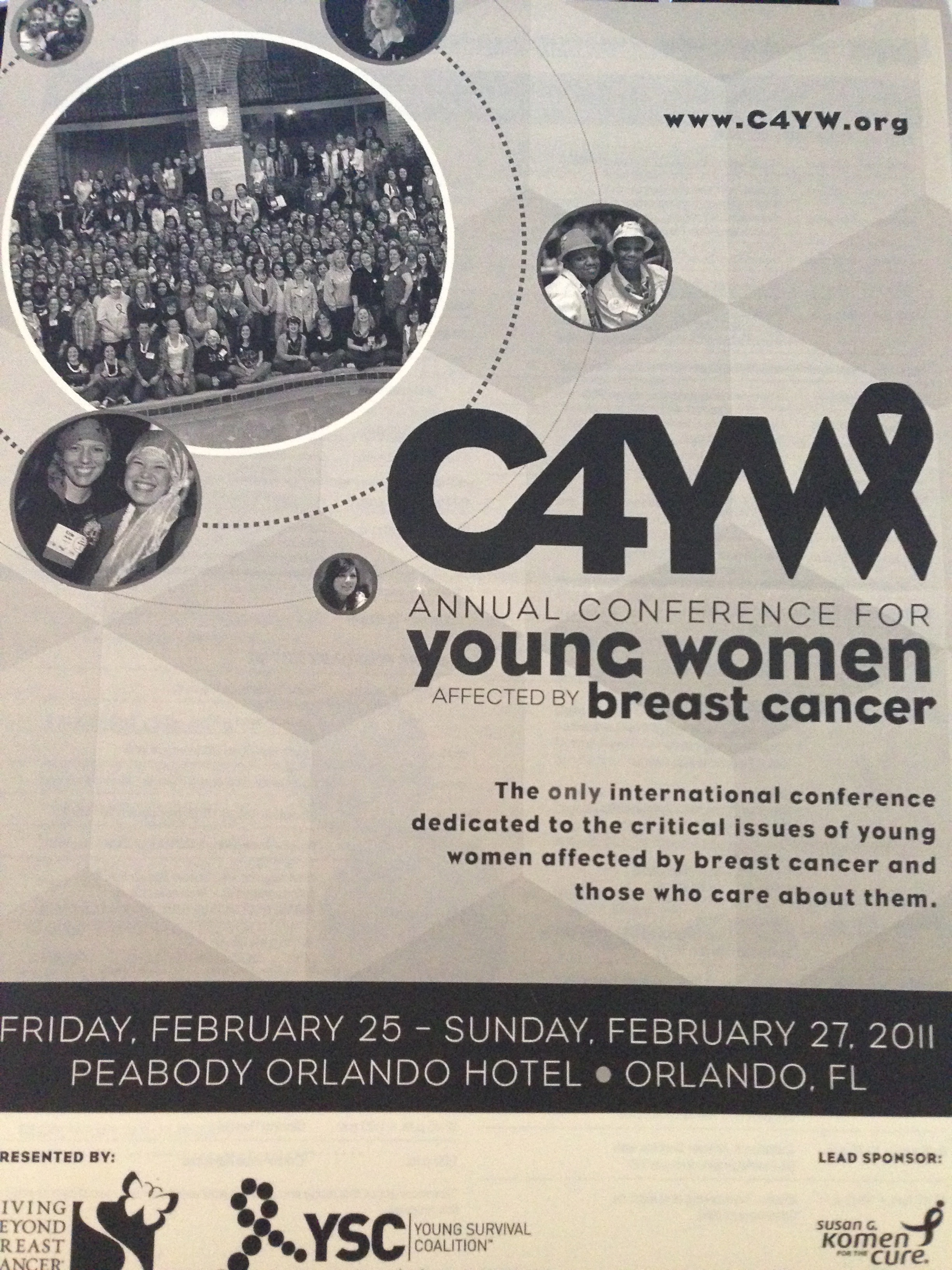
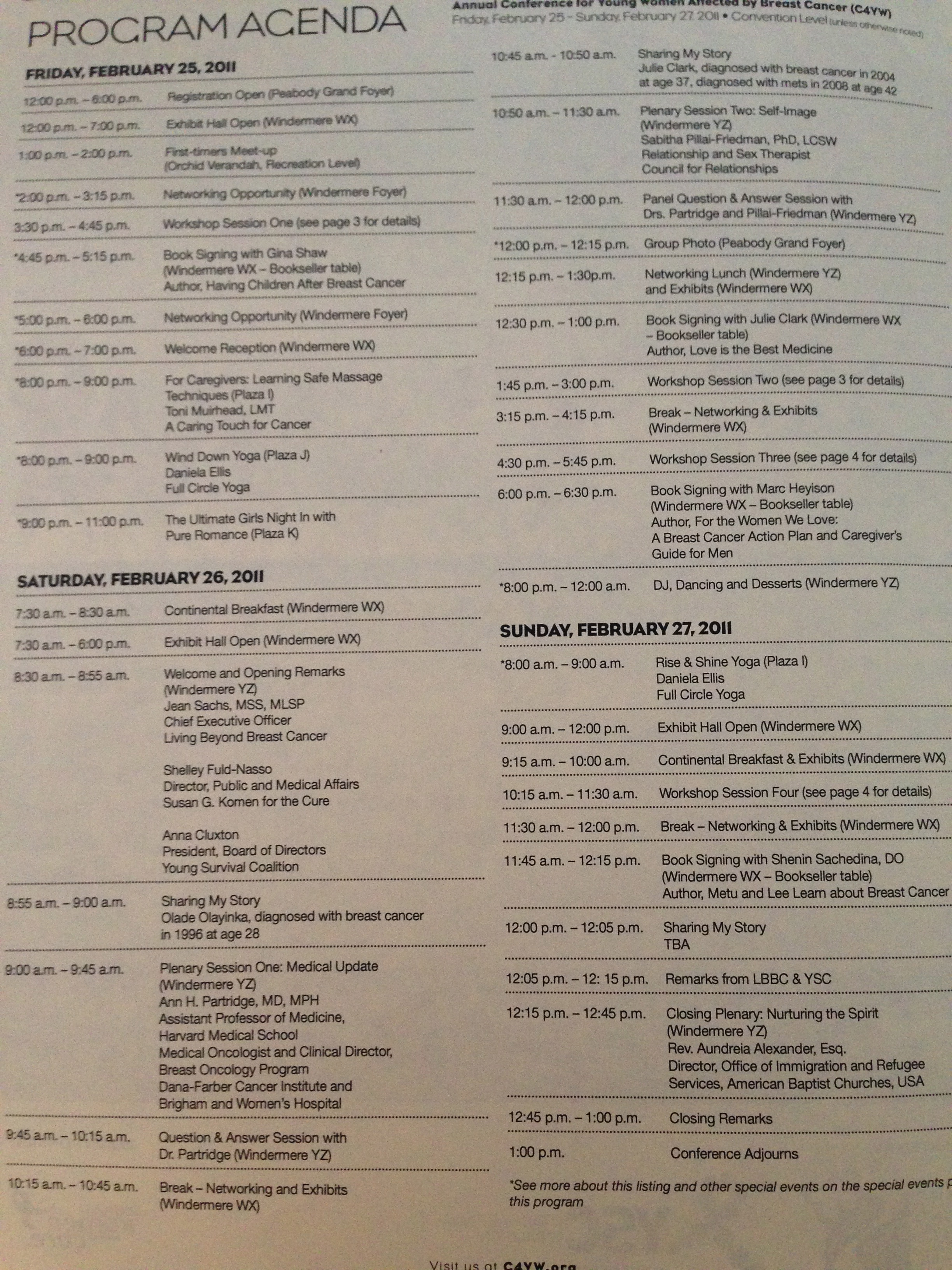
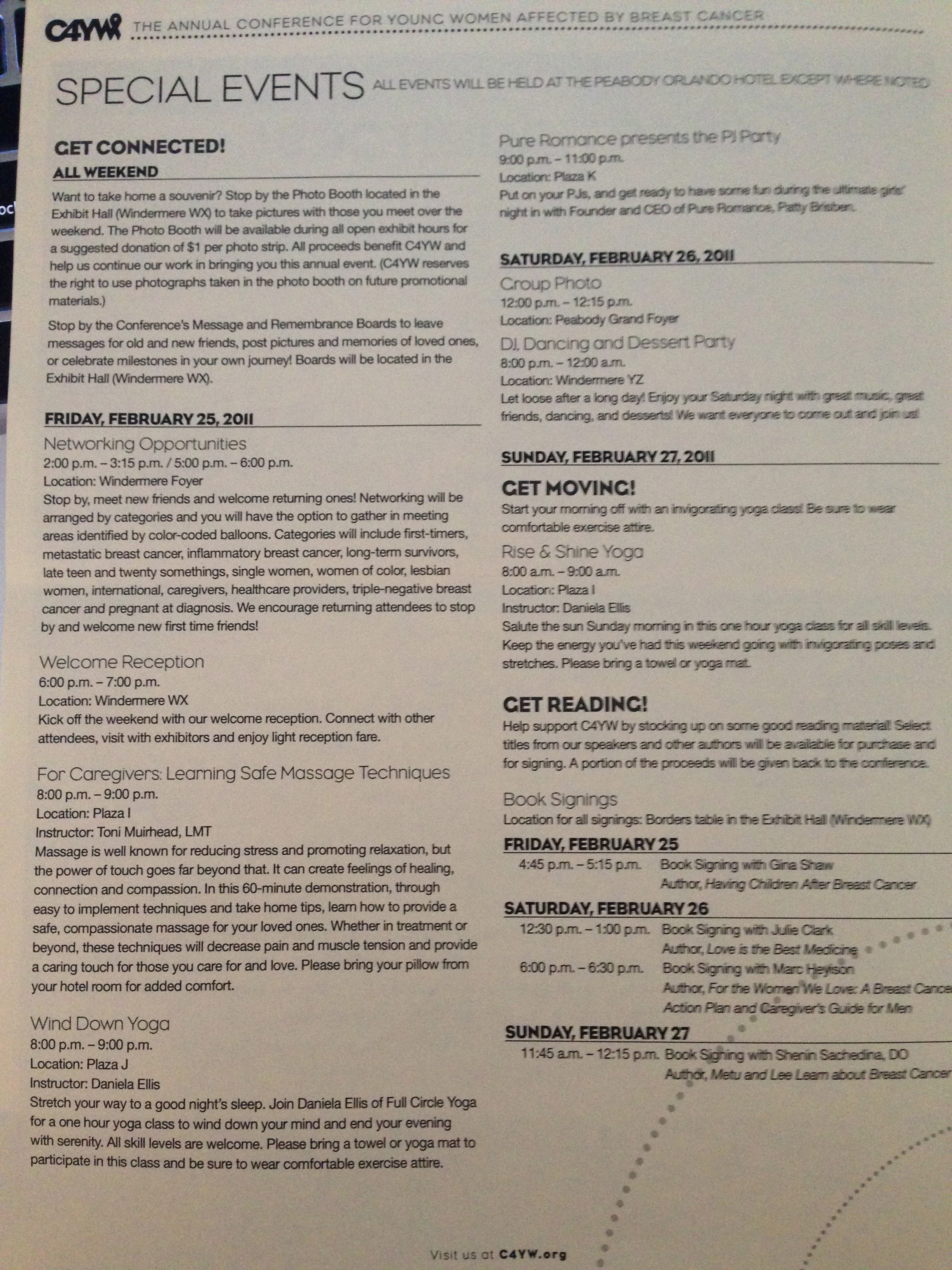
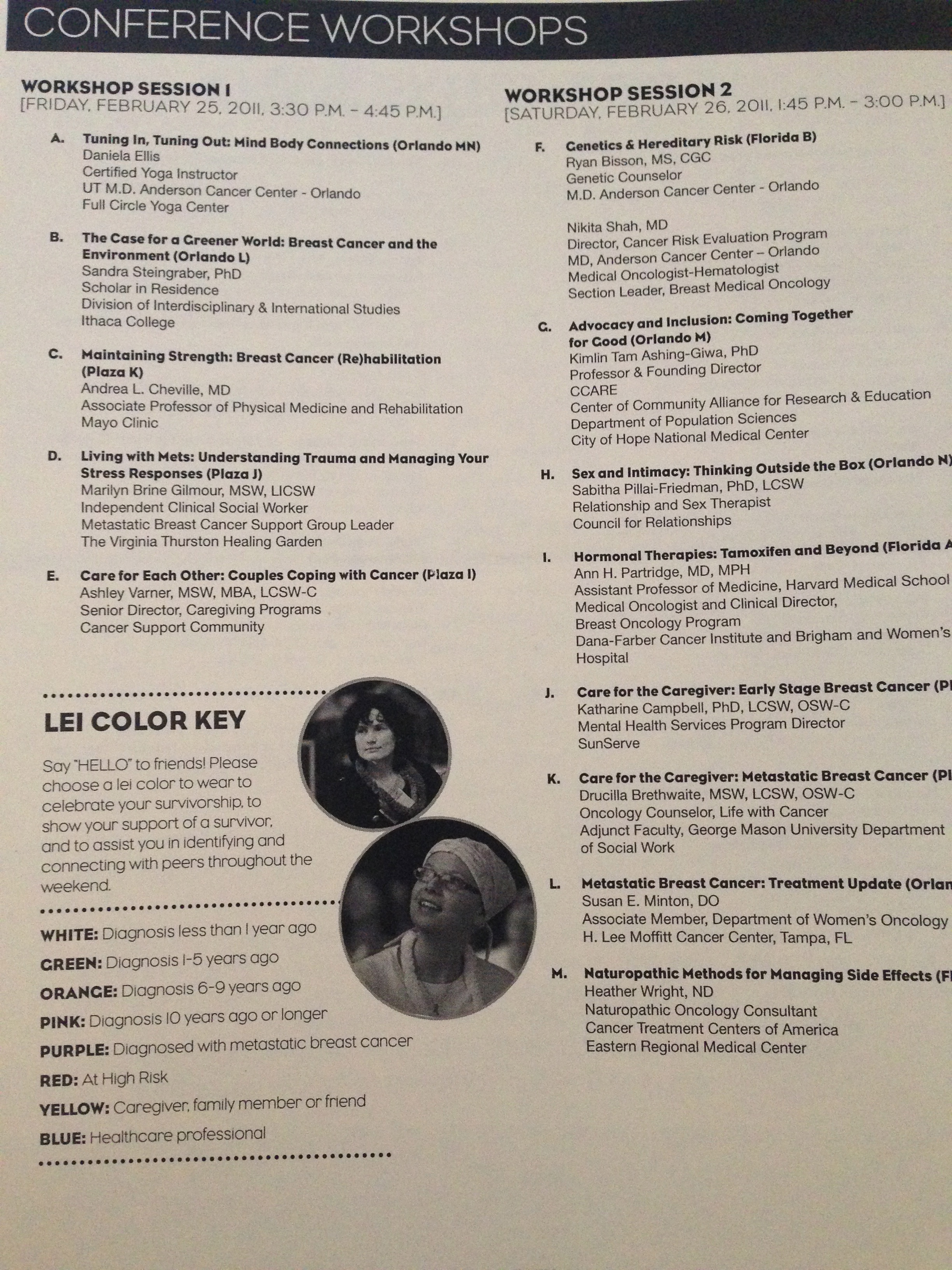
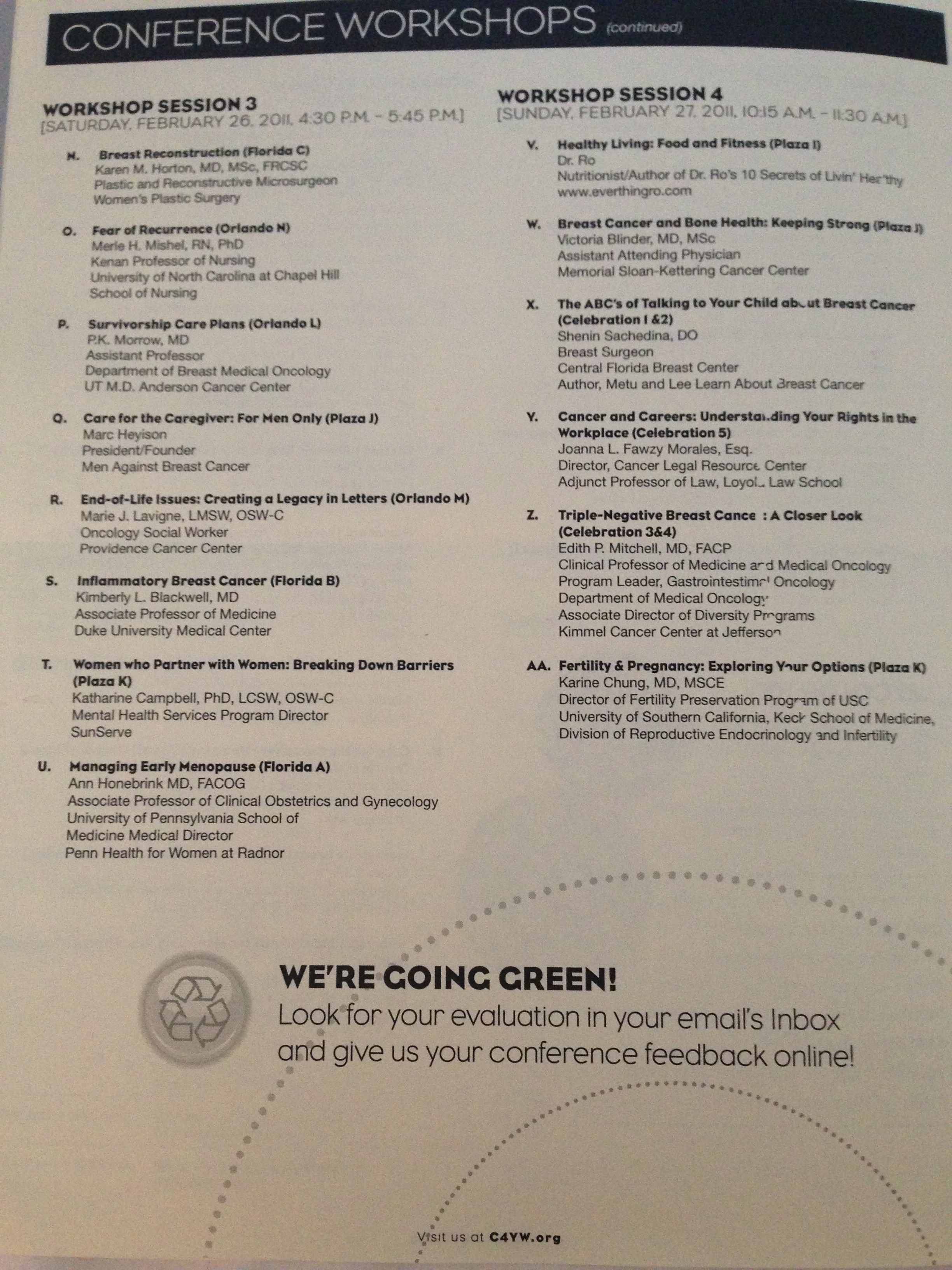
I was back home for 36 hours before heading off to Orlando, Florida and my second year at the Annual Conference for Young Women affected by breast cancer (now known as C4YW).  I learnt so much attending the seminars and workshops but mostly it’s the community and support of being with people who really understand it.  Being my second year I was also able to talk to some of the newbies and help them too.  My oldest buddy, Jenny was there too and once again we roomed which allowed us time to gossip and talk about the old days and also openly talk about the past few years and its impact on us.  AND there were even more of my Phyllodes’ sisters there…. I cannot tell you just how special and meaningful it is to be able to spend time with them, to give and receive a hug and to be able to talk about being diagnosed with this rare cancer.

One of my sisters, Andrea Lambert was there this year.  We hadn’t yet met in person but Andrea has been a constant support to me from the first moment Trish introduced me to the Phyllodes Facebook group.  I can’t explain how much it meant to me to be able to give her a hug.

During the time together we all spoke about doing more advocacy and awareness of Phyllodes.  If having the Facebook group has taught us something it’s simply that there are people out there who are diagnosed and it’s not just us!  Andrea talked about doing a TV piece in conjunction with her husband’s role as a hockey coach.  The piece was aired last night on Fox6.  Do take a look – click here  Andi is amazing, beautiful, strong and I’m proud to say, my friend.

YSC Conference in Orlando

Very excited to have received a bursary place to attend this year’s Young Survival Coalition conference in Orlando, Florida.  I know how much last year’s conference helped me come to terms with my diagnosis.  The workshops were well planned.  The plenary sessions informative.  Most of all was simply the camaraderie between attendees and knowing you’re not alone.

I’m also super excited to be able to meet up with some of my Phyllodes friends.  Some were in Atlanta but more that I know online from the support group and particularly, Andi.  Andi is someone I’ve mentioned before who was pivotal in my managing my diagnosis.  Sadly Jolene is no longer with us ‘physically’ but we have a plan!

I need to remember that attending the conference is for me.  Me personally.  About me.  I know I will be tempted to be looking at it as opportunities for the UK conference for Living Beyond Diagnosis and I’m sure there will be lots of ideas but sometimes I need to put my own health and mental health first.

I’m grateful for the long flight today.  I can sleep.  I worked through the night before leaving the UK to get everything up to date and ahead of myself so that I could put an ‘out of office’ message on and leave.

Once again Jenny is coming to the conference and will be sharing my room at the Park Plaza.  Always great to catch up and particularly at the conference when it’s so easy to share concerns and worries with someone you’ve known for 20 years but who ‘understands’.

IMG_6424IMG_6425IMG_6428IMG_6429


IMG_6426IMG_6427


National Cancer Information Pathways

I was extremely excited to hear about this new initiative – National Cancer Information Pathways.  The premise is that there will be an online system that is accessible on the internet and contains information, documents and reference sheets for the entire pathway relating to each cancer.  It’s no small job but I know first hand that if I could have accessed a reliable resource that provided me with bitesize pieces of information at different times during my journey, life would have been so much easier.  Imagine being able to download information and email it to friends or family that enquire ‘what now’.

The idea is that your Cancer Nurse Specialist spends 10 minutes with each person to find out what what they need to know, set up an account an print out the relevant information that they need at that time.  The patient can then go in to their account and look at other additional information when they wish and then to discuss these with the CNS.

How brilliant will this be?  So when I was asked if I would consider becoming a Patient Reviewer for this system and National Cancer Action Team (NCAT) (who are coordinating the system), I jumped at the chance.

Today the ‘Patient Reviewers’ met up for an event to understand the nuts and bolts of the system.  How it will work.  What needs to be done.  Understand that each and every document needs to be reviewed by patients to ensure that it is in a format that is easy to understand.  Lay people’s language (with medical terms added).  Not to much information and not too little. We discussed the quantity of documents that would be needed and attempted to break down a pathway and think of other aspects that we, as patients, may think necessary whereas clinicians may not have thought about it.

The system can be accessed here.  (**UPDATE – now here).  By entering your cancer type and postcode you will then be presented with the applicable information.

Our jobs as Patient Reviewers is to be on standby (using an online system) to review everything.  We will receive an email notification when information needs reviewing to login.  Once there, we will comment/change each document (via the system) and upload these for the central administrator to decipher.  If the changes are big changes they then need to go back to the author to rewrite/edit.  For each document there will be quorum of so many reviewers required so that we can ensure that it has different perspectives review it.

Exciting times and I’m so prepared to get down to work on this.

Last day of Conference and I want to max out on information

8am – Yoga – Yes you did read that right.. I was up and out and in a yoga class for an 8am start!  Along with about 50 other people from the Conference.  The little room was packed and as we stretched and posed we all became very close friends!  

9am – Quick shower and down to the exhibitors hall to grab a cup of coffee before the next workshop.  The other girls were leaving at 11am to fly back to their destinations  and headed out with Jen to get some breakfast.  Although some of the ladies were a little worse for wear and hadn’t yet made it out of bed after their 6am finish time in the karaoke bar.  You know some people might frown upon partying hard at the conference, but for a lot of attendees they can really let their hair down (or take off their wigs) and just be themselves, laugh at themselves, at our situation and be amongst friends.  That kinship is more important, sometimes, than anything else and the conference is a way to network with people who are travelling this journey with you.

10am – Workshop Session Four – Body Image: Breaking Through the Mirror – Lillie D Shockney, RN, BS, MAS

I don’t need to tell you why I wanted to attend this workshop!

Lillie Shockney was an awesome speaker, within minutes she had us all thinking, crying or laughing… or for some, all three and it just made sense… so forgive me if I repeat bits and pieces but I think it may help others too.  She is a breast cancer survivor herself but was involved as a breast cancer nurse before diagnosis.  She has many tales about people and situations that shock and then bring you into fits of laughter as she tells of prosthetics popping out on golf courses and board rooms.  I can understand why she is involved in so many educational projects in the US and overseas.

Lillie Shockney is also involved in a project in the Arabia regarding education and medicine for young women.  The average age of diagnosis is only 34 and usually death within one year of diagnosis.  Scary stuff and it’s no surprise that breast cancer is referred to as ‘Death Fate’.

How we see ourselves is often very different to how we perceive others see us.  Think about it some more…

When we hear those four little words “You have breast cancer”, we instantly are fearful. We’re fearful of losing our lives, of losing a breast (part of whole), of losing hair and also of losing our mate, of gaining weight, losing libido, depression, preoccupation of fear of recurrence and needing to find our ‘new normal’.  And it all happens so quickly.

She said that she urges women to seek solace in humour through the rough stuff.  To label the surgery ‘transformation surgery’ as it really is and does transform your body and mind. 

Celebrate that you go from being a breast cancer patient/victim to a breast cancer survivor.  Doesn’t that sound better?

Ms Shockney also mentioned that she’d known cases where survivors experienced pain or phantom limb sensation after surgery to remove the breast – but she said that with some survivors they’d been able to find a spot on the body that meant the sensation disappeared!

Redefine your intimacy, talk it all through with your partner and ensure that they are part of the process.  Often when we’re unable to be sexually close, simply holding hands conveys what you’re feeling.

Partners often become owner occupiers for a while…

Oh and if you’re having chemo, organise a little party with your closest friends and have a coming out party for your hair before you start.

I think for the most part, for me, this workshop smacked me in the face and told me not to worry about it all so much.  When I meet the right person, it won’t matter.  Should I need further surgery or treatment, learn to laugh at the little stuff and the big laughs will follow. Find humour in the hardest of times.  And rather than feeling that any change is a bad change, embrace the new chapter of my life and use the learnings.

11.45am – Don’t go – Sadly the time had come that some of Team Phyllodes had to head off to get flights home.  I rushed up to the lobby after the workshop to find them all there, long faces (and a few hangovers).  I was sooo sorry to see the first go, particularly Trish.  She was the first person who retrieved me from cyberspace when I was searching for answers and someone, anyone, to talk to.  The difference this made to me, my discovery, my recovery and now… I can’t put into words.  The relief to know that I wasn’t alone and I could ask questions and she quickly put a shout-out for other Phyllodes survivors to friend me and I really felt that having felt so alone I suddenly had sisters out there who could pick me up and lend me a shoulder to cry on when I needed it.  Since then I’ve tried hard to ensure that no one feels alone with this ‘rare’ illness – we’re not THAT rare (but we are of course, unique!)!  So having this opportunity to meet and hug Trish and some of the others from cyberspace was something I will cherish forever.

12.15 – Closing Plenary: Resigning as General Manager of the Universe: Taking Control of your Own Health and Life – Kim Carlos     

Kim opened her speech with words that resonated loudly with me:

“When you hear these four words “You have breast cancer”, you instantly feel alone.  But I’ve learnt that I’m NOT”

She told of her story, of how she now uses every experience and learning to ensure that at the very least the message to women AND men, gets round, check your breasts. Don’t leave it to chance, you are your own medic… and remember that ALL the people at the conference were told at some stage ‘don’t worry, you’re too young to have breast cancer’… ooooh how wrong they are!  In the UK we are lucky to get mammograms at 40, in the US they don’t get mammograms until they’re 50 and everyone at the conference was under 45 years of age! 

She went on to tell of her journey with her new friends, of times they laughed, times they cried and times that should probably be confined to the conference… but you can read about it in their book “Nordies’ at Noon” http://www.nordiesatnoon.com/authors.html

Like so many of the speakers, survivors and hosts, Kim was keen to learn from her experiences and to use this for something better (and also to get away with a few things too) and Kim’s top 10 were:

10.  I could say NO to the things I didn’t want to do and not feel guilty.

9.   I could have a messy house and it was OK.

8.   It was easier to raise money for good causes… a bald head helps!

7.   No shaving, no razors, no waxing, no in-growing hairs etc.

6.   Had a tummy tuck as part of her reconstruction surgery.

5.   Got a new boob and a breast lift… for free!

4.   Meals bought to her by friends and family which meant no cooking.

3.   There was no such thing as a bad hair day.

2.   Anything that didn’t quite go right, she could blame on “chemo brain”.

1.   It made Kim realise the wonderful gift of life and made her cherish family, friends and life.

Kim’s recipe for survivorship

S – Support & Survivors and co-survivors.

U – Uncertainty that you will fill your life.

R – Resigning as general manager of the universe.  You don’t have to be in control.  You don’t have to be one that everyone comes to.  Take care of yourself and let others take care of the universe.  You can ask for help and you can accept the help given/offered.

V – Venture.  Take a risk.  Do something you’d otherwise never give a go.  You can never fail, just learn and experience.  You never regret something you did, just those things you didn’t do.

I – Information.  What do you do with all the information and learnings you’ve got from this experience.  Use them.  Empower yourself, do something with it, use it!  Become an advocate.  “Be an active participant in your care”.

V – Valuing each and every day.  (What are the things in YOUR life that you value?  Do them).

O – Optimism. 

R – Refusing to give up.  And SURVIVING and THRIVING.

12:45 – 10th Anniversary Cupcake Celebration and Closing Remarks from LBBC and YSC

As the Conference closed I was incredibly aware of the amount of information, companionship and warmth that I had gained from the weekend… Somehow I was going to be thankful for the cosy atmosphere of the BA flight home to think through what it’s meant to me.

1:30 – After more sad goodbyes in the lobby, Jen and I headed out into the chilly Atlanta sunshine and were whisked off to Sue’s house for an American brunch.  Yummy pancakes, bacon, strawberries, maple syrup, eggs etc.  Awesome meal and fun walk in the afternoon with Sue, Paul, Jen and Sue’s children before Paul drove me to the airport and my long flight home.