Launch of Penny Brohn’s National ‘Living Well’ courses

A few months ago I was invited to write a small piece to appear in the Sunday Telegraph. The focus was to be nutritional information following a cancer diagnosis.  A hot topic and one that can be confusing.

Specific nutritional advice should, of course, be sought from your medical teams and indeed is tailored to each person and their specific cancer diagnosis.  For example advice given to a bowel cancer survivor would be different to that given to a lymphoma survivor, at least in part.  In addition, some treatments and particularly some chemotherapy drugs are extremely sensitive to some foods and incorrect advice could be very damaging.

My piece therefore was written on the basis of an overview and enabled me to signpost to some smaller specialist charities and also to organisations that offer nutritional workshops for cancer survivors.  Often these smaller organisations don’t have large media or marketing budgets and rely on word of mouth referrals or editorial similar to that which I was asked to write.  The submitted piece with links is below:

————————————————————

Submitted to the Telegraph:

As a cancer patient diagnosed with a rare soft tissue sarcoma, Phyllodes, in 2009, I am always seeking information and guidance with regard to lifestyle, health and wellbeing. There is often information that appears to contradictory or conflicting in the media and also an overwhelming amount of ‘advice’ from well meaning friends, colleagues and acquaintances. What I have learnt with regard to balancing and increasing my intake of fruit and vegetables is actually quite simple.

· The well known guidance of ‘5 a day’ is a good place to start.
· Divide your plate into imaginary slices so that 50% of the meal is fruit and vegetables.
· Balance the colour of fruit and vegetables you eat. If, for nothing else, it looks more attractive to eat and means you get less ‘bored’ with the healthier choice.
· Experiment and try new fruits and vegetables. Even the ‘oddest’ looking vegetable can taste scrummy and be good for you!
· Snack on fruit (strategically placed fruit bowls help with this).
· When chopping up vegetables for dinner, julienne an extra carrot, celery, pepper or similar. Pop them into a small foodbag. You can then take this out with you or have in the fridge ready for those ‘picking’ moments.

In my role as moderator for a Phyllodes Support Group and also my work with Living Beyond Diagnosis, I am often asked for advice regarding healthy eating or lifestyle choices. I know from conversation with others diagnosed with different cancers and at different stages of treatment or wellness, that some fruits and vegetables can have different effects on the person and therefore professional advice should be sought together with a sensible approach. I am cautious about giving any specific nutrition advice as I’m not qualified to do so but I signpost them to specific charities and organizations specializing in their cancer type and urge them to speak with their oncology consultant and/or cancer care specialist.

There are some fantastic charities and organisations offering dietary information online, nutrition workshops and even cookery classes. Why not make the discovery and incorporation of new fruits and vegetables fun and easy?

NHS Choices has a number of links to healthier eating. They also have a link to 5 a day on a budget.

The Teenage Cancer Trust  make the point ‘Young people with cancer often face rare and difficult to treat disease that requires aggressive chemotherapy and radiotherapy. Being as fit as they can and eating well is critical to helping them fight both the disease and the debilitating treatment. This can be particularly challenging with side effects like severe mouth ulcers, nausea and changes to taste and appetite. It is vital that health services focus on nutrition during treatment and research foods that can add value in a young persons fight against cancer’.  Simon Davies, CEO, Teenage Cancer Trust

The Haven, a national breast cancer charity, provides centres which offer free emotional support and healthy lifestyle advice to anyone before, during or after, breast cancer treatment. Their professional team include experts in nutrition, counselling, exercise and mindfulness to help anyone with and beyond breast cancer. Their research has proven the benefits of its in-depth programme.

The charity provides a healthy eating guide as well as DVDs and CDs to help people who can’t get to one of their centres.

Maggie’s Cancer Caring Centres  offer free comprehensive support for anyone affected by cancer. In addition to the many support groups, emotional and psychological support, benefits advice and practical support, they also run Nutrition Workshops.

The sessions are aimed to promote a healthy, balanced and varied diet and comprise in an informal setting:

  • The importance of good nutrition to overall well-being
  • An overview of what is a healthy diet
  • The role of antioxidants, phytochemicals and essential fatty acids in the prevention and protection from cancer
  • Making the most of the diet in simple and easy to achieve ways

Many people who come to the workshops may have read books on nutrition or sourced information from the internet and the sessions can help to clarify what people have discovered, plus they are an opportunity to explore and share.

Beating Bowel Cancer  have produced a booklet entitled Living With Bowel Cancer: Eating Well which can be downloaded. The booklet outlines dietary advice specifically for bowel cancer patients following treatment or surgery.

Advice is also available via their specialist nurse helpline 08450 719301.

Penny Brohn Cancer Centre provides a unique combination of physical, emotional and spiritual support designed to help anyone affected by cancer at any stage of their illness. Information and advice on healthy eating is one of the many services we offer to support people to live well with the impact of cancer.

Our range of services, which are available to cancer patients and their supporters, include one to one sessions with a qualified Nutritional Therapist, residential courses and a choice of one day courses covering; healthy cooking options and demonstrations, menu planning, how to combine and cook foods and the theory and science behind our guidelines.

Penny Brohn have also produced a guide to maintain a healthy, balanced diet whilst living with cancer “The Bristol Approach to Healthy Eating

Further information can be found at www.pennybrohncancercare.org/eating-well

Anna Wallace
http://www.annawallace.co.uk
Founder of Living Beyond Diagnosis

————————————————————

During my research and conversations with Penny Brohn Cancer Care for the Telegraph piece, I was told about a very exciting development in their programmes.  I was aware of the residential courses in Bristol from friends who have benefitted hugely from attending.  The new news is that they were launching their ‘Living Well’ programme nationally later this year.  It’s been hard not to tell you all before now, such wonderful news.

Tonight, I was honoured to have been invited to attend the launch at a reception hosted by The Rt Hon Dr Liam Fox MP at the Houses of Parliament and hear in full about the exciting project.

————————————————————

What does Penny Brohn Cancer Care do?

Penny Brohn Cancer Care supports people living with the impact of cancer through our unique combination of physical, emotional and spiritual support.  This is designed to support the individual and work alongside their medical treatment.

We provide our services free of charge, thanks entirely to the charitable donationsl and voluntary contributions which fund our work.

Our services are open to everybody over the age of 18 with a cancer diagnosis and their supporters.

For information and support contact our Helpline on 0845 1232310 or email helpline@pennybrohn.org or visit http://www.pennybrohncancercare.org.

What is ‘Living Well’?

Led by experienced, trained facilitators, Penny Brohn Cancer Care’s Living Well course provides people with a tool kit of techniques that can help support physical, emotional and spiritual health.

Information is provided on healthy eating, exercise and understanding the impact of cancer on emotions and relationships.  In addition participants experience different methods of stress management.

People are encouraged to share their experiences with others in similar situations, and think about what future steps they could take to “live well”.

The Living Well course is part of a wider pathway of care at Penny Brohn Cancer Care.  This approach includes ongoing support and other courses are available.

How is ‘Living Well’ delivered?

We have a choice of delivery models:

  1. Partnership with NHS cancer services
  2. Partnership with charitable and independent organisations
  3. Delivery as an independent course

Living Well can be delivered in both residential and non-residential formats and can be tailored to the needs of individual client groups.

————————————————————

Over the past years Penny Brohn have been refining the programme to ensure the content is current, required and flexible to the needs of those attending.

Penny Brohn have created the Living Well programme taking a holistic view of treating the whole person.  Supporting people living with the impact of cancer through a combination of physical, emotional and spiritual support.  They have conducted extensive (and continued) research and evaluations of attendees and supporters from attendance to date to see assess the impact and value of each aspect of the course.  This research and evaluations allow them to continue to support the individuals after attending the courses by keeping the dialogue open and a way to come back for further support or attend courses.

I have been truly encouraged by their approach that the impact of cancer can affect people at different times and in different ways.  I’m also encouraged that this is not only on the ‘heresay’ of a cancer patient but on substantiated research.  We hear a great deal about ‘survivorship’ but often this isn’t backed up with real hard evidence and research.  I’m concerned that when more budget cuts are made within NHS healthcare that cuts will be made in areas without substantiated research underpinning it.  Well done Penny Brohn and the University of Westminster for this continued research and evaluation of need.

I was also excited to hear that as a charity they wanted to share their expertise and work collaboratively with other charities to host Living Well courses around the UK.  Instead of setting up new Penny Brohn Cancer Care centres themselves, costing millions and then servicing people local to their new Centres, they acknowledged that by working with other organisations they can not only reach more people but can also educate and inform of the need for survivorship support of this kind.

In attendance tonight were a large number of representatives from other charities who, I’m pleased to say, seemed agreeable to working WITH Penny Brohn in the national launch of Living Well.

Already organised are a number of regional non-residential courses:

26-28 Nov 2012    National Star College     Cheltenham
3-5 Dec 2012        Willow Lodge      Sheffield
21-23 Jan 2013    The Octagon     Hull
21&28 Jan 2013    Norman Power Centre     Birmingham
4 Feb -18 Mar 2013   Cancerwise    Chichester
5-7 Feb 2013        Penny Brohn Cancer Care   Bristol
18-20 Feb 2013    Great Oaks Hospice    Forest of Dean
19-21 Feb 2013    The Octagon     Hull

Perhaps you know someone who might benefit from attending one of these non-residential courses or indeed a course in Bristol at their HQ.

Perhaps you know an organisation/charity that could co-host a course.

Perhaps you could fundraise for them or propose a corporate donation to your employer.  They run these courses free of charge with voluntary donations.

A link to the BBC news about the launch and services – click here

Small c Coffee & Cocktails

I figured it was about time I wrote about Shine London and Small c Coffee & Cocktails and why I’ve been attending.

A while ago I was contacted about a new charity ‘Shine Cancer Support‘ – A Network for Younger Adults Affected by Cancer.  The organisation was created by people who found themselves diagnosed with a cancer in their 20s, 30s and 40s and in many cases with little information or support for their age group.  Or diagnosed with a ‘rare’ cancer, there isn’t a specific support group to attend and certainly not for your age group.  Issues such as fertility, dating, childcare or returning to work are critical to a young adult but often overlooked with cancers predominantly diagnosed in the older person.  In addition, many support groups take place during the day and this timing in itself lends itself to attendees being older or no longer working.

Many people will tell of how peer support has been incredibly valuable in their ‘journey’ and that a shared experience or a tip or trick can be crucially important at a vulnerable time.

Shine offer a number of activities in Bournemouth, Dorset.  They have had walks on the beach, balls, drinks evenings and new members lunches.  They have arranged pamper days and Christmas and Halloween parties.

A summer holiday took place this year and it is hoped to be an annual event.  Camping in Swanage with members and their families.  This weekend away allowed family members to also network with others and share their own experiences.

In London, there are regular Coffee & Cocktail evenings.  The venue is changed regularly and meet up every 6-8 weeks.  It’s a good mixed group of men and women, age range is literally 20-40(ish!), different and varied diagnoses, some still in treatment, some between treatments and some counting the years of survivorship.

What I love about it is that we’re in a pub, bar or private club.  We drink wine, beer, juice, coffee or bubbles!  We chat as a group but also as small groups.  We talk about living.  We talk about dying.  We talk about cancer.  We talk about where we’ve recently eaten or holidayed.  We talk about aspirations.  We share experiences.  We talk about inspirations.  We talk about each other.  We talk about our families and friends.  For the most part we talk about all the ‘normal’ stuff that you talk about with your friends in the pub… and probably talk more and faster as the wine/beer is consumed.

What we don’t do is sit around in a circle going over our medical history, latest operation or graphic side affects.  But if they’re mentioned, it’s OK too.

Tonight’s meeting was made all the more amusing when early on we were joined by a gentleman who was probably in his 40s and clearly had had too much of something… perhaps booze but I suspect it may have been combined with other substances!  He bounced over to our table informing us that he was meant to be at a wedding reception.  The bride shouldn’t be marrying that &^%(*.  Then he described their whole relationship.  A while was spent on his asking if what he was wearing was suitable or should he have his scarf on or off, should the jacket be on or off – each ‘idea’ being modelled by his strutting across the bar and back to our tables.  We then heard all about his life.  His wife (or ex-wife).  His lover.  And so much more.  It was hysterical and I have to say that as a group we were all crying with laughter and fuelling his drunken rants!  After quite some time we managed to persuade him to head off to the wedding reception… I would so love to have been a fly on the wall when he turned up!

We were joined by two new group members.  Twin men in their 20s.  One with cancer, the other supporting his twin brother.  They were fun and we had a laugh.  We also heard his/their story.  They also shared moments together when something was said and the other realised that they’d not heard it before.  I believe the group environment allowed them to talk about issues that they’d previously skirted around too.  But mostly, I hope, they felt supported.  I do hope they’ll be back to the next evening.

There are many support groups.  There are many different support environments.  One is not necessarily the right one for all.  I’m excited by Shine and what it has the ability to do – support people diagnosed with cancer in their 20s, 30s and 40s.  I’m also very pleased to count these new people in my group of friends.  Just sometimes I need people who understand… and sometimes I just need people to have a glass of bubbles with!

French 75 cocktail… combining two faves… gin and champagne!


World Stroke Day, 29 October 2012 + my crazy abseil!

Did you know that today is World Stroke Day?

Several months ago a friend forwarded an email from The Stroke Association.  They were  looking for volunteers to abseil down Battersea Power Station and raise some valuable funds for their organisation.  It piqued my interest for quite a number of reasons.  Moments later I had replied and signed up for the event.

Firstly, I’m not a fan of heights.  In fact, I get queasy going up in some lifts and can’t go to the edge of buildings with floor to ceiling glass.  However those of you who know me well, will also know that I’ll reframe this fear and create it into a challenge.  Scared of the sea, I learnt to scuba dive.  Fearful of being out of control, I did a skydive.  Logically, I can do this too – eeek!

Secondly, Battersea Power Station is an iconic building that has been part of my landscape for many years.  Since first moving to London 26 years ago, the silhouette has been a part of train or road journeys from North to South of the Thames.  Before much of the new London developments built over the last 26 years, it was always there unused and unloved but proud of his history and heritage.

The building was once a power station and decommissioned in 1983.  The building was Grade II protected against demolition and has been searching for a new owner and purpose ever since.  Wikipedia’s entry.

I understand the power station has been sold and that the new owners are working and reworking planning applications to redevelop the land.  I’m not sure what it will become or when the work will start.  There are many stories written of it crumbling.  I’ve no doubt however that the view that I’ve loved will change but am hoping that this ‘Cathedral of Industry’ will still retain much of it’s original character and beauty.

Thirdly, The Stroke Association is an organisation close to my heart (pun intended!).  They do incredible work supporting people and their family who have been affected by stroke.  They believe strongly in survivorship and ‘Life after Stroke’.

Many people think that a stroke only happens to older generations or perhaps those with an unfit lifestyle or that they aren’t as bad as many other illnesses or diseases.  Sadly in many cases this isn’t true.  A few facts below:

• An estimated 150,000 people have a stroke in the UK each year
• Stroke accounts for around 53,000 deaths each year in the UK
• 10,000 people under the age of 30 will have a stroke each year
Stroke is the third most common cause of death in England and Wales, after heart disease and cancer
• Stroke accounts for 9 per cent of all deaths in men and 13 per cent of deaths in women in the UK
• Stroke has a greater disability impact than any other chronic disease. Over 300,000 people are living with moderate to severe disabilities as a result of stroke
Three times more women die from stroke than breast cancer

A few of the reasons why I feel passionate about raising some funds for the Stroke Association and why I’m abseiling this coming Saturday.

My friend’s father, a fit and active retiree, who passed away suddenly.

Rob who had a stroke earlier this year which led to the discovery of bowel cancer.

And two little munchkins who are both very close to my heart.  Both were born with different diagnoses but devastatingly both sets of parents were warned that they will probably be affected by strokes throughout their lives.  Sadly for one child the strokes have recently started.  She doesn’t understand them nor understand what they are or why they’re happening.  So far they’ve not been bad strokes.

This Saturday is the date of my abseil.  You can only imagine how my palms go sweaty at the very thought of launching myself over the edge.  Genuinely I feel sick.  Genuinely I’ve questioned why I’m doing such a crazy thing when I hate heights.  Genuinely I’ve thought of backing out.  Then I remember the faces of those I’m doing this for.

I set myself a target fundraising figure of £425.00 and I’m chuffed to say that I’ve exceeded that.  BUT I also know that any pounds and pennies that can be raised over and above my own fundraising figure are needed.  I’m also keen that you know exactly how the Stroke Association use donated funds.

For every £1 donated:
79p goes to directly to supporting their work to fight stroke.
20p is invested to generate future revenue.
AND only 1p goes toward running the charity.

Find out more about the Stroke Association here or donate directly to the charity.

AND if you want to sponsor me and my insanity on Saturday 3 November 2012 please donate via my justgiving page at https://www.justgiving.com/annagoanna

PS Any donations over £500 and we’ll use my bottom as an advertising hoarding – well let’s face it that’ll be in most of the pictures and it’s large enough!


Breast Cancer Care Fashion Show 2012

Breast Cancer Care are a charity who do so much for anyone worried about, diagnosed with breast cancer and also those caring for people with breast cancer.  They are a small charity who do so much.  They address issues that seem to fall through the net too, for example younger women diagnosed with breast cancer, moving forward after your diagnosis and also those who are diagnosed with secondary cancer.

I know from my own personal experience of breast surgery from my phyllodes tumour how much body image and the psychological and emotional aspects of cancer can be debilitating.  I also know from friends how much Breast Cancer Care have been there for them during recurrence, mastectomies, body image, terminal diagnosis, secondaries and simply being ‘too young to get breast cancer’ but having it!

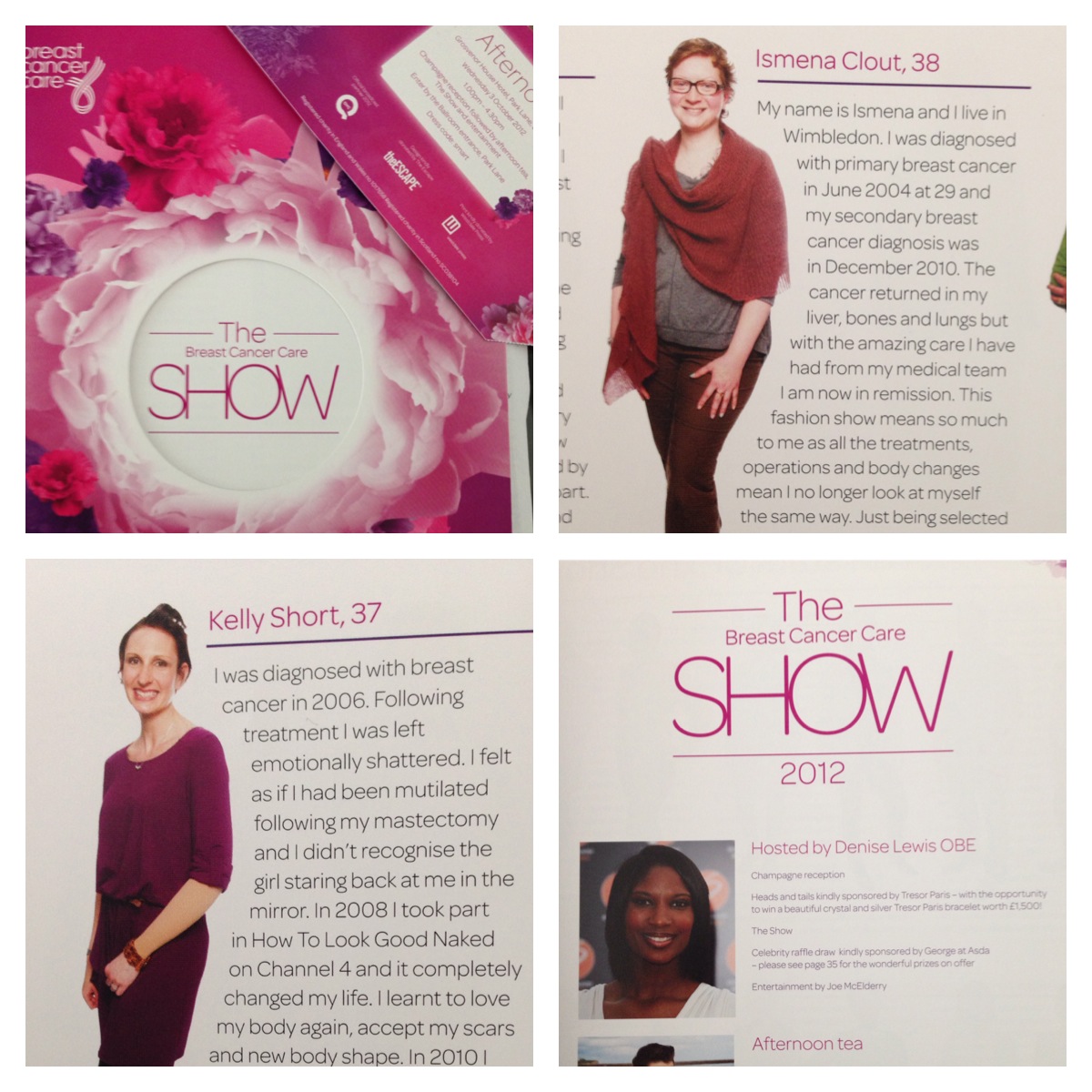
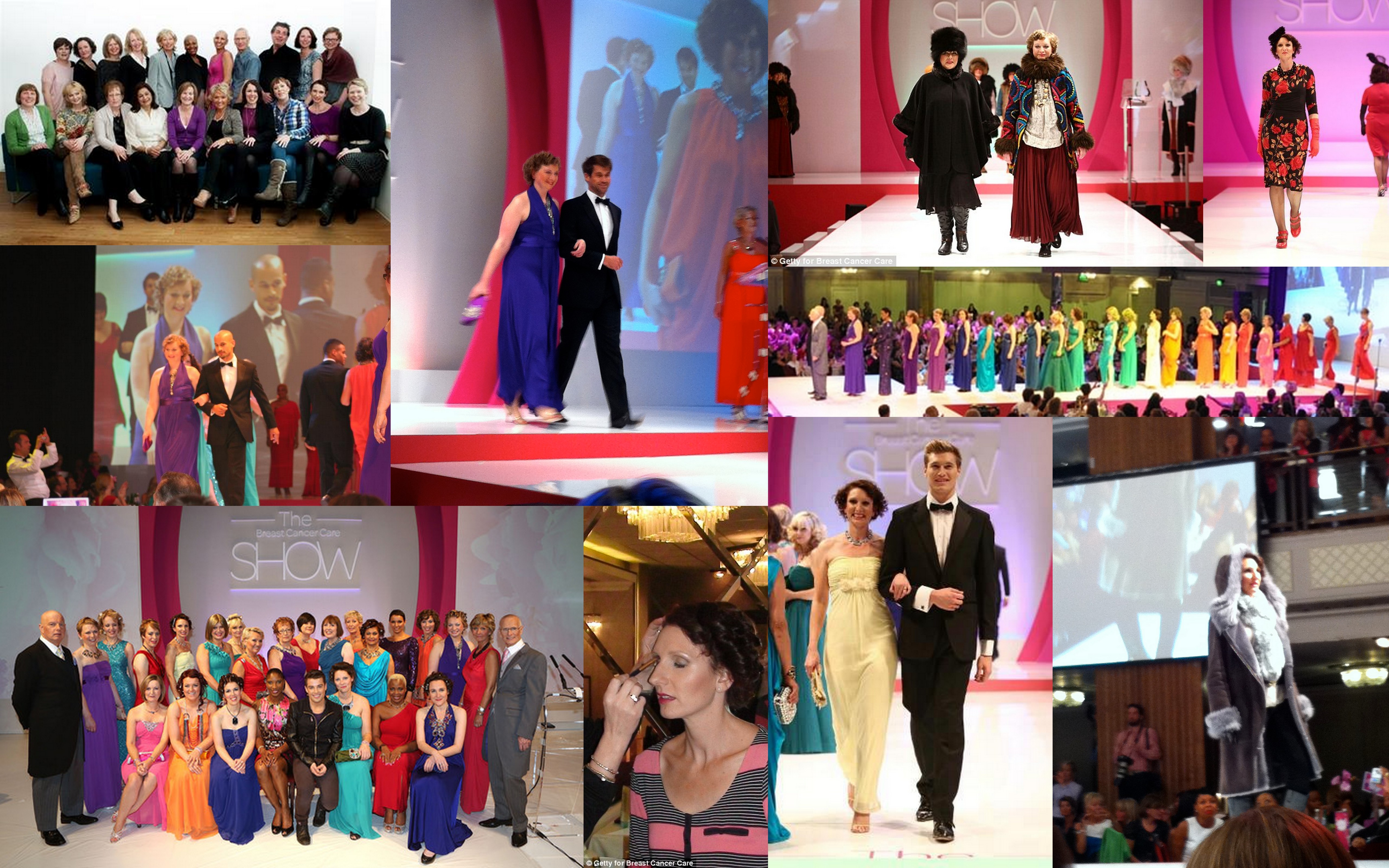
Today was Breast Cancer Care’s London flagship event.  Each year they host a fashion show in London and other locations around the country.  There are a couple of aims of this fashion show – the most obvious perhaps is fundraising.  The less obvious are the confidence that ladies and gentleman with breast cancer get from seeing the models on the catwalk.  All the models have been diagnosed with breast cancer.  Many of them have had mastectomies, some with reconstruction. For many of these ladies and gentleman to walk tall down the runway looking so splendid is such a huge achievement and a great hazzah to the cancer they’ve previously been diagnosed with.

IMG_4061

This year my friend, Fiona Macrae who set up an insurance company, Insurance With, which offers travel insurance to people with long term conditions after her own diagnosis, and I wanted to go along and support two of our friends, Kelly and Issy in their debut catwalk!

We had tickets to the afternoon event and frocked up accordingly!  Our table was right by the runway so we had the perfect spot to see the models.  What an incredible inspiration to see Kelly, Issy and all the other models walk proudly and strutt their stuff.  Amazing.

Breast Cancer Care Fashion Show London 2012I’m so very proud of Kelly, Issy and all the models for taking part in the Show.  An incredible afternoon, wonderful afternoon tea and bubbles, fabulous auction items and best of all, such inspirational ladies and gentlemen models.

Well done Breast Cancer Care and thank you.  Roll on next year!

All change

In my posting in July I mentioned that I had asked my wonderful consultant about referring me to The Royal Marsden hospital’s sarcoma team for my follow up surveillance.

At 2pm today I had my first consultation appointment with the sarcoma team at The Royal Marsden. The waiting room was absolutely packed and I waited nervously for my name to be called.

I was concerned that they wouldn’t take my case on but that I had sort of ‘discharged myself’ from my previous consultant’s care. I was worried that they would perhaps think I was over anxious about follow up scans or perhaps that they would recommend I stay with my existing hospital. I was concerned that although they are a centre of excellence for sarcoma in the UK, that the person I was assigned wouldn’t know about Phyllodes – after all there are over 70 different sub-types of sarcoma.

So despite my waiting only a very short time, I was more than a little anxious. Had I made the right decision in asking my lovely consultant to refer me? Would he take me back if I hadn’t? What would I do if they didn’t take me on as a patient? What would I do if they changed my follow up surveillance schedule in a way that worried me more?

Phew, I’ve been called.

I first met with the nurse who explained what would happen and who I would be seeing. She then left me in the little consulting room whilst I waited for the Registrar. Seemed like ages and once again all my anxieties were kicking in. The Registrar then arrived and ran through my medical history and also asked about my siblings, parents and grandparents’ medical history. She also told me that my case had been discussed at today’s MDT (multi-disciplinary team) meeting in detail.

And then, she asked the question that I was most worried about answering… why was I here and what did I want from the Royal Marsden? So I told her why (see previous post) but I also told her about our Facebook “Phyllodes Support Group” and what I’ve been doing with Living Beyond Diagnosis. She asked a few more questions and then said she’d return with the consultant.

I was then left in the little consulting room on my own… and yes the little voice in my head was once again telling me that they wouldn’t have me as a patient etc etc.

I was terrifically grateful when the door opened once more and the Registrar came back into the room accompanied by a consultant. He introduced himself and we spoke briefly about me, my medical history, why I requested the referral and my previous care.

He then asked more about the Phyllodes Support Group and was terrifically impressed with the number of members, the information and experience sharing, the documents and reference papers that have been collated and also the polls and data that we were collecting and sharing within the group. He also said that he felt that should we, as a group, wish for some assistance or input for the group, then I should just ask and he would try to facilitate this for us.

I was also able to tell him about the report that is currently being finalised containing a section about Phyllodes from the contact I have met at two Cancer data conferences in the UK. He would love to see a copy of this when published.

It goes without saying that I will be looking at what input will be useful from RMH and also what we can provide to RMH from the group… certainly it would be fabulous to have a medical facility, who specialises in sarcoma, to take an active interest in the group members and their health. Watch this space!

We then returned to my health and monitoring for recurrence or metastases from the excised malignant phyllodes tumours. We agreed that my previous consultant had done an excellent surgical job in removing both of the tumours and then ensuring that sufficient clear margins were obtained. He agreed with the advice that I should not have any adjuvant radiotherapy at this time. He also agreed that the screening regimen implemented in my previous hospital was the best to quickly identify any local recurrence (together with my own personal checks). We then spoke about any requirements for any additional screening/surveillance for possible metastases, particularly with regard to the malignancy and mitoses of the excised tumours. He suggested and has requested that I have a 6-monthly chest x-ray at the same time as my existing scans ie annual mammogram with intervening 6 monthly ultrasound of both breasts.  This chest x-ray will be looking for any traces of naughty cells in my lungs.

I left RMH this afternoon feeling that I had made the right decision to ask to be referred. Perhaps I should have made the request at an earlier stage and saved myself some levels of anxiety along the way.  But I also know that I couldn’t have managed to do that before now.

I am, of course, sorry that I won’t be hearing my, now previous, lovely consultant refer to me as ‘Miss Lumpy Bumpy’ again but I’m so very grateful for his care up until now and can only say that whoever the patient is who gets my slot on his busy schedule is a very very lucky lady.  Perhaps I shall pop in with a box of biscuits for him and the team when I’m next passing my old hospital.

So that’s it. Next scans/checks are in January. Between now and then I’ve got a number of cancer conferences to attend, not least the annual Sarcoma conference which this year is in Italy. They were asking for patient advocate attendees to speak at the conference and I’ve put my name forward.  I would love the opportunity to tell them all about our Phyllodes Support Group and also about Phyllodes itself, in the hope that perhaps more medics and researchers will be more aware and knowledgeable.

Pilot Study/Clinical Trial – your input please

As many of you know I volunteer my time for a number of health/cancer related organisations and projects. One of these relates to clinical trials, pilots and medical research.

Today I was invited to attend a meeting relating to pilot research project for a gynaecological cancer. For confidentiality reasons I can’t go into too much detail about the pilot so forgive the slightly ambiguous detail.

Previous papers and an outline of the project had been sent to me by email for review and comment prior to the meeting. However today’s meeting was with one a lead clinician and a surgeon to understand in more depth the pilot, the background and also their previous findings.

My input, together with a couple of other volunteers, will then be to review the documentation further, advise on the patient information aspect of the documentation and also to voice any concerns that we may have about the pilot, improvements or other care considerations that we believe necessary to include, as if we are patients ourselves. Once this round of paperwork is complete the project will then be presented for grant funding.

If funding is found, this pilot will, if successful, lead to a full European clinical trial, which again, will require further funding to be obtained.

The process is lengthy and time consuming and is driven by otherwise already busy clinicians. However to see their passion at getting this pilot off the ground and hearing about the study itself and the ‘prospective’ benefits to future patients diagnosed with this cancer is incredible, inspiring and has to be admired.

The study aims to show that by having these additional and specific scans, they are able to identify potential spread, metastases or recurrence of this cancer at a much earlier and specific stage, as well as determine if there are specific nodes that need removal (ie without the need to remove unnecessary nodes, as is sometimes undertaken now). The team are aiming to show that with this ‘small’ additional intervention, that advanced cancer can be avoided or reduced and mortality rates decreased substantially.

I was fascinated seeing the early details for presentation and further understanding the additional risks (very low) to a participant taking part. Gosh if they’re right and can prove it in the full blown trial, it will make huge headway in the reduction of advanced cancer and death for this particular type of cancer but also prospectively for other cancer types that behave in a similar way.

Why am I telling you this little bit? Well I figured that many of the readers of this blog do so because they themselves have or know someone diagnosed with cancer or another long term condition.

I’m after your opinions/comments please.

What would be the important things you’d like to know in the patient information presented to you, to encourage you to participate in a study or clinical trial?

As a study participant in this pilot, you would be asked to receive further scans (with tracer dye) and an additional couple of hours added to your ‘regular’ hospital checkup programme.

Who would you like to speak to about the trial, should it be offered to you?

How much information would you like to receive? And in what format?

Is it important to you to know the outcome of the study/trial (if possible)?

Cheltenham

I’ve only been to Cheltenham a few times in my life but each time it seems to grow on me a little more.  I think it’s a pretty well kept secret, even from us Brits, as to it’s beauty, architecture, lifestyle and many events and celebrations.

Wikipedia lists it as – Cheltenham (play /ˈɛltnəm/), also known as Cheltenham Spa, is a large spa town and borough in Gloucestershire, England, located on the edge of the Cotswolds. It is the home of the flagship race of British steeplechase horse racing, the Gold Cup, the main event of the Cheltenham Festival held every March. The town hosts several festivals of culture often featuring nationally and internationally famous contributors and attendees, including Cheltenham Literature Festival, Cheltenham Jazz Festival, Cheltenham Science Festival and Cheltenham Music Festival.[1]

Gosh doesn’t that all sound so sensible?

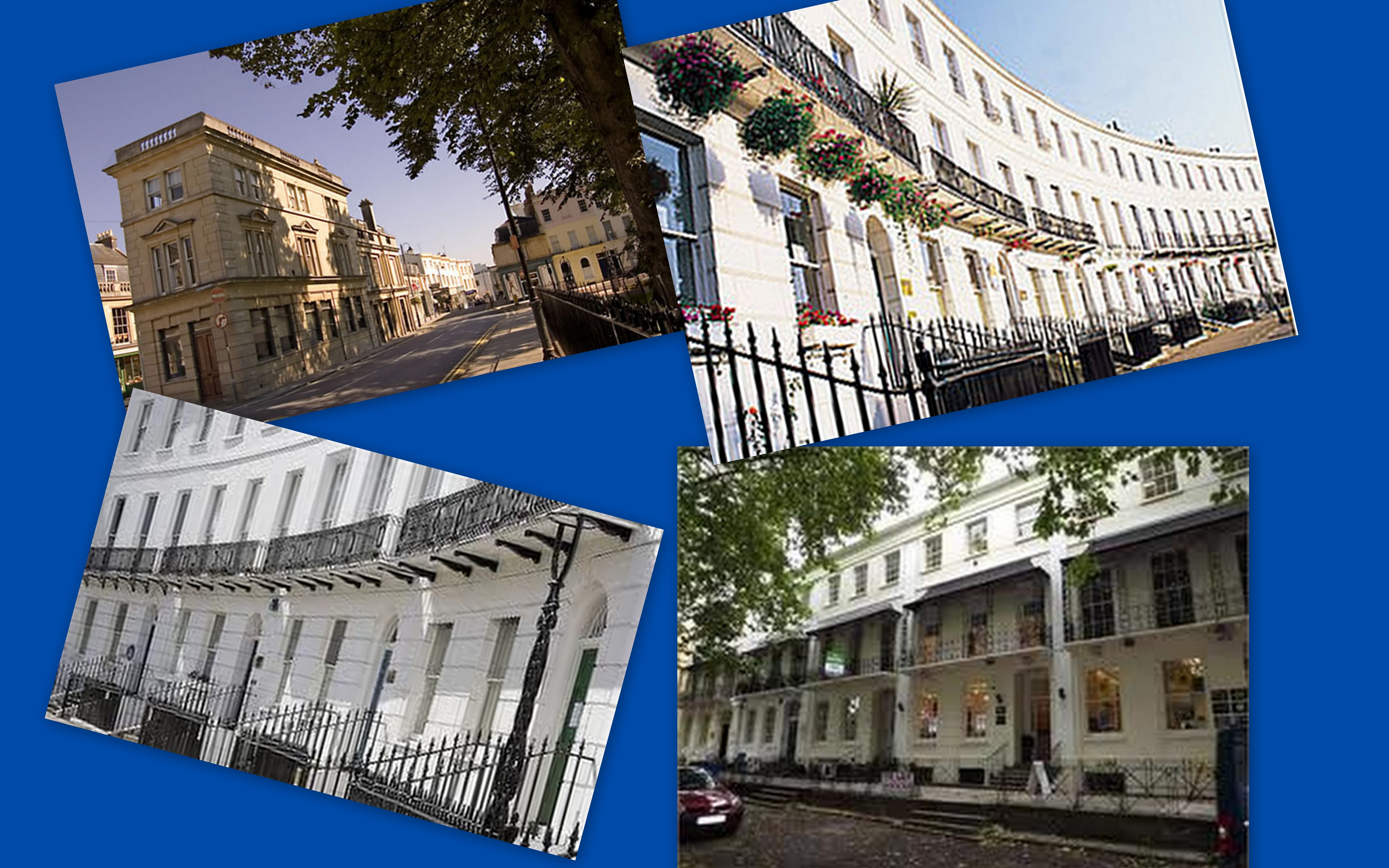
Even the architecture looks grown up!

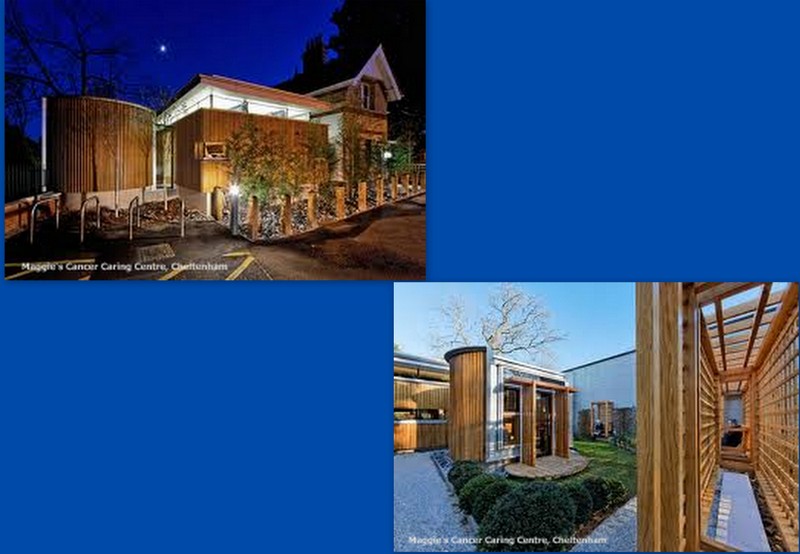
There’s even a Maggie’s Cancer Caring Centre in Cheltenham… and that too looks like a cool building.

Hehehe those of you who know me well know that I’m a fan of architecture.  You also know that when I’m visiting new towns or cities I often end up with black eyes… no, not because I’m out running (hahaha), but because I’ve got my nose in the air looking up and come a-cropper with uneven pave stones, signposts or bollards!

So despite my tongue in cheek comments, I’m quite at home in Cheltenham looking at the architecture, the town design, sculptures and garden landscaping.  There’s lots of space, lots of history and lots of well maintained areas that must make the people of Cheltenham very proud to live there.

I think I’ve got my eye on the 2013 Jazz Festival… hmmm May next year!  Who’s joining me?

Truly if you’re in the UK and want somewhere to explore, do think about visiting Cheltenham.

However for all the ‘cultural’ comments above I have to ‘fess that there wasn’t a great deal of culture surrounding this weekend’s visit… but then again there wasn’t really meant to be either!

PJ who used to be a neighbour of ours in Sydney is currently in the UK visiting friends and family.  He isn’t from Cheltenham, his family are in Essex.  However some years ago, he stayed with friends in Cheltenham for a weekend and by the end of the weekend, had a job and then stayed there for 3 years, in their basement!… I can so understand how this might happen too!  Cheltenham does have that draw for me too!

So this weekend I discovered a new part of Cheltenham.  One that doesn’t appear in Wikipedia.  The 40-somethings that are still out to party!  I suspect however that in ‘real life’ there may be less going out and partying and more responsibility and childcare.  But it’s great to see that there’s still a  good group of PJ’s friends who get together when he’s in the UK and let (what remains of) their hair down!

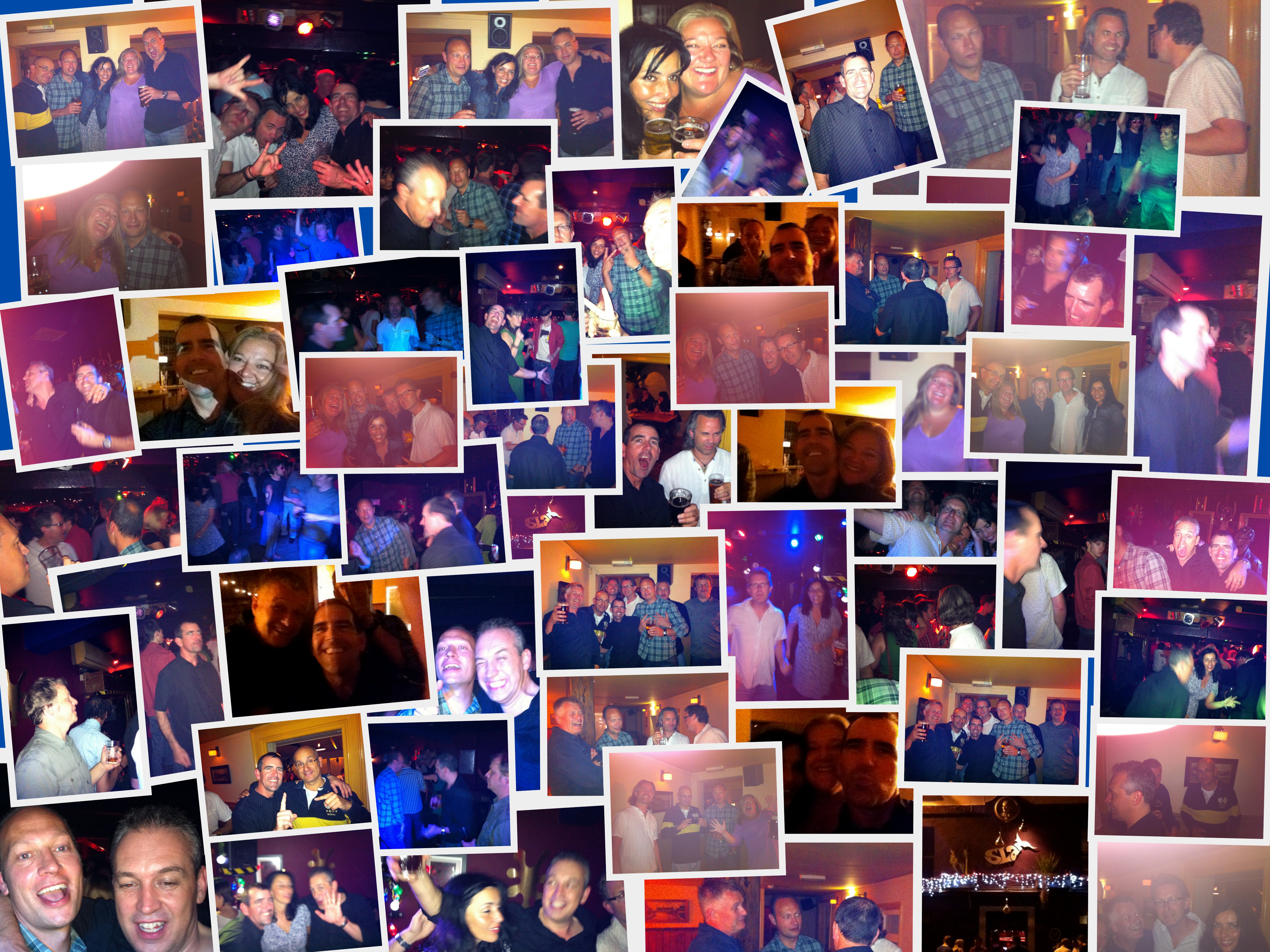
I think I’ll let the photos explain the evening… err except to say bourbon and coke and still in a club at 3am!

Loved it.  Fabulous evening.  Great bunch of people.  Lots of laughter.  Beautiful town.  Hmmm maybe I should move to Cheltenham?

Sssssh secret mission

OK so I can’t tell you where I’ve been but I will share with you what I’ve been doing this evening.

I’ve been undercover with Silent Customer mystery dining.  Obviously I can tell you no more about where I was or to describe the location and what it was like (well except to say that they’ll be getting a good review on most elements filed!)….but suffice it to say that we had a great evening.

Importantly, I was also able to meet up with a friend who I have met through twitter and ‘cancerland’ but whom actually lives only a mile or so from where I was in 2009, when I started this blog site!  Funny world and I’m quite sure that if we dug down a little we’d find friends in common as well as the many places that already are.

Tonight was a celebration for us both… a celebration of life and lives past and present.  It’s one of the hazards of ‘living in cancerland’ that you get to be great friends with people who are diagnosed with cancer and leave this world too soon.  Or just sometimes you go through a patch when it seems that you’re surrounded by people who are diagnosed and pass away.  But what we must always remember is that each of those passing are special and deserve a moment of reflection and love, together with a glass of bubbles raised in their honour.

Tonight we were able to talk freely about some things that have happened over the past few months.  We spoke of the solutions to, in some instances, moving on and moving past and also stopping and dwelling in others.  We talked of time for ourselves and we talked about times to give and share.  We talked of volunteering and challenges.  We talked about the NHS, work, projects and planning.  We talked of changing the world, if just by a little bit at a time.

Truly a lovely evening with a wonderful and inspirational new friend… and the champagne, three courses, coffee and wine only cost us each a tenner after I’m reimbursed for filing the review/report to Silent Customer!

Sarcoma Awareness Week

This week is Sarcoma Awareness Week.  I wonder if you knew that?  The problem with being a rare cancer type is that even if you have an Awareness Week, you’re only a small voice in the big noise of life.  Even if you are able to get others to share the awareness and retweet or repost about it in their own social networking, how many people actually read it or look at links?  However I, for one, have tried to share the word.  I’ve taken Sarcoma UK leaflets into hospitals and GP surgeries.  I’ve even taken to leaving a few on seats of trains or tubes or buses – and loved it when people pick it up and read it to fill a few minutes of their journey.  You never know but what they read may well help someone else or themselves understand a sarcoma diagnosis.

So, I’m going to give you just a few facts about Sarcoma (extracted from Sarcoma UK’s website www.sarcoma.org.uk) and I’d really really appreciate it if you could tell someone something about Sarcoma.

  • Sarcomas are rare cancers that develop in the supporting or connective tissues of the body such as muscle, bone, nerves, cartilage, blood vessels and fat.
  • There are around 3,200 new cases of sarcoma diagnosed each year in the UK.
  • Sarcomas account for about 11% of childhood cancers.
  • Sarcomas account for about 14% of cancers in teenagers.
  • Most sarcomas (approx 55%) affect the limbs, most frequently the leg.  About 15% affect the head and neck area or are found externally on the trunk, while the remainder will be found internally in the retroperitoneum (abdominal area).
  • There are around 70 different sub-types of sarcoma within these broad categories.  These sub-types are determined by the tissue of origin (the tissue in the body where the tumour originally formed), genetic characteristics or by other molecular analysis undertaken by expert pathologists.

Types of Sarcoma

  • Sarcomas fall into three broad categories:
  • Soft tissue cancers
  • Primary bone cancers
  • Gastro-intestinal stromal tumours (a type of soft tissue found in the stomach and intestines commonly known as GIST)

Causes of Sarcoma

The causes of most sarcomas are unknown.

Treatment

Despite the many different sub-types of sarcoma, the general pattern of treatment is similar.

Surgery is commonly viewed as the best option for a ‘cure’.  Chemotherapy will usually be used with bone sarcomas before and after surgery, although it is less often used with soft tissue sarcoma. The case for chemotherapy following surgery is uncertain with soft tissue sarcoma but may be suggested with sub-types known to respond well to chemotherapy.

There are circumstances when radiotherapy offers benefits, usually after surgery but occasionally at other times too.

The treatment plan developed by your doctors will be specific for you. You may meet other patients with a similar diagnosis but who are having different treatment but this is usual and nothing to be worried about.

Surgery should be undertaken under the supervision of a sarcoma specialist multi-disciplinary team, even when the surgeon is not a regular member of that team.

There’s a really informative video created by Papercut Pictures called “All in it Together – Living with Sarcoma” from which you will a small selection of different ages, diagnoses and stories.  Do take a minute to watch http://vimeo.com/papercutpictures/sarcomauk


Phyllodes is a soft tissue sarcoma…


Tonight found me at our London Sarcoma Support Group’s party to celebrate Sarcoma Awareness Week held at Maggie’s Cancer Caring Centre in Fulham, London.  An amazing vital group of patients, carers and friends.  The volume was high and the laughter loud.  There was also tears and supportive hugs.  It was lovely to meet some of the group members’ husbands, wives, children, partners who were also there supporting them.

Sadly one of the group had lost his wife only a few weeks ago and I hope found comfort in our company.  Another has just found out his cancer has returned and he is to start yet another course of chemotherapy to keep it in check.  BUT whatever was happening with each of us in attendance you knew that there was a strong bond of support there and a lot of giggling and laughter.  Despite my not having been to several of the recent monthly meetings due to a number of reasons, I was touched that so many of the group were pleased to see me and remembered what I had been diagnosed with, what I was off doing shortly after we last met.

You see I’m not a ‘support group’ sort of a person.  For those of you that know me well, you’ll know that despite my putting this blog up in the public domain, I’m actually fairly private about a lot.  For some reason, for me, I find it useful to be able to use this blog to be open!  I also know that my family can read it and know what’s going on but don’t need to speak about it or mention it – we’re not good at talking!

All that said, I enjoy attending the sarcoma support group… but I perhaps sometimes appear to the group as the one ‘who’s sorted’ and is ‘supporting’ rather than ‘needing support’!

Precious people

You know from previous posts that I’ve a dear friend going through chemo at the moment.  Some days are tougher than others and some days are just plain exhausting for her.  However true to her enormous courage and strength she tries to do so much and mostly for others.

 Yesterday she was at the House of Commons with Target Ovarian charity for a reception with guest MPs, Lords and Trustees together with doctors and researchers who are working to improve the lives of women diagnosed with ovarian cancer.  It is also an opportunity to speak with politicians and other guests about this rare cancer and raise awareness.  Particularly poignant as last year Letitia attended this event with Kerry, who sadly is no longer with us.

Today however was a treat day.  She was attending the new cancer centre at UCLH for a session with the team about meditation.  There has been over the years quite a bit written about meditation helping people cope with long term illnesses and, of course, the reduction of stress.  Recently there has been a few articles written about the definate benefit for cancer patients and indeed Penn University in the US have a course of mindful meditation specifically for their patients (see my notes from the workshop at the YSC Atlanta Conference in 2010).

We had arranged to meet for lunch, headed into Covent Garden and found ourselves at Brasserie Blanc.  OK so it was a little deliciously naughty but hey, we deserve it!

We were tucked neatly into an alcove which looked into the middle of Covent Garden but from where we could dine and chat without being overheard or interrupted.  It really was a super spot and it was only at 3.45pm that we realised the time!

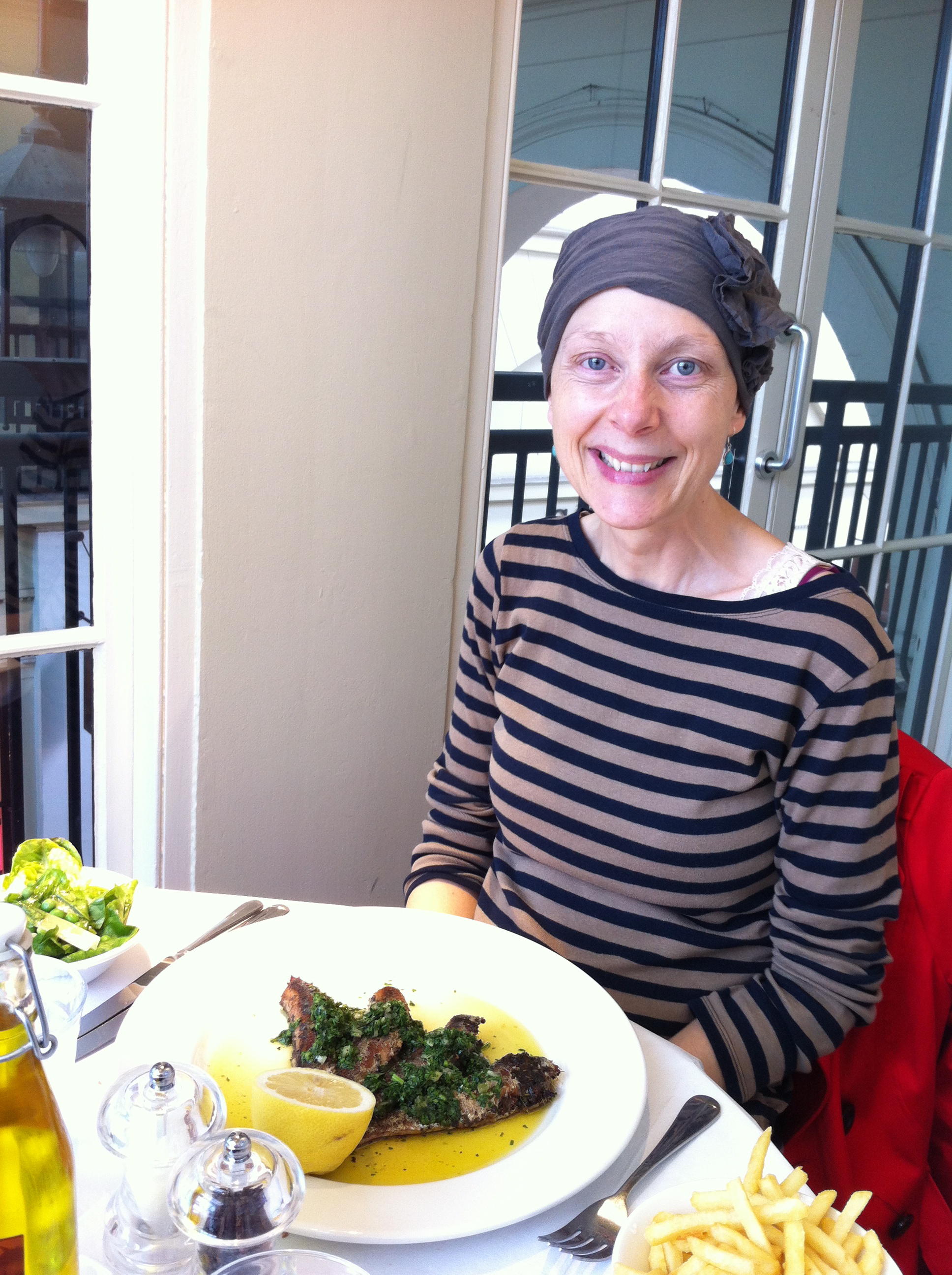
And doesn’t Tish look fantastic.