Afternoon tea at Claridges

Don’t you just love little surprises? Particularly when they’re something lovely and it’s a thank you to you for something that you’d have done no matter what.

You’ve probably already worked out that if I believe in someone or something, I’ll tell you about it. I’ll certainly recommend them/it if asked. I am however a bit picky too and my standards are (mostly) pretty high.

So it’ll come as no surprise that when I met Fiona Macrae during my search for services and people to participate in the first Living Beyond Diagnosis event, I had found a something/someone worth recommending. Fiona was diagnosed with breast cancer and despite working in insurance in London, was unable to find travel insurance for a well needed short break between treatment and surgery.

Because of her own experiences and following her own treatment and surgery, she created the business InsuranceWith, providing travel insurance for people with pre-existing medical conditions.

If you’ve been diagnosed with a long term condition or know someone who has, you will understand the importance of holidays, visiting friends and family and time away from the inevitable medical appointments, surgery and treatment. Something that you take for granted is to be able to travel somewhere and relax… so imagine what it feels like when your insurance is revoked, new insurers tell you that your premiums are now in the thousands of pounds or that you simply are uninsurable. Companies like InsuranceWith review each case on it’s own merits. They have medical underwriters who understand risk.

And for the most part, they have been able to offer travel insurance at reasonable rates to friends and acquaintances I’ve referred who have been able to enjoy their holidays, trips of a lifetime or family visits without worry.

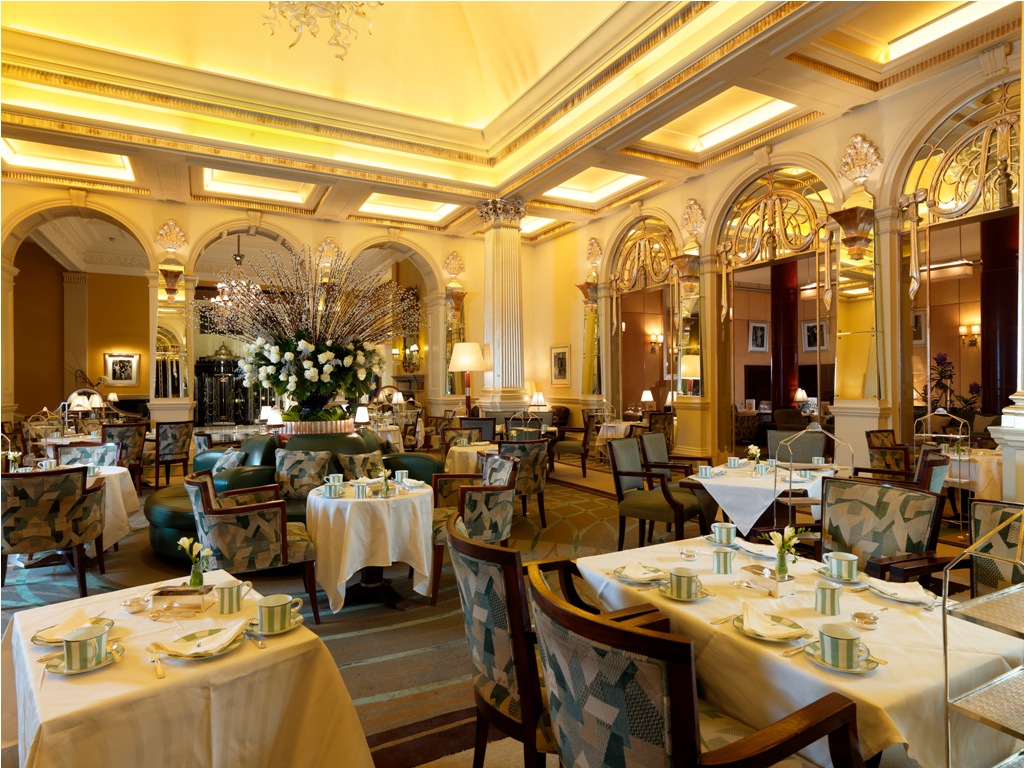
Today, Fiona very sweetly took myself and another lady, Kelly, to Claridges to say thank you for supporting her.  Really an unnecessary thank you and in fact it should be in reverse but… I do love afternoon tea… I do love bubbles (just in case you hadn’t noticed)… and I do love the grandeur of deliciously fabulous places such as Claridges.

What a treat…. Thank you Fiona.


NW London User Partnership Group – NW London Cancer Network

Tonight’s meeting of the User Partnership was, as usual, enlightening and thought provoking.

The main agenda item was in relation to the new NHS structure, how it will affect cancer services in NW London and what the ‘London Cancer Alliance’ really is!

The London Cancer Alliance (LCA) is a new collaborative partnership of 17 acute provider trusts across NW, SW & SE London. Its aim is to improve cancer patients’ experience, outcomes and quality of life though the delivery of excellence in clinical care, research, innovation and education; ensure equitable access to integrated pathways across primary, secondary, tertiary, community and third sectors; promote prevention and early detection of cancer by influencing public health messages.

A presentation was given in regards to the new structure proposed at the LCA. We saw the list of the 17 partner trusts that have now signed up and committed to the LCA and proposed timescales for implementation and appointment.

There are many reasons for the LCA, not least in order to set standards, propose and regular accreditations for providers of cancer services throughout the LCA, co-ordinate and share cancer research and exchanging information and best practice.

In a perfect world however neighbouring areas would always have shared, set standards, created and managed best practice but we know that this didn’t always happen and there has often been an element of competition when there should have been collaboration.

The new structure of the LCA should be more patient focussed. Demonstrate via metrics that there are improved patient experience and outcomes in London. To support neighbouring providers, hospitals and organisations rather than relish in their failure!

So will it work? How long will it take? Will it be implemented in this format or re-shaped again?

It is anticipated that it will be fully delivered in its current format within 3 years. Will it work or will it need re-shaping? Yes it’ll probably morph a little… but hopefully to include new innovations or progress that will make it work better. So will it work? I hope so. Wouldn’t it be a great place if within London Cancer Alliance area, there was patient-centric collaborative care?

One final point with regard to the new NHS structure including the LCA, WE, patient advocates or people who have been affected by cancer (directly or indirectly, as patients, carers, friends, colleagues or relatives) must also be involved in the creation, moulding and upholding of any new structure.  At all stages we should have representative to ensure that the discussions remain patient-focussed rather than budget or even ego led!

Also discussed was how we, patient advocates and members of the user group, could assist in better awareness of symptoms of cancer. The age old argument was made that 20% of cancer deaths could be prevented IF the symptoms were recognised earlier and that often people will return a number of times to a GP before being referred. We know this to be absolutely true and there are various projects underway to help educate GPs, for example:

GP Awareness campaign from Sarcoma UK
Macmillan DVD – Care in Primary Care – a toolkit, Macmillan Learn Zone
NHS Cancer Screening Programme information packs
etc

Is there some way that you could get involved?  Have you been affected by cancer?  If so, could you speak at your GP practice, hospital, nurse training etc?

However WE must also educate the general public. If we know that cervical screening saves lives, why do some people not turn up for screening or have never been screened? The same applies for mammograms and the bowel cancer screening programme.

The point was also made that despite it being increasingly difficult (in some practices) to get a GP appointment when you need one.  Comment was made about the sign that you see in some GP practices that ‘warns’ patients that they can only bring one issue to the GP per appointment – does this stop some patients from mentioning more than one symptom? Surely the education must also extend to educating the patients in how to get the most out of their appointment time.

We need to utilise the GP appointment time more efficiently. Make a list of symptoms. Note down the time of day or physical activity at the time of the symptoms. Take the list with you in a readable format and, if you’re uneasy about discussing them, give the list to the GP.  Take a notebook and pen with you to write down any answers or observations that your GP may make.  If there are any familial concerns about a symptom such a family member being diagnosed, remember to mention it too!

The Daily Mail published an article about the 7 vital steps to making the most of a GP appointment.  Click here to read

My final word though – if you’ve a friend or relative who’s concerned about going to the GP or whom you think may have concerns asking questions, stating symptoms etc, why not go with them?

Sssssh secret mission

OK so I can’t tell you where I’ve been but I will share with you what I’ve been doing this evening.

I’ve been undercover with Silent Customer mystery dining.  Obviously I can tell you no more about where I was or to describe the location and what it was like (well except to say that they’ll be getting a good review on most elements filed!)….but suffice it to say that we had a great evening.

Importantly, I was also able to meet up with a friend who I have met through twitter and ‘cancerland’ but whom actually lives only a mile or so from where I was in 2009, when I started this blog site!  Funny world and I’m quite sure that if we dug down a little we’d find friends in common as well as the many places that already are.

Tonight was a celebration for us both… a celebration of life and lives past and present.  It’s one of the hazards of ‘living in cancerland’ that you get to be great friends with people who are diagnosed with cancer and leave this world too soon.  Or just sometimes you go through a patch when it seems that you’re surrounded by people who are diagnosed and pass away.  But what we must always remember is that each of those passing are special and deserve a moment of reflection and love, together with a glass of bubbles raised in their honour.

Tonight we were able to talk freely about some things that have happened over the past few months.  We spoke of the solutions to, in some instances, moving on and moving past and also stopping and dwelling in others.  We talked of time for ourselves and we talked about times to give and share.  We talked of volunteering and challenges.  We talked about the NHS, work, projects and planning.  We talked of changing the world, if just by a little bit at a time.

Truly a lovely evening with a wonderful and inspirational new friend… and the champagne, three courses, coffee and wine only cost us each a tenner after I’m reimbursed for filing the review/report to Silent Customer!

PPI Clinical Trial Group

This evening saw a number of the PPI group meeting at Imperial College’s new research site in Hammersmith for the first public IMANOVA tour.  We were taken round the Imaging Centre and see and understand what equipment and research is undertaken there.  The site used to be a GSK Research facility but is now a joint collaboration between a number of research organisations.  This means that the equipment is essentially being shared and where expensive equipment may previously have only been available to the one pharmaceutical organisation for use, is now being used by many.  Just one of the machines we looked at tonight was over £1m to purchase alone!

We looked at the how the images were viewed, the accuracy of each of the images (particularly with the technology available whereby they were able to lay images over eachother from different image machines).  How each can detect tumours, markers and glucose (amongst others) with extraordinary accuracy.  There were still false positives but it seemed that the technicians and technology were proving that managing these false positives was getting easier.

Following the tour we were taken through to the ICTEM building where some clinicians and researchers presented to us on “Imaging Research”, “Breast Research”, “Lung and Trophoblastic Research” and “Prostate Research”.

Always fascinating to hear what clinicians and researchers are carrying out and also to hear of any advancements or breakthroughs that are occurring.  Certainly a few items for thought.

I am hoping that the group will be given the opportunity to become further involved with the research.  Perhaps to assist with the review of paperwork, input into the research and, if available, to be part of a recruitment drive for volunteers in latter phase clinical trials.

I shall keep you posted…

Routemaster Buses and Route 38

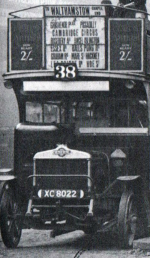
Did you know that in addition to all the other lovely things we’re celebrating in the UK in 2012 eg the Queen’s Jubilee and the Olympics, we are also celebrating 100 years of the bus route 38 in little old London town.

Image

To celebrate the centenary of Route 38, Arriva London have partnered with Maggie’s Cancer Caring Centres in a project “Walk the 38”.  More information at www.maggiescentres.org/walkthe38 or www.arrivalondon.com/maggies.

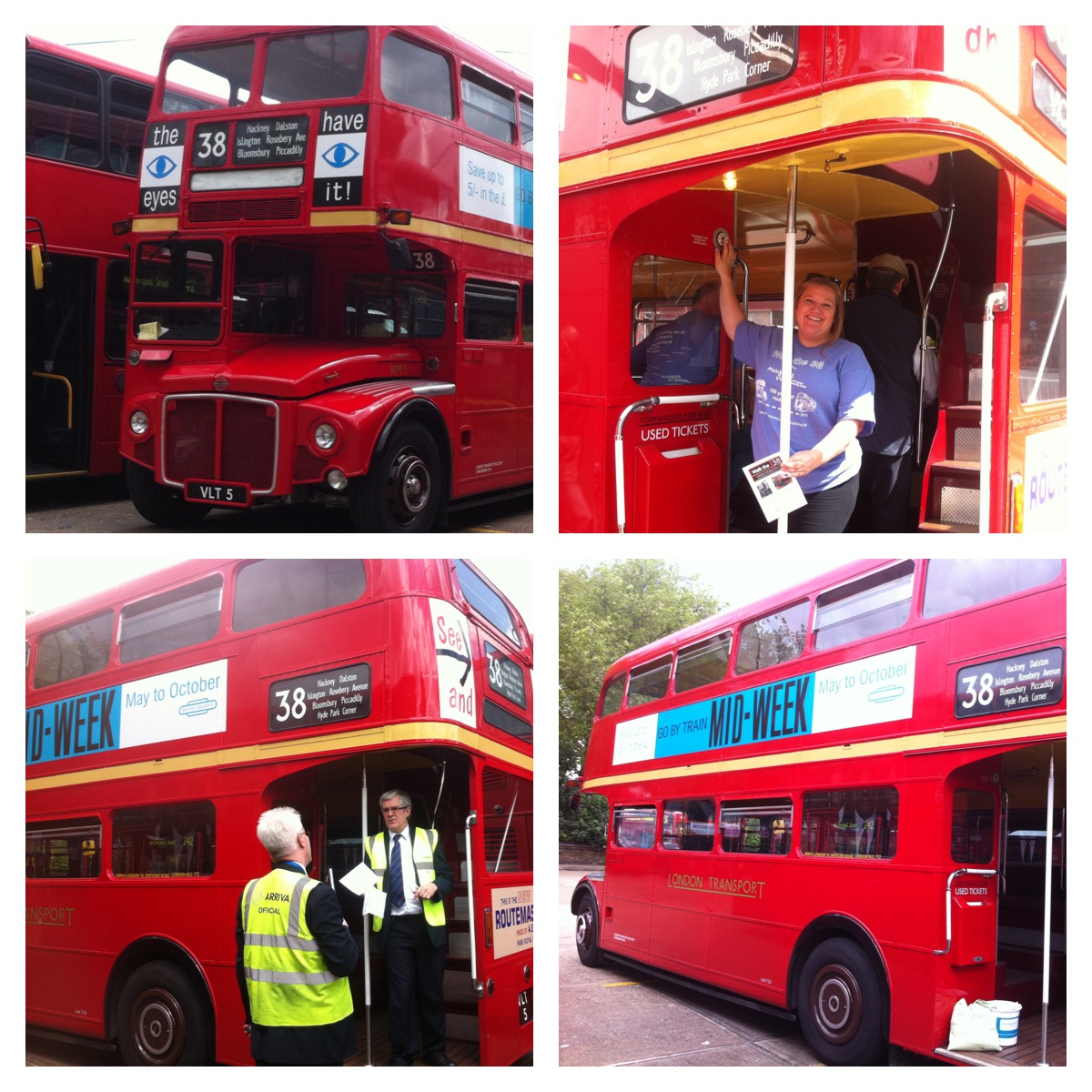
Today however I had the absolute privilege and delight to be volunteering for Maggies on an old-fashioned Routemaster bus.  Arriva kindly waived the usual bus fare in lieu of us collection donations for Maggie’s and at the same time enabling us to speak to the passengers about the Walk the 38 initiative and also about the amazing work that Maggie’s Cancer Caring Centres provide to anyone affected by cancer.

The fundraising bucket was mighty heavy when I handed over my shift to the next volunteer and I know that every penny will be put to tremendous use for people like me who have and continue to use Maggies’ Cancer Centres throughout the world.

As well as being able to give back to Maggies a tincy little bit by volunteering for them today, it really didn’t feel like a chore at all.  It was blinking a-mazing!   I love love loved being on a Routemaster bus again, able to swing around the pole at the back of the bus, hear the sound of the engine and the dingdong of the bell as the conductor lets the driver know when to move off or stop at a bus stop.  I heard many many stories from bus enthusiasts about why they were there going back and forth between Clapton and Victoria on these special buses laid on for today.  But also to listen to the sharp intakes of breath that was accompanied by the broadest of smiles from people standing on the pavements or stopped at buses as they realise a real Routemaster bus was back on the roads.  We were asked many times if they were coming back into service but sadly they’re not.  They were iconic in London town and certainly a part of my childhood memories of coming into London and starting work in London.

Image

The drivers and conductors were also volunteers today from Arriva.  They had once worked on the Routemaster buses and loved them.  I heard their fond memories of incidents and laughs they’d had.  Apparently as Routemasters were faded out in London the conductors one by one left the job but not before they applied to work on Route 38.  Route 38 was the final one to have Routemasters and the day after the final Routemaster was put into retirement there was a tearful party for all the conductors and drivers.  Today however we had many of these men and women giving up their time just so that they could drive or conduct one more time.  As we’d pass another Routemaster on the road there would be a welcome wave and a shout across to an ex-colleague with a grin that could barely fit the face and eyes that were lit with pure excitement.

I think my abiding memory of today will be a simple one though.  One chap stood at a T-junction.  As we turned the corner he looked up, he looked again, his jaw dropped and only slightly giving way to a smile he craned his neck out to watch us as far as he could and we, those of us who were captivated by him watching us, could see a million memories flood across his face.

New – Walk38 video

NCIN (National Cancer Intelligence Network) – Cancer Outcomes Conference (Day 2)

Our second day of the conference “Supporting research” was introduced by David Ardron, Lay member, National Cancer Intelligence Network Steering Group.

David is passionate about advocacy and patient involvement at all levels.  It’s always a joy to be around David as he’s very good at inspiring you to do more, to get involved, to have a voice, to listen and to talk.

John Parkinson, Director, Clinical Practice Research Datalink
Clinical Practice Research Datalink – presentation

John reiterated the need for quality data “Extremely important that we monitor the quality of data”.  I loved that John informed us that the worst UK data is still leagues ahead of much of the global data, including the USA.

CPRD is looking at the quality of the data, setting and monitoring standards.  Looking at randomised trials with regard to the data and every day improving it and the standards for it’s retrieval and inclusion.  Currently they have 52m signed up in England and are adding another 12m for Scotland, Wales and Northern Ireland.

The data is accessible, searchable, cross-referenced and linked to many systems.  Thereby allowing the users to really determine patterns, information, requirements, costs etc associated with the data.  It’s aim is so that utilising this data becomes easier so do the results to predict AND address trends or increases in disease but also to be able to report on where something didn’t go as it should or can be improved upon.

Fascinating and I shall be watching the news with regard to CPRD.

Kerina Jones, Senior Research Fellow, Health Information Research Unit (HIRU)
The Secure Anonymised Information Linkage (SAIL) system: challenges and opportunities in health data linkage – presentation

Kerina’s presentation of the SAIL system once again highlighted many of the challenges idenitfied by others.  THey are however tackling many of them head on with this system.  Certainly worth watching for other integrated systems, how to integrate and why integrated data is required if we are to make headway in healthcare.

Kerina also showed us the MS Register which is being used to understand more about ‘living with MS in the UK’ and trying to make sense of MS.  As you know Mum was diagnosed with MS and although she lived a long and active life for many many years with the illness, it ended her life early.  She sought answers to why, what if, how since diagnosis and importantly questions such as how do I lessen the effects, deal with the side affects or get by day to day.  Perhaps this MS Register will lead others to the answers that Mum so desperately sought or perhaps the people currently providing answers will help a new generation to manage life with MS.  If you know someone diagnosed with MS, perhaps they would like to register and become involved?

Cathie Sudlow, Chief Scientist, UK Biobank
Research opportunities in UK Biobankpresentation

Are you part of the Biobank database?  I am.  So I found it really fascinating to hear more about Biobank from the aspect of how the data is being used, rather than the questions that I see and reply to.

It was a huge project to implement with over 500,000 UK adults taking part.  Questionnaire to be completed, physical health tests to take, blood and spit to be given and analysed and then the follow up processes.  As a participant I found the inclusion process very easy to do and well organised.

Cathie showed pictures of where samples are stored and also how they may be utilised for testing.  Her slides in the presentation and the information on the site itself show how the data collated and utilised on this scale really can make improvements in care in the UK.  It also demonstrates that projects, even on this large scale, can also be carried out efficiently and make a difference.  However it really does require our involvement – would you get involved?

————————————————————————————————-

We then headed to parallel sessions chosen by each delegate from the following:

Health economics
International focus
Co-morbidity and risk adjustment
Recurrence and late effects

I attended: International focus

The session was introduced by Dr Jane Hanson, Lead Advisor for Cancer, Welsh Government & Head of Cancer National Specialist Advisory Group Core Team.

There is something so fabulously refreshing and encouraging to hear from a group of clinicians and researchers about collaborative working across borders.  All the speakers in this section were able to demonstrate joint working, the reasons for it and also sourcing some results.  Excellent and I truly hope that other, perhaps insular projects, look to join forces with others.

Harry Comber, Director, Irish National Cancer Registry
Towards a European cancer information system; the EUROCOURSE project and beyond – presentation

EUROCOURSE was new to me.  It’s growing and the buy-in from a multiple level of sources and countries is growing.  The strict regimen for which data is accepted is being acknowledge and addressed (after many iterations and refinements).  The future, albeit, a great deal of work could benefit more than just cancer.  By sharing into a joint portal all european cancer registry, we will be able to not only improve healthcare but also to look at Europe being the choice and specialism for some cancers – and accessible.

Home (European Cancer Observatory)

There is a conference in September 2012 (that I’m not attending) IACR Conference 2012 at which it is hoped to define further registration methods, data quality issues, evaluation of clinical care, survivorship and survival and linkages with other data.

Dr Roberta De Angelis, Senior Researcher, National Centre of Epidemiology, Italian National Institute of Health
Cancer survival in Europe: first results from the EUROCARE-5 study

Dr Roberta De Angelis presented information for the first results that haven been drawn from Eurocare-5 study.  The Eurocare-5 study looks at the survival and care of cancer patients in Europe.

The project has been going for some years and has grown with each iteration.  Increases in numbers of patients included, numbers of registries participating and is now from 12 European countries with incidence and survival data available.

Because the data is now stretching back some years and has been validated and improved by some hardlined protocols and rules, they are now able to utilise the data for the purposes of good reporting.  There have been a great many results and documents produced from this data and is accessible on their website, including reports with reference to the relative survival in Europe for breast cancer patients.

Dr Martine Bomb, Programme Manager, Cancer Research UK 
The International Cancer Benchmarking Partnership (ICBP)

The ICBP is a unique and innovative global partnership of clinicians, academics and policymakers.  Dr Martine Bomb was terrifically excited to be able to let us know that there were 4 papers about to be published (currently in final review) relating to their findings.

They have been particularly working with breast, colorectal, lung and ovarian cancer.  The collaboration of their work spanning 12 jurisdictions in 6 countries and 3 continents and trying to establish WHY cancer survival rates vary between countries and jurisdictions.

I think its also important to note that the first phase of this project was funded by NCAT (National Cancer Action Team in the UK) but the next phases are to be funded by each jurisdiction contributing to the cost.  Hopefully this will not mean that things will slip due to funding issues but that the impetus of the work already undertaken and published will keep the project going and growing.

A link to some of the ICBP publications can be found here

————————————————————————————————-
Dr David Brewster, Director, Scottish Cancer Registry introduced the first afternoon session
Data visualisation

Alan Slater, Cancer Research UK
Using data visualisation to engage the public and to communicate the messages to cancer research and control – presentation

Alan Slater, as always, gave an engaged presentation relating to data.  I know it’s a little difficult to imagine how data can be engaging but really it is… I think I love it so much because I know how the experts, analysts, clinicians and researchers are improving the quality of the data, the breadth of where the data is retrieved from and then how the data can be interpreted to make a difference.

The first few slides of Alan’s presentation was using design and infographics from Facebook to show how the presentation of data can be deceptive.  He then presented the data in a different way and then a further method – same data but a very different visualisation and view.

His presentation and many different ways of presenting data, highlighted that it is terrifically important to know and understand your audience.  To present data accurately and specifically for the audience but not in a way that it appears to be false or inaccurate but perhaps simplified or indeed in depth.

He also provided a list of good tools that could be used for data visualisation tools.  But importantly he also confirmed what we all know (we being involved patients or patient advocates) is that data is important in a patients decision making processes and the patients should be empowered with information provided accurately and told well.

David Ardron, Lay member, National Cancer Intelligence Network Steering Group
What s a Kaplan-Meier Plot anyway? – presentation

David’s presentation into what a Kaplan-Meier Plot really is was a very personal one.  He used the case of his father to demonstrate the need for patient involvement, the value of choice and quality of life.  It also spoke of learning from examples past and present.

Sarah Stevens, Eastern Cancer Registration and Information Centre
Insight Track; a new tool for visualising and following the patient pathway – presentation

Sarah’s presentation related to ENCORE data.  A great deal of the issues that she spoke of with regard to data input, transfer, value and use had been covered by a great many previous speakers.  However one line she said really did resonate we should use data registries such as ECRIC in order to “Fight cancer with information”

————————————————————————————————-

The final and closing plenary session was chaired by Richard Stephens, Chair, National Cancer Research Institute Consumer Liaison Group.

Simon Davies, Chair of Cancer52 – representing 57 cancer charities that focus on rare and less common cancers
Less is more!  The way forward – presentation

Often when we’re talking about cancer data, information and resources, we hear only about the ‘main’ cancer types.  So it was very refreshing to have Simon Davies speak at the closing of the conference about the importance of data with regard to rare or less common cancers.  53% of deaths in the UK are attributable to cancers that are defined as rare or less common.  However the difficulty is that of those 53% there are many different types of rare or less common cancer types!

Simon spoke of Cancer52 which now represents 57 cancer charities and work together to ensure that rare and less common cancers are on the agenda for research, discussion, information and support.

Mike Richards, National Cancer Director for England
National cancer intelligence: where now; where next? – presentation

Mike advised that the NCIN is to be moved into Public Health England.  What this should mean is that is has more governance within the health arena in the UK.  He spoke of where the information was obtained, where it should be accessed and how it should be used.

We also learnt that there is to be a new collection of genetic information added to the NCIN dataset in the near future.  It is hoped that this will lead to better output, better and more accurate commissioning and all this in a time effective period.

Mike’s final point was “Most importantly – cancer intelligence will be THE primary driver of improved outcomes – as a lever in itself and as the bases for other incentives (e.g. financial)”.

My conclusions of the conference.  Data is valuable.  But it’s only as good as the input data in order to accurately be used.  There needs to be buy-in from multiple levels of people, organisation, jurisdiction, continent and countries.

NCIN (National Cancer Intelligence Network) – Cancer Outcomes Conference (Day 1)

Ray Murphy, Chair, National Cancer Partnership Forum, opened the conference and welcomed delegates in attendance.

Ray had a couple of questions that he posed in advance of the conference starting:

“If we are to equal the European rates, we need to save an additional 5,000 lives a year by 2014/2015” – I’ve heard that number before and I can’t help but quiet down the nagging voice in my head that lets me know that the number will be much greater than that – Europe are imrpoving their cancer survivorship numbers too and 5,000 will only equal their numbers today. We need to try much much harder!

“How far are we away from the best cancer (useful data) in the world?”

Chris Carrigan, Head, National Cancer Intelligence Network
The evolution of the Networkpresentation

Jem Rashbass, National Director for Registry Modernisation, National Cancer Intelligence Network
The vision for cancer data in England

Data should allow personalised and stratified medicine. What we’re discovering and confirming is that no one person’s disease is the same as the next. Recently there’s been the discussions about how many types of breast cancer there is, for example. This means the surgery and treatment thereof should be tailored according to the type of breast cancer AND the person diagnosed.

By providing a personalised care plan the patient is further empowered in their own decision making of their own health and life plan.

A great example of a patient portal is the Brain Trust

We should be able to “predict” services availalbe to patients and clinicians based on the statistics and indeed we’re starting to see trends for this purpose emerging.

Dr Mick Peake, Clinical Lead, National Cancer Intelligence Network
Using data to change clinical practicepresentation

Ciaran Devane, Chief Executive Macmillan Cancer Support
Is data really benefiting patients?presentation

Ciaran spoke of data (good data) being critical in commissioning.  Data can identify where all are diagnosed for the purposes of treatment, followup, survivorship and end of life care.

By collecting and managing this data we are able to call upon the commissioning at the right time and in the right location ie local for anyone diagnosed with cancer.

42% of deaths per annum have had a cancer incidence however we have to consider that the numbers of cancer patients WILL go up.  Not because there are more people diagnosed but because people are surviving cancer.  Therefore the need for more survivorship and end of life care is critical.

More is being written about survivorship than mortality however we need to ensure there is a shift in the care for patients (and carers) to be able to manage survivorship.

Breast Cancer Care have been able to utilise data to evidence the need for more resources surrounding secondary breast cancer patients.  Crucial changes to the care for breast cancer patients that comes from data being gathered, analysed and acted upon.  See Breast Cancer Care’s paper ‘Spotlight on secondary breast cancer‘.

Macmillan are trialling a tool which it is proposed will assist people diagnosed with cancer to choose the right treatment and care in a location that near them, or their family.  At the moment the tool is being trialled for colon and rectum cancer in England.

————————————————————————————————-

We then headed to parallel sessions chosen by each delegate from the following:

Early diagnosis, screening and prevention
Patient experience and reported outcomes
Epidemiology
Cancer Audit

I attended: Patient experience and reported outcomes

The session was introduced by Dr David Cromwell, Senior Lecturer, London School of Hygiene and Tropical Medicine.

Robert Whistance, University of Bristol
Patient-reported outcomes (PROs) of colorectal cancer surgery: a systematic review of outcome measures – presentation

He spoke of the difficulties of patient reported outcomes and data in some areas, particularly with regard to obtaining the information when a patient has left hospital or for the followup appointments or indeed a patient’s perception of pain, for example.

The problems surrounding standardisation of trials, questions and information gathered.  However he was also able to evidence that although the earlier periods of classification and clarification can be trying, the results were critical to getting the care right.

He also pointed us to The Cochrane Collaboration, whose tag line is ”
Working together to provide the best evidence for health care”.  I would urge you to take some time to review the site and content.

Dr Anas El Turabi, Cambridge Centre for Health Services Research
Variations in satisfaction with involvement in decisions about cancer treatment: analysis of the National Cancer Patient Experience Survey 2010

Dr Anas spoke of the research that they had been conducting in to the variation of the patient experience resulting from the 2010 survey.  We know that there are several influences such as socioeconomic, ethnicity, age, sex etc however their task was to evaluate it further with a view to being able to draw out what is actually required to change in each area.

There will always be variables and therefore the task is to allow for the variables but to ensure that issues are not overlooked or perhaps addressed to heavily because of the variables but indeed that these variables are managed.

It was evident, more than any other aspect of the survey, that a “Shared decision is an important aspect of cancer care”.  Certainly I know from my own experience and conversations with others, that being part of a decision about ones own healthcare is empowering and healing.

Natalie Blencowe, University of Bristol
Which outcomes are important to patients and surgeons? Core disclosure prior to oesophageal cancer surgery – presentation

The team chose to look at the oesophageal cancer surgery which has the largest morbidity of all NHS surgeries.

What information and how much is good and right for cancer patients?

First there must be a ‘Core Disclosure Set’ established and added by patient belief, expectation or needs.  This Core Disclosure Set once developed would then be used in surgical consultations prior to oesophagectomy.

The methodology and iterations are best detailed in the presentation prepared by Natalie, however I think it’s very evident that the process is long and drawn out but as it should be in order to gain the best possible questions and answers, to be asked and answered in the best possible language and wording.  Each list of questions in any ‘surveys’ or questionnaires must be tested and revised many times by both the clinicians, patients and lay representatives.  Terminology is new to those entering a procedure but old to those who have practiced it for years!

Natalie also referred to the The COMET (Core Outcome Measures in Effectiveness Trials) Initiative (Web and twitter @COMETinitiative) which aims to set standards and agreed measures for this type of work.  If agreed standards and measures are implemented then the iterations of future work may be reduced.

————————————————————————————————-

Dr Mark Davies, Medical Director, NHS Information Centre introduced the first afternoon session

Using clinical information to improve services and outcomes

Professor Julietta Patnick CBE, Director, NHS Cancer Screening Programmes

Information to improve cancer screening services

Julietta’s presentation related to the screening programmes that were underway in the UK.  The importance of these programmes, the cost and the benefits.  She spoke of the difficulties in getting people to take up new programmes, particularly those such as bowel cancer screening… however she was also able to demonstrate that screening programmes do work and do pick up signs of cancer early.  They may ‘stand-alone’ as being an expensive option however evidence indicates that by picking up the early signs of illness, most cases are treatable and therefore more extensive surgery or treatment and long term care avoided.

Julietta also spoke of the ‘celebrity affect’ that sees peaks in screening being undertaken. An obvious one was regarding Jade Goody and the sudden increase in cervical cancer smear tests.  At these times the service is hard to manage due to the numbers of tests being required at short notice however many cases were identified at a time when they would have otherwise potentially have been missed with the patient not attending the regular screening.

We therefore concluded that more emphasis was required to urge people eligible for screening, whether it be cervical, bowel, breast or prostate to attend clinic and keep the appointments made for them.

Di Riley, Associate Director, Clinical Outcomes Programme, National Cancer Intelligence Network

Information to improve clinical servicespresentation

This presentation was relating, more particularly, to the commissioning aspect of cancer care in the UK currently and also with reference to the changes that are taking place in the NHS structure.  Di, once again, demonstrated the need for data, it’s analysis and, of course, the imperative requirement for the data to be entered and managed in a good standardised format.

She also explained further the decisions that are made at a clinical level but also with regard to the cost and distribution of services, hospital beds and medication etc.  I guess we are often quick to say that drug A isn’t available or there wasn’t a hospital bed when it was needed or indeed we’re told the cost of something means that it’s too much for our care… but all these factors ARE considerations and hard decisions do need to be made by someone and the buck stops with them.  I can’t imagine the task in hand or the times when they must consider that perhaps they’ve got it wrong or allocated funding to a necessary place when they also know it’s needed elsewhere.  But that’s reality.   It think this presentation really showed other considerations that aren’t usually discussed in the public domain but perhaps should be.

Di also showed us through some of the pages of the Cancer Commissioning Toolkit which is online and available to health professionals, allied healthcare and of course commissioners.  It was fascinating to see the depth to which the system goes and how it can be utilised to assist with ‘best’ decision making at a local level.  The presentation shows many pages and search profiles to give you an idea of the system if you’re unable to create an account.

Like most of the discussions today, this highlighted once again the importance of good, clean data, accurate inputting and standardised information.  Sharing information and accessing information and data for joint decision making.

————————————————————————————————-

The afternoon’s parallel sessions where again each delegate from the following:

Staging
Access to medicines
Less Common Cancers
Information for the public
Supporting commissioning

No surprise here, I attended: Less Common Cancers

The session was introduced by Baroness Morgan of Drefelin, Honorary President, Cancer52 and Chief Executive, Breast Cancer Campaign

The focus of the introduction was really expanding what we already know that although each individual ‘rare’ cancer may well be small in numbers, unfortunately together they make up over 52% of the deaths from cancer in the UK each year.  It is terrifically difficult to research or support each of of the individual rare cancers but together we can ensure there is a voice, advocacy and pathway to secure more funding and projects.

We also know that some of the ‘rare’ cancers may switch places on the ‘league table’ of cancers with others that are currently reducing in numbers.  Always a positive mark for those that are being reduced in numbers but not necessarily for those that are increasing and not funded for research!

Matthew Francis, West Midlands Cancer Intelligence Unit
Patients with Soft Tissue Sarcomas of the Limbs: who treats them? – presentation

Matthew spoke about the reasons why specialist centres are required in the UK, why a specialism will assist patients in the future and indeed improve the care and quality of surgery.  It’s obvious really, if a team perform an operation repetitively they should only improve.  They should find  a new better way of doing things.  There should be less room for error.  However there is also the difficulties of specialist centres not being as accessible as a local or district hospital to consider.

Some brief statistics to demonstrate the rarity of soft tissue sarcomas as well as the variety in age and anatomical site were shown.  Around 2,800 diagnosis in England and approximately 1% of all malignancies diagnosed.  However over 100 different types of soft tissue sarcoma.

Matthew spoke of the absolutely critical importance of the Improving Outcomes Guidance (IOG) which includes a recommendation that ‘patients should undergo definitive resection of their sarcoma by a surgeon who is a member of a sarcoma MDT which treats 100 or more cases per annum’.

Perhaps selfishly, I considered my own Phyllodes case and those of my fellow English people diagnosed – rarely can any of us say that we have been referred to a specialist surgeon who is a member of a sarcoma MDT and who has treated 100 or more cases per annum!  If ever.

On the fifth page of Matthew’s presentation he identifies that there are only 5 centres in England that treat both bone and soft tissue sarcomas.  15 centres that treat soft tissue sarcomas and another 20 diagnostic centres around the country.  The purpose of these are to provide specialist help on sarcomas for GP’s generic information on sarcoma.

The second part of Matthew’s presentation “Where are patients with soft tissue sarcomas treated surgically?” he provided some statistics from the information/data available.

Matthew was able to demonstrate that there is a lack of accurate recorded data in a number of areas and stressed the importance of this information being included.

He showed us the validation and methodology in his referencing and analysis and then was able to show where treatments were in fact carried out.  Only 51% was carried out in specialist centres.  More shockingly were the figures that identified that there was no HES (Hospital Episode Statistic) record for patients diagnosed or indeed surgery recorded as relating!

There will be some instances where surgery isn’t an option (because of other health issues, at the request of the patient or because the outcome wouldn’t warrant the surgery) however the figures don’t seem to stack up.

There is still a great deal more analyses required to be done, together with encouragement by bodies such as NCIN, NCAT and NHS to ensure that data is input correctly, time efficiently and accessibly.  More information regarding staging of sarcomas should be included as should the discussions held at MDTs and more specifically sarcoma MDTs.

Admissions to specialist centres for surgical treatments are increasing but need to increase further. There’s still substantial amount of work to do for sarcoma and rare cancer reporting however having attended this conference last year and spoken with Matthew at each conference, I am confident that headway is being made, and we should thank them for this.  This evidence will aid the case for investment into rare cancers.

Tania Tillett, Royal United Hospital
Evaluation of a Cancer of Unknown Primary Service; the first two years – presentation

Cancer of Unknown Primary (CUP) is something that is rarely spoken about.. even more than rare cancers!  It was hard enough to be diagnosed with a rare cancer but to be told that you have a cancer but the medics don’t know where it started from or where the primary site is, must be even more frightening.  The question must arise so often – why don’t they know?

Tania is part of a service that has been going for the past two years and is utilising data to try to establish some evidence why CUP cases exist and indeed can be do something better with the data and records to assist with the identification of a cancer primary site.

Tania spoke of some of the difficulties in the project, not least that often by the time a CUP is reported it is because it is metastatic at the time of diagnosis and unfortunately higher in mortality levels.

Despite the lack of clarification or reporting, Tania was able to report that there have been improvements in the care  of CUP cases, that there are cases where specialists have been involved at a much earlier stage in the care and that there is far more optimism for CUP than previously.  There was however more than needs to be done with services, research and classification.

I came away from this presentation a little buoyed by her work and hopeful that Tania and her team will be able to assist more people diagnosed with CUP.

Lucy Elliss-Brookes, ASWCS Cancer Network
Routes to diagnosis for less common cancers

Lucy spoke about some collaborative work to set up standards and specific routes for diagnostic tools.  She identified again the need for better more conclusive data.  She also spoke of shared data and working WITH other health professionals and bands to ensure that a cohesive reporting structure can be found together with standards for asking, receiving and inputting data.
NCIN Cancer Outcomes Conference 2012

I am privileged enough to be invited back to this year’s NCIN Cancer Outcome Conference in Birmingham over the next few days.  I attend in the capacity of patient advocate involved in the many groups, boards and committees as well as moderator for our Phyllodes Support Group.  As always, my aim is to learn as much as I can about different aspects and to report back to the many others who are interested in learning more.

NCIN by way of reference is the National Cancer Intelligence Network and “is a UK-wide initiative, working to drive improvements in standards of cancer care and clinical outcomes by improving and using the information collected about cancer patients for analysis, publication and research.”

In short, they are joining together different data collation systems, ie hospital records, GP records, chemotherapy records etc.  Doing some work with the data input sites (ie hospitals and clinicians etc) to ensure the data is good, clean and accurate.  Then analysing the data many many ways.

This analysis will lead us to identify trends in cancer, perhaps geographically, perhaps by age or even occupation!  We will also be able to determine if there is a bottleneck in good outcomes, perhaps at the GP level or perhaps lack of information and awareness about symptoms.  We can see see where surges in screening have taken place and then work out why – such as the Jade Goody effect for cervical cancer screening.  The data will also be able to identify if there is a better patient outcome if treatments such as chemo/radiotherapy are given for different cancers and at different times.  The data could perhaps also tell us if the quality of life and survival is acceptable IF prolonged with additional treatments.

I know the next few days will be inspiring, rewarding and enlightening but I also know that I have two days of data and information coming straight at me.  Don’t bother asking me my name by Friday night!

Golf Live Volunteering for Maggies

Early start this morning and a race to get to Golf Live at London Golf Club, Nr Brands Hatch in Kent.

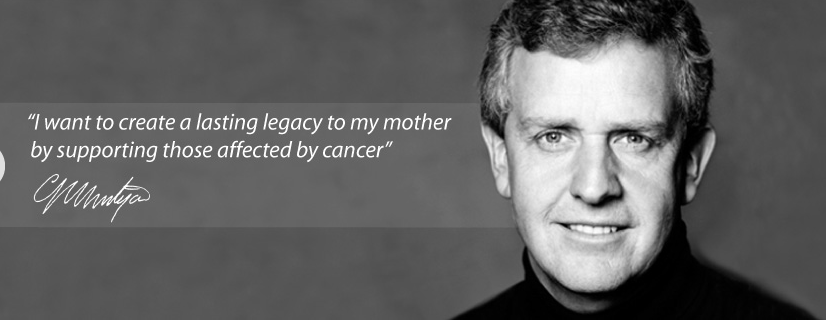
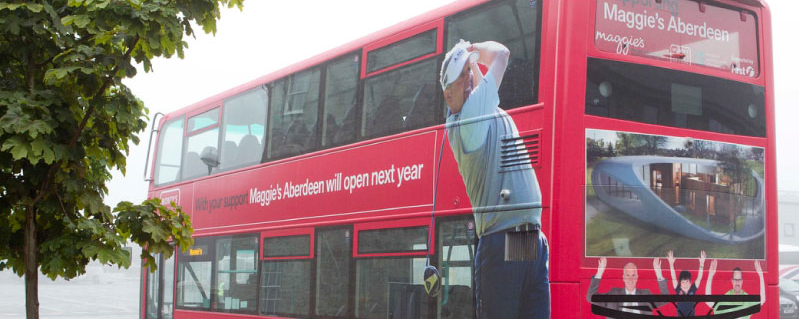
I’m volunteering today for Maggies Cancer Caring Centres and Elizabeth Montgomery Foundation.  The Elizabeth Montgomery Foundation was set up by Colin Montgomery in his mother’s name.  Colin has pledged that he will raise funds to open a new Maggies Centre in Aberdeen… no small feat and such an incredible offer.

Screen Shot 2013-10-15 at 17.02.01My job today is to tell people about the wonderful work that Maggies do, why they’re important to a patient and carer and also what they have meant to me.  We have a little golf challenge for people to participate in but most importantly it’s about spreading the word and allowing them the opportunity to donate.  It’s been a wonderful and fun day.  Emotional at times and I know that for some people they’ve found a new resource for themselves or others that they didn’t know about or understand.

Screen Shot 2013-10-15 at 17.01.46I also had the chance to meeting ‘Monty’ and hold the Ryder Cup!!

What an amazing difference a new Centre in Aberdeen will make for so many people.  I’m looking forward to seeing the plans develop, the building opening and hearing people’s feedback on the services offered.

small c event

Shine Cancer Support is a network for younger adults affected by cancer. It was created Emma who was diagnosed at ‘the wrong age’ with cancer.

There are many ages that are ‘wrong’ for cancer. Of course all ages are ‘wrong’ for cancer and noone should have to be diagnosed, in a perfect world. What I mean is that, for example, when you find a lump in your breast in your teens or 20s, firstly you are told it can’t be cancer as you’re too young. Next it’s hard to find information that doesn’t speak about having cancer after having children, marriage or life in general. Rarely is fertility issues discussed as this isn’t the ‘normal’ checkbox that needs to be ticked for the majority of people diagnosed with cancer. Attending support groups often means you’re the youngest there and the discussions are about their children or grandchildren.

You see, inconveniently you’re too young for the standard cancer care support initiatives and too old for the paediatric care plans.

The isolation is enormous and often continues for many years due to lack of resources or community in which you can freely air concerns or worries.

Shine is an initiative that is attempting to fill this space. It’s run by patients and is intended to be an informal place (online and face-to-face) where people diagnosed with cancer in their 20s, 30s and 40s can meet.

Tonight I attended the first London drinks. There were only 8 of us at this first drinks meet. We met in a busy bar where ‘normal’ people were having an evening out. It wasn’t a ‘support group’ and we didn’t go around and introduce ourselves by name, cancer type and date of diagnosis (the usual introduction!). But we talked. We chatted about life. We chatted about problems we had encountered. We talked about how we overcame them. We talked about our families, about our friends, about our futures. The conversation was light, fun and frivolous…. Hey and we even laughed!!

Truly a great initiative and something to be encouraged. There’s definitely a gap in the care and support for young adults. Find out more and perhaps attend or support them? http://www.shinecancersupport.co.uk