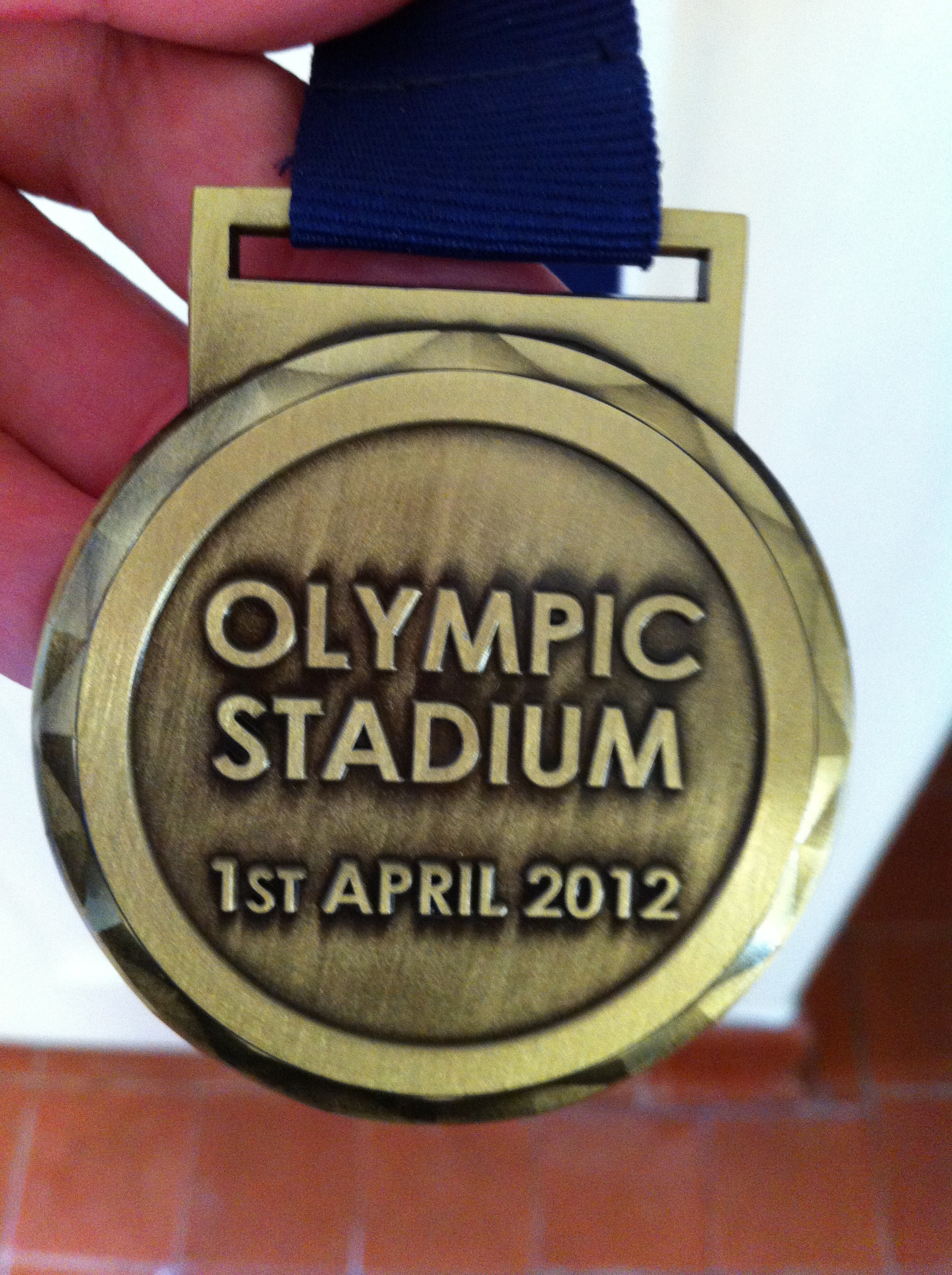
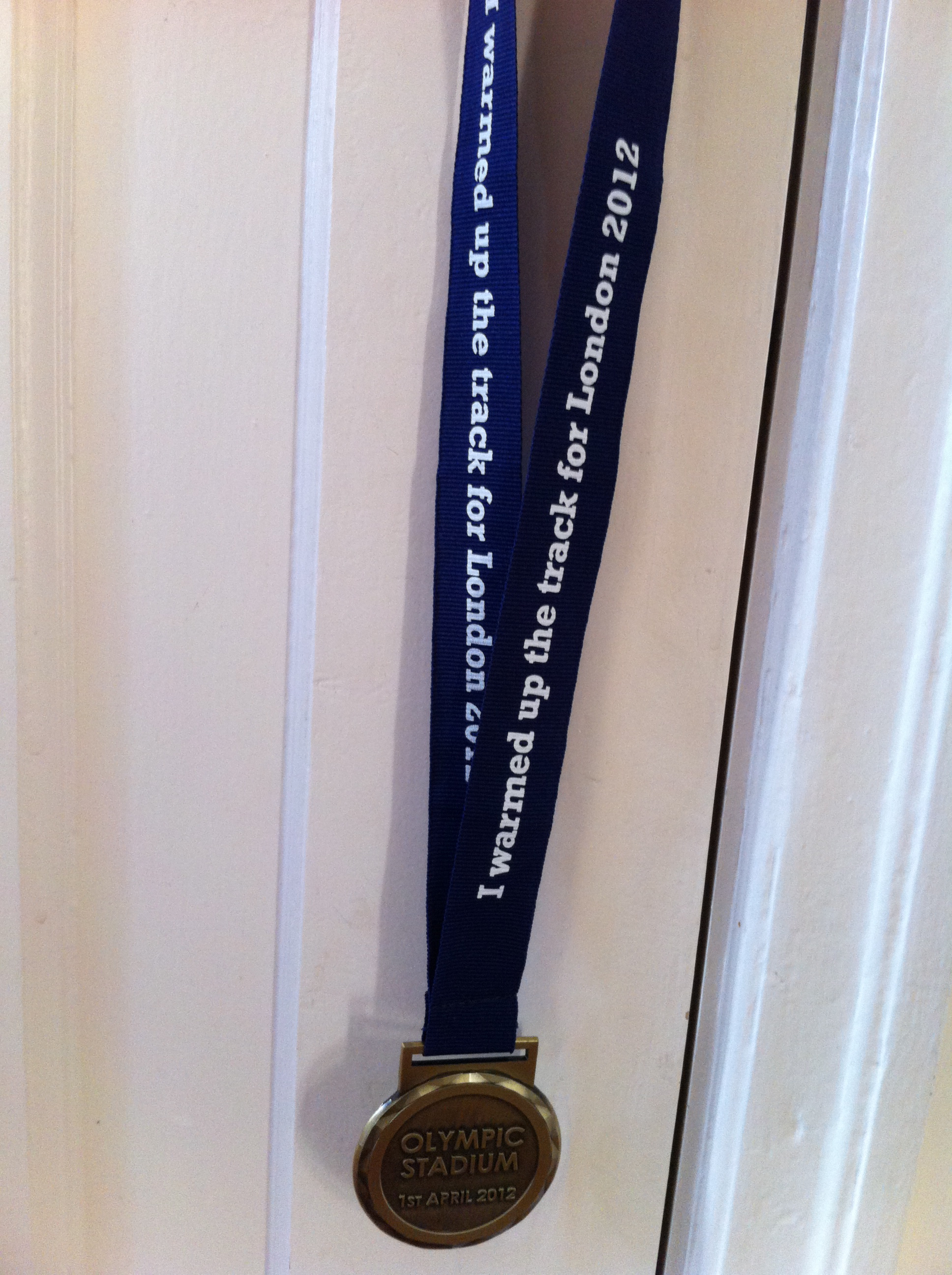
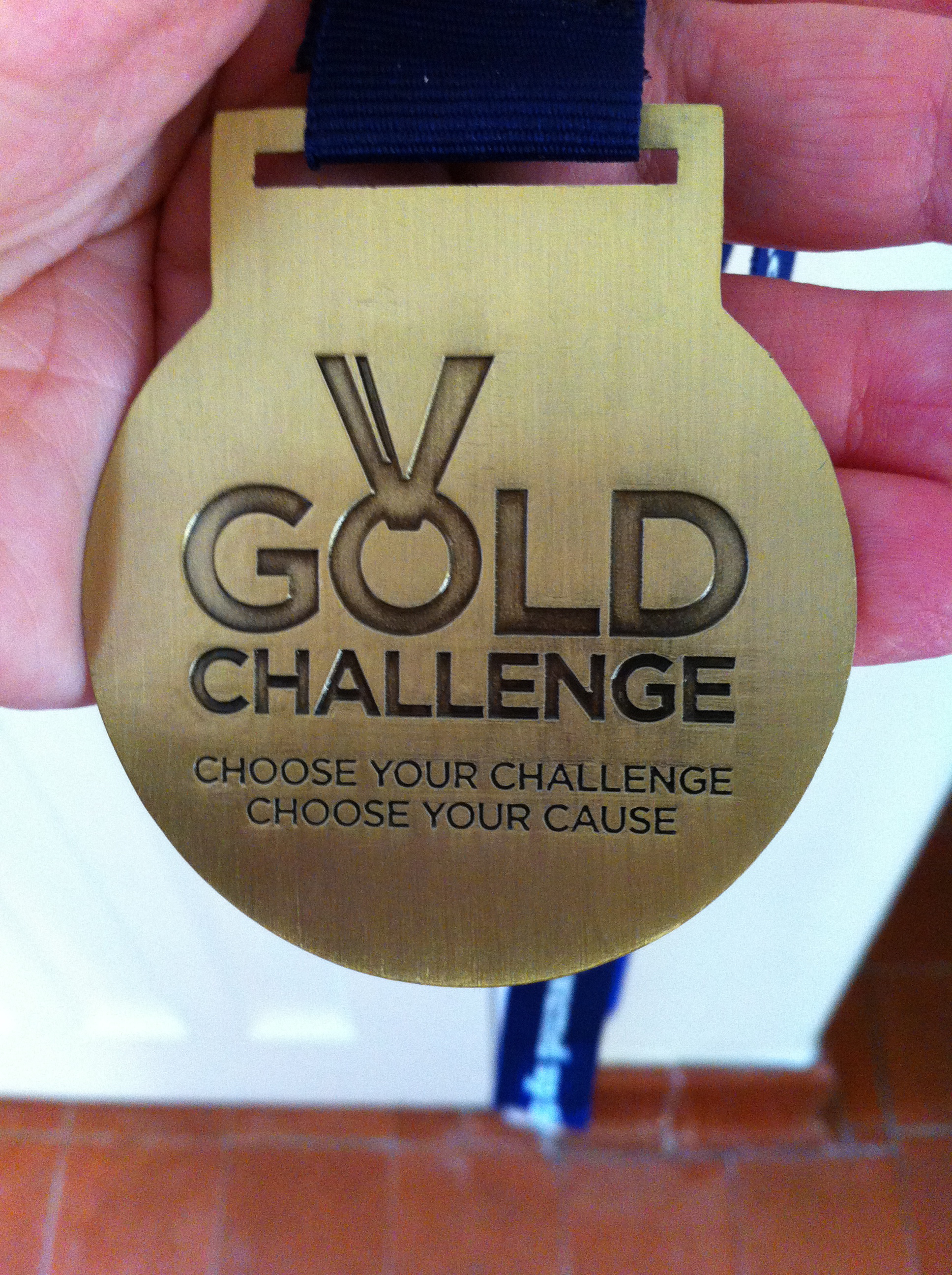
Olympic Park for the Gold Challenge


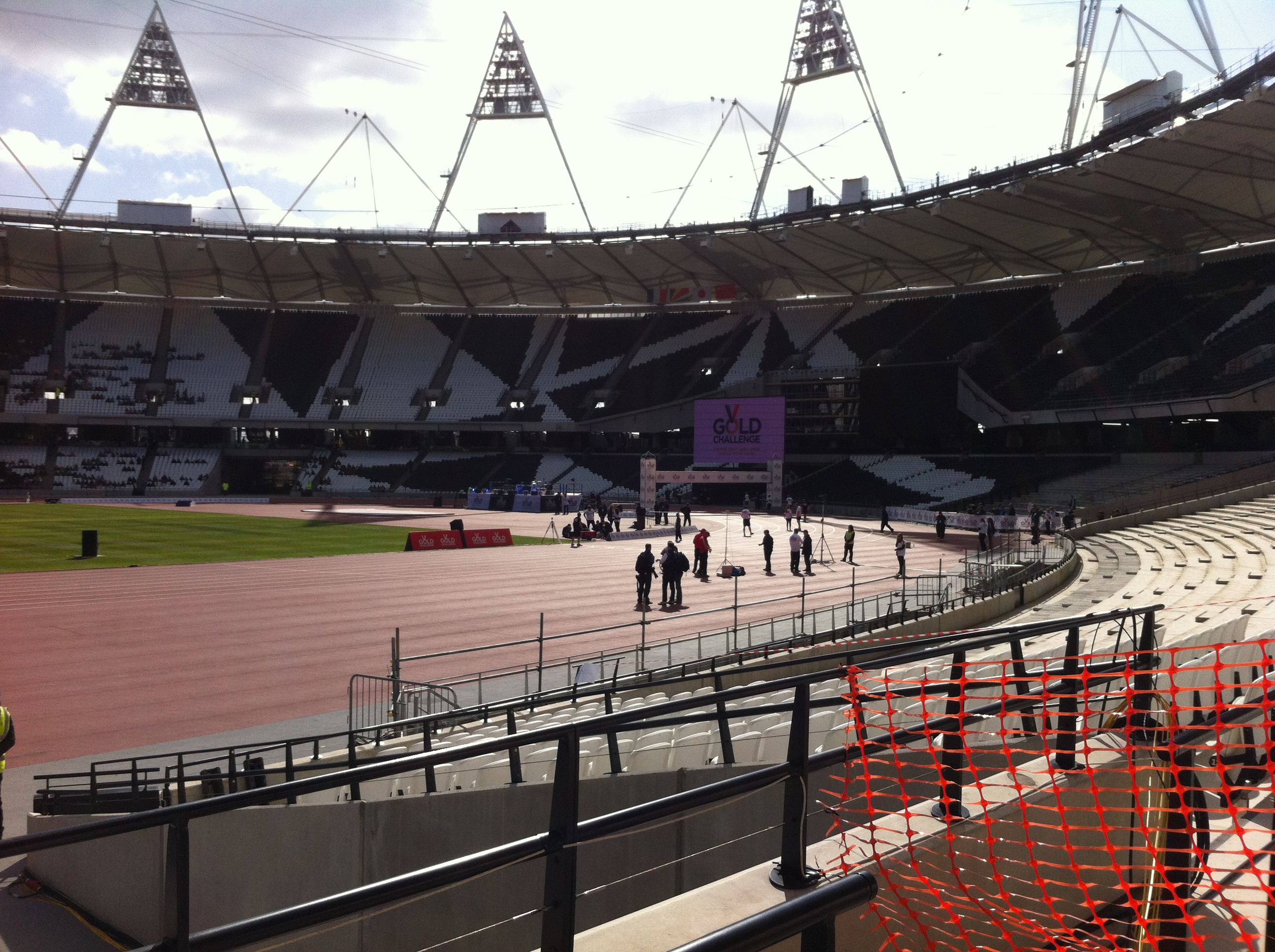
Up early and excitedly making my way to the new Olympic Stadium in East London.

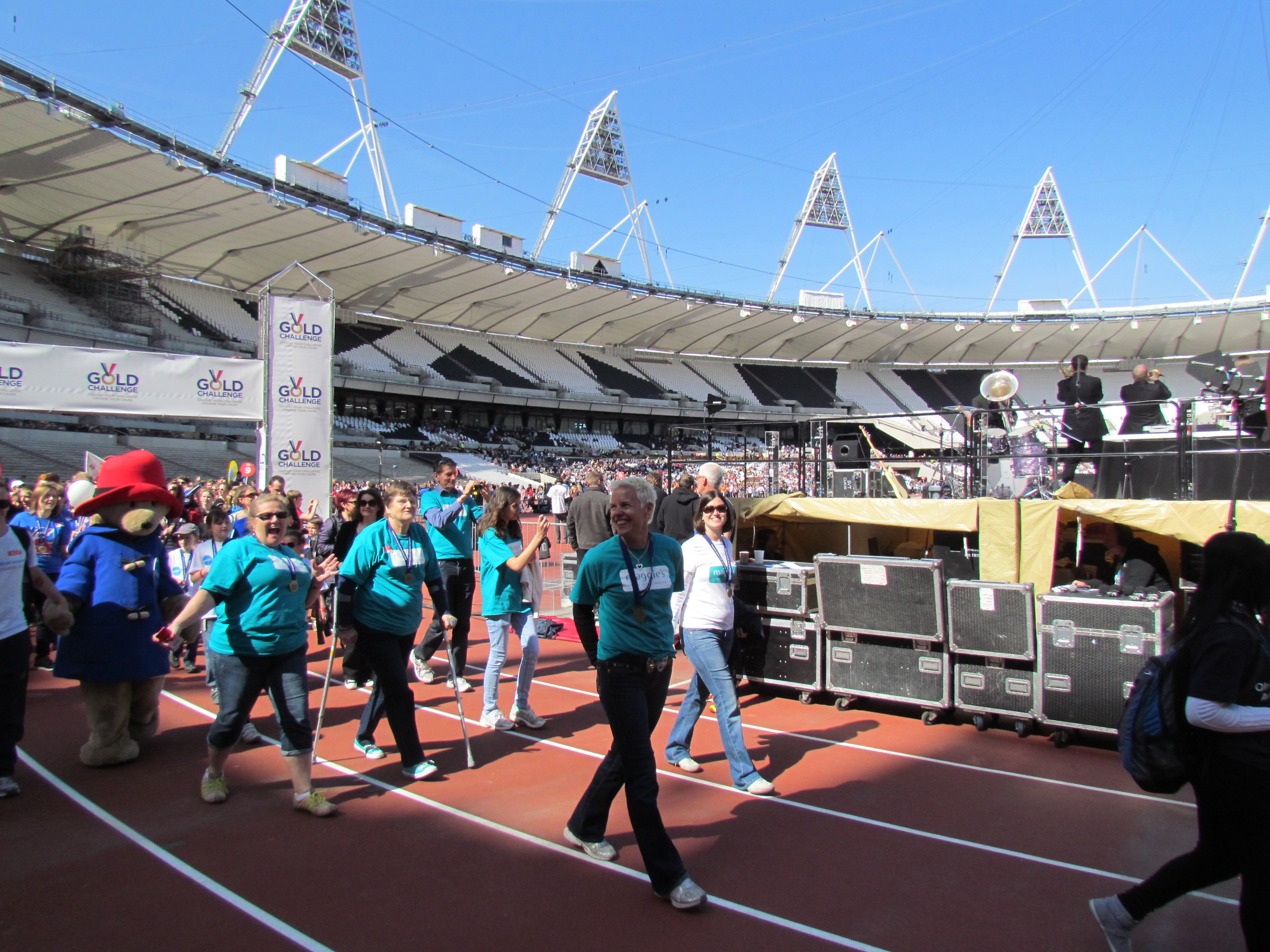
I’ve been honoured to represent Maggie’s Cancer Caring Centres in a parade of charities and organisations involved in the Gold Challenge event.


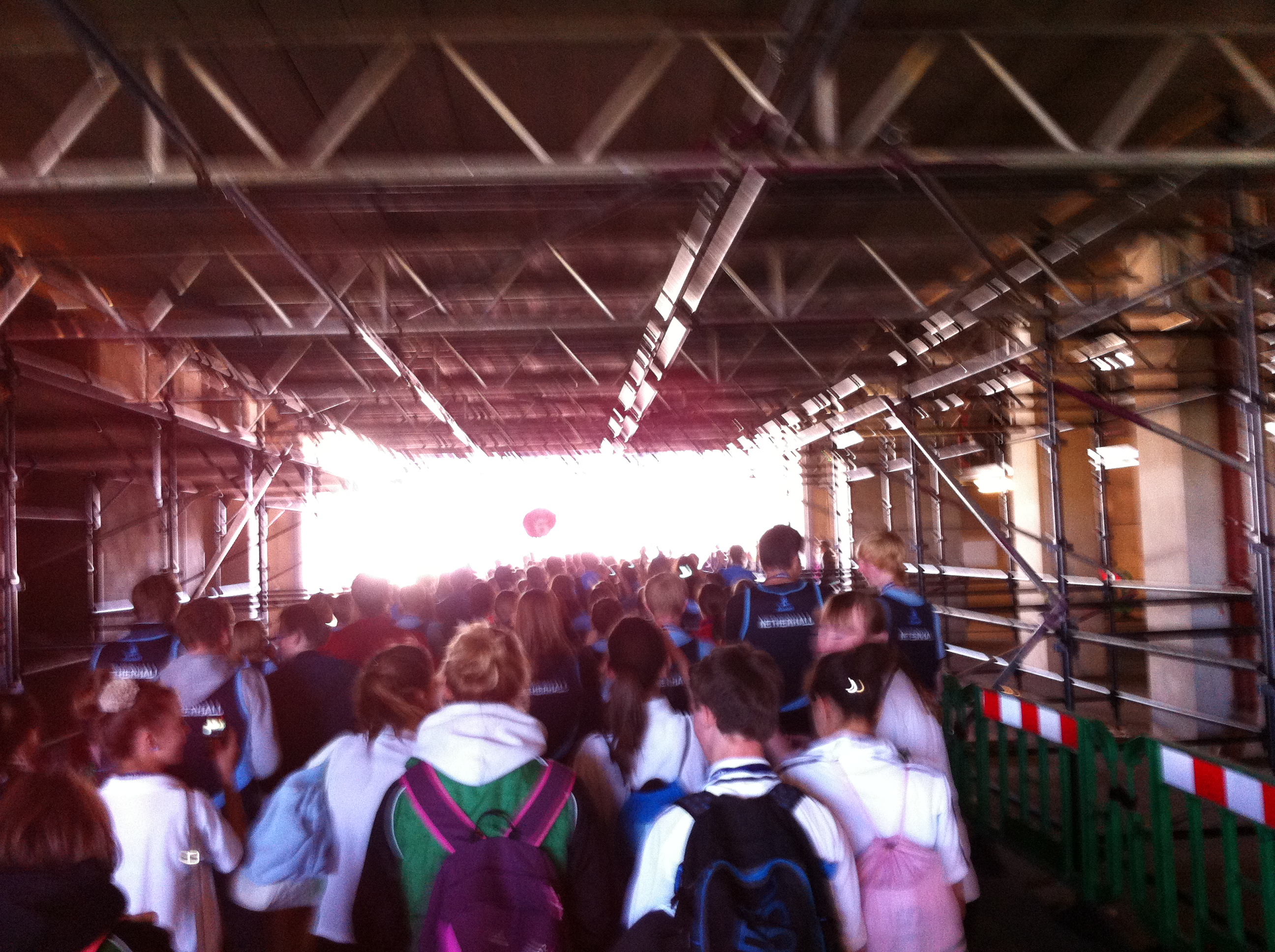
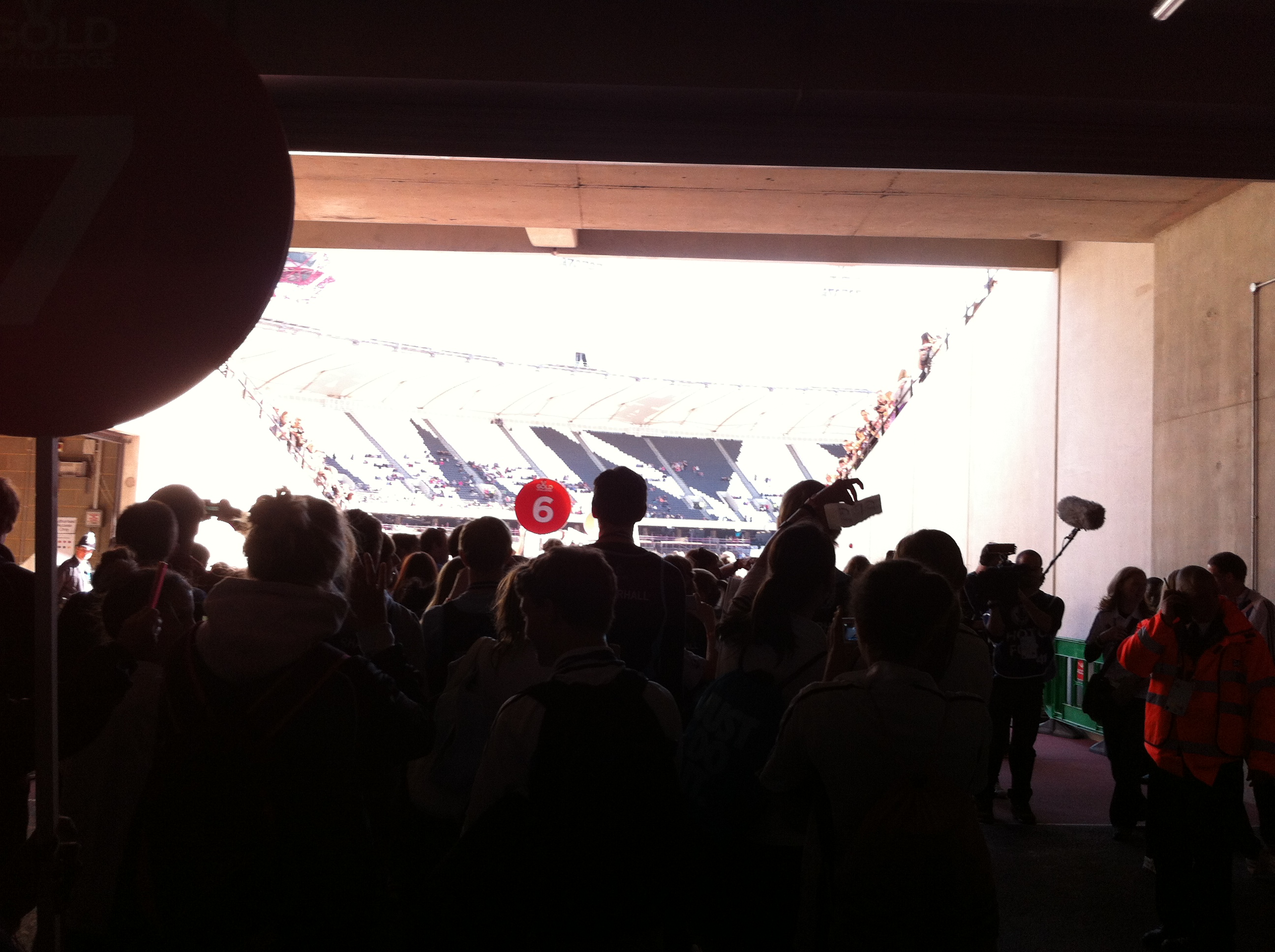
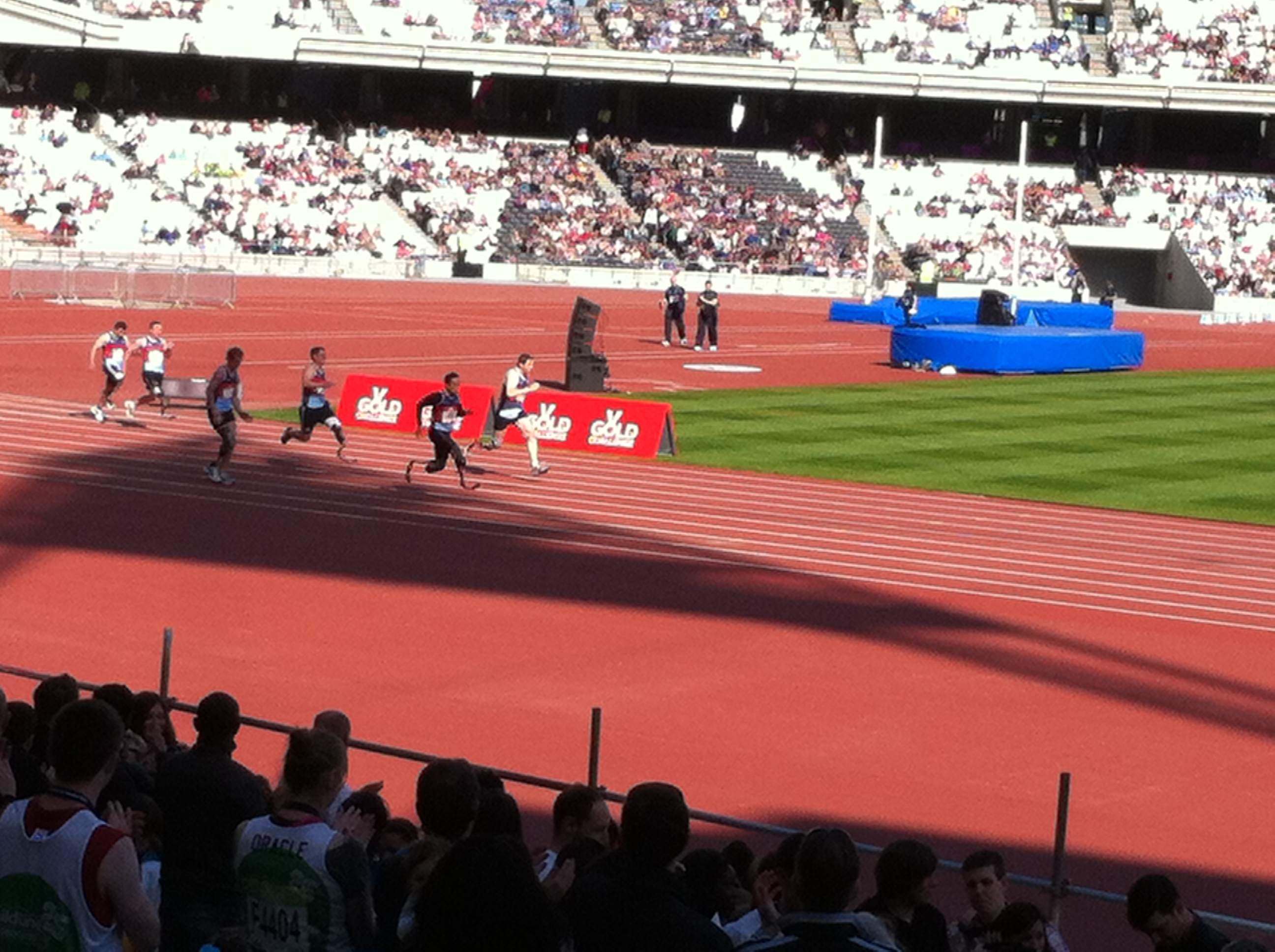
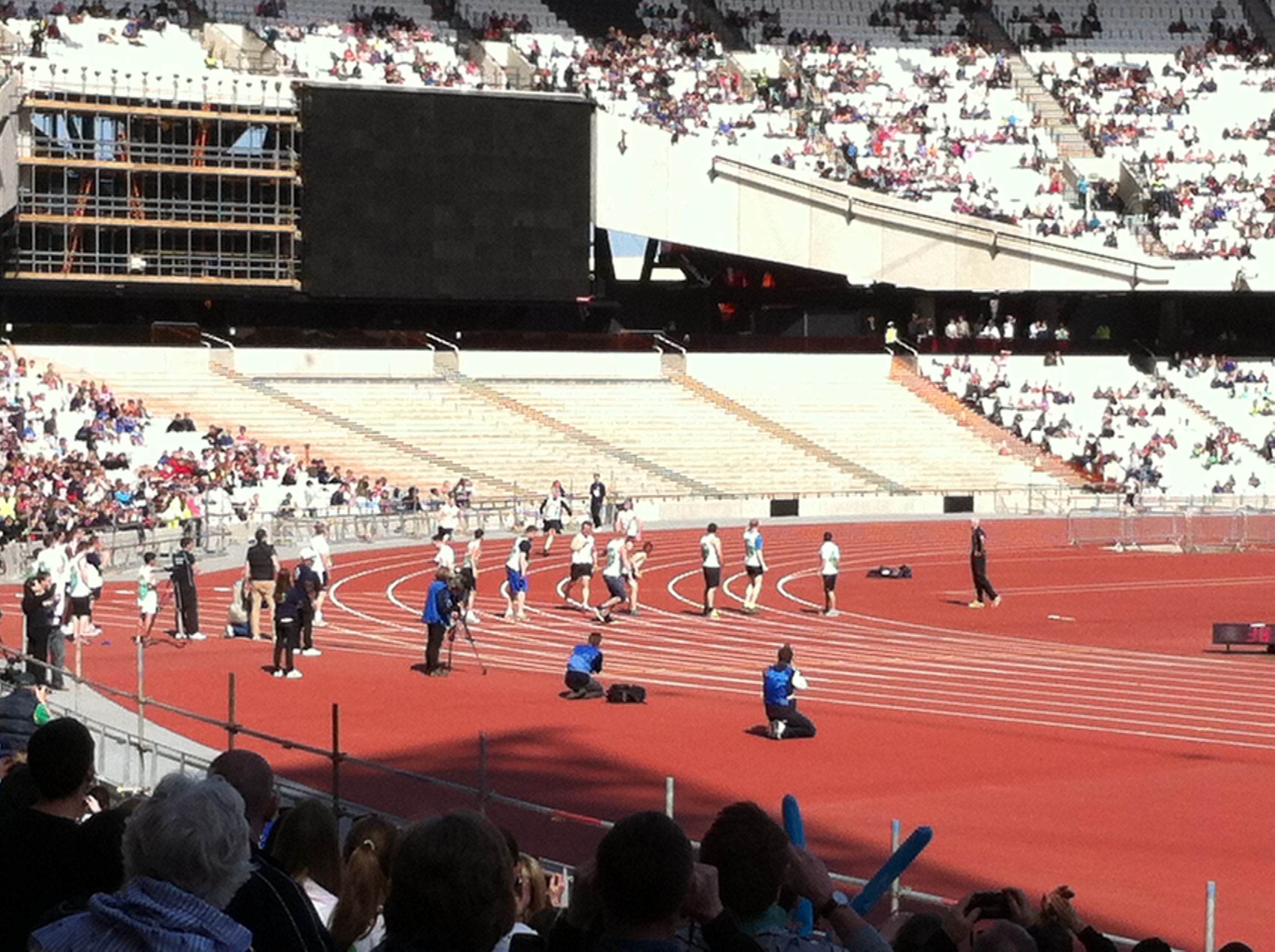
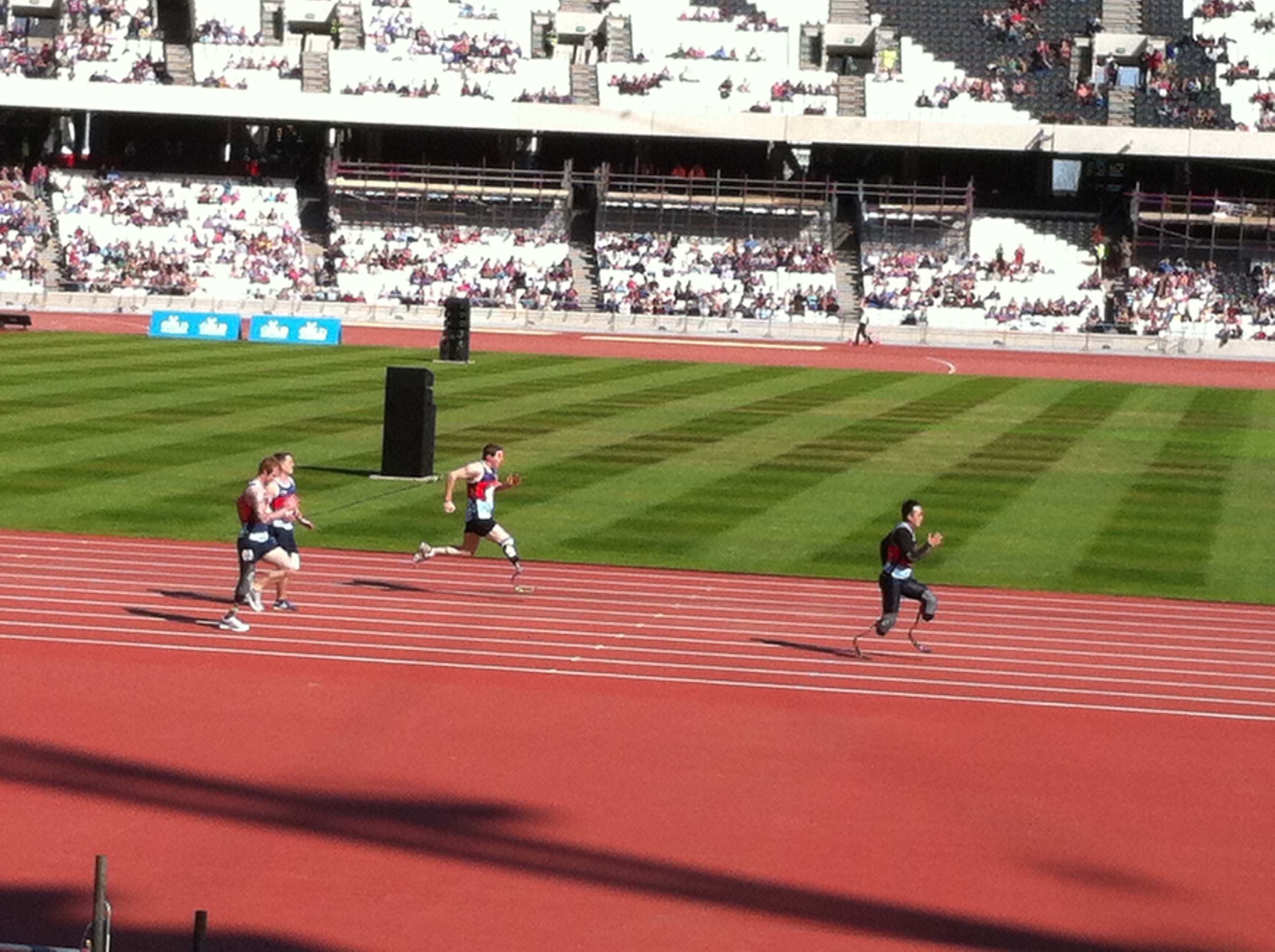
I think the pictures speak the many words… except to say that when we walked through the athletes tunnel, went from light to dark and echoing in the tunnel could hear the roar of the crowd, then from dark to light as we entered the stadium, it really was A-mazing. I really felt that as I came through the tunnel, I could achieve anything, particularly with the support and encouragement of all the people cheering me (errr us) on.


We then went on to parade around the track in the stadium. I was able to touch the track that athletes will achieve their dreams in July but also for future years and generations to come. Where spectators will formulate plans to train harder to be at the next Olympics Games. Where it will inspire people, encourage and give confidence.


I can’t wait for the real Olympics and am so proud to have been part of the team who warmed up the track for the real Olympians!


Pan London Event: Survivorship and Cancer

Hosted by the Kings Fund in their wonderful building in Cavendish Square the Pan London Event was well attended.  Currently the approach to follow-up for cancer survivors is centred around routine outpatient appointments.  The purpose of this event is to look at developing and testing new approaches to follow up care for those living with and beyond cancer.

The agenda for the day looked to tackle many of the areas and the speakers are experienced and experts in their fields.  However I was a little scared (and rightly as it turned out) about the amount of content for the day. Most of the speakers had between 15 and 30 minutes for their presentations!  I wonder if it would have been better to tackle half the amount of subjects and to have a further event or perhaps make it a two day event.  Sadly, in my opinion, I do feel that for many of the speakers they barely had time to scratch the surface and therefore negated the power of the event.

A link to the full agenda is Pan-London-Survivorship-conference-25th-November-2011.

I won’t go into great detail as a great many of the points made I have previously discussed in this blog.  However bullet points for thought, discussion and response:

  • Cancer incidence is rising.
  • Cancer mortality is falling.
  • We NEED to action a survivorship programme (with funding and holistically) for the increased quantity of people requiring it.
  • We need to put these plans into action NOW as the increase will be unmanageable before we know it.  (Although personally I feel it is already here!)
  • Within the Cancer Reform Strategy there are 4 new partnership initiatives:
    • NAEDI – Awareness and early diagnosis
    • NCSI – Survivorship
    • NCEI – Inequalities
    • NCIN – Intelligence
  • We need to ensure that each of these 4 partnerships work collaboratively but not in competition with eachother.
  • Cancer practice needs to be reviewed to be personalised for each person affected.  We can no longer treat a 17 year old with breast cancer in the same way as a 70 year old!  One size does not fit all and considerations need to be made with changes to the pathways and personalisation at the fore.
  • When we refer to ‘Living with and Beyond Cancer’, there are many considerations and organisations that should be involved – COLLABORATIVELY:
    • Information and communication
    • Psychological support
    • Supportive and palliative care
    • Clinical Nurse Specialists (we need more of these not less!)
    • Cancer Patient Experience Survey Programme.  Many areas need improvement and this survey is a great way of measuring these.  Should be run regularly and measurable penalties be applied.
    • National Cancer Survivorship Initiative.  Working with all third sector organisations to ensure that this initiative is actionable.
  • In 2010 the NCSI-Vision-Document document was published.  This document details the five shifts required in the vision, the priority areas and a general iterative process to achieve this vision.
  • We have a long way to go but at least survivorship is now firmly on the agenda and there’s barely a meeting when it’s not discussed… we just need to make sure that firm plans are in place for anyone living with and beyond a cancer diagnosis.
  • A presentation from Macmillan Cancer Care identifying the cancer care pathway and also crunching numbers of people and stages – this focused on London and despite having heard these numbers plenty of times, it still comes as a shock that they’re so high and rising!
  • Natalie Doyle of The Royal Marsden presented about why Holistic Needs Assessment is so vital in patient care.  A holistic health and social care assessment is undertaken in order to identify supportive and palliative care needs of an individual and to trigger any specialist assessment that may be required.  For instance, home help, nursing staff visiting at home, transport to and from hospital, psychological support, social and occupational needs and spiritual needs.
  • Holistic Needs Assessments should be carried out at a number of points and revised accordingly:
    • Around the time of diagnosis
    • Commencement of treatment
    • Completion of the primary treatment plan
    • The point of recognition of incurability
    • The beginning of end of life
    • The point at which dying is diagnosed
    • At any other time that the patient may request
    • At any other time that a professional carer may judge necessary
    • Each new episode of disease recurrence.
  • We know that often nurses are under a great deal of time pressure and there are cutbacks affecting the number of CNS available.  However this should not affect whether an assessment is carried out.  It should take no more than 30 minutes.
  • The holistic needs assessment and/or treatment summary should be sent from the hospital team to the GP surgery.  The GP should then assist in ensuring that any additional care is implemented and managed locally.
  • We had three presentations fro Cancer Networks showing the sort of projects that had been undertaken within London with reference to breast follow ups, supporting people with brain cancer at work and a cancer transition programme.
  • A presentation regarding the Late Effects work being undertaken at the Royal Marsden.  A critical piece of work that is looking at the long term effects on surviving cancer patients.  In the past life expectancy has meant that many of these effects of treatment (chemotherapy, surgery or radiotherapy) haven’t come to light  However more particularly for people being treated at a younger age, this research is imperative to allow them to survive WELL as well as survive.
  • Pawan Randev spoke about the impact of survivorship on GPs and primary care.  He referred us to the November 2011 edition of the British Journal of General Practice – Cancer Survivorship.

A few other reference points would be to the HSJ Supplement from April 2011 –  HSJ_survivorship_supplement

A further tool book – The Cancer Survivor’s Companion.


NCRI Conference 2011, Liverpool

I’m currently in Liverpool at the NCRI (National Cancer Research Institute) Conference as a lay person and representing the various committees, boards and support groups that I am part of.  As with all cancer related conferences I hope to glean positive information that can be shared in the many places and in a relevant way.

My main interests, as always, relate to Phyllodes and sarcoma research and also to survivorship and late-effects of treatment in survivors.  The agenda of the event over the three days interested me greatly in that there are a number of plenaries and workshops on the topics of interest.  I registered several months ago and managed to get a sponsored place at the event with accommodation and costs covered by the NCRI.

However if I’m honest in the past few weeks I’ve been struggling enormously with a whole host of things in my own life that has left me exhausted, anxious and tearful.  Some of it I could explain and some of it, or the triggers, I don’t know where to begin or how to address… so added to the above, coming to the conference has also been an anxiety for me in the past few days.  Ridiculous really, as it was me who sought out the opportunity and applied for a place!

The end of day one has just passed and I’m writing this note.  My tears are close and I DO know why.  This afternoon’s plenaries have been very exciting.  Looking at new advancements in clinical research, DNA and molecular cell structure and mutation of genetics in oncology patients.  However following this was a 10 minute talk by an artist Harriet Barber talking about her artwork, following her own breast cancer diagnosis, of breast cancer patients called “Breast Cancer LIFE”.  Why so difficult, you may ask when I’m such a huge advocate for The Scar Project?  I know and understand a great many of the pictures.  I see the beauty in the individuals posing on canvas and photograph.  I believe their stories and feel their pain.  Jolene and Erin were photographed for the Scar Project… I know them and know their journeys.  All of this you know from my blog and all of this I know because i have found myself revisiting those thoughts with every glance at the pictures.  The truth is though, there was something more in those 10 minutes of hearing Harriet speak that struck a chord.  Nobody has seen me naked since my operations.  Nobody has seen my imbalanced boobs or my scars (well except medics and they don’t count in this!).  For 2 years (as my second operation was 2 years ago yesterday), I’ve hidden away.  Shied away from any potential opportunity for a relationship or even a fumble (sorry if that offends!).  For all my blarney about being OK, being able to cope, being able to move on and ‘survive’… I’m not, if I can’t even look at myself in the mirror.  I don’t even think I’ve done that… I mean really look, not just walk past a mirror.  How can I possibly think about moving on, meeting anyone and being intimate in any way when I can’t even look at myself?

“No statements about the cancer.  Only about Now and about Life.”  – Harriet Barber

St Paul D’Aria – talk by Lauren Pecorino

The Paul’s Cancer Support Centre, based near Clapham Junction in South West London offer a range of services for people affected by cancer, for the diagnosed but also for carers, family members and friends. Several of my friends have attended their Healing Journey course and found it enormously helpful to get through the emotional and psychological impacts of being diagnosed with cancer. They offer a great many more services at the Centre but also via webinars.

However tonight I attended the Centre to hear Dr Lauren Pecorino speak about ‘Lifestyle choices that may reduce cancer risk: evidence based recommendations’.

She has written a book ‘Why Millions Survive Cancer: The Successes of Science’ which goes into more detail about the improvements worldwide in survival rates for many cancers and she believes that these improvements mean that “our attitude towards cancer now needs drastic change”.

As someone diagnosed with a rare cancer and indeed meeting so many more people diagnosed with different cancers, the subject of ‘is it my fault I have cancer?’ or ‘is it my lifestyle that gave me cancer?’ or ‘could I have avoided cancer?’ often come into discussions. Mostly at the darkest of hours and at a time when there’s the blame game discussion.

I get truly frustrated when I read articles in many publications (medical and non-medical) that imply that by eating, drinking or doing something you have in some way made a choice to have cancer. Some of the same publications then produce articles saying that the same things will in fact cure cancer! Just for a laugh have a look at this page http://kill-or-cure.heroku.com/

But the same applies for healthy living… if you have a sedentary job or perhaps work night shifts, you are also putting yourself at risk of cancer. Errr hellooo?

So tonight, Tish and I decided to pootle along to this lecture in the hope that we could come away with something conclusive. Was there in fact a food stuff that should be INCLUDED in our diet or one that should be EXCLUDED?

Sadly the lecture really was much of the same. Generalist in approach and undefined in advice.

She touched on the importance of ‘personalised medicine’ (a terrifically fabulous idea in principle but very hard to administer in the current thinking). She also spoke of components of some fruit and vegetables actually turning on genes that help protect you against cancer… but only in a general way and not all cancers nor for everyone!

I guess I felt a little cheated. I wanted some facts. I wanted an ‘expert’ to say X or Y will work with to reduce occurrence or recurrence of cancer B or C. I know it’s never likely that they’ll tell me anything about Phyllodes or indeed for Tish about Ovarian – the joys of rare cancer diagnosis – but I had hoped there’d be something new that I can share with others who are seeking hope and ‘informed choice’.

In conclusion I should add that there are many many pieces of research into healthier eating and lifestyle choices. This research is for all sorts of medical conditions, including cancer. I hope in the future this research is going to allow more personalised medicine and treatment. I would like to see ‘personalised medicine/stratified medicine’ (current buzzwords) to also include lifestyle advice as well as drugs prescribed. I believe there must be a more holistic approach to health generally.

I also know that, for many, the idea of eating 5 a day of fruit and veg or taking up running, just isn’t going to happen… however encouraging and motivating people to be more interested in what they put in their bodies and how they use their bodies must surely be the way forward. I would love the media to use encouragement and motivation instead of the current method of blame – particularly people who only have 4 a day or eat the occasional takeaway or didn’t go for a brisk walk today… it doesn’t mean they WANT to get cancer!

I also know many people who are gym bunnies and have been all their lives. They eat right. They exercise regularly. They don’t drink. They’ve never smoked. And still they are diagnosed with cancer.

It breaks my heart when I hear a cancer patient ask if they have caused their cancer because they liked milkshakes too much or a takeaway every Sunday night. I think they’ve enough to handle being diagnosed without feeling that they are in some part responsible!

I’ve not read Dr Lauren Pecorino’s book “Why Millions Survive Cancer” and I’m sure there are some fabulous tips and tricks for a healthier lifestyle. However I didn’t feel there was enough substance during the lecture to compel me to buy it. Have you read it?

Skin clinic

Being fair skinned and someone who has had moles/bumps removed, I do try to keep an eye on my skin. In the UK there isn’t the awareness about skin cancer nor moles going ‘funny’ as there is in Australia.

I remember when I lived there it was just part of ‘life’, nipping annually into the cancer care clinic. You’d strip off down to your undies and stand on a little podium. Then a dermatologist would then peer and peek at your every inch with a magnifying glass. They picked up a ‘wrong-un’ whilst at this clinic and I was booked in and it removed within days.

Everyone went along and it only took 10 minutes of your time. You could do it in your lunchtime. Medicare covered it so you didn’t worry about the cost.

What was slightly disturbing about it though, was that every single dermatologist that saw me over the years was British. They had chosen this speciality and said that there weren’t jobs in the UK or a proactive role in picking up skin irregularities early. Skin cancer is one of the most common cances in the UK with the numbers on the increase. As with all cancers there is an importance upon early detection, yet we don’t promote it?

Cancer Research UK have some great information “SunSmart

I’ve recently noticed that the ‘scar’ where a suspicious lump was previously removed has been getting bigger. There are also (and have been for quite some time) several moles that are a bit itchy. So I overheard that my GP surgery has a skin care clinic once a month and I’ve booked myself in.

Today’s the day. I put my bestest undies on and figured that it’d be similar to the one in Oz whereby my whole bod (including the areas that I can’t see myself – ie my back!) would be inspected. However what happened was I was required to tell them which ones itched and show them the new lump only. There wasn’t an examination of other moles nor an offer to do so. This was also done by my regular GP not a skin specialist. Bless him (and you know I think he’s fabulous), but he’s not a skin specialist. Hey ho, I had the ones I was concerned about looked at anyway and a few little ones frozen off.

What I would love to see (and I’ve suggested it) is that Macmillan Cancer, who have a business alliance with Boots The Chemist, take charge and put a project in place. Through the Boots alliance they have access to virtually every high street in the country.

How about a campaign whereby canvas portakabins are erected in stores. They just need to be big enough for someone upon a step to be examined by a skin specialist. There could be a ‘roadshow’ of specialists travelling the country, checking skin and referring as necessary. Surely Boots could sponsor it? I’m sure most people would buy a sandwich or do a little shopping whilst they were in the store. People could pop in during their lunch breaks or nip out in the afternoon.

What would that cost in real terms? And then, balance it with the cost saving to the NHS by picking up suspicious skin problems early?

Community Pharmacy Project Planning

I have been asked to be part of a project in South West London that is trialling the further inclusion of pharmacies and pharmacists in the early diagnosis of cancers.

In the UK we’re not great at recognising that pharmacists really are an overqualified underused medical resources in our stretched NHS system.

We know from research carried out (and logical paths of thinking) that many people will pick up an ‘over the counter’ quick fix for a cough, cold, ache or pain etc rather than going to the family doctor/GP. This has got much more frequent in habit since changes to many GP practices whereby appointments are not easily made and indeed to do so, for some, means taking the day off work to arrange the appointment!

We also know there are large numbers of people in the UK who have not signed up with a GP. They’ve perhaps moved areas in the UK, moved from overseas, don’t speak the language, cultural differences or can’t guarantee a female GP or perhaps the paperwork is too much for them. There are many reasons.

We know that many people will also visit the same pharmacy on the way to work, school drop-off, work or to the train station. Pharmacists see much more than we think and indeed are able to look at patterns of habits.

A good community pharmacist will also know a little about each customer. They will ask questions and be discrete. They will and should be able to let someone know when they should in fact be seeing a GP or perhaps have concern about the ‘over the counter’ medicine that is being taken whilst also knowing what is ‘prescribed’.

Pharmacists however don’t have the ability to refer patients in for scans if they believe something to be far more wrong than a simple cough…. Well until now!

This project is working with a number of community pharmacies to see if they can identify early people with lung cancer. For example if someone comes into the pharmacy very very regularly coughing and buying a linctus, it could be deemed as a sign that there is something more wrong. Or perhaps they’re constantly buying bottles of gaviscon, it could be deemed as a sign of something else.

They have the opportunity to discuss other symptoms with the customer and perhaps to urge them to seek further medical advice.

This particular project is looking at the ability of pharmacists being able to refer directly to hospital for relevant scans/checks based on the symptoms, questions and responses.

If a customer is ‘cared for’ by a pharmacist and urged to go straight to hospital, don’t you think they’d do that straight away. If they were urged to get an appointment with their GP, they may not have one or they can’t afford to take a day off work etc so it may pass and they may buy their ‘over the counter’ medicines from another pharmacy.

It will truly be very interesting to watch this project take shape and see if we can identify a marked improvement in the early diagnosis of lung cancer (the main one that we’re targeting first and that we will be able to monitor results). If so, it would be something that we would look at rolling out nationwide AND look at what other conditions could be covered in this project… not just cancer but other conditions that require early detection and diagnosis.

Watch this space.

Macmillan Voices Conference

As a patient advocate I often get asked to attend conferences and meetings.  Part of my role as a patient advocate is to share my learnings both as a patient and subsequent to treatment.  The piece that is invaluable to organisations is that patients can work independently of any charity or company mandate.  By this I mean we are able to speak our minds and say what we think or what we have learnt without needing to be loyal to the green of Macmillan or Pink of Breast Cancer or Yellow of Sarcoma.

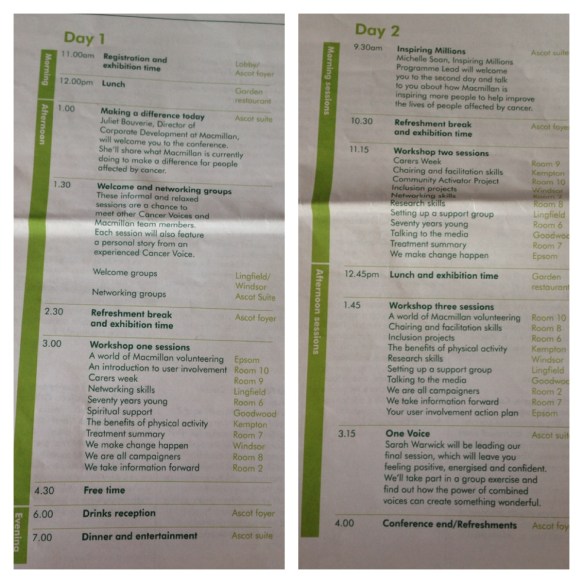
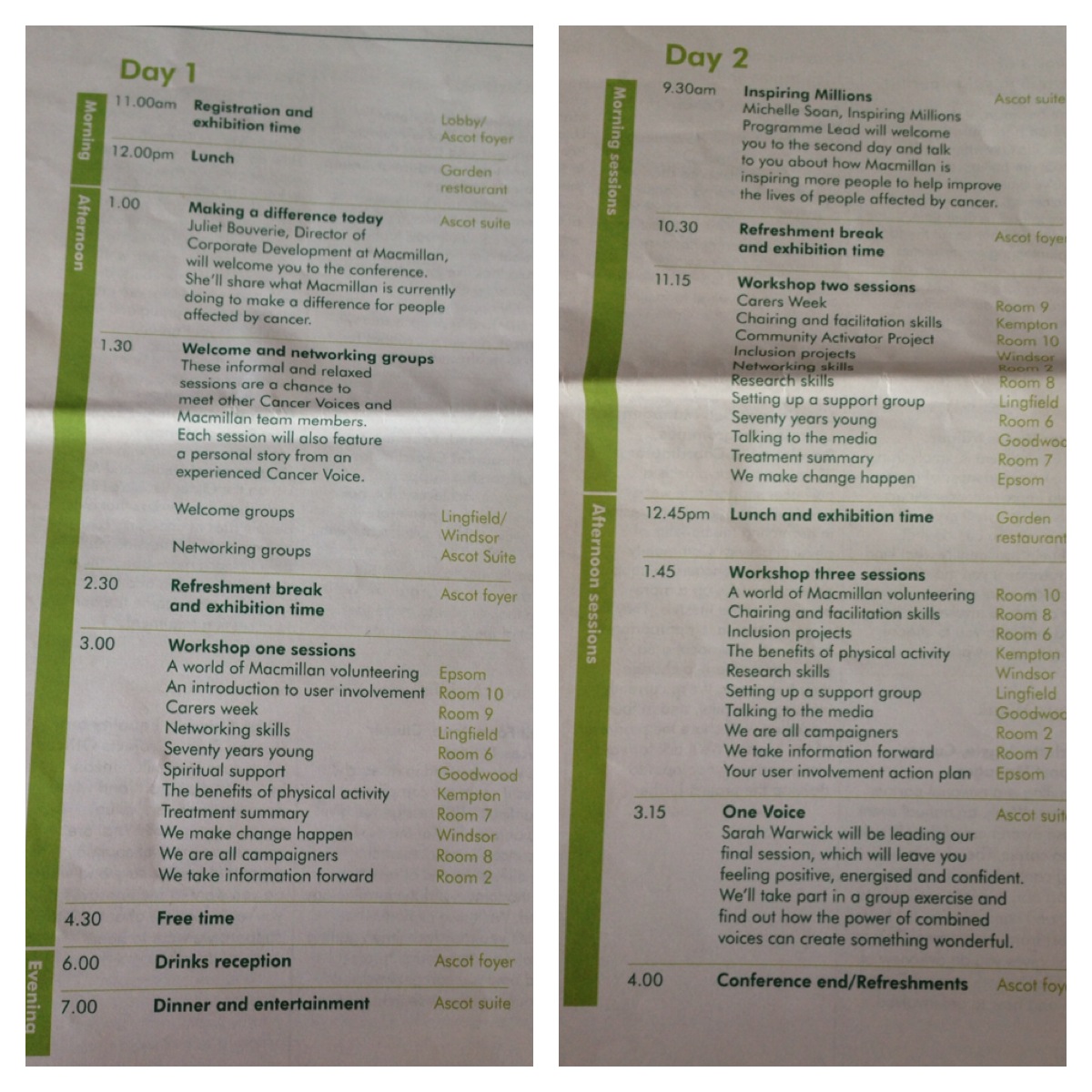
Macmillan Voices are a scheme set up for patients and carers to have a ‘voice’ within Macmillan and help shape future services by their involvement.  It is often by way of focus groups on particular subjects (I’ve done many of these for them) or by completing surveys or reviewing leaflets and documents before publication.  The Macmillan Voices Conference is an annual event where the Voices get the chance to get together.  Throughout the 2-day conference there are workshops and networking groups.

There is clearly a great deal of investment from Macmillan in the Conference and I truly hope that the work we, the Voices, are doing during the Conference is used effectively.  I’m acutely aware that this is funded by people’s hard earned money donated via some fundraising event.
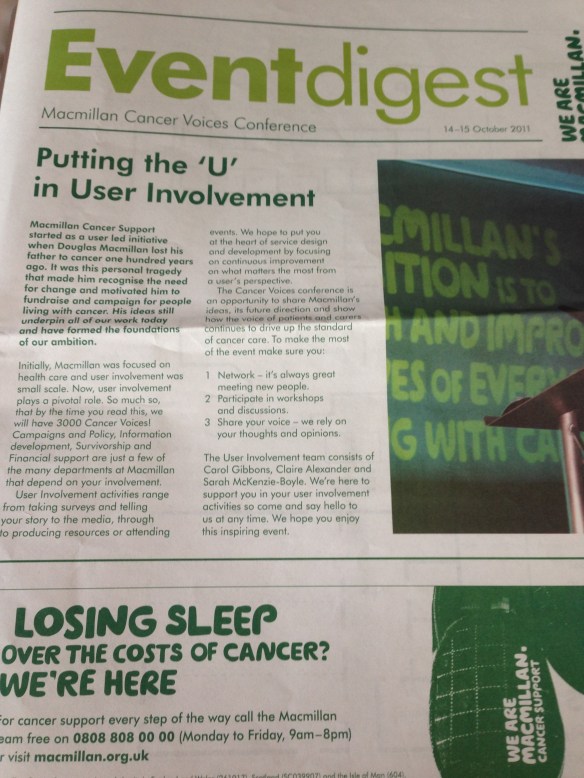
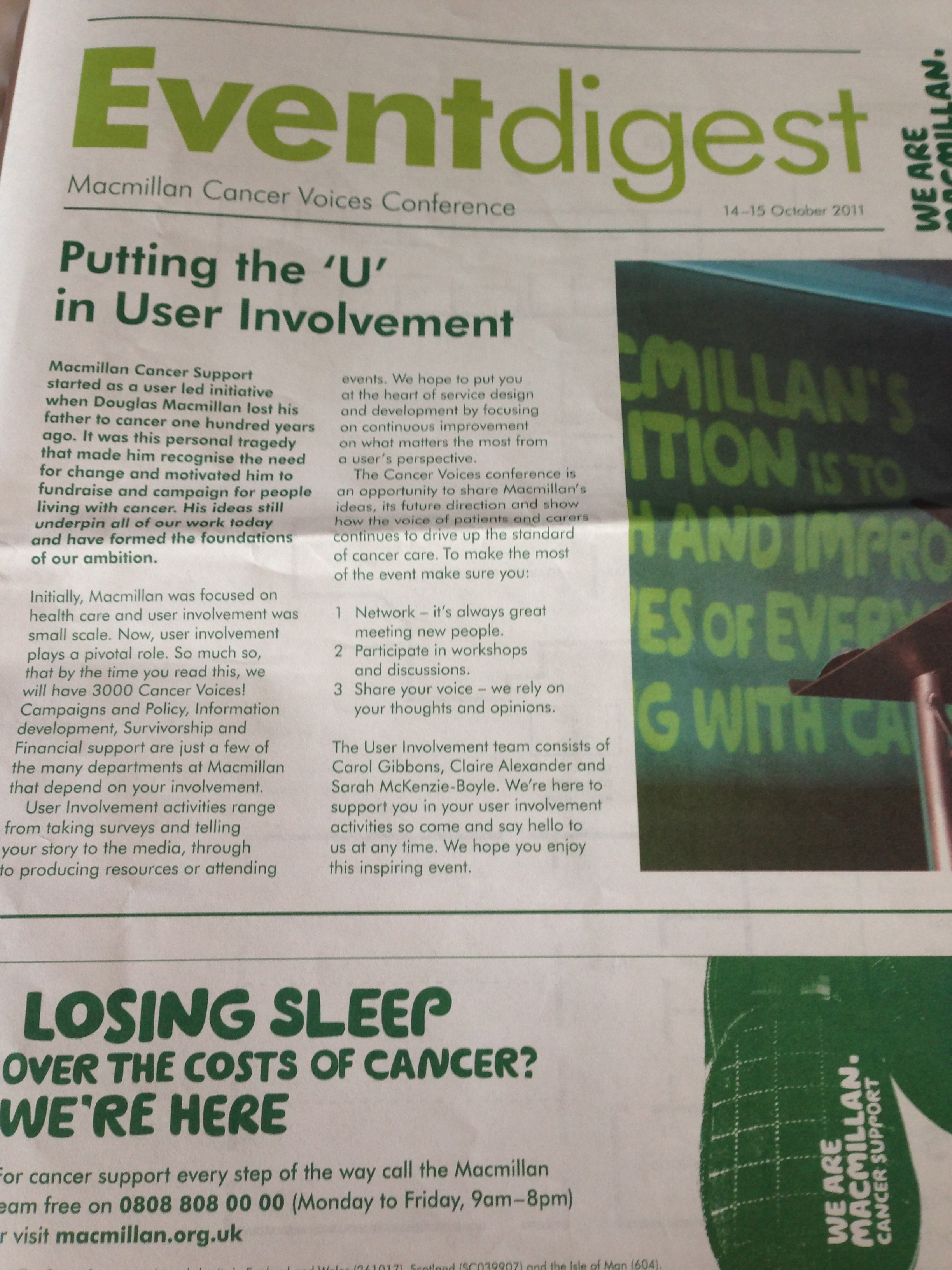
IMG_6647Our Conference Newspaper/Programme

IMG_6654We are welcomed to the Conference during the opening plenary by Juliet Bouverie, Director of Corporate Development at Macmillan.

Juliet introduces herself (she’s new to the role) and tells us a little about why she’s passionate about her role in Macmillan.  She also talks a great deal about the fundraising at Macmillan, some of the events that have happened and how grateful they are for all the monies raised. (Sadly to me, this came across as another plea for money and since we’ve all given up our time to be here and are Cancer Voices doing many things for Macmillan it feels insulting to ask for more!).

Juliet then gave us some facts and figures about fundraising, numbers raised, spent and people living with cancer.

This last year £137m has been raised of which £97m was spent on cancer support.

In 2030 Macmillan believe that the numbers living with cancer will be double that of today.  Currently 2m people living with cancer.  In 2030 they estimate 4m people living with cancer.

There is an urgency not only for a cure for cancer but to ensure there is support and assistance for those living with and beyond a diagnosis of cancer.  Often the emotional and psychological aspects are overlooked in favour of the physical.  All three aspects need addressing and supporting.

Juliet also spoke briefly about a Macmillan project to run training courses for all Boots pharmacists.  Clearly they have a corporate deal with Boots but I’d like these courses to be offered to all pharmacists no matter which company they’re employed by.  Personally I rarely see the pharmacist in a large Boots chemist but am more likely to chat to the pharmacist in a small chemist and aware that they often have more time for me too!
IMG_6650

Networking Group

Within our first Networking group we heard a story from another Voice about her experience of surviving cancer.  This led to a group discussion about survivorship and where people had found support and information.  We discussed the survivorsforsurvivors website, the Cancer Survivor’s Companion book, support groups within Facebook and Twitter and of course charity-led online forums.  As also discussed how to ensure that any late effects from cancer treatment, particularly from childhood cancer treatment, was also supported.

I think it’s so important that doors are left ajar for people who have gone through a cancer diagnosis at any age.  Many people ‘just get on with’ cancer and then are left floundering some months/years later when they think about what they’ve experienced.  Or that side affects take very different forms and are at very different times in ones life but still need addressing and supporting when they manifest themselves.  There shouldn’t be a time limit on getting support.

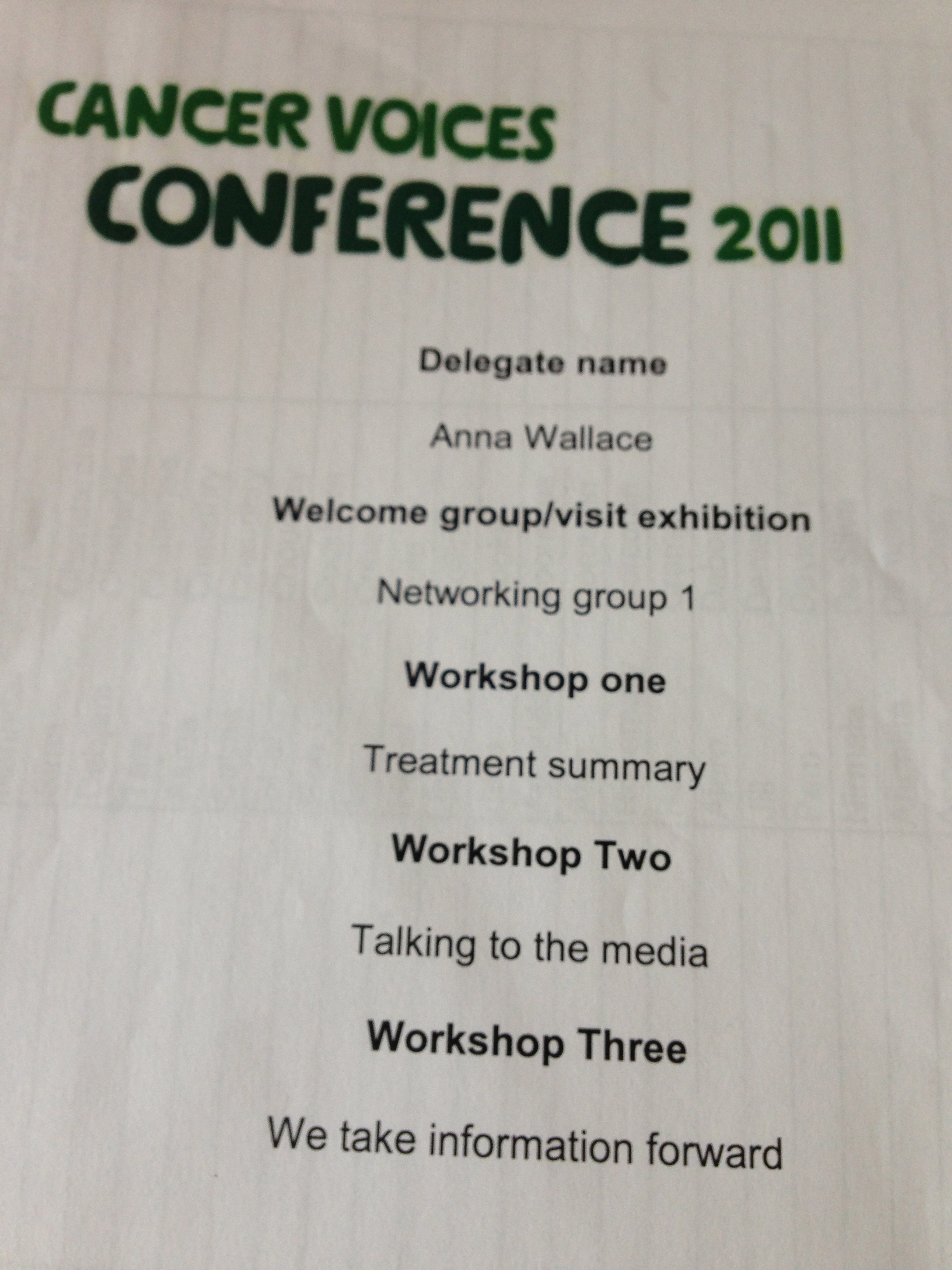
After lunch we headed off to our Workshop One sessions.  I had chosen ‘Treatment Summary’.
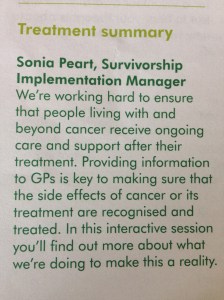
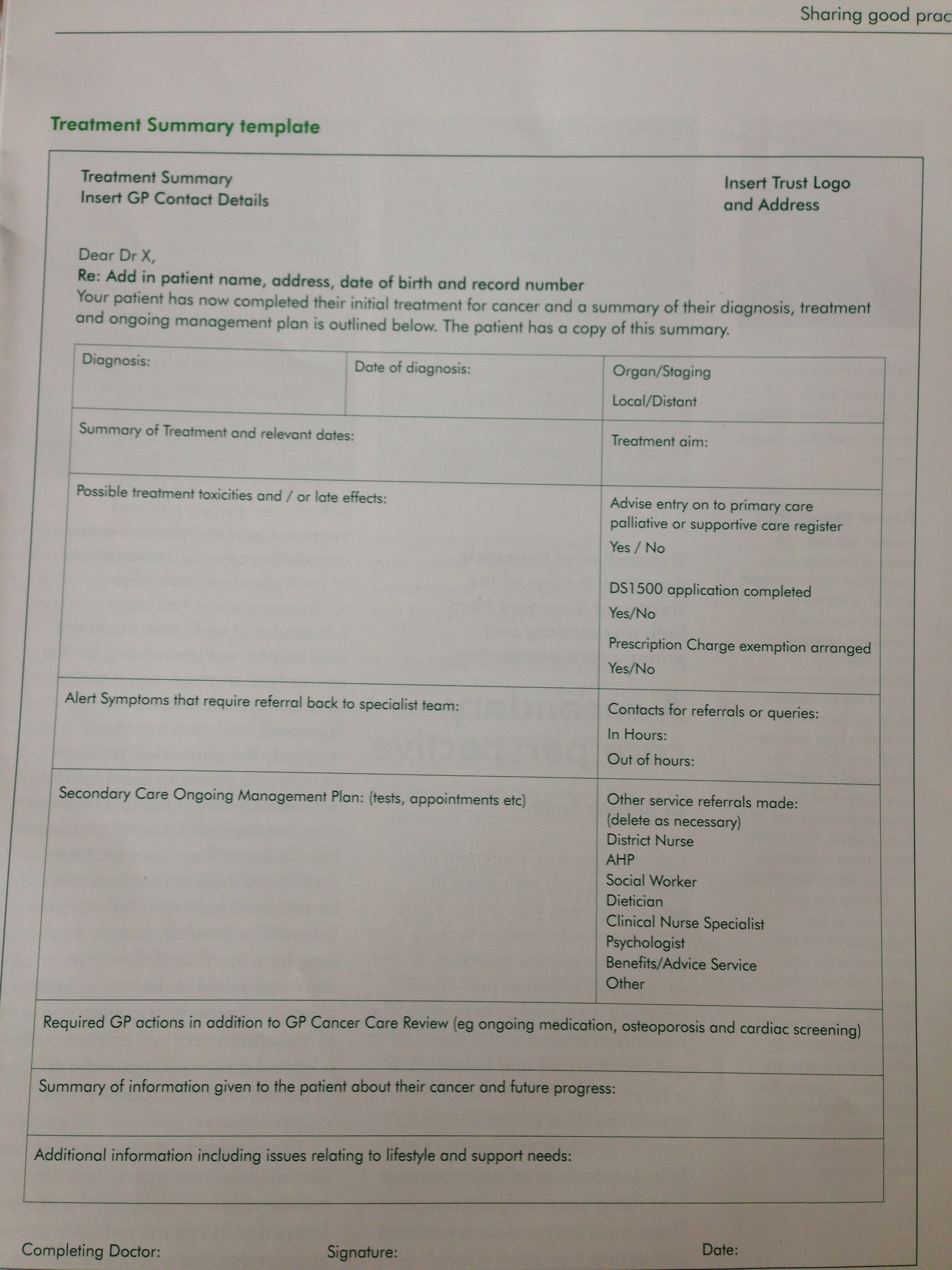
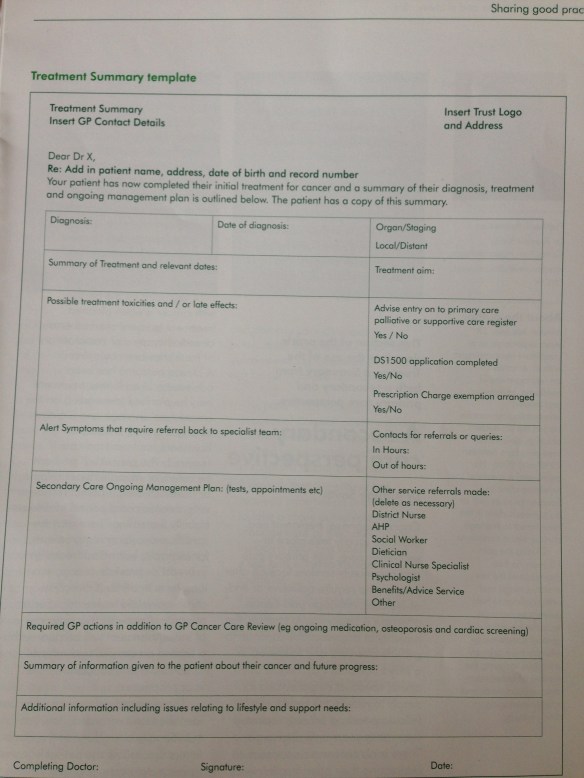
IMG_6651Treatment Summaries are a fascinating beast and once that has had much airtime of late.  Essentially ‘Treatment Summary’ or ‘Patient Passports’ are a brief medical history of a patient’s journey with cancer.  They are much like the ‘red book’ that parents were given when I was born and that documented all vaccinations, Dr visits etc until I was 16.  Every parent managed to keep these books safe and take them with them on every medical visit their child made.

What the Treatment Summary/Patient Passport is aiming to do is to keep a full record of the medical journey in one place.  As a patient I am all too familiar with having to constantly ‘remind’ or tell my history with cancer, every date and every detail.  The problem with this is that I may forget some detail or having not understood the medical importance of a piece of information, have missed it out.  This then leads to problems.  For the old/infirm or (err) unwell this is even harder to manage.  Particularly if they have different family members or carers present at different consultations.

Macmillan have devised the Treatment Summary template
IMG_6655

All very valuable information and is a great idea.

The barriers to this would simply be asking the medical team who are already stretched, to complete yet another form, ask them more questions and then to organise a method to send these treatment summaries to the GP (in addition to any usual paperwork).

Another barrier may be that each Trust/Hospital/Clinician may require slightly modified forms or information.  Then if the Treatment Summaries appeared in different formats at the GP office, they becoming confusing and laborious to read meaning that they may end up in a file unread.

BUT equally disappointing was that Macmillan (Juliet Bouverie was present in this workshop) appeared to be completely unaware of the other organisations, charities and hospitals that had been working on their own Treatment Summaries.  We have been discussing it on committees that I’m involved with at the Royal Marsden, NW London Cancer Network, SW London Cancer Network, C&W LinK for quite some time and I’ve seen the results of other people’s work.

The Patient Passport (very similar to the Treatment Summary) is now live and working well for many.  There are ones by Royal Marsden, Chelsea & Westminster, West Middlesex, East Cheshire, NWLondon/Imperial and many more.  Some of these are ‘advertised’ as being required for vulnerable patients but can and are used for many more than just the ‘vulnerable.  There are also private companies who sell ‘Patient Passports’ allowing the patient to keep a summary of all their treatment records and to take these with them to any medical appointment.  Much like our parents did when we were children.  Juliet seemed genuinely surprised that anyone else had thought of the idea of Treatment Summaries and promised to investigate.

I’ve heard the argument that we would lose our patient passports.  How many parents lost their red books?

The difference between a Patient Passport -v- a Treatment Summary is that the patient/carer is responsible for their own information.  This is in addition to the information shared between health organisations in the ‘normal way’ but adds another level of information easily accessible and digestible that the patient/carer can produce at every medical appointment… and update at the appointment too.

What frustrated me about today’s workshop was the complete lack of awareness of any other organisation or NHS Trust work in this area.  Macmillan have spent, I’m sure, a great deal of money on this project without consultation with others.  As it is there are perhaps already too many Treatment Summaries out there.  A GP in West London could well get sent 4 different types from the list of those already published.  How on earth are they meant to know the differences on each?  Most urban GPs will have 6,000 patients in their practice of which approximately 200 will be living with cancer.

Dinner

In the evening of the first day of Conference there is a dinner to which all attendees are invited.  Always a good opportunity to meet new people and catch up with some old faces too.

———-

Day 2

———-

Our day begins in the main hall with a presentation by Michelle Soan, Inspiring Millions Programme Lead.  She spoke to us about a new project called ‘Inspiring Millions’ as a way that we can spread the word about Macmillan and the reasons everyone should be inspired to fundraise for Macmillan.  I can’t help but feel that since we’re all Voices attending the Conference the ‘hard sell’ is overkill but hey ho!  Here’s their video explaining Inspiring Millions.

Workshop Two – Talking to the Media
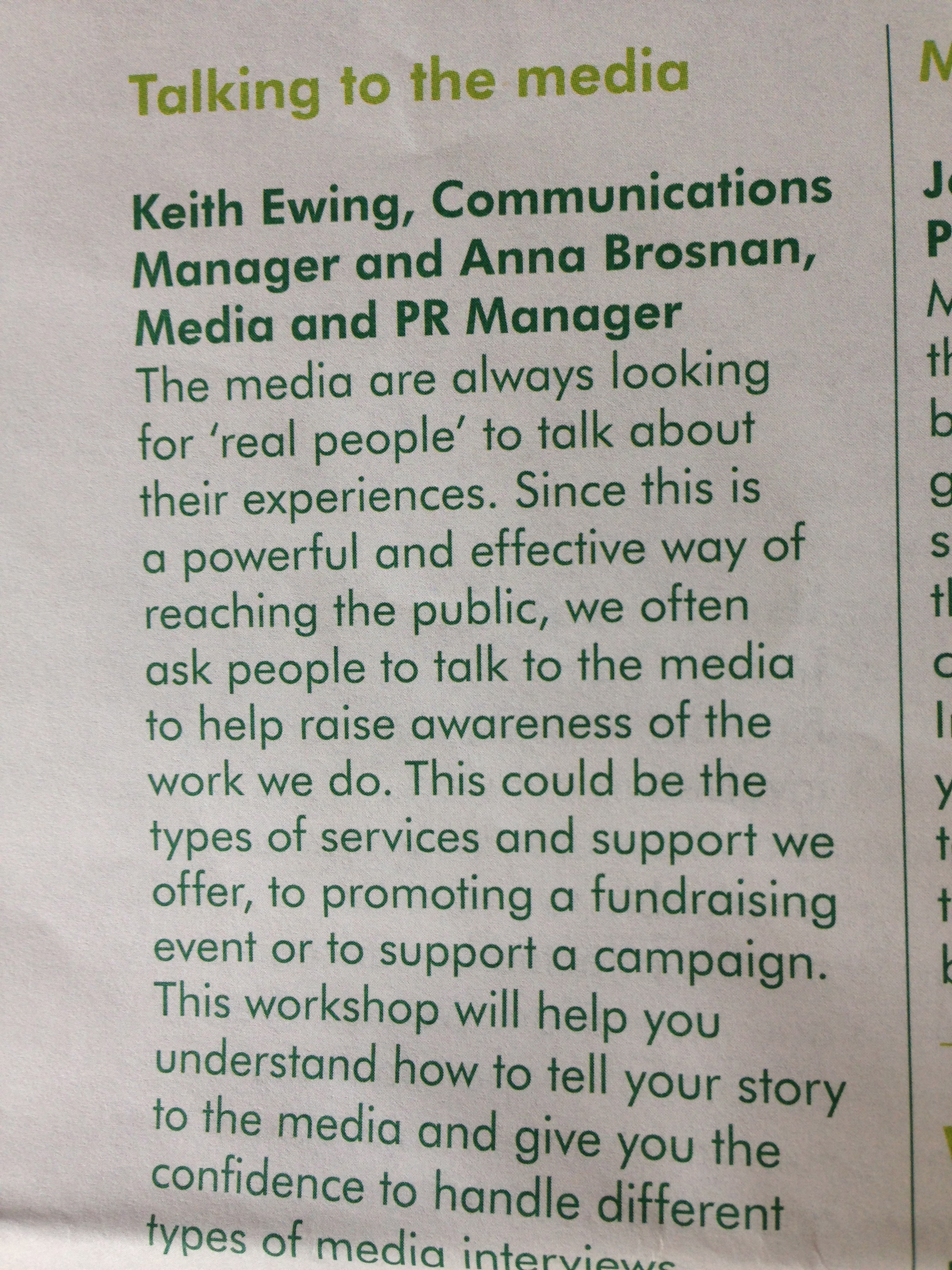
IMG_6652

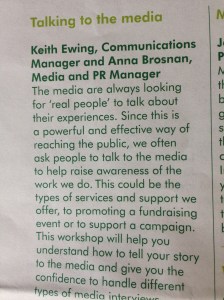
This workshop was aimed at those of us who are often asked to talk about our experience, particularly with reference to the TV, newspapers and radio.  Many people in the workshop were able to share their own experiences of working with the media.  For many it went well but for others they explained what had happened when they had been put on the back foot or perhaps hadn’t been briefed about the discussion properly.  Many also spoke of the emotional aspect to share your story.  It’s wonderful for others to hear and understand they are not alone in their own diagnosis but there’s a warning that often bringing up your own story brings with it memories or feelings that you’ve long since buried.

Some hints and tips from this workshop:

  • Media is often very reactive to what’s happening in the world.  Therefore you may be asked to participate with little or no notice.  Always be prepared.
  • Some TV/radio can be pre-recorded and edited.  Be aware that punchy shorter statements are more likely to make it into the final version and not on the cutting room floor.  Therefore word your important messages well.. and briefly.
  • Always ask, when first contacted, if the piece will be live or recorded.  If live, how long will you have to speak.  Prepare accordingly.
  • If your being asked to be interviewed for a written piece, ask to read it before it goes live in case of any inaccuracies.
  • Ask what sort of questions you may be asked and if there are any you can see before the interview.
  • Ask for a copy of the finished film, feature, interview or piece.  It’s not always possible but if you can retain a copy for yourself, it will be useful.
  • You don’t have to be an expert on the issue at hand but rely on your experiences and signpost to experts you are aware of such as Macmillan.
  • Its useful to have 3 key things you want to get across during the interview.  Then if you get stuck with a question you can guide it to one of these points.
  • Have some water to hand so you don’t get dry throat.
  • During filmed interviews always look at the reporter not the camera.
  • Be aware that you may feel you have been cut short during a live interview.  This is because of time restrictions not something you’ve said.
  • Try to smile a little.  Even on the phone or radio you can ‘hear’ a smile.
  • Take a deep breath and relax.

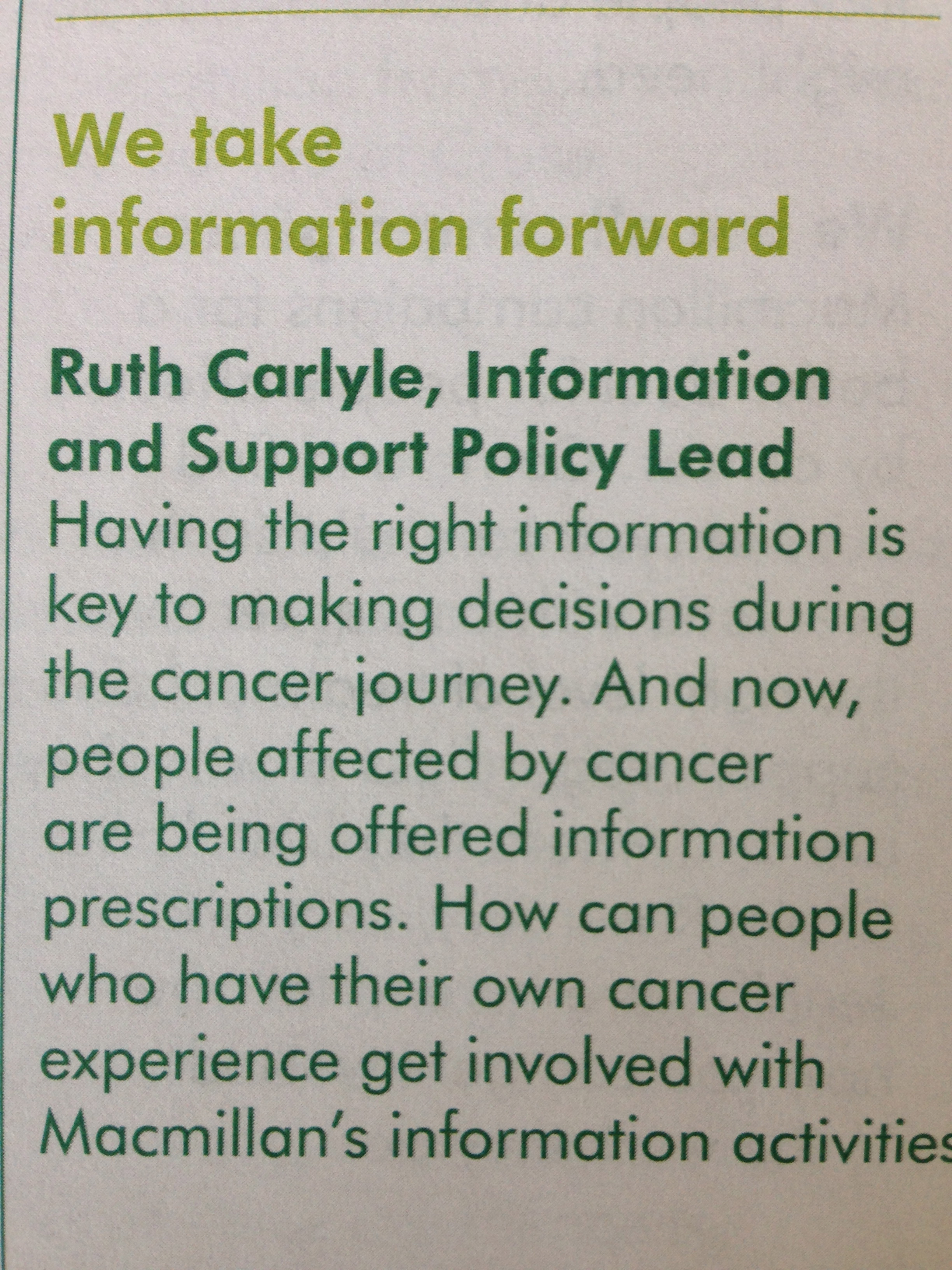
Workshop Three – We take information forward
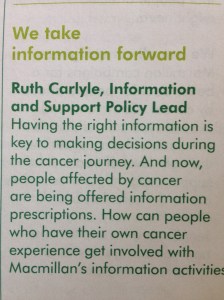
IMG_6653This workshop related to a number of information resources:

Promoting Information Prescriptions – This system that was created and started by NCAT.  You may recall that I spoke of my involvement as a patient reviewer here.  My mention of it from the NCIN conference and my speaking at the recent Learn and Share event.

So this was where the project had got to… Macmillan had taken it over.  No wonder why the wonderful reviewer system had broken down.  How incredibly sad that NCAT had a host of trained volunteers who were ready willing and able to review, write and process the information quickly and efficiently.  So that many information pathways can be put into the system and accessible to people needing it at a time when they need it.  Why on earth wasn’t this aspect of the project taken forward and at the very least these trained volunteers asked if they’d like to continue the project for Macmillan instead of NCAT?

During the workshop we have a walkthrough of the system and I’m astounded at the level of basic information there now is for cancer.  It all appears generic and I know that there is little hope of getting any information about any rare cancers or support for them from the system.  Have a look here.

Getting involved in Information & Support Services – Macmillan run over 140 cancer information and support services across the UK.  In hospitals, libraries, community centres and hospices.  The services offered range from information about specific cancers, treatment options, signposting to relevant clinical, social care or obtaining travel insurance, understanding the information or simply having time to talk.  Each centre is run by a team of people including an Information Specialist and trained volunteers.  Cancer Voices are encouraged to volunteer.

Getting Involved in reviewing books – Macmillan use reviews by people affected by cancer to help compile a list of suggested books for use in public libraries and information centres.  Reviews are also added to Macmillan Cancer Support website.  A link to a review of the wonderful Lisa Lynch’s book ‘The C-Word’ here.  Cancer Voices regularly get asked to review books.

Promoting core book list in libraries – Macmillan have put together a list of core books that are recommended to librarians about cancer.  This list should allow them to make informed judgements about which books to stock, how to select and appropriate range of materials and when to replace books.  This guide will also enable to librarians to recommend specific books when asked by the general public.  Cancer Voices are being urged to get involved by working with Macmillan to contact libraries local to them.

The Conference closed with a session entitled ‘One Voice’.  The programme said this would leave us “feeling positive, energised and confident.”  Sarah Warwick who hosted this session asked the group to stand, dance, move and sing.  An interesting ask and very isolating for those that were in wheelchairs, crutches or unable to move easily.  Even harder for those with a tracheostomy.  As I watched the group of attendees cautiously attempt to follow the instructions, I also noted a trail of people heading for the door and home.  I shortly followed them out.  Furious on behalf of all those who ended a two day conference where they had volunteered their time, energy and commitment to Macmillan to leave feeling humiliated that they couldn’t participate in the closing session.  I’m quite sure, like me, they didn’t leave feeling any kind of positive, energised or confident.
 

Cancer Research Share Event

Many charities and NHS divisions ask for patients and carers to share their experiences via a presentation, a video or a talk to staff.  The premise is always that this helps their staff focus on why they’re doing a job and perhaps understand aspects of their services from a ‘user’ perspective.

I was asked to speak this afternoon at Cancer Research to a group of new members of staff who’ve joined within the past 3 months.  A mixed audience of all levels of staff, some of whom will be working in a clinical setting or a lab, others in an office, some on fundraising teams and others within the media team.

I prepared what to say.  The outline of what I wanted to say was:

  • Introduction and thank you for invitation
  • Who I am and my journey
  • Why you’re doing what you’re doing
  • Thank you
  • The future

Sounds simple, doesn’t it?  I’ve had many sleepless nights thinking about that I’m to say, how it will be received and if I can say it at all.  It’s hard to talk about some aspects as I’ve safely stored those in the mental ‘do not revisit’ box and need to dip in and get it out.  I also know that the patient experience is so valuable and even the heartstring stuff is useful to ensure that people remember why they are doing the job they’re doing.

So when the event was cancelled this morning I’m not sure if it was relief or disappointment I felt.  Certainly I wished I could get back that missing sleep from the past few nights!


Anniversary

I don’t often talk about Mum anymore… or at least not out loud.  I do however go to dial her phone number and remember that she’s no longer here…. or I find myself talking to her or asking her opinion and then worrying that I’m not doing things as she’d want them to be done, or more often get frustrated and pissed off that she’s not here anymore.  I also get upset that she’s not here to celebrate my achievements.

I was recently nominated by two separate people for the Divine Woman Award 2011.  The two people who nominated me don’t even know each other but know me – one from the US and one from the UK.  Astonishingly they also nominated me for slightly different reasons… one for my work within the cancer arena focusing on survivorship, patient involvement and support.  The other for my work within the cancer arena but more particularly for my phyllodes work – finding out more, probing and asking questions, sourcing new information and more importantly my helping others newly diagnosed and through our Facebook group ‘Phyllodes Support Group’.  Divine Chocolate realised that I had been nominated twice and I was shortlisted and  invited, with a plus1, to the Finalists Reception with 5 other entrants.  I didn’t win, but the lady who did was very deserving and amazing… as were the other finalists too.  I went to the Finalist Reception alone because the only person I really wanted to accompany me was my Mum and she’s no longer here.  But I hope she looked down and was proud of me and why I had been nominated and why I was selected from all the entrants to be in the final 6.

Mum fought for more information on Multiple Sclerosis, more research, more progress, more support and more awareness… she used to drive us all nuts in her quest to help and find out more.  I knew why but I used to say to her to concentrate on herself rather than ‘the cause’ and get frustrated that right up until she was no longer able to use her fingers to write and use the computer, she would be writing to medics, politicians and health authorities with information, research or questions.  I now so understand why she did it and why it meant so much to her to know that she had tried to do something so that others behind her may not have to struggle with MS the way that she had.  She was determined to help find an answer as to why this dreadful disease existed and to find a way to relieve the symptoms for others.  I know that she will have made a difference with everything she did… I just hope that I can do so with Phyllodes too.

So Mum, 2 years ago today I watched you close your eyes and soon take your last breath.  I watched you peacefully slip away leaving behind your damaged body on this earth.  You’d had enough of the fight.  I know it was your choice to leave.  But I miss you so much.  Love you Mum.

Information Prescriptions Learn & Share Event

I’m very nervous about this.  I’ve had sleepless nights of late thinking about this.  I need to do it though.  I’m perfectly placed as I’ve been a Patient Reviewer on the Information Prescription (AKA Information Pathways) and also as a patient who sought information.

I’ve been asked to speak at a training event for nurses and staff that will be using the system first hand.  It’s part of a phased rollout project and there’s been lots of negative comment about the system from users that feel it’s yet another thing that they’re being asked to do when they’re already short of time.  Sadly one aspect of the rollout that I believe was missing was to supply IT equipment and printers to users – a small cost in the big scheme of things and one that is so essential!  In many locations the nurses are writing down the names of forms and papers and then asking patients to print them in the Cancer Information Centres or at home.  I can’t imagine, as a patient, doing this or feeling looked after doing it myself!

I joined the delegates at lunchtime and heard the presentation from David Manning of NCAT talk about the content and where it’s at.  (Sadly as a patient reviewer, I know that we’ve not reviewed any documents for quite some time!).

Then there was a short presentation from nurses using the system.  Telling us some of the quick wins they’d discovered whilst using the system, feedback from patients about the information and also highlighting a few of the hurdles they have had to overcome.

My turn next.  I was so terribly nervous.  I firstly introduced myself as a patient, user, survivor, patient advocate and many other titles!  An introduction to a brief summary of my cancer journey.  Finding the lump, Mum’s funeral, the interaction with primary care, introduction and immersion into cancerland and.. well you know the rest of the story from here.  I ended with a short piece about the Information Prescription system.  Why I thought it was invaluable.  Although it is something else that the nurses have to do (and I appreciate how much they already have do) it is about patient care.

In my view it is important to look after a patient holistically.  If a patient’s needs are met and reviewed regularly, have a system that they can refer to and find reliable information, then wouldn’t their lives actually be made easier as the patient would become more self-managing!

At the end of the day I was so pleased that so many people came up to me to thank me for telling my story.  They told me of parts that they’d not really thought about before.  I hope it’s made a difference.

(***UPDATE*** at the following Cancer Network meeting the Nurse Director pulled me to one side and told me that my talk had been the most influential.  She said since that date, she’d heard nurses discussing it and discussing how they can improve things.  WOW – the impact of a patient story.)