Sarcoma Awareness Week

This week is Sarcoma Awareness Week.  I wonder if you knew that?  The problem with being a rare cancer type is that even if you have an Awareness Week, you’re only a small voice in the big noise of life.  Even if you are able to get others to share the awareness and retweet or repost about it in their own social networking, how many people actually read it or look at links?  However I, for one, have tried to share the word.  I’ve taken Sarcoma UK leaflets into hospitals and GP surgeries.  I’ve even taken to leaving a few on seats of trains or tubes or buses – and loved it when people pick it up and read it to fill a few minutes of their journey.  You never know but what they read may well help someone else or themselves understand a sarcoma diagnosis.

So, I’m going to give you just a few facts about Sarcoma (extracted from Sarcoma UK’s website www.sarcoma.org.uk) and I’d really really appreciate it if you could tell someone something about Sarcoma.

  • Sarcomas are rare cancers that develop in the supporting or connective tissues of the body such as muscle, bone, nerves, cartilage, blood vessels and fat.
  • There are around 3,200 new cases of sarcoma diagnosed each year in the UK.
  • Sarcomas account for about 11% of childhood cancers.
  • Sarcomas account for about 14% of cancers in teenagers.
  • Most sarcomas (approx 55%) affect the limbs, most frequently the leg.  About 15% affect the head and neck area or are found externally on the trunk, while the remainder will be found internally in the retroperitoneum (abdominal area).
  • There are around 70 different sub-types of sarcoma within these broad categories.  These sub-types are determined by the tissue of origin (the tissue in the body where the tumour originally formed), genetic characteristics or by other molecular analysis undertaken by expert pathologists.

Types of Sarcoma

  • Sarcomas fall into three broad categories:
  • Soft tissue cancers
  • Primary bone cancers
  • Gastro-intestinal stromal tumours (a type of soft tissue found in the stomach and intestines commonly known as GIST)

Causes of Sarcoma

The causes of most sarcomas are unknown.

Treatment

Despite the many different sub-types of sarcoma, the general pattern of treatment is similar.

Surgery is commonly viewed as the best option for a ‘cure’.  Chemotherapy will usually be used with bone sarcomas before and after surgery, although it is less often used with soft tissue sarcoma. The case for chemotherapy following surgery is uncertain with soft tissue sarcoma but may be suggested with sub-types known to respond well to chemotherapy.

There are circumstances when radiotherapy offers benefits, usually after surgery but occasionally at other times too.

The treatment plan developed by your doctors will be specific for you. You may meet other patients with a similar diagnosis but who are having different treatment but this is usual and nothing to be worried about.

Surgery should be undertaken under the supervision of a sarcoma specialist multi-disciplinary team, even when the surgeon is not a regular member of that team.

There’s a really informative video created by Papercut Pictures called “All in it Together – Living with Sarcoma” from which you will a small selection of different ages, diagnoses and stories.  Do take a minute to watch http://vimeo.com/papercutpictures/sarcomauk


Phyllodes is a soft tissue sarcoma…


Tonight found me at our London Sarcoma Support Group’s party to celebrate Sarcoma Awareness Week held at Maggie’s Cancer Caring Centre in Fulham, London.  An amazing vital group of patients, carers and friends.  The volume was high and the laughter loud.  There was also tears and supportive hugs.  It was lovely to meet some of the group members’ husbands, wives, children, partners who were also there supporting them.

Sadly one of the group had lost his wife only a few weeks ago and I hope found comfort in our company.  Another has just found out his cancer has returned and he is to start yet another course of chemotherapy to keep it in check.  BUT whatever was happening with each of us in attendance you knew that there was a strong bond of support there and a lot of giggling and laughter.  Despite my not having been to several of the recent monthly meetings due to a number of reasons, I was touched that so many of the group were pleased to see me and remembered what I had been diagnosed with, what I was off doing shortly after we last met.

You see I’m not a ‘support group’ sort of a person.  For those of you that know me well, you’ll know that despite my putting this blog up in the public domain, I’m actually fairly private about a lot.  For some reason, for me, I find it useful to be able to use this blog to be open!  I also know that my family can read it and know what’s going on but don’t need to speak about it or mention it – we’re not good at talking!

All that said, I enjoy attending the sarcoma support group… but I perhaps sometimes appear to the group as the one ‘who’s sorted’ and is ‘supporting’ rather than ‘needing support’!

NCIN (National Cancer Intelligence Network) – Cancer Outcomes Conference (Day 1)

Ray Murphy, Chair, National Cancer Partnership Forum, opened the conference and welcomed delegates in attendance.

Ray had a couple of questions that he posed in advance of the conference starting:

“If we are to equal the European rates, we need to save an additional 5,000 lives a year by 2014/2015” – I’ve heard that number before and I can’t help but quiet down the nagging voice in my head that lets me know that the number will be much greater than that – Europe are imrpoving their cancer survivorship numbers too and 5,000 will only equal their numbers today. We need to try much much harder!

“How far are we away from the best cancer (useful data) in the world?”

Chris Carrigan, Head, National Cancer Intelligence Network
The evolution of the Networkpresentation

Jem Rashbass, National Director for Registry Modernisation, National Cancer Intelligence Network
The vision for cancer data in England

Data should allow personalised and stratified medicine. What we’re discovering and confirming is that no one person’s disease is the same as the next. Recently there’s been the discussions about how many types of breast cancer there is, for example. This means the surgery and treatment thereof should be tailored according to the type of breast cancer AND the person diagnosed.

By providing a personalised care plan the patient is further empowered in their own decision making of their own health and life plan.

A great example of a patient portal is the Brain Trust

We should be able to “predict” services availalbe to patients and clinicians based on the statistics and indeed we’re starting to see trends for this purpose emerging.

Dr Mick Peake, Clinical Lead, National Cancer Intelligence Network
Using data to change clinical practicepresentation

Ciaran Devane, Chief Executive Macmillan Cancer Support
Is data really benefiting patients?presentation

Ciaran spoke of data (good data) being critical in commissioning.  Data can identify where all are diagnosed for the purposes of treatment, followup, survivorship and end of life care.

By collecting and managing this data we are able to call upon the commissioning at the right time and in the right location ie local for anyone diagnosed with cancer.

42% of deaths per annum have had a cancer incidence however we have to consider that the numbers of cancer patients WILL go up.  Not because there are more people diagnosed but because people are surviving cancer.  Therefore the need for more survivorship and end of life care is critical.

More is being written about survivorship than mortality however we need to ensure there is a shift in the care for patients (and carers) to be able to manage survivorship.

Breast Cancer Care have been able to utilise data to evidence the need for more resources surrounding secondary breast cancer patients.  Crucial changes to the care for breast cancer patients that comes from data being gathered, analysed and acted upon.  See Breast Cancer Care’s paper ‘Spotlight on secondary breast cancer‘.

Macmillan are trialling a tool which it is proposed will assist people diagnosed with cancer to choose the right treatment and care in a location that near them, or their family.  At the moment the tool is being trialled for colon and rectum cancer in England.

————————————————————————————————-

We then headed to parallel sessions chosen by each delegate from the following:

Early diagnosis, screening and prevention
Patient experience and reported outcomes
Epidemiology
Cancer Audit

I attended: Patient experience and reported outcomes

The session was introduced by Dr David Cromwell, Senior Lecturer, London School of Hygiene and Tropical Medicine.

Robert Whistance, University of Bristol
Patient-reported outcomes (PROs) of colorectal cancer surgery: a systematic review of outcome measures – presentation

He spoke of the difficulties of patient reported outcomes and data in some areas, particularly with regard to obtaining the information when a patient has left hospital or for the followup appointments or indeed a patient’s perception of pain, for example.

The problems surrounding standardisation of trials, questions and information gathered.  However he was also able to evidence that although the earlier periods of classification and clarification can be trying, the results were critical to getting the care right.

He also pointed us to The Cochrane Collaboration, whose tag line is ”
Working together to provide the best evidence for health care”.  I would urge you to take some time to review the site and content.

Dr Anas El Turabi, Cambridge Centre for Health Services Research
Variations in satisfaction with involvement in decisions about cancer treatment: analysis of the National Cancer Patient Experience Survey 2010

Dr Anas spoke of the research that they had been conducting in to the variation of the patient experience resulting from the 2010 survey.  We know that there are several influences such as socioeconomic, ethnicity, age, sex etc however their task was to evaluate it further with a view to being able to draw out what is actually required to change in each area.

There will always be variables and therefore the task is to allow for the variables but to ensure that issues are not overlooked or perhaps addressed to heavily because of the variables but indeed that these variables are managed.

It was evident, more than any other aspect of the survey, that a “Shared decision is an important aspect of cancer care”.  Certainly I know from my own experience and conversations with others, that being part of a decision about ones own healthcare is empowering and healing.

Natalie Blencowe, University of Bristol
Which outcomes are important to patients and surgeons? Core disclosure prior to oesophageal cancer surgery – presentation

The team chose to look at the oesophageal cancer surgery which has the largest morbidity of all NHS surgeries.

What information and how much is good and right for cancer patients?

First there must be a ‘Core Disclosure Set’ established and added by patient belief, expectation or needs.  This Core Disclosure Set once developed would then be used in surgical consultations prior to oesophagectomy.

The methodology and iterations are best detailed in the presentation prepared by Natalie, however I think it’s very evident that the process is long and drawn out but as it should be in order to gain the best possible questions and answers, to be asked and answered in the best possible language and wording.  Each list of questions in any ‘surveys’ or questionnaires must be tested and revised many times by both the clinicians, patients and lay representatives.  Terminology is new to those entering a procedure but old to those who have practiced it for years!

Natalie also referred to the The COMET (Core Outcome Measures in Effectiveness Trials) Initiative (Web and twitter @COMETinitiative) which aims to set standards and agreed measures for this type of work.  If agreed standards and measures are implemented then the iterations of future work may be reduced.

————————————————————————————————-

Dr Mark Davies, Medical Director, NHS Information Centre introduced the first afternoon session

Using clinical information to improve services and outcomes

Professor Julietta Patnick CBE, Director, NHS Cancer Screening Programmes

Information to improve cancer screening services

Julietta’s presentation related to the screening programmes that were underway in the UK.  The importance of these programmes, the cost and the benefits.  She spoke of the difficulties in getting people to take up new programmes, particularly those such as bowel cancer screening… however she was also able to demonstrate that screening programmes do work and do pick up signs of cancer early.  They may ‘stand-alone’ as being an expensive option however evidence indicates that by picking up the early signs of illness, most cases are treatable and therefore more extensive surgery or treatment and long term care avoided.

Julietta also spoke of the ‘celebrity affect’ that sees peaks in screening being undertaken. An obvious one was regarding Jade Goody and the sudden increase in cervical cancer smear tests.  At these times the service is hard to manage due to the numbers of tests being required at short notice however many cases were identified at a time when they would have otherwise potentially have been missed with the patient not attending the regular screening.

We therefore concluded that more emphasis was required to urge people eligible for screening, whether it be cervical, bowel, breast or prostate to attend clinic and keep the appointments made for them.

Di Riley, Associate Director, Clinical Outcomes Programme, National Cancer Intelligence Network

Information to improve clinical servicespresentation

This presentation was relating, more particularly, to the commissioning aspect of cancer care in the UK currently and also with reference to the changes that are taking place in the NHS structure.  Di, once again, demonstrated the need for data, it’s analysis and, of course, the imperative requirement for the data to be entered and managed in a good standardised format.

She also explained further the decisions that are made at a clinical level but also with regard to the cost and distribution of services, hospital beds and medication etc.  I guess we are often quick to say that drug A isn’t available or there wasn’t a hospital bed when it was needed or indeed we’re told the cost of something means that it’s too much for our care… but all these factors ARE considerations and hard decisions do need to be made by someone and the buck stops with them.  I can’t imagine the task in hand or the times when they must consider that perhaps they’ve got it wrong or allocated funding to a necessary place when they also know it’s needed elsewhere.  But that’s reality.   It think this presentation really showed other considerations that aren’t usually discussed in the public domain but perhaps should be.

Di also showed us through some of the pages of the Cancer Commissioning Toolkit which is online and available to health professionals, allied healthcare and of course commissioners.  It was fascinating to see the depth to which the system goes and how it can be utilised to assist with ‘best’ decision making at a local level.  The presentation shows many pages and search profiles to give you an idea of the system if you’re unable to create an account.

Like most of the discussions today, this highlighted once again the importance of good, clean data, accurate inputting and standardised information.  Sharing information and accessing information and data for joint decision making.

————————————————————————————————-

The afternoon’s parallel sessions where again each delegate from the following:

Staging
Access to medicines
Less Common Cancers
Information for the public
Supporting commissioning

No surprise here, I attended: Less Common Cancers

The session was introduced by Baroness Morgan of Drefelin, Honorary President, Cancer52 and Chief Executive, Breast Cancer Campaign

The focus of the introduction was really expanding what we already know that although each individual ‘rare’ cancer may well be small in numbers, unfortunately together they make up over 52% of the deaths from cancer in the UK each year.  It is terrifically difficult to research or support each of of the individual rare cancers but together we can ensure there is a voice, advocacy and pathway to secure more funding and projects.

We also know that some of the ‘rare’ cancers may switch places on the ‘league table’ of cancers with others that are currently reducing in numbers.  Always a positive mark for those that are being reduced in numbers but not necessarily for those that are increasing and not funded for research!

Matthew Francis, West Midlands Cancer Intelligence Unit
Patients with Soft Tissue Sarcomas of the Limbs: who treats them? – presentation

Matthew spoke about the reasons why specialist centres are required in the UK, why a specialism will assist patients in the future and indeed improve the care and quality of surgery.  It’s obvious really, if a team perform an operation repetitively they should only improve.  They should find  a new better way of doing things.  There should be less room for error.  However there is also the difficulties of specialist centres not being as accessible as a local or district hospital to consider.

Some brief statistics to demonstrate the rarity of soft tissue sarcomas as well as the variety in age and anatomical site were shown.  Around 2,800 diagnosis in England and approximately 1% of all malignancies diagnosed.  However over 100 different types of soft tissue sarcoma.

Matthew spoke of the absolutely critical importance of the Improving Outcomes Guidance (IOG) which includes a recommendation that ‘patients should undergo definitive resection of their sarcoma by a surgeon who is a member of a sarcoma MDT which treats 100 or more cases per annum’.

Perhaps selfishly, I considered my own Phyllodes case and those of my fellow English people diagnosed – rarely can any of us say that we have been referred to a specialist surgeon who is a member of a sarcoma MDT and who has treated 100 or more cases per annum!  If ever.

On the fifth page of Matthew’s presentation he identifies that there are only 5 centres in England that treat both bone and soft tissue sarcomas.  15 centres that treat soft tissue sarcomas and another 20 diagnostic centres around the country.  The purpose of these are to provide specialist help on sarcomas for GP’s generic information on sarcoma.

The second part of Matthew’s presentation “Where are patients with soft tissue sarcomas treated surgically?” he provided some statistics from the information/data available.

Matthew was able to demonstrate that there is a lack of accurate recorded data in a number of areas and stressed the importance of this information being included.

He showed us the validation and methodology in his referencing and analysis and then was able to show where treatments were in fact carried out.  Only 51% was carried out in specialist centres.  More shockingly were the figures that identified that there was no HES (Hospital Episode Statistic) record for patients diagnosed or indeed surgery recorded as relating!

There will be some instances where surgery isn’t an option (because of other health issues, at the request of the patient or because the outcome wouldn’t warrant the surgery) however the figures don’t seem to stack up.

There is still a great deal more analyses required to be done, together with encouragement by bodies such as NCIN, NCAT and NHS to ensure that data is input correctly, time efficiently and accessibly.  More information regarding staging of sarcomas should be included as should the discussions held at MDTs and more specifically sarcoma MDTs.

Admissions to specialist centres for surgical treatments are increasing but need to increase further. There’s still substantial amount of work to do for sarcoma and rare cancer reporting however having attended this conference last year and spoken with Matthew at each conference, I am confident that headway is being made, and we should thank them for this.  This evidence will aid the case for investment into rare cancers.

Tania Tillett, Royal United Hospital
Evaluation of a Cancer of Unknown Primary Service; the first two years – presentation

Cancer of Unknown Primary (CUP) is something that is rarely spoken about.. even more than rare cancers!  It was hard enough to be diagnosed with a rare cancer but to be told that you have a cancer but the medics don’t know where it started from or where the primary site is, must be even more frightening.  The question must arise so often – why don’t they know?

Tania is part of a service that has been going for the past two years and is utilising data to try to establish some evidence why CUP cases exist and indeed can be do something better with the data and records to assist with the identification of a cancer primary site.

Tania spoke of some of the difficulties in the project, not least that often by the time a CUP is reported it is because it is metastatic at the time of diagnosis and unfortunately higher in mortality levels.

Despite the lack of clarification or reporting, Tania was able to report that there have been improvements in the care  of CUP cases, that there are cases where specialists have been involved at a much earlier stage in the care and that there is far more optimism for CUP than previously.  There was however more than needs to be done with services, research and classification.

I came away from this presentation a little buoyed by her work and hopeful that Tania and her team will be able to assist more people diagnosed with CUP.

Lucy Elliss-Brookes, ASWCS Cancer Network
Routes to diagnosis for less common cancers

Lucy spoke about some collaborative work to set up standards and specific routes for diagnostic tools.  She identified again the need for better more conclusive data.  She also spoke of shared data and working WITH other health professionals and bands to ensure that a cohesive reporting structure can be found together with standards for asking, receiving and inputting data.
A friend in need

Today I woke early and headed out to get the bus into Chelsea.  I’d had a somewhat sleepless night anxiously running through all the things I needed to say this morning.  As the bus slowly made it’s way down the Kings Road I will still mentally making notes.  This time though the notes and things to remember weren’t for my own ‘consultant Q&A session’.  I was meeting up with a lady that I’d ‘met online’ a few weeks ago.  She posted on a forum a question about Phyllodes and had concerns there was nothing out there nor anyone else diagnosed.  Her comment appeared in the many different internet search mechanisms I have set up and we became acquainted.  Over the past few weeks we have corresponded by email regularly and I have been able to introduce her to the ‘Phyllodes Support Group’ on Facebook.

Like so many of us diagnosed with Phyllodes, we can’t find information or resources easily accessible.  If you go on to many cancer sites or into information centres there is never (or very rarely) any mention of it.  Just in that moment, it can feel even more frightening and isolating than ever.

Today was a consultant appointment that I had encouraged.  The lady had many questions and her own hospital didn’t seem to know or understand Phyllodes.  Therefore a consultation at the Royal Marsden with sarcoma specialists we hoped would help her get answers.  The lady had been up tremendously early to make the journey to London and we met (with her adult daughter) in a coffee shop around the corner.  Because of delayed trains we only had about 30 minutes.  But enough time to walk and talk on our way to the hospital, run through the questions she’d got written down and importantly, I believe, enough time for her to meet me and know that we do survive Phyllodes!

I left them at the hospital as they were called in for the appointment, we hugged and I wished them luck.  The lady then handed me a card.

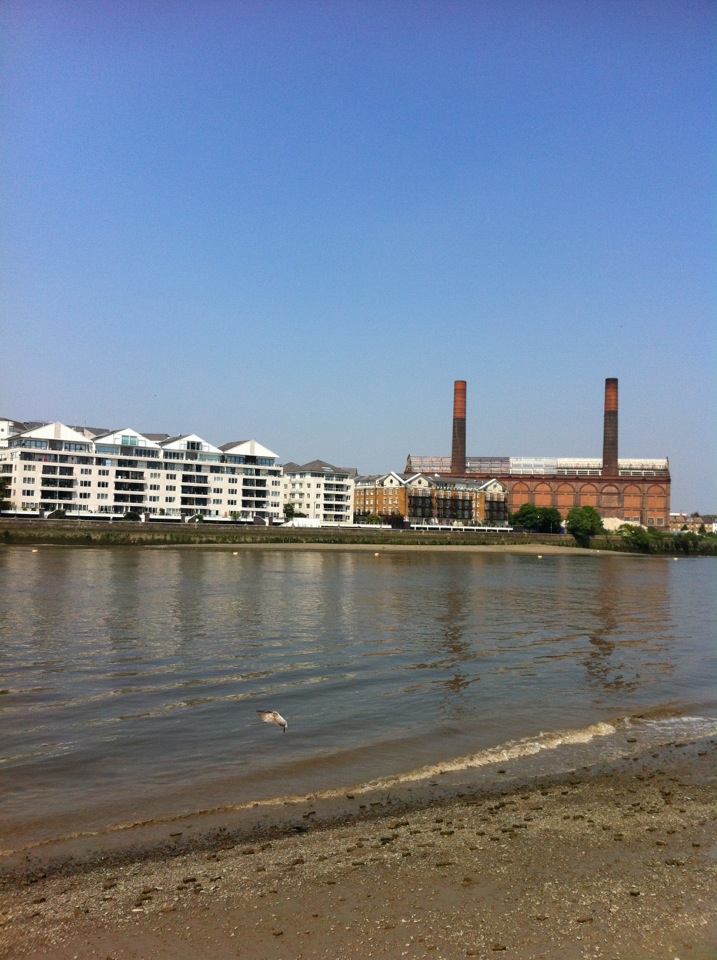
The sun was shining so I decided that, for once, I really did have enough time to walk home and set off along the Fulham Road and to the river pathway.  Just past Battersea I found a bench sheltered from the now very hot sunshine and stopped for a minute.  My phone blipped with a text from the lady letting me know they’d just left the hospital and would email fully later.  I, of course, (and you’d expect nothing less) suggested that she and her daughter enjoy the sunshine somewhere fabulous for lunch with a glass of bubbles… !!!  

I then opened the card.  The front was a picture of a baby elephant.  Inside the words:

“They say that ‘Elephants never forget’… well neither will I Anna!  I will never forget all the support you have given me this last month – giving me links and pointing me in the right direction.

It’s official…. “You are a Star AnnaGoAnna!”

There might have been a tear that snuck out and rolled down my cheek… or it could have just been the sun getting in my eyes!

I walked home wondering what it would have been like had there been a ‘Me’ around when I was diagnosed.

Mum’s birthday

Today would have been Mum’s 73rd birthday.  She died in 2009 from a long battle with Multiple Sclerosis.  She was ready to die but I don’t think I was ready to let her go.  Can’t tell you how incredibly selfish that sounds, even to me.

In the past few years there have been so many times when I’ve wanted to or needed to know something about her, our family or an event that happened… she would be the only one who’d know the answer and she’s not here to help.  When I get into my car I often think about dialling her number on my hands free for a long chat whilst sat in traffic or on a motorway journey.  They were the easiest chats, Mum always wanted to talk and I always seemed to have lots to do or be getting on with, so car chats were longer, more amiable wittering affairs.  They were the times when we would talk, really talk, about everything and anything.  Other calls seemed to be short snatched calls, and mostly were about her care, carers, finance, arrangements or such.  So perhaps you understand why I wish I could call Mum from the car for a chat…

Mum didn’t ever knew I was diagnosed with cancer.  My having found the lump the morning of her funeral.  I wonder what she would have said and done to support me?  It’s funny that something that has had such a huge impact in my life is something she hasn’t been able to know or help with.

I do know however that she would have been so extremely proud of what I have done and achieved since my diagnosis.  Both in my personal life and with Living Beyond Diagnosis.  I also know she would have been encouraging me along and probably calling everyone she knew to get involved with it too.

What now Mum?  I need to go back into paid employment and I’m not sure where I want to go?  I’ve gained huge amounts of skills and experiences in the past couple of years and I would like to channel my new found skills into my new career.  I also know that I’d like to do something that matters, something that really matters.

Any ideas, Mum?

Scans

Hahaha don’t you just love hospital instructions!… I have more scans and one of my instructions is not to wear a corset!!

I hadn’t been thinking about wearing one but now the devil in me is sorely tempted!!!

OK so I didn’t but I did think about it! Here we go again, nervous once again just in case they find anything but also feeling like an old professional patient. 6-monthly checkup scans – this time only an ultrasound.

Phyllodes Sisters

During my journey I have spoken of my ‘Phyllodes Sisters’ who have been there for me in so many ways.  The majority of these ladies I met online via the Facebook group ‘Phyllodes Support Group’ and some I have, as you know, had the pleasure to meet at the Young Survival Coalition (C4YW) Conference in the US.  I have mentioned a few by name but mostly by reference to the wonderful team who mean so much to me.

Today we hurt.  Today our beautiful Jolene lost her battle with cancer.  Jolene was a shining example of how to live but also an example of how to die.  Diagnosed first at the age of 17 with her first Phyllodes tumour, then with metastases to other parts of her body and new rare and also common cancers too including chrondosarcoma and DCIS since her first diagnosis.  She’s had surgeries, chemotherapy and radiotherapy.  After two major surgeries earlier this year to remove tumours from her jaw, the jawbone being replaced with bone from her thigh, first one side and then a recurrence on the other side of her jaw a few weeks later.  She thought she had beaten cancer once more.

After experiencing headaches she fought to have scans on her brain and they discovered yet another fast growing rare tumour behind her eye.   Jolene made the decision at the age of 25 not to have any further surgeries or treatment.  She decided that her quality of life was more important, even if just for a short time, than to undergo surgery that they couldn’t guarantee would work, nor would possibly leave her blind or disabled.  The medics gave her 3 months maximum to live.

Hahaha (and as I type that I can hear Jolene’s laughter)… Jolene wasn’t going to take that lying down and steeled herself to have the best ever time that she could, in the time left to her.  I saw daily posts of adventures.  Jolene spoke of a closeness that was evolving each day with family and friends and an amazing mother-daughter bond and one with her grandmother too.  She amazed us all at her life and laughter and also her compassion for others whilst she faced this every day.  And we held her hand on the days it seemed too much or when the pain was unbearable.

In the early hours of today she went to sleep.  On her terms and only when she was ready to go.  She was surrounded by her family and friends and left peacefully.

For her friends and family there is now a huge gaping hole where Jolene once lived in our lives.  I personally cannot believe I won’t hear her laugh anymore or read about the mischief she creates on this earth.  However we’re all absolutely sure that the angels are partying tonight.. and if they are at first reluctant, Jolene will have them dancing and giggling in no time.

Jolene VonMillanich – 19 November 1985-30 October 2011 – In the Arms of the Angels by Sarah McLaughlin

Cancerversary

Happy Birthday Granny. It’s funny how I know it was my Grandmother’s birth date and that I now remember it every year. I didn’t when you were alive but now that it’s interwoven with my cancerversaries it’s become a significant day to me. It was the 16th October 2009 that I was told the pathology had identified a rare cancer and a day when the bottom fell out of my world…. but also a day where I felt that you, Granny, had been looking out for me and holding my hand. Thank you.

I’ve not updated a great deal on the website this year, partly as there has been little to write about anything ‘new’ about Phyllodes (for those of you who find this site looking for information); partly because there’s not been too much about my own health that has been newsworthy or that I’m willing to share; and mostly because I don’t know what to say.

The Conference has been put on hold following delays by the Charity Commission in our registration. These delays in turn meant that the financial year end for many corporate sponsors was missed and tens of thousands of funding lost as a result. It had been hoped to postpone the event – the structure, speakers and workshops being arranged and set up – however the venue, despite being given 7 months notice, would like an astronomic cancellation costs. Long story short but this sent the whole project into a spin and has, for the timebeing, been shelved. My decision was not taken lightly and there were a number of factors in this decision. The most important was that I was worried that we would raise more funds for the project which may end up in a corporate venue bank account rather than put toward the project itself! I was also aware that the 24/7 work on the project had been making me quite unwell and was undergoing a number of tests for a large part of 2011 to establish what was wrong with me – to date still inconclusive. I was also exhausted and feeling utterly battered and bruised by the experience. However the upsides were that I was being approached regularly to sit on a board or committee at local and national levels within cancerland and from where I may well be able to influence the very changes that the Conference would have been able to do, ie survivorship and patient empowerment. I also received some great feedback from a few UK cancer support charities to say that on the back of meetings with me, they had altered their programs for cancer patients and carers.

I am and have been devastated that the event is not going to happen – it was my baby; I know how much of a difference it would have made to attendees and others; it was addressing head-on issues that cancer survivors ask about all the time but we Brits aren’t great at answering; and also I’ve invested an enormous amount of my own money into it. However I do know that I made the right decision, for now.

I have, very recently, been approached by two parties, one a volunteer organisation and the other an NHS group. Both of them would like to utilise some or all of my conference structure, speakers and workshops in their own events and clinics. I’m looking forward to assisting them with their projects.

For me… I know that I need to spend some time on me. Some time looking at what I best need to do and how I do it. I know from my recent episode in the GP surgery and others that I’ve not told you about that I need to deal with some demons of my own. I’ve learnt a great deal in this process though. Not least about friends and family. I’ve also learnt that I need positive people in my life.

2 years on reflection

Two years ago today I received the results of my biopsy. They told me that I had a benign fibroadenoma and that this could easily be removed, nothing to worry about and bish bash bosh, I’d be back to my old self in no time. So much so my chirpy little entry on this site for 9 September 2009 reminded me that I had discussed renaming the procedure with my consultant to mallowectomy as it didn’t sound as harsh as lumpectomy!

Worst still the line:
“At least however we don’t have cancer in our family history and I’m just lumpy bumpy.”
I can’t tell you how often I replay that sentence in my head and how sad it makes me that I was just soooo damn wrong.

That was how I felt at the time. That was how my day was going. And that was (at that moment in time) how it was going to be, just a little blip. I think you can read the relief in my entry of knowing that I didn’t have cancer. But wow what a rollercoaster there was ahead of me.

Two years on, I’m ‘cancer-free’. That is to say the scans have told me that they got it all and there are no recurrences in the breast tissue. I can’t tell you any more than that. There is no real end date either. I know that may sound odd or strange but where there is clinical evidence or a precedent to follow then many cancers can get the 5 year ‘all clear’ or the at the end of this drug or that drug you will have beaten it. In my head however there isn’t an end date/time because nobody knows. If I sound like I’m dwelling in it, I’m not. Not at all. I’m cancer-free. But I find it terrifically hard when there’s a route or a pathway or a reference for other cancers and illnesses that determines an end or a route with markers on it. For something so rare, where there is no definitive ‘guide’, there are no answers. I may not be a scientist or mathematician but I like things to be solvable and there to be a reason and result. My favourite subjects at school (and subjects that I did well) were sciences, maths and even loved algebra! I think that’s where I struggle most… lack of reason and answers. Perhaps as more of us are diagnosed there will be more pressure for clinical trials, research, information and resources to be undertaken. As well as more data and reference points for ‘guides’ to be created. Perhaps my digging away at various different resources, speaking at cancer-related events, involvement in a number of different cancer networks, sarcoma groups, conferences and boards that maybe the word ‘Phyllodes’ will become a name that people start to think about…. perhaps. But I’d rather noone else had to join this exclusive group and be diagnosed!

2 years and 2 days on

It didn’t go unnoticed, by me, that on Saturday 20th August 2009 was the day that I found the lump that has caused me so much anxiety, sense of loss and belonging together with a feeling of being so alone. I remember so clearly the moment as I was getting ‘ready’ for Mum’s funeral, changing in and out of outfits and adjusting myself when I felt that lump (which then became lumpS). I remember that moment of sheer panic and fear, that moment of anger that Mum wasn’t alive for me to go to for help… instead in a few hours time we would be at the crematorium turning her earthly body to ash. I don’t know if I’ll ever forget that moment or, like other moments in this journey, when the world seems to suddenly turn black. That moment when I can’t see any light to run toward or any chink that makes any sense or demonstrates that there is life and light beyond.

So two years on I did something very different. I went to a music festival with a friend. Shellie knows me well but didn’t realise the significance and I didn’t tell her either. I guess I needed to prove that I could do something new, exciting, positive and fun. Prove it to myself. With people who wouldn’t be worrying about me and what was going on in my head… and I did it. I really did it. OK so I drank too much on Friday night. I danced like a looney-tune and I probably embarrassed myself… but I didn’t let the darkness in. I remembered how to forget. I sang in a loud (probably out of tune) voice along to the sounds of the 80s on the Friday night stage for camping festival-goers. And then I collapsed in my tent and slept soundly until the morning.

OK OK, much like my time in the 80s I woke up with a raging hangover, feeling queasy and unwell. Perhaps also a little maudeline and quiet but grateful for the company of Shellie and our new tent neighbours with whom we’d launched our company upon on Friday night and had a great night with. Everyone else was chipper and late morning Shellie and I headed out for a walk along the river. The music festival (Rewind Festival) is held in Henley, my local town when I grew up. A place that I used to go with Mum and where many memories were held – good and bad. Walking along the river and through the town was good, cathartic in a way but one that I could only flash through in my mind whilst we wandered. I’d still not told Shellie or the others the significance.

I didn’t drink on Saturday and danced and sung along (perhaps slightly more in tune) to the hits of the 80s. Memories flooding back but all safely in my head.

This was my first foray into Festival going. I loved it… mostly. No I really loved it… the only part I wasn’t keen on was the sanitation issue with portaloos and very few showers (and a 2.5 hr queue for a cold shower!). Beyond those issues the rest was blinking brilliant. Danced, sang, laughed, chatted, giggled and generally had a ball. With Shellie but also with old and new friends… I even hope to go back next year.

I guess what I was trying hard to do, and I think achieved.. ‘best foot forward’… ‘onward and upward’ etc etc

I’m getting there… but there is a niggle in my head. There was at the festival, as there often is, a friend trying to match make me, concerned that I’m not in a relationship and convinced that I should be. Looking around for my ‘perfect partner’ and then quizzing me on my intention. I don’t think I notice men in a ‘relationship’ way any more. I notice them as being someone who I’d like to spend more time with. Or perhaps someone who I have a great deal in common with. Someone I enjoy being in the company of. But I’ve switched off anything else. Last night as I tried to get to sleep in the cold tent, I spent many hours thinking it through, having been quizzed heavily during the evening. I don’t know if it’s because I don’t think I’m good enough; I don’t want to inflict myself upon someone because what happens if the cancer does come back; I don’t know if it’s because I can’t put myself in the position of being knocked back and rejected; I don’t know why.. but I think right now, I’d much rather enjoy someone’s company, have a laugh, enjoy life, do things together without any expectation but mostly have fun. I don’t know… but I do know that I don’t know!