Has it been found?

When I returned to Australia in 1998 I entrusted a box of photos and paperwork to my brother to look after.  After all I was only going out there for a year so it contained things that I’d need when I first returned.

I never dreamt that I’d be out there for many years and that my brother and his family would move more than once in that time.  On their last move I asked my brother about the box and was told that he’d not come across it in the move. I have to confess to being more than a little sad about it but my own fault – I’m an adult and should be responsible for my own things.

Obviously I came back to England and got on with my life.  I didn’t need the box or its content… or did I?

You see there was one thing in there that I have thought of often.  Wondered where it is.  What it said.  etc.  It was a Journal that I kept on my first trip via Asia to Australia in early 1998.  A trip that changed and influenced me far more than any other education or experience in my life.  For so many reasons.

I’ve just received a text from my sister-in-law.  They’re clearing out the loft room for their latest house move and she’s found THE box!  Her text says it contains “A brown covered journal”.

I so can’t wait to be reunited with the Journal… and the other content of the box.  I’ll keep you posted… whoooohoooo 🙂

The Artist at the Royal Albert Hall

I didn’t manage to get to the cinema when the Artist was showing.  I heard all the hype about how fabulous it was and felt that I should have seen it.  Then when it cleaned the floor with a squillion film awards I knew I’d missed out.

However I did wonder why.  I mean we had black and white silent movies many years ago and they lost out to the newer ‘talkies’.  I considered getting the DVD at home to watch but was urged that it wouldn’t be the same on a small screen.  So I did nothing… well until I spotted that the Royal Albert Hall were showing the film with the score live from the London Symphony Orchestra!

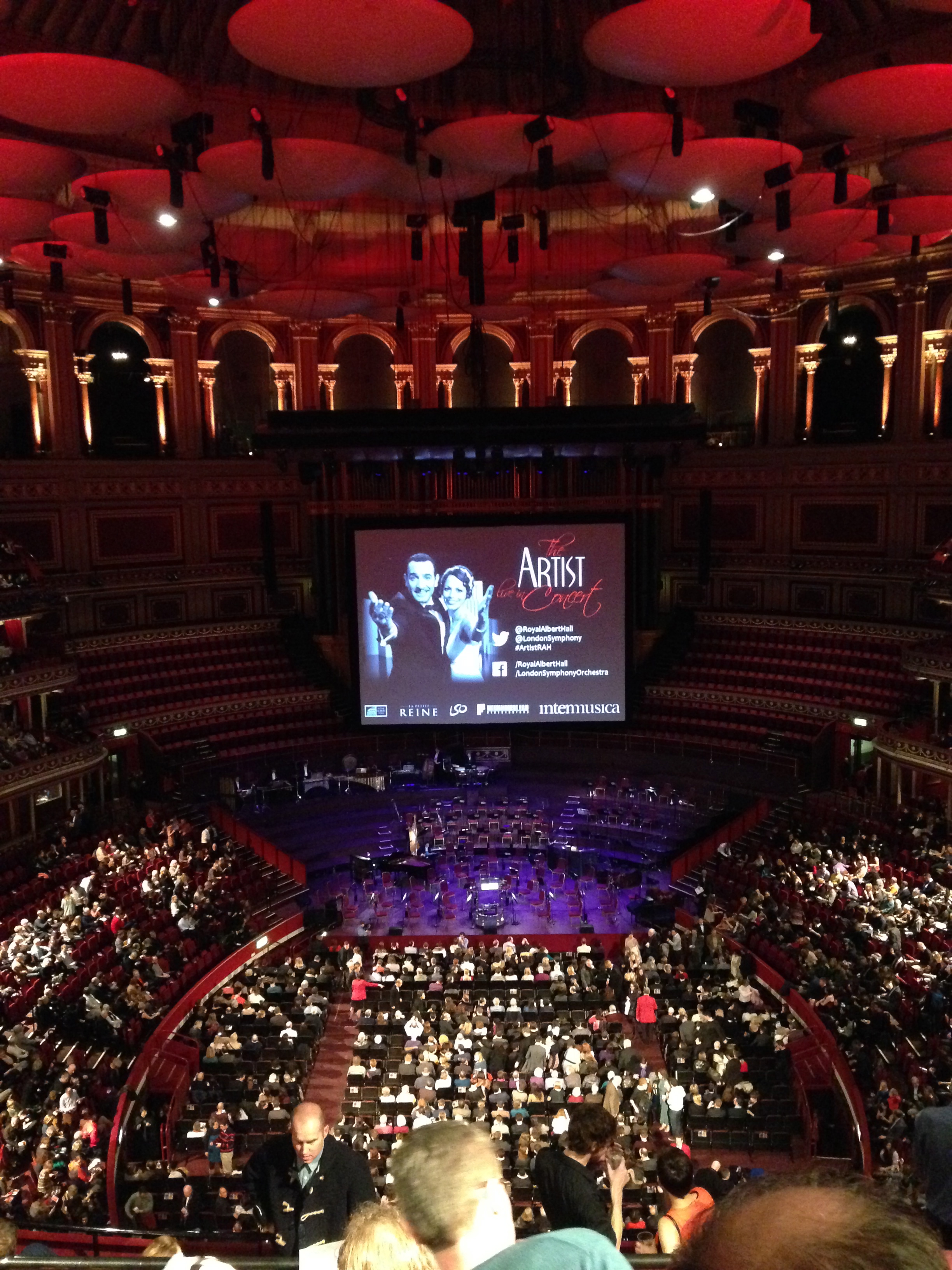
IMG_4333Well that’d be a big enough screen, right?

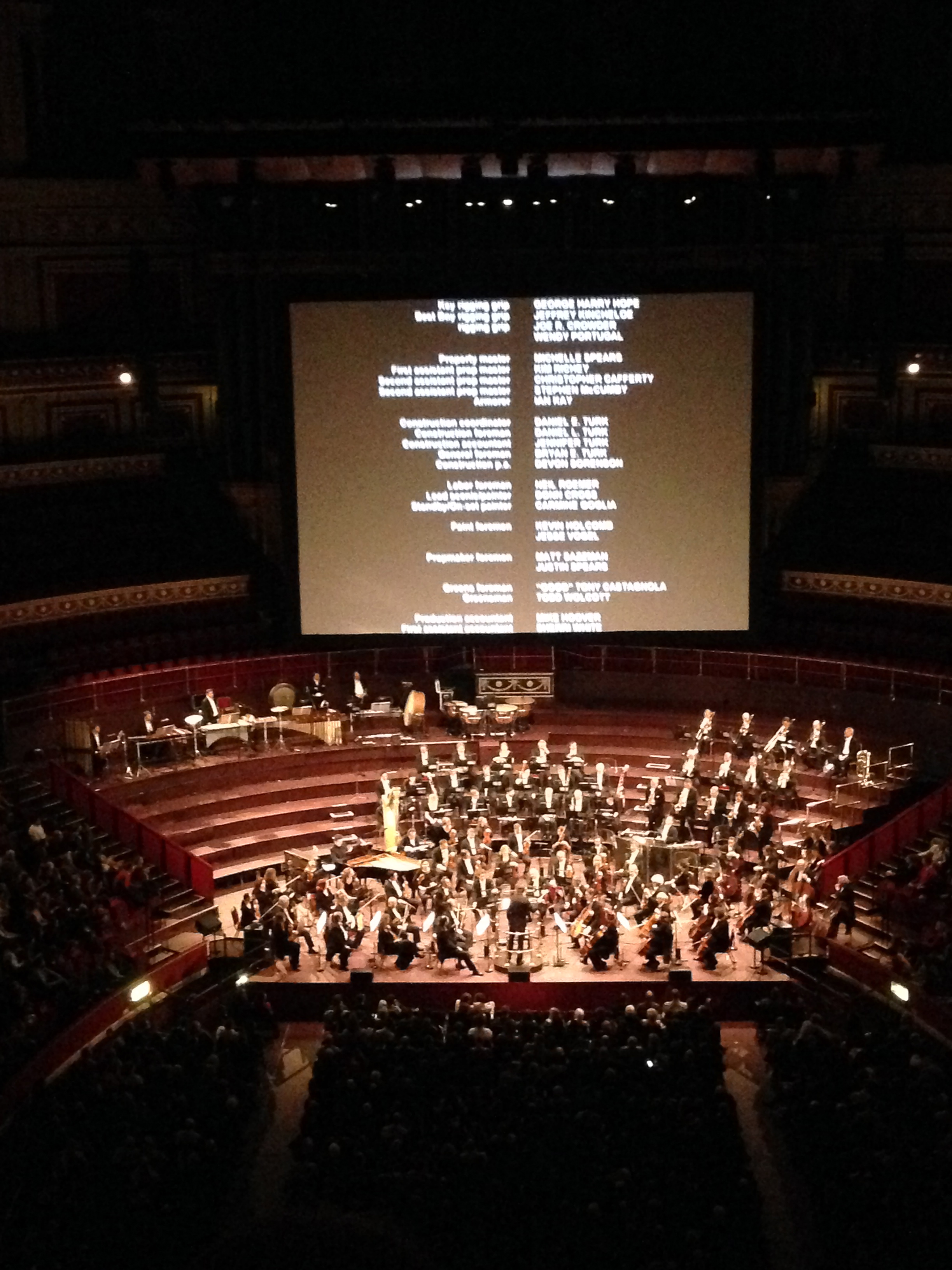
IMG_4334Tonight we took our perfectly located seats in the circle, dead centre to the big screen and awaited the orchestra’s arrival.  The orchestra arrived and tuned up.  Much celebration from us all when the pianist and conductor came out.  Then the credits rolled and the music started.

IMG_4339
Incredible film.  Cleverly reminded us how actors don’t actually need words to communicate a story.  For some parts there were subtitles and others we lipread.  There were points when I didn’t know what was being said but it didn’t matter as the actors expressions and gestures told us what they meant.

The sensory aspect of the evening was by watching a film without words.  The music being played beautifully from an orchestra below the big screen.  Then to really confuse us, there was a couple of points when the silent movie became a ‘talkie’ – it managed it.  It actually seemed odd to hear words being uttered by the actors!

So very pleased I’ve now seen The Artist.  So very much more pleased that I’ve seen it with a live orchestra in such an incredible setting.

Reviews:
Entertainment Focus
Classical-Music

London Focus Group on Research Strategy

Following on from the “Your Say, Your Day, Your CRUK” event, I was invited to attend a Research Strategy day at Cancer Research’s head office.  Cancer Research are running a number of these smaller events around the country (each one with approx 8 people) following on from a number of points raised from the Your Say Your Day event. Well done Cancer Research for following this up.

The purpose of creating a research strategy is to bring forward the day when all cancers are cured.  However in order to fund all the research it would take an inordinate amount of money and way more (sadly) than Cancer Research have access to from all the mammouth fundraising efforts of you all.  This sadly means that not everything can be funded and research has to be ‘put on hold’ or simply not undertaken.  Inevitably this means difficult decisions based on so many factors.

Cancer Research have four main objectives in their research strategy which in brief are:

  1. Reducing risks of developing cancer.
  2. Diagnosing cancer earlier.
  3. Developing new treatments.
  4. Improving cancer treatments.

Each of these objectives were discussed in length at our meeting.  It was a great opportunity for each of us to add our own voice, experience and opinion as to the impact and importance of each of these objectives, in our minds.

Throughout the day there was a lively discussion.  For those of us affected by rare and rarer cancers it also gave us the opportunity to ensure that these were not forgotten in the discussions and included in the objectives.  Over 53% of all cancers fall within the classification of rare or rarer cancers however these are often not in the public eye as there are many cancers but only a minor number of people with each cancer so their ‘voice’ is quieter.

We discussed the emotional impact of cancer, particularly with reference to funding or working with parties looking at the psychoncological aspects.

Discussed was the ‘topical’ conversation of collecting data for BRCA 1 & 2 as to outcomes and how many chose mastectomy -v- lifestyle/surgery.

The EPIC study – where over 500m people from 10 countries have been recruited to research into diet and nutrition with reference to chronic conditions including cancer.

Our group, after lengthy discussion, thought that lifestyle research should be undertaken collaboratively with other charities, organisations, NHS England.  We felt that by working on a larger project across boundaries there would be more access to specific patients and carers able to provide research data and feedback before during and after diagnosis.

With reference to Objective 2 about early diagnosis, a question was raised “Do we find early diagnostic tests for cancers that are curable?”.  A difficult question to answer.  Logically, of course, so that noone needs be diagnosed and can live cancer free.  Logic would also say though that as not every research project can be funded, should the money not be spent on a cancer where there is no cure?

With reference to Objectives 3 and 4, there was a very lively discussion.  Where there are some treatments already should we develop new treatments?  Clearly a difficult one however logically (oooh logic eh?) medicine and technology is always improving, so why shouldn’t there be advancements are simply because of improved technology.  Just because something works it doesn’t mean that there may be a less toxic chemo or less invasive surgery?

One of the many aspects we looked at with reference to this was not only the survival statistics but the length of survival, quality of life and mortality rates.  Each of these have a slightly different bent to them but as people affected by cancer, we all said that actually quality of life was essential in surviving.  Therefore some surgeries which mean that a persons lifestyle is inhibited in such a way to make it ‘difficult to live’ may not be the best option (for some).

We also said that we appreciated Cancer Research (like any organisation) needs to make an impact.  We often, within business, talk of ‘quick wins’ and I guess for many within cancer research, this might be seen as an easy solution, not overly complex, perhaps for a ‘popular’ cancer or a project that perhaps doesn’t take long to complete.

We discussed the possibility of Cancer Research’s involvement in surgical trials.  Could they be carried out in a way that each one would be comparable and thereby determine an advancement in treatment?  This is a difficult one as we know that as humans we have different skills and perhaps are better at one thing than another and indeed each patient is different too.

Discussed during the day was also the Genomics England project.  Worth reading and understanding a little more, if you don’t already know about it.

We were given £350m each (in monopoly money!) and asked to consider how we would allocate the funds within the four objective areas.

Those of us with a voice for rare and rarer cancers were also keen to ensure the addition of monies being ringfenced for rare and rarer cancers.  The main reason simply being that the time required to recruit patients or obtain tumour samples takes much longer due to there being fewer of each available.  We wanted to ensure that the funds, although allocated for a project in Year 1, would be available for an extended period of time, should the project not be able to begin until the data had been gathered.

As part of the focus group, we were handed a pack of post-it notes.  On the wall was a series of points which marked the different stages of the research cycle.  We were asked to use the post-it notes to write our concerns, feedback, thoughts, etc on each of these stages and more particularly where we believe patients, carers, advocates should be involved in the discussions AND decisions of Cancer Research’s Strategy and how the monies raised by the public is to be spent.

A terrifically interesting day and I do hope our voices and opinion will be considered and valued by Cancer Research.

Rugby on my Birthday

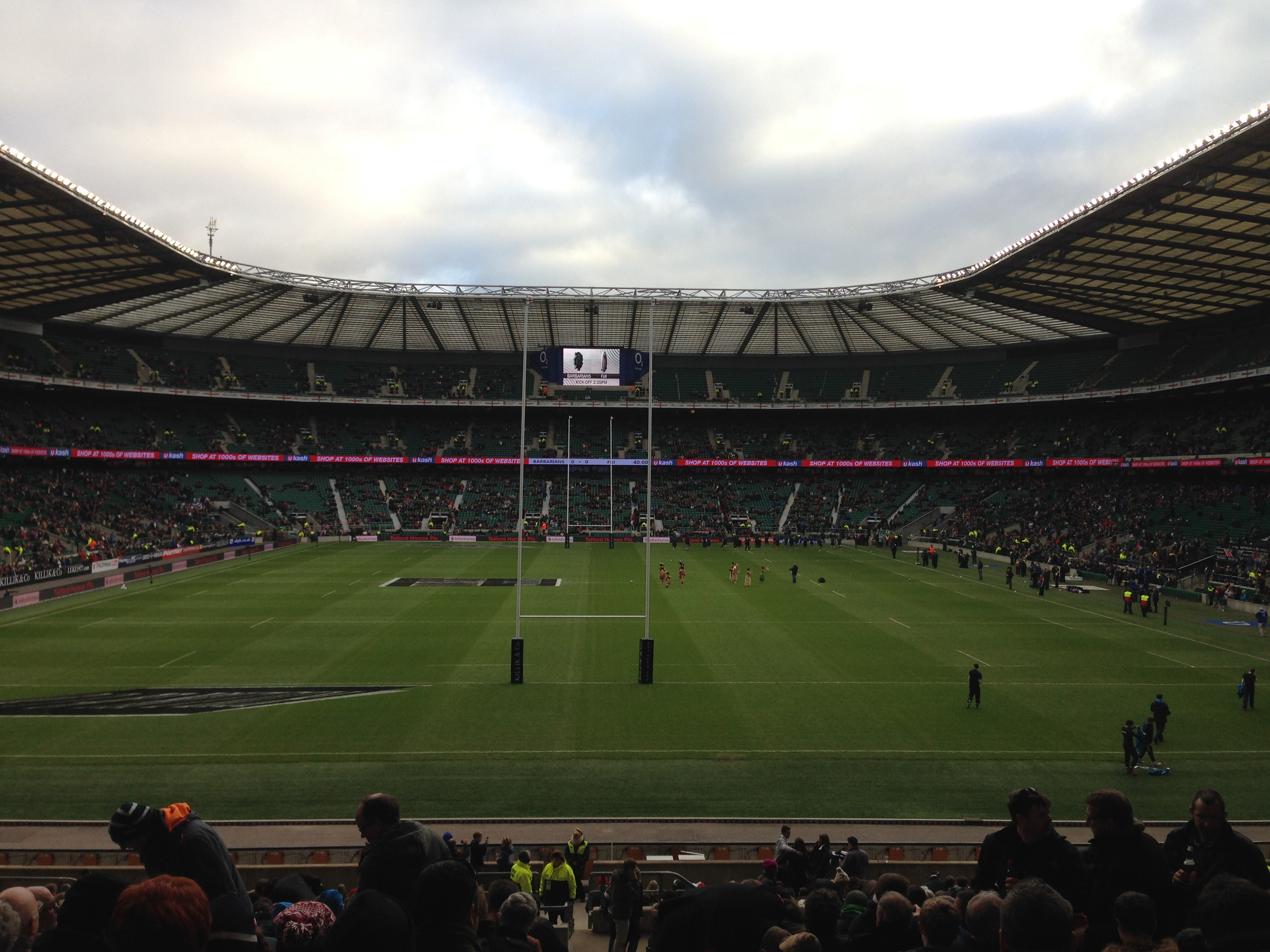
I’d been really looking forward to today. Seeing Barbarians -v- Fiji play rugby at Twickenham with my brother, nephew and friends. I was also able to invite a friend’s son from the US who has been doing a short internship in London. On his ‘reccying’ visit in the summer he confessed to not understanding rugby or cricket at all, so we’d best educate the chap!

I love the Barbarian matches and love that they always play on my birthday. Wrapped up warm (many layers) we met at Twickenham. My nephew and his friend were almost as excited as I.

IMG_0141

Perfect seats for us. Back row so the boys could stand up and cheer loudly! Right behind the goal and at the top of the steps – perfect all round.

IMG_4214A fabulous game… better 2nd half than the 1st for those of us cheering on the Barbars.

The match is hosted by the Barbarians to celebrate Fiji’s centenary year of rugby. Fortunately the result of 43 points to 19 isn’t as shocking as the results back in 1970 when the Fijians demolished the Barbarians 29 points to 9! Although today’s score doesn’t show how close the game was fought.

IMG_0142Fabulous birthday treat… AND to be hanging out with my brother and nephew for the day is the hugest treat of all.

Sky’s match report

Farewell to Charlie Gray

I was at the funeral today of a wonderful fit young man of 88 who lived life well and taught others to live that way too.

A packed church with a spectrum of generations present. Some having travelled quite some distance to pay their respects but each of us with our own fabulous stories about him.

Growing up in a small country village with a close community means that we’re all one big family. As children we could go off on our bikes with a sandwich and 2p for a phone box. We could be gone from first light until dusk. We’d join up with other children from the valley and respective parents enroute would note when we passed or call our parents to say we’d been spotted.  It also meant that there’s not a lot that you can do without someone knowing about it!  Even at my ‘ahem’ young age, I’ve seen (and babysat) children who have now grown up to be adults with children themselves!

Despite being the sad occasion of Charlie’s passing, it was a joy to meet up with people who I’ve not seen since childhood or others that remember me as a child! One such person reminded me how proud my Father had been when I was interviewed, at the age of 15 for the BBC News in 1982 – I don’t recall it but apparently the whole valley had seen it and apparently became my Father’s ‘proud Father party-piece’ for many months afterward!

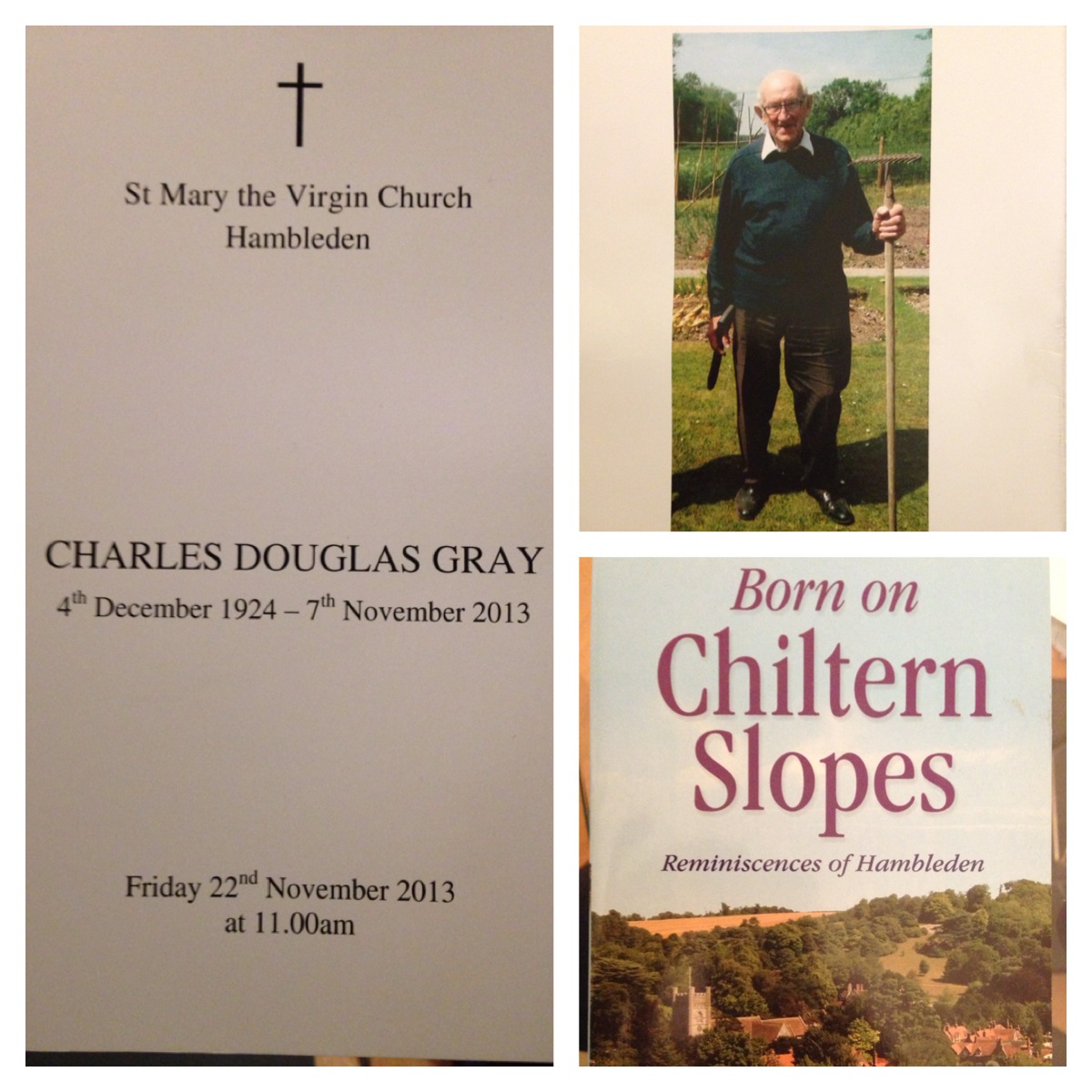
Charles Gray had lived his full life in Hambleden, as had many many Gray generations before him. His only time away had been during the war. Fortunately for us and the wider world, Charlie was persuaded to write his memories down and in 2003 a book was published “Born on Chiltern Slopes”. A fascinating book to those who know Hambleden but also those interested in a period of time and a country setting. On the back of the book is this:

“The author Charles Gray is a true countryman much loved in the village of his birth. His contribution to the community life in Hambleden has been extensive, prolonged and it continues. Although a prize winner at school he started work locally at 14 finally retiring from a company directorship at 69. All his life he has participated fully in village life, first as a young and talented sportsman, scoutmaster, then becoming president of the cricket club, chairman of he village sports club, school governor and churchwarden. After war service overseas he returned to marry the young district nurse. His entire life has been focused on the picturesque village of Hambleden set in a beautiful valley in the Chiltern Hills. In this book he reminisces affectionately over bygone times. He and his wife still lead extraordinarily active lives.”

IMG_4211

A fitting service but even more poignant was the Committal followed by the hearse being driven through the village square, over the bridge and out of the village.  The square, roadway and pathways were lined with people saying farewell as Charlie left Hambleden for the final time.

Building Careers in Clinical Research Conference

This conference is held annually for nurses and health care professionals to understand about clinical research as part of their career path, network and share ideas and good practice.

Conference Agenda – Clinfield Conference

Clinical research nurses are historically an under recognised group within the healthcare setting.  However their work is invaluable to advancing medical research and patient understanding to available treatments.  The skills of clinical research nurses are so often under-utilised within mainstream clinical practice and the research agenda but offer so much.   One the main discussions at the conference therefore is to look at the broader agenda and look at where we can each promote the invaluable work that the clinical teams do.

My invitation to participate in the conference came to me because of my involvement as a patient advocate/representative with Imperial College Hospital.

Throughout the day’s conference there was an overwhelming enthusiasm for spreading the word about clinical research.  For better understanding about what clinical research actually is and what is available at the bedside together with what is being developed in the lab.

Certainly I have been aware that there isn’t enough information nor knowledge available to patients nor also a practical matter of fact guidance to what clinical research truly is.  As patients we there is a need (in most of us) to know that research is being undertaken to advance medical care.  To know that there are changes that may benefit us or those who travel the road behind us.  To know that involvement in a trial will not leave us like the Northwick Park ‘Elephant Man’ drug trial.  To know that participation in research may mean simply completing a survey of questions every few months or having your bloods analysed regularly.  It’s not always about a taking a new drug!

What I discovered from this conference was that it wasn’t only the patients who didn’t fully understand clinical research – it’s also the doctors and nurses in clinical settings.  I guess it’s understandable that a GP might not be able to keep up with all the ‘new’ research.  Less understandable for doctors and nurses in a hospital environment but still possible.

This is why it’s critical that ‘clinical research’ is something that is taught in medical school as progress.  That there is an easily accessible, searchable and functional database of trials available to all.  That the trials in the database are up to date and have contact details of who’s in charge and how to participate.

It’s also critical that there are trained clinical research staff available for consultation with patients and colleagues alike.  These staff members to have a voice at MDT settings so that all staff are aware of their role and expertise.  They should also span the gaps between primary and secondary health care settings.  Referrals of patients are sent to them to have research explained fully to them and how they may participate.  They should also, with training, be able to dispel any myths about elephant man etc and to encourage the positive impact of clinical research.

In addition the role of a clinical nurse specialist doesn’t have to be a full-time role.  There were  a number of speakers who told us of how they had embraced their clinical role in addition to research.  As a midwife, as a nurse, as a lab clinician… perhaps this is one of the best solutions so that they’re able to bring both practical and research experience to each case.

An excellent conference and certainly there was a great deal discussed for me to consider in my many networks and patient advocate involvement roles.  Below are a few bullet points:

  • Historically clinical research has been under recognised in healthcare.
  • Clinical research skills are under-utilised in main stream clinical practice and research agenda.
  • Need to look at a broader agenda.
  • Need to promote the invaluable work that the clinical teams do.
  • More multi-professional education and training needs
  • Research, translation and innovation
  • Through research we bring some certainty in an uncertain NHS world
  • A larger impact on health is from ‘public health’ rather than ‘medical health’ – need to re-balance
  • Gaps between primary and secondary health care.  Closer integrated working practices are needed.  New ‘Pioneer Program’
  • Targets are not the same as outcomes
  • Patient Centred culture
  • RCP – Circle of Patient Centred Care
  • RCP – Future Hospital Commission 2013 diagram
  • Competencies and appraisals for research nurses should change and be updated in methodology
  • We don’t do enough to raise awareness of clinical trials
  • Need more clinical research training provided to clinicians so they’re able to speak with patients
  • More accurate information on hospital trust websites and other websites i.e. charities, local authorities etc
  • PALS should receive training too
  • Everyone should be aware of ‘We do clinical research
  • National Institute for Health Research Clinical Trials
  • Involvement in research benefits patients but also hospital trusts – financially and with reputation
  • Managers and senior colleagues should support staff in training and research recruitment practices
  • Work with the media and charities to send ‘good messages’ about research not just dramatic headlines
  • Other healthcare professionals including pharmacies should be involved and aware of clinical research.
  • Always feedback results (good and bad), send thank you’s to those involved and offer further involvement
  • What do clinical nurses do?
  • Read Kerry Stott’s blogs about clinical trials
  • We Nurses‘ website  and also twitter @wenurses

“To find your mission in life,” author Frederic Buechner is quoted as saying, “is to discover the intersection between your heart’s deep gladness and the world’s deep hunger.”

Research changed my life

“If we are serious about patient choice and patients having a partnership with clinicans, then we have to be serious about raising patient awareness of clinical research opportunities.”

Budapest Visit

Yet another wonderful flight with British Airways.  I was only slightly embarrassed when the Head Stewardess called my name and said she’d a message from BA’s Executive Committee.  Ahem… thank you for flying with us so often this year!

So I’ve made it to Budapest.  First impressions as I make my way from the airport to the City and my hotel, it’s quiet.  I mean it’s really quiet.  Cities usually have a noise about them or at the very least a hum of busy-ness but it’s missing.  Starkly to my ear it’s quiet.  I’m also aware of the buildings.  There are some of architectural note but many in disrepair and ‘grey’ in colouring.  Obviously this changes as we reach the city centre and tourism land but I’m wondering if there is a great deal of poverty in Hungary and if I’m going to be confronted with lots of beggars whilst I’m here.  It’s not in anything I’ve read nor any of my friends who’ve visited before me have mentioned it but I’m wondering…

This little break away in Budapest is courtesy of my Avios points and a very small amount of cash and once again I take no responsibility for my being here.  They sent me a very kind email which asked if I’d thought about visiting Budapest.  I replied (out loud!) that I had but had never been.  Scrolling down the email it encouraged me to book it… so I did!

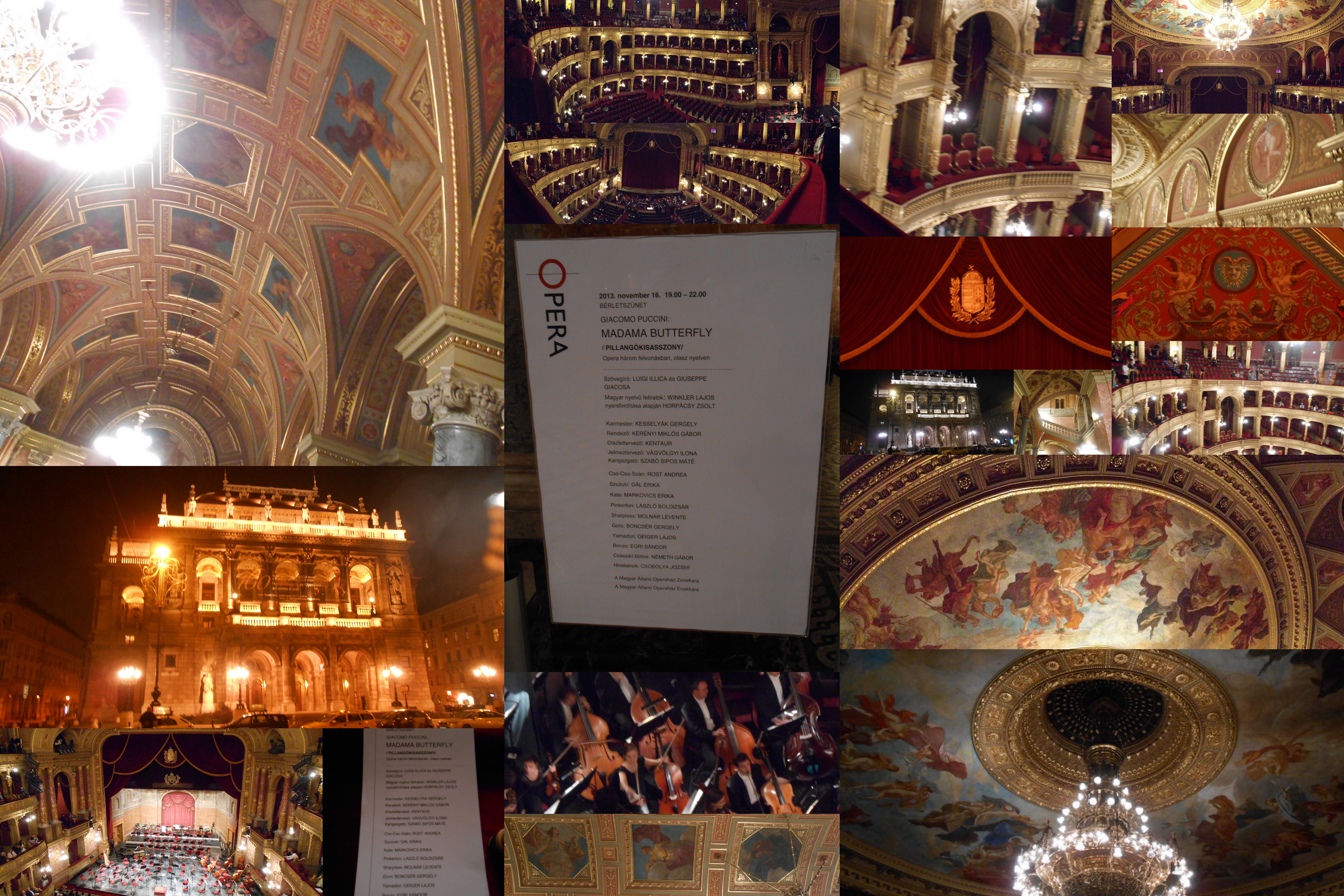
As you know I rarely venture overseas if I can’t also add in an opera or a concert.  It’s always such a treat to be able to experience either of these things in a foreign country, often in their language and certainly in a new and exciting venue.  Tonight was no different.  I had been able to secure a ticket to see Madame Butterfly by Puccini at the incredible Hungarian State Opera House.  The Opera House is quite an imposing building on Andrássy út
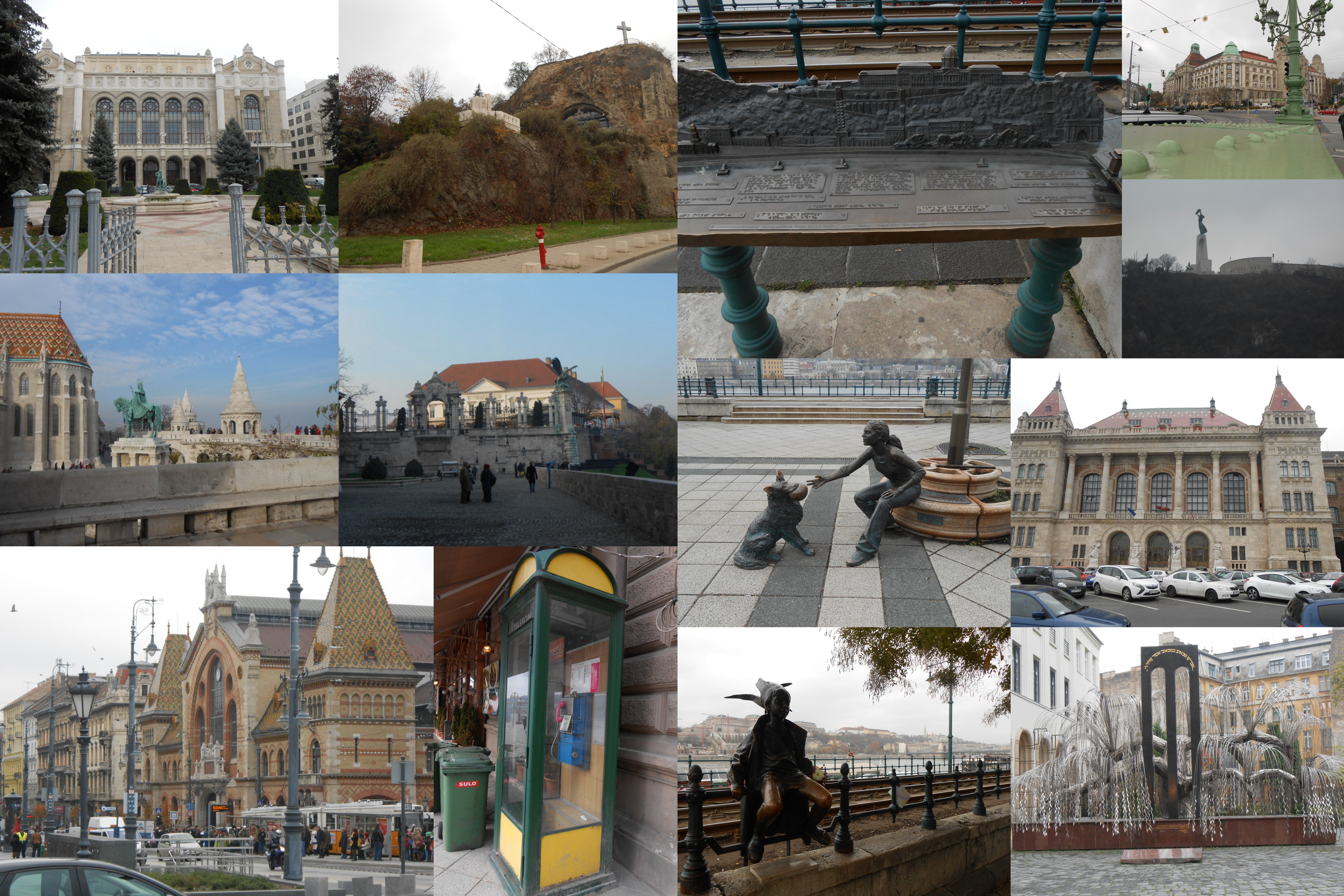
but even the ornate stonework on the outside doesn’t prepare you for the incredible detailed interior.  I can’t do it justice in words so please look at my pictures.  (As always, click on the images to see in fullscreen)
Budapest Madama Butterfly & Opera HouseI even remembered to bring my opera glasses.  They were my grandmothers and then Mum’s and I don’t think I’ve ever remembered to take them with me before today.  What a splendid production.  An incredible performance from Butterfly herself.  The set design was cleverly simple as were the costumes.  However each were striking and effective to the storyline too.  Loved it.

During the intermissions I spoke with a lady sat to my right.  She is German and told me that she had now been to Budapest for a week’s holiday for the past 8 years! I asked her why she kept returning.  Her response ‘simple – opera, baths and coffee’.  Her itinery is always similar – Buda’s best thermal spas during the day, opera in the evenings and often returning to the spa late at night too.  She’s given me some tips for spas… so I’d best get some sleep now as I’m going to be visiting one tomorrow (I hope!).

Sunday
After feasting on a wonderful breakfast in the hotel (Sofitel Budapest) , walking shoes on, water bottle in backpack and we’re off…

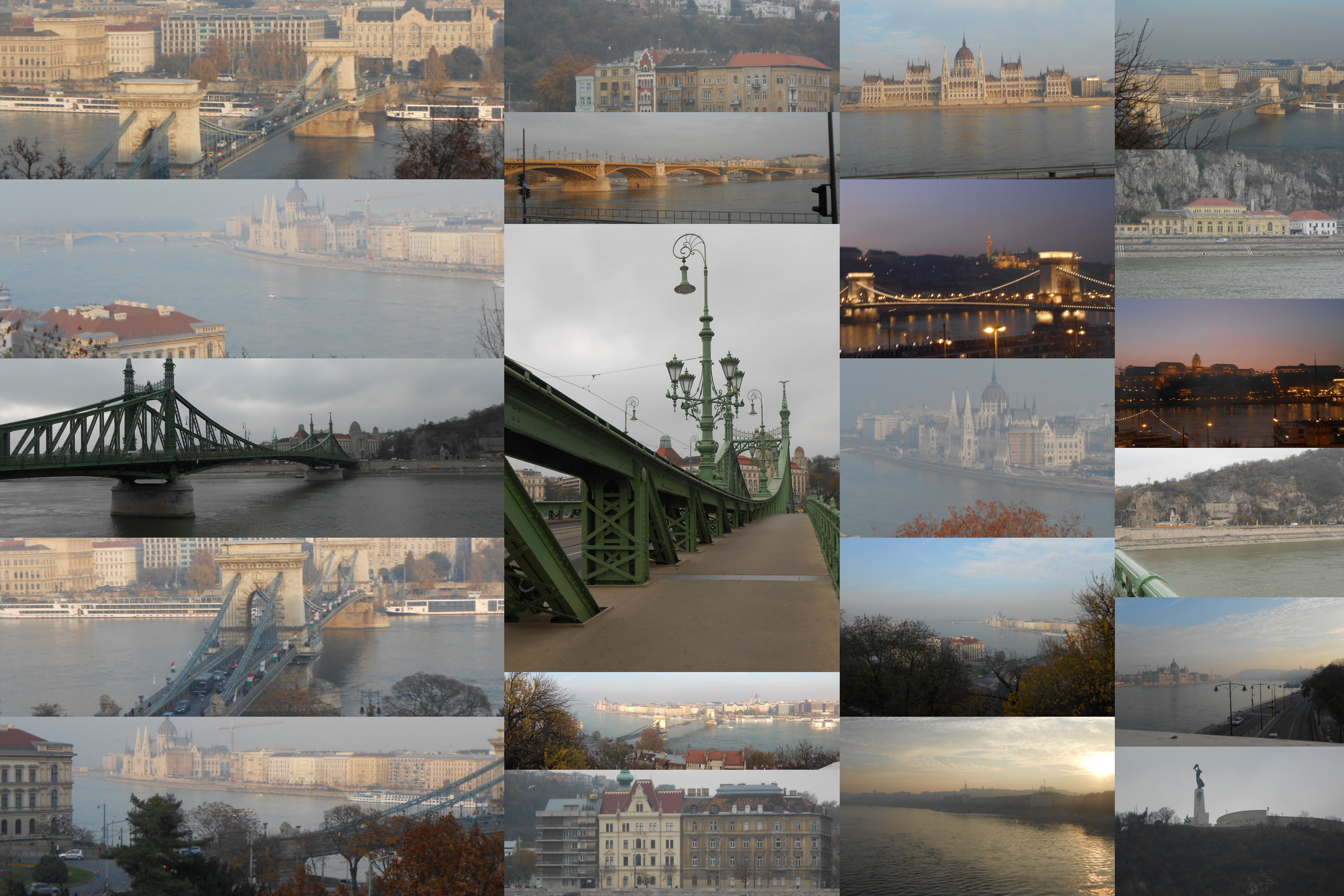
My walk took me first along the river and over the Chain Bridge.  This bridge is one of the iconic pictures of Budapest but has another meaning for me.  The designer of this bridge also designed Marlow bridge – a bridge I know well from my childhood.
Budapest Bridges & ViewsI took the funicular train up to the Buda castle area.  Only a few minutes of a trip but I absolutely adored the wooden carriage, the antiquated structure and, of course, the magnificent view back across the Chain Bridge.  Well worth the price of a one-way ticket.
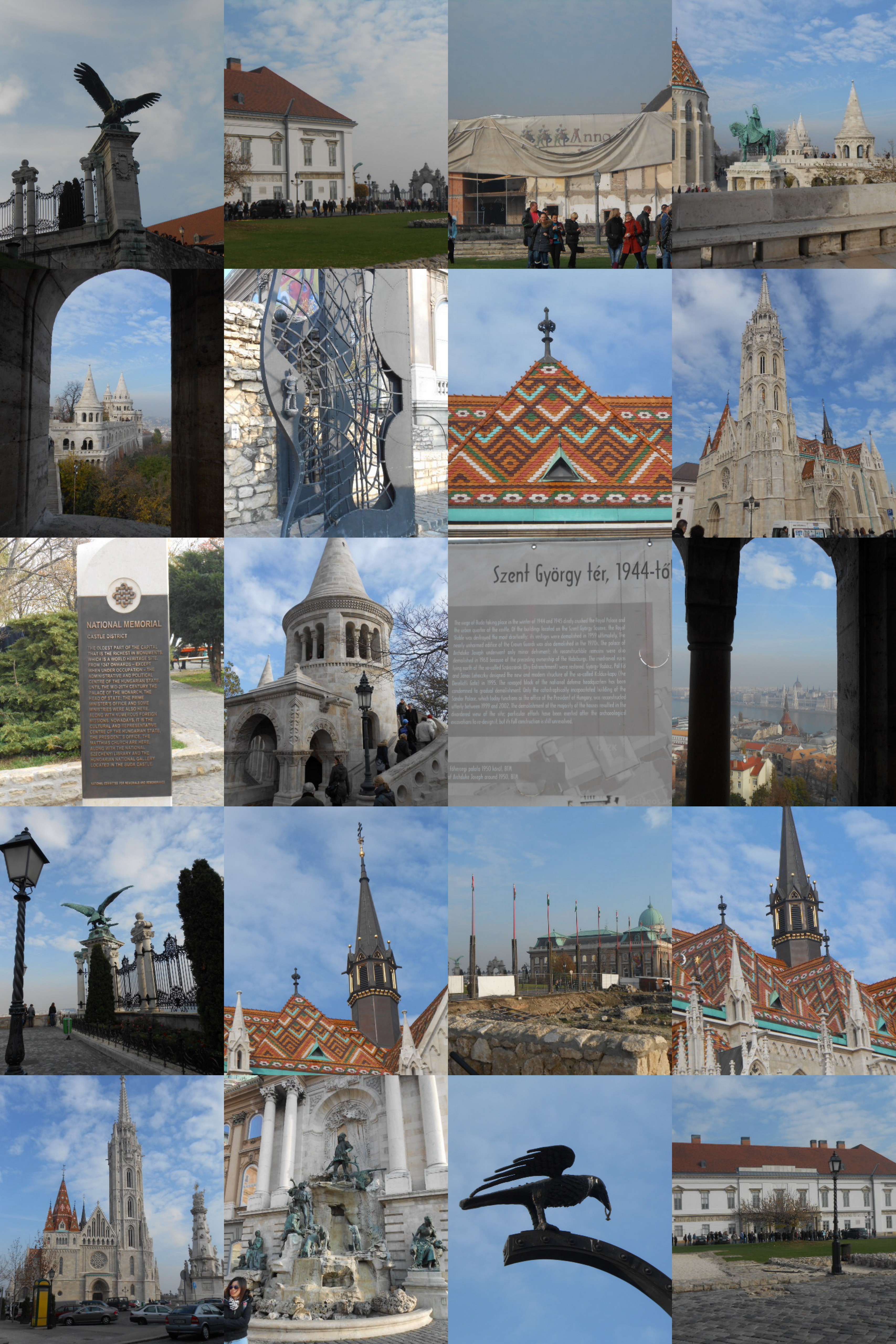
Budapest Furnicular RailwayI spent several hours walked around the Castle District.  I managed (unplanned) to also be there for the changing of the guards which is an incredibly regimented event with lots of high kicks from men in uniform!  Heading right first I discovered the Fisherman’s Bastion which has conical towers and reminded me somewhat of a Disney story or two.  The views back over the Danube are quite something from this vantage point too.  Next to the Fisherman’s Bastion is Matyas Church, Gothic windows and roofs decorated with stunning multicoloured tiles.  I was fortunate enough to be there in glorious Autumnal sunlight so the tiles shone.
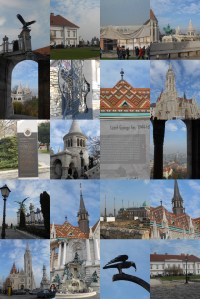
Budapest Buda Castle Area
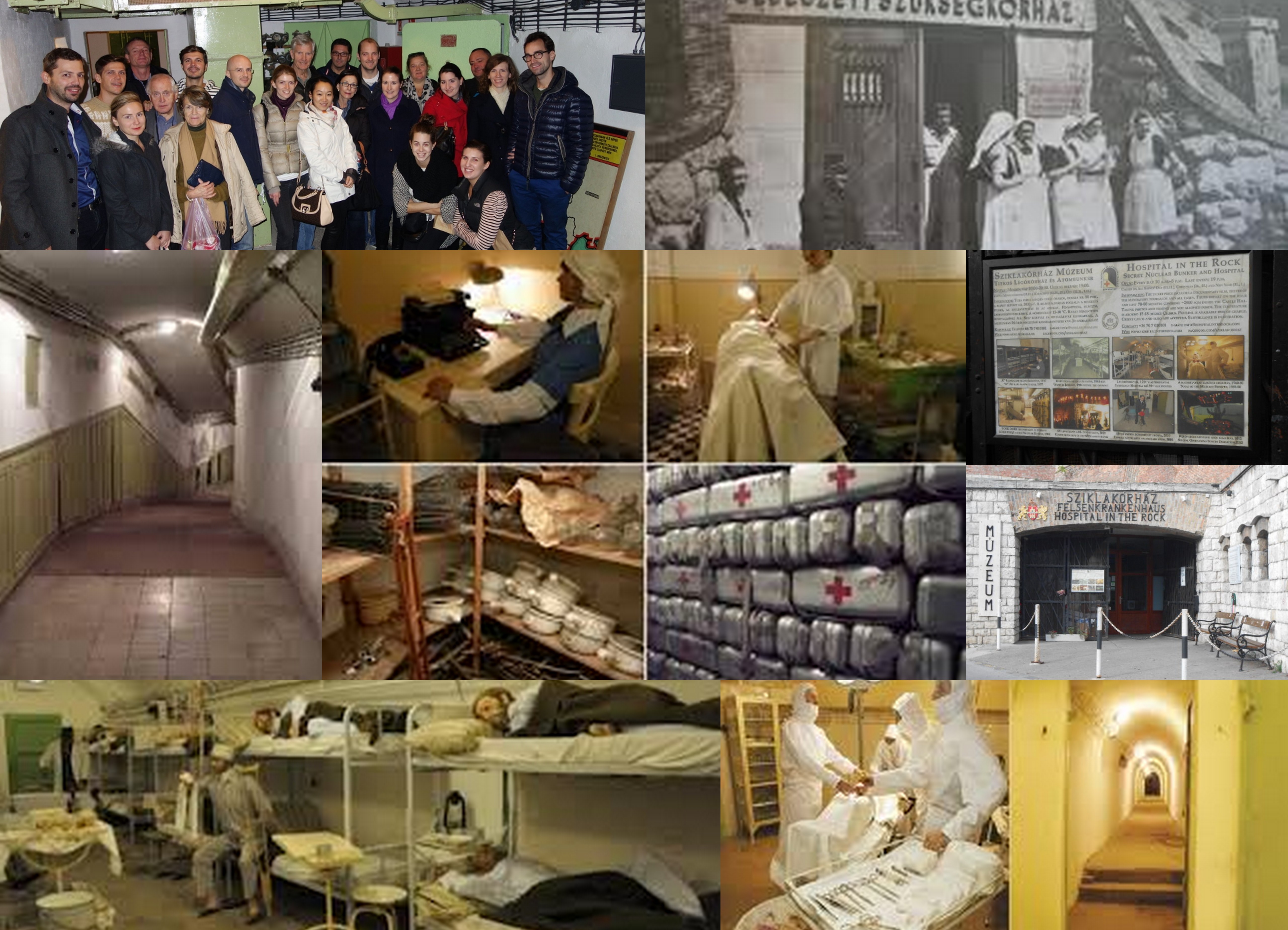
There were many Squares, intriguing street ways, museums, fountains and official buildings to explore in the Castle District.  I however was determined to find the Hospital in the Rocks.  I was ignorant of the history of Hungary so the trip has been fascinating to find out about it.  I didn’t know that they were under Communist occupation for many years (less didn’t know but perhaps didn’t have reason to consider).  I didn’t know that one of the longest battles during World War 2 was centred around Budapest.  Through an archway and down a stairway, I found the entrance to the Hospital and waited a short time until the next tour.  I had heard about the hospital being made up of underground tunnels but didn’t fully know what to expect.  If you’re in Budapest you HAVE to go.  During WW1 many people from Budapest dug underground and created their own caves where they stored possessions and were safe.  In WW2 the Government thought that they could use these caves by joining them together and creating an underground hospital over 1km in length, safe away from the bombing.  It was only ever meant to hold up to 60 patients, as an overspill from the main Budapest hospital of St John’s.  However when the main hospital was bombed it became the main resource and at one time there were over 200 patients in the cramped tunnel and caves.  They put in ventilation system and a water filtration system also.  There are now wax models of soldiers, doctors and nurses to show you how the space was utilised.  It really is quite incredible and surely saved many many lives.  What is also obvious from the models is that they were treating British and German alike.  Far far into the maze of tunnels is also a ‘secret’ nuclear bunker!

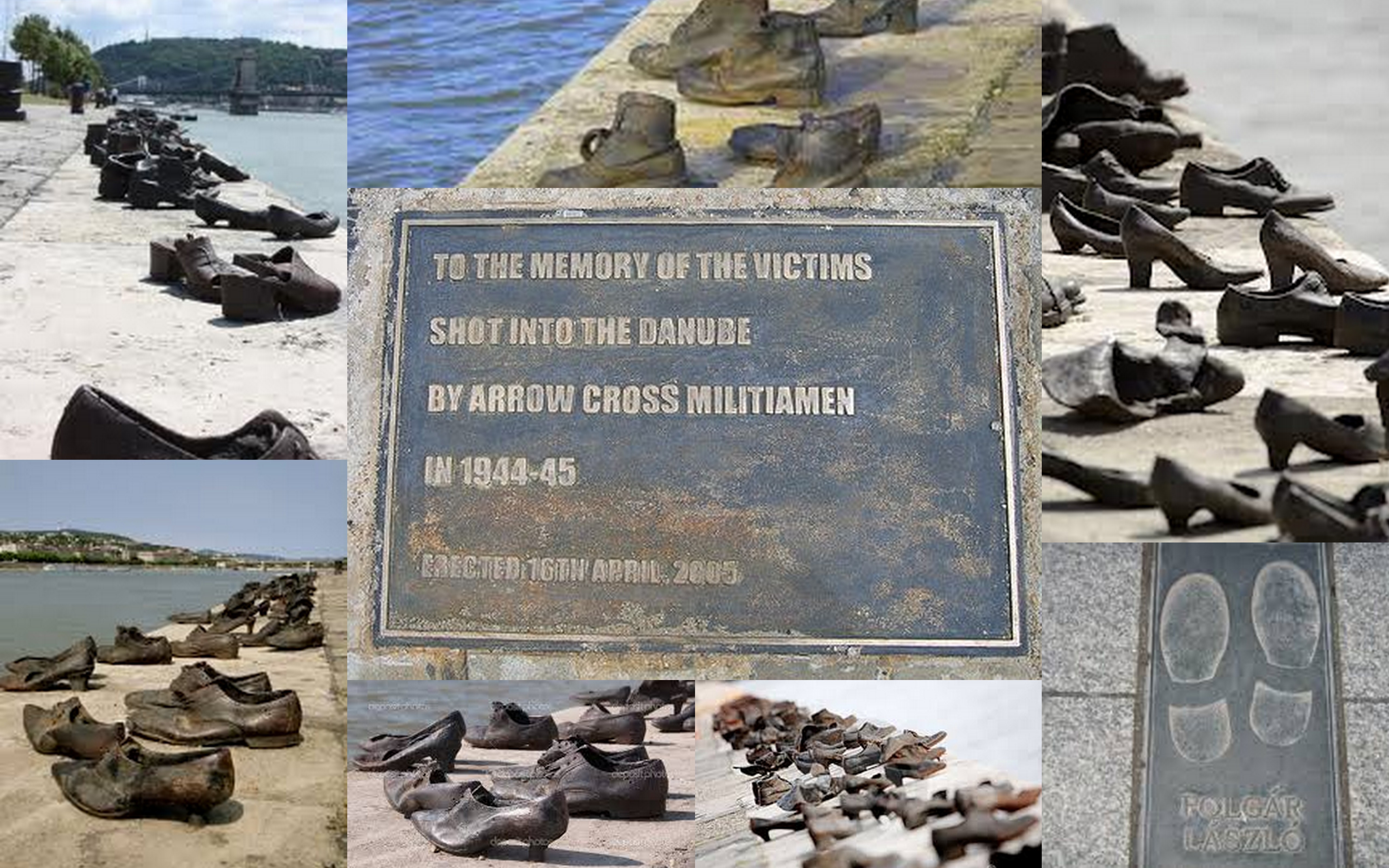
Budapest Hospital in the RockAfter a wander round the Castle grounds, I headed down the hill.  Views over Budapest were amazing in the afternoon light.  I’d not walked enough so decided to cross the river at the next bridge, Margaret Bridge, about 1.5km further along.  A lovely walk with amazing views across to Parliament.  Over the bridge and headed toward Parliament.  Sadly there’s a great deal of building work and resurfacing work being carried out in Budapest so for much of this walk I was directed between barriers and unable to get close to many buildings of note.  The ‘building’ route also took me much further along the river frontage to be able to ‘touch’ the Jewish shoe memorial.  I was able to see it but through wires so the pictures below are ‘borrowed’.  However it in no way lessened the impact of this memorial.
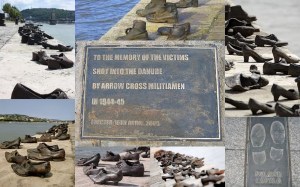
Danube ShoesAs the light was fading and my feet were well and truly aching, my sightseeing day needed to end with a cake and rest!

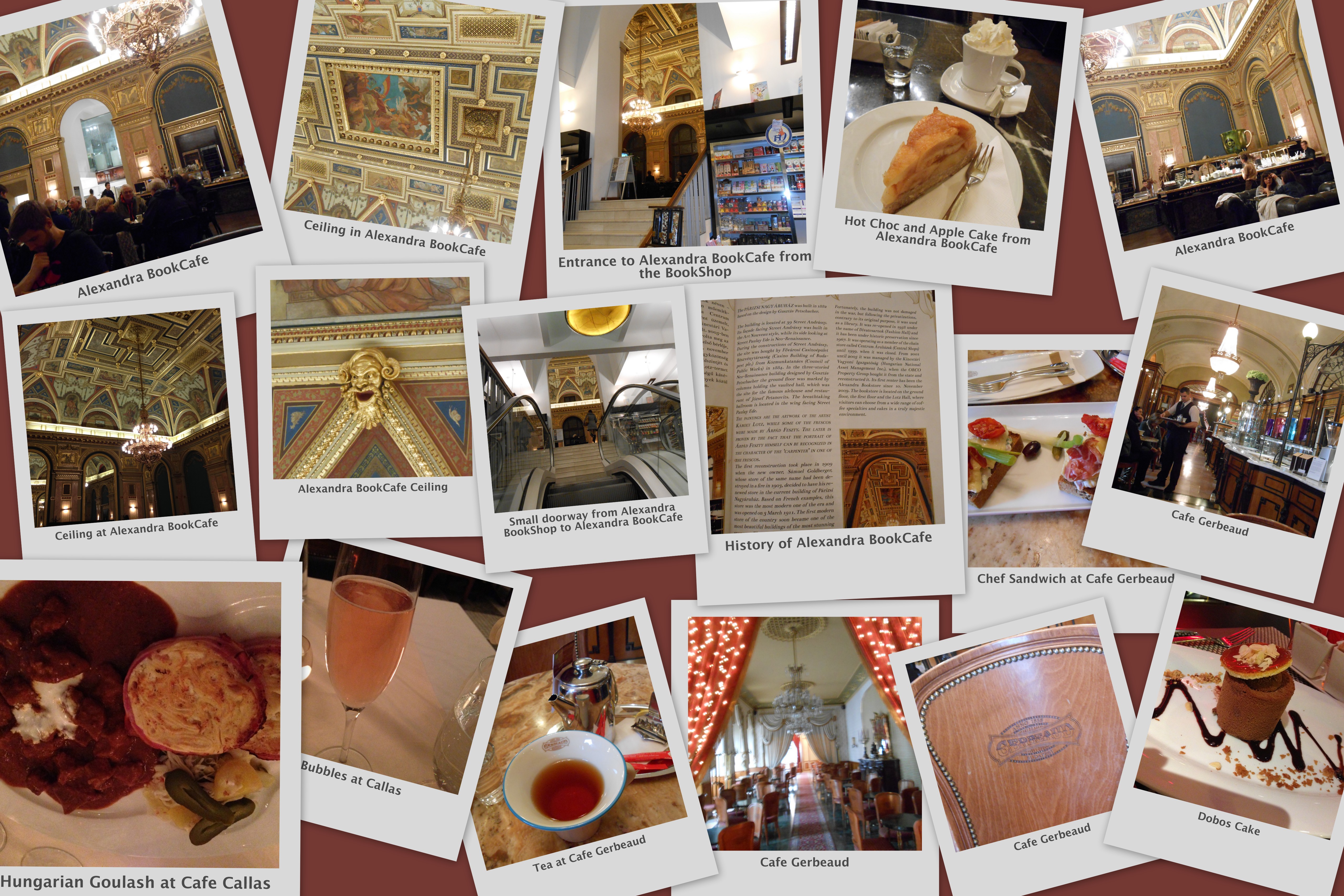
Dobos Cake it had to be with a piping hot coffee (see photo below).

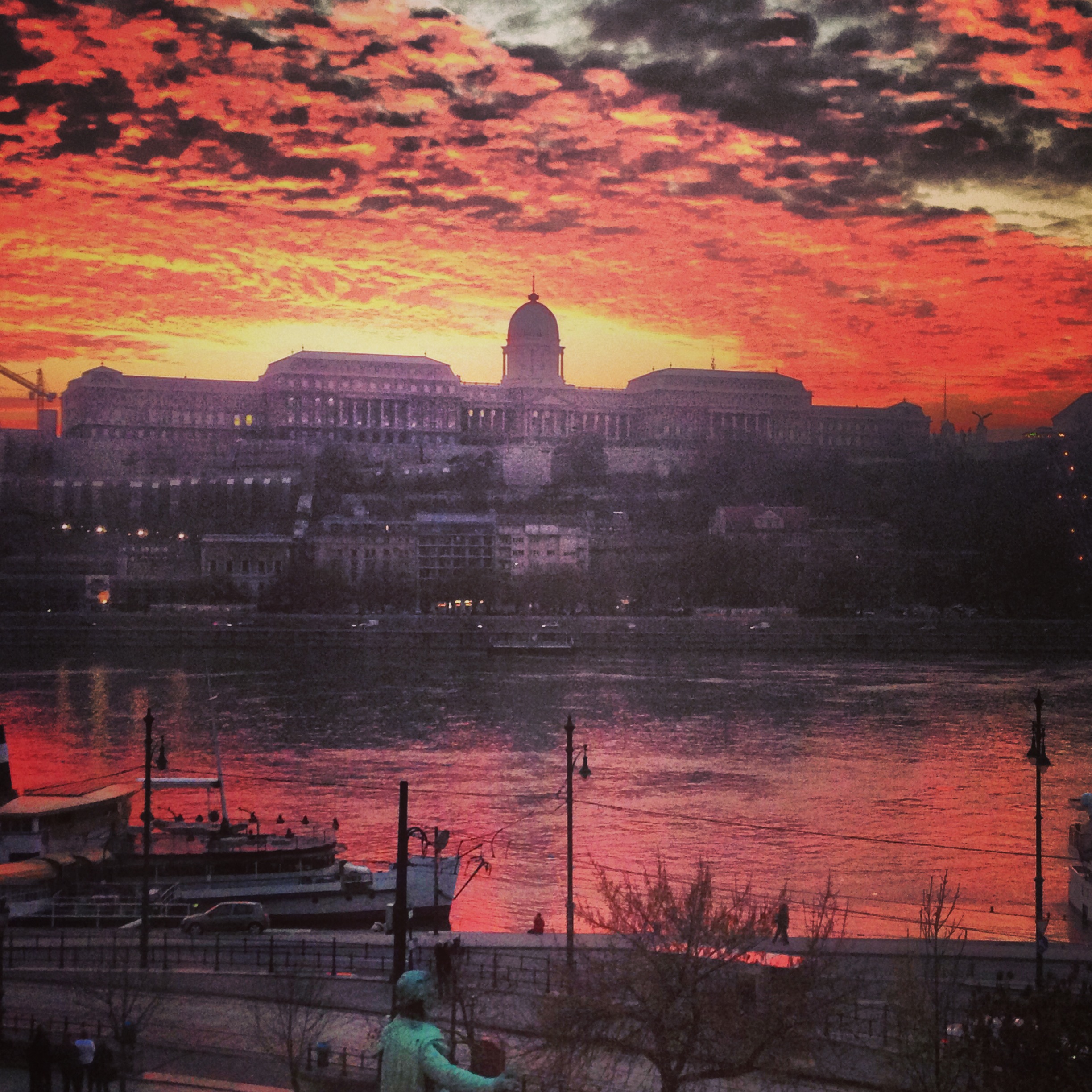
After a hot bath and chill I was getting ready to go out to forage for dinner when I looked out of my hotel window and saw this.
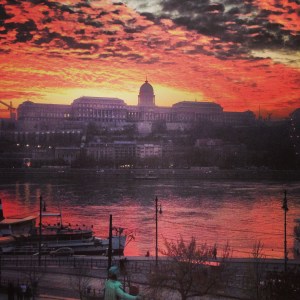
IMG_4179I left the hotel and headed right toward the Jewish Quarter.  Again lots of squares and buildings that once again were ornate with carvings and clever architecture but right next door to ramshackled shells of buildings that appear unloved and disused.  There was also more building work being carried out and indeed the skyline of Budapest carries quite a few cranes.  Once again I realised that the streets of Budapest are really very quiet.  However at no time did I feel unsafe as I wandered aimlessly down interesting looking streets – no plan and no map!  I spied the Synagogue on my travels and my intention is to revisit this during the day before I leave.  After a few hours I found a small restaurant for dinner.  Great food but not noteworthy enough to tell you where (despite their being in the ‘Best Places to Eat in Budapest’)!

Monday
This morning I woke up with one of my headaches/migraines from hell and stupid stars in my vision.  So a leisurely breakfast and back to bed to get rid of my headache.

Several hours later I was up and out.  Feet still ached from the day before but I headed back toward the Jewish Quarter in the daylight hours.  My late start and a few wrong turns meant that I arrived at the Synagogue shortly before they stopped doing tours (which in the Winter is shortly after lunchtime!)  However I was able to see quite a lot by walking down the side streets and looking through the gateways.  Stunning once again.  It was evident that the Jewish Quarter was probably better maintained than other areas of Budapest.

Next I walked the labyrinth of back streets and alleyways through to find cake!  I’d been told of the Alexandra Bookshop.  But first, I found another cafe that I’d also been told of – the Muvas Tearooms.  This old-world tearooms is worth a visit.  The sandwiches, drinks menu and, of course, cakes are plentiful and add to the ambiance of old-world charm, ornate ceilings and mirrors.  The staff however are a little stuffy but hey!  A sit down with a sandwich and iced tea was most welcome.  As much as I was tempted by their selection of cake, I headed out again in search of the Alexandra Bookshop.  I knew there was a sumptuous cafe behind a bookshop front but somehow I didn’t expect quite this.  Truly incredible that you go through a ‘Waterstones-esque’ bookshop, up an escalator and see an archway.  Through that is the most incredible tea room.  It originally was the second floor of the former Paris Department Store and has chandeliers and fresco-style ceiling painted by Karoly Lotz – the same artist who painted rooms at the Parliament building.  Talk about grandiose and renaissance.  Hot chocolate and cake were also divine.

Budapest Dining
A short hour and a half to nip back to the hotel and get changed for tonight’s 160th anniversary of the Budapest Philharmonic Orchestra concert.  It’s once again at the Opera House and a splendid affair.  Whilst waiting to take our seats I got chatting to a lovely lady from Budapest.  She’d travelled the world in her time and worked overseas including as a nurse at St Christopher’s Hospice in the UK.  Amongst other topics I asked her why there was so much building work in Budapest.  I was intrigued that so much was taking place at one time.  It all became clear when she told me of the war when a lot of Budapest was bombed.  Of the communist times in Budapest where nothing was done.  Then sadly the last Mayor was in office for many years but refused to do any renovations or repairs.  The locals watched as buildings that could have been saved crumbled away and with it pieces of history lost.  She said how envious they had all been that in Prague renovations had been undertaken for years and that tourists travelled there in droves for years to see their beautifully restored city.  However the new Mayor has instructed renovation and repair wherever possible.  Everything is it to be done immediately and by craftspeople to try to retain/restore as much original feature as possible.  The people of Budapest are very happy and she said also willing to be put out by all the building work for as long as it takes to restore the city to it’s former glory.  I, for one, look forward to returning to it one day to see this.
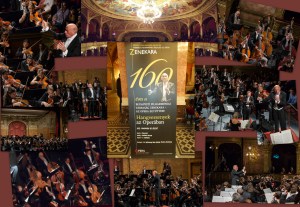
Budapest 160 HPOBartok: Dance Suite
Kodaly: Dances of Galanta
Mahler: Symphony No. 1
Conductors: Gyorgy Gyorivanyi Rath,
Pinchas Steinberg

After the concert I took my dinner at Callas a restaurant right next door to the Opera House but had been recommended to me.  Great food, fabulous service and, once again, a building worth seeing.

Tuesday
My final day.

My wanderings this day took me along the Danube river front toward and over the Elizabeth Bridge.  I visited the Gellert Spa to look at the art deco interior.  I wasn’t brave enough to bare my scars to the world in the spa itself so didn’t get to see the whole space.  For those more adventurous the Gellert Spa or the Szechenyi spas were both recommended as places to visit, relax and enjoy.  Rudas baths were also recommended but apparently are a little more basic and have single sex days on certain days and times so check first.

Further along the riverside is the University.  Around this part of the City I got the impression that it was very studenty and I guess would be more lively in the evenings(?).  The University is huge in Budapest and I understand is quite something to be able to get a place here.

My journey then took me back across the river over, this time on a tram.  After a very short trip I got out and walked back in the direction of my hotel.  Stopping off for one ‘last’ teashop experience at Gerbeaud.  Gerbeaud is said to have the best cakes in the city… there’s a LOT of competition!
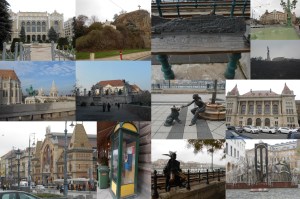
Budapest Wanderings
Sadly my time in Budapest was so short.  I certainly could have discovered more in a few more days and perhaps even plucked up the courage to visit one of the spas!  One thing that I realised part way through my trip though was that the Hungarian identity seems to be quite confused.  I think because of the war, of occupations, of communism etc, there have been hangovers from each of these eras and the true Hungarian identity has enveloped something from each of them.  It’s magicial in some respects because there is so much diversity and culture but in others I wonder what a ‘true’ Hungarian city would be like.  The opulence inside buildings isn’t reflected so much in the grey of the outside and streets.  Again is that a bad thing?  Each place holds a secret beauty inside.  My comments about poverty too may have been misplaced.  The local people I met and spoke with are happy.  Happy with what they’ve got but don’t have longings for material things, labels and possessions.  It’s probably quite refreshing.  The shops are simply stocked (with the exception of the tourist thoroughfares).  Pharmacies have everything behind wooden screens where you are required to speak with a pharmacist to ask for everything (even toothpaste I discovered)!

I’ll be back.

Hello Fresh

Wow that’s a heading if ever there was one.  I know that some of you may have been misled by it too 😉

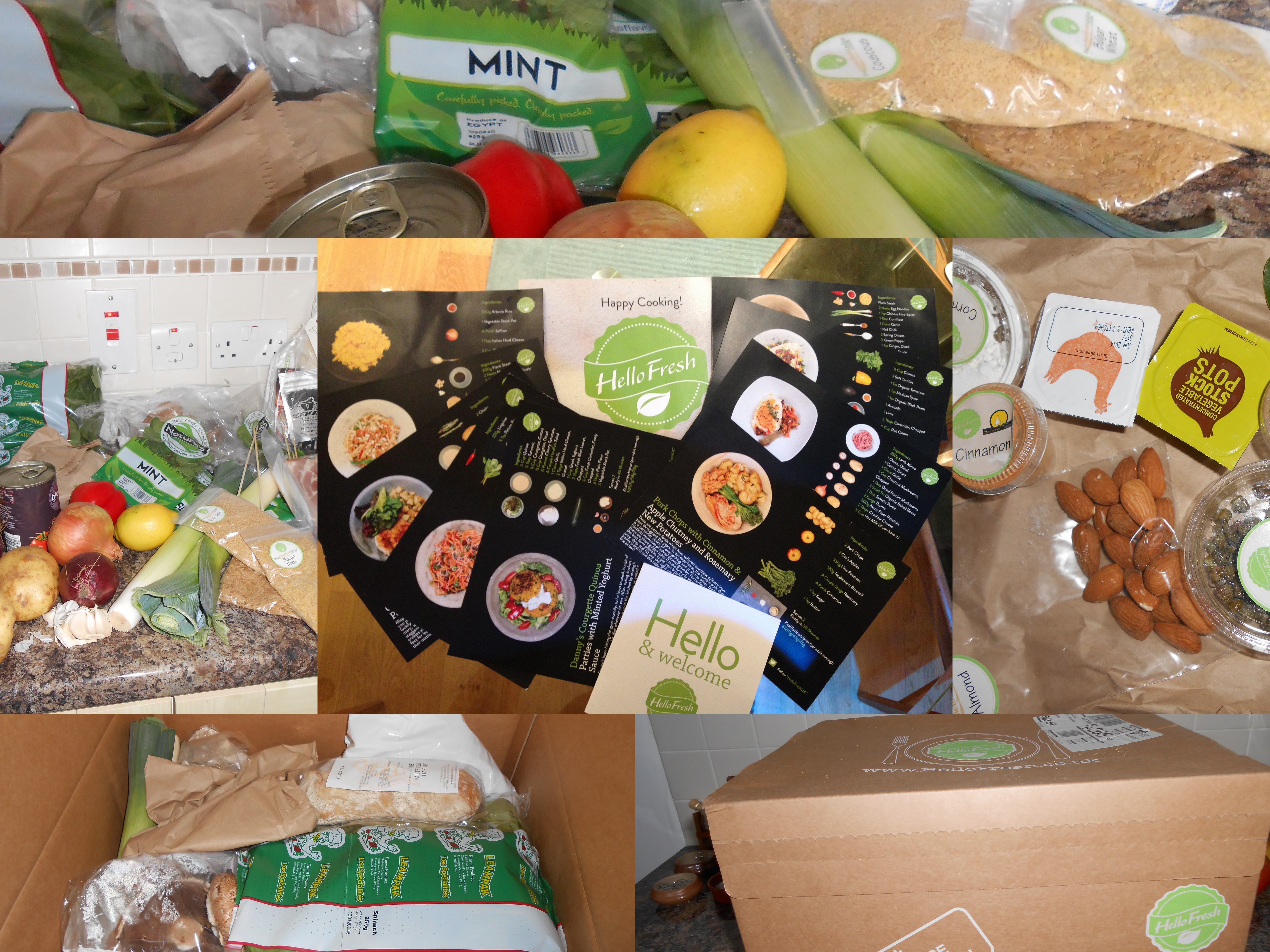
Actually it’s about food.  Hello Fresh is a company that delivers food, recipes and inspiration to my door.  I found out about them a few months ago and was intrigued.  So I thought I’d give them a try.

Once very two weeks I receive a box delivered by courier.  The only things I need in my kitchen cupboard is oil, salt and pepper.

I’ve loved the anticipation of what it contains.  Wondering what dishes I’ll be creating this week.Hello Fresh

Within the box is all the ingredients and instructions.  The contents weighed and measured.  Small packets of spices, flours and pulses.  The right quantity of vegetables.  Neat ‘chill pack’ containing all the meat and fish again in just the right proportions.  Together with the exciting part, an envelope containing the five recipe cards.

I’ve loved learning new dishes.  Using spices and herbs that I don’t usually use.  Experimenting with ingredients that I’d usually walk past.

Although I can cook and indeed enjoy cooking, my day to day repertoire has become dull and boring.  I’m no Michelin chef but know my way around the kitchen.

So why Hello Fresh.  It’s simple:

No shopping.  Fresh ingredients delivered to the door.  Great recipes that provide inspiration and experimentation.  Delicious meals.

Go on, give them a try.  If you let me know then I can do a referral which, I think, benefits us both!

Insights Event at Royal Opera House – Parsifal

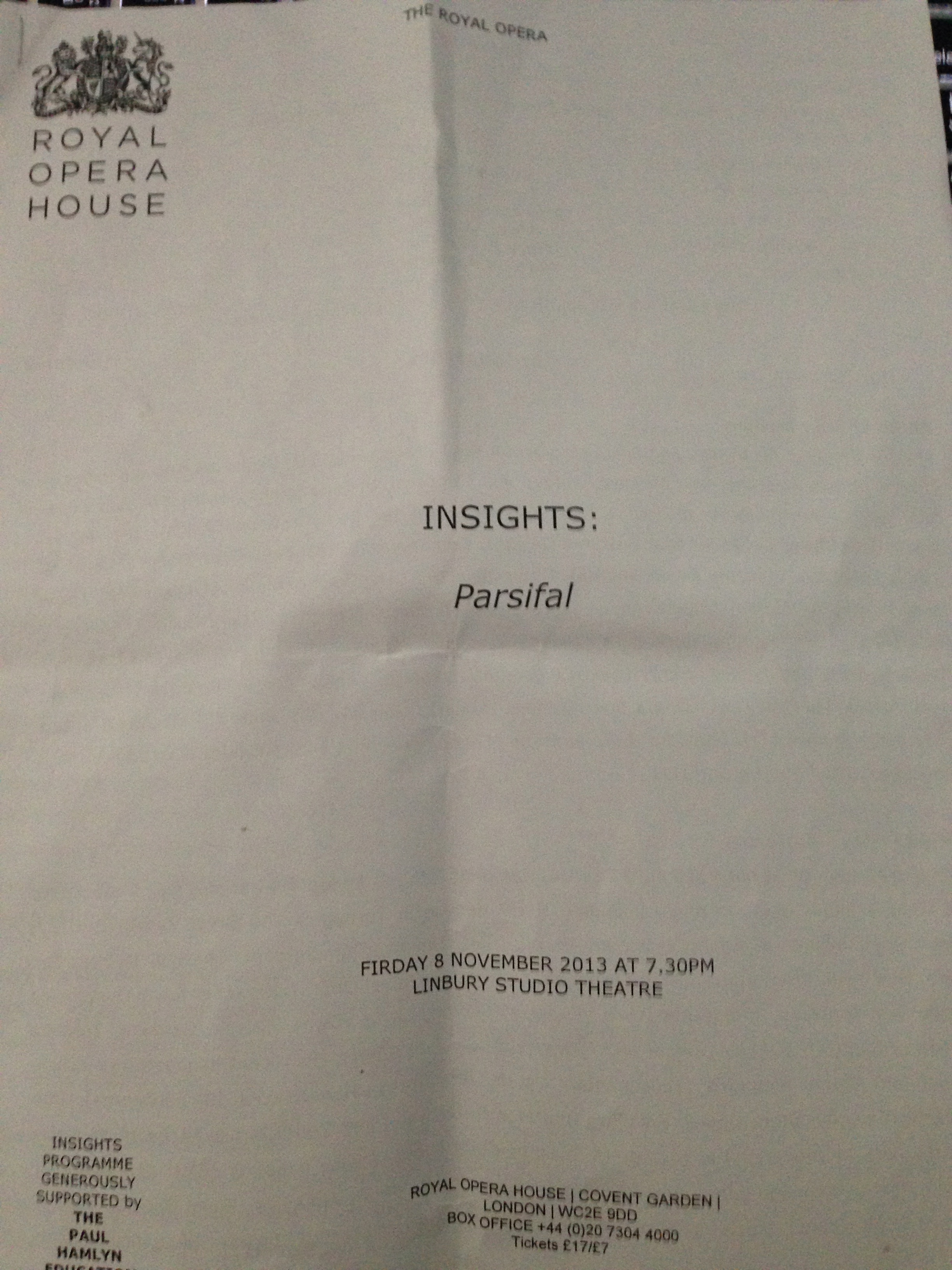
At the recent Vintage Afternoon Tea in aid of Penny Brohn Cancer Centre I was fortunate enough to receive through their ‘balloon’ prizes, two tickets to an Insights event at the Royal Opera House.

IMG_4156

I’ll confess that although I’ve been lucky enough to have been to the Opera House to see a number of opera and ballet performances, I’d never heard of ‘Insights Events‘.  I didn’t really know what these were, nor what to expect from the evening.  However whenever I’ve been brave enough to mention them to anyone ‘in the know’ there has been a sharp intake of breath, comments about the tickets being like gold-dust and much excitement.  I knew then that I’d be in for a treat.  Now I know that perhaps these events are kept a little hidden so that only those special people can get to go!  I’ll be back for more, if I can get tickets.

So what is an Insights Event?  In essence it’s a lecture about an upcoming performance.  Gosh that sentence makes it sound so dull and you’ve probably switched off.  It’s true it’s a lecture but what it is in addition, is an event that brings the music, story, stage and history to life.  Much like an opera, we were drawn in and left longing for more.

This evening was presented by Sara Mohr-Pietsch and following a brief but excited introduction, Antonio Pappano (Conductor) and Mark Packwood (Chief Répétiteur and, for this evening, pianist) stepped onto the stage of the Linbury Studio.

Antonio passionately talked about Wagner, a little of where he was and what he intended in writing this opera.  They played excerpts of the music.  Joined for parts by Gerald Finley and Simon O’Neill who play Amfortas and Parsifal respectively.  Antonio translated key phrases.  Unwrapped the storyline.  Drew us into the story and music.  We were, literally, on the edge of our seats and wishing he’d continue and we could see the whole performance right now!  What an incredibly inspirational conductor.

Of course he ran over on time but I’m quite sure that the audience would have kept him there all night!

Following his musical insight, we were then introduced to Sarah Lenton, a lecturer and historian.  Sarah spent her time talking about Wagner, the time the opera was written, the accuracies and also inaccuracies of the story.  Comparisons from Parsifal story to religious stories.  How it can be a spiritual piece that refers to the crucifixion and indeed Wagner said he had written it on Good Friday (his wife’s diaries tell us otherwise!).  Fascinating.

The final piece of the evening was presented by Stephen Langridge (Director) and Alison Chitty (Designs).  In discussion with Sara, they told us of the inspiration and development of the set design, costumes and lighting.  Incredible to think that the process has taken nearly 2 years in the making from the first ideas about how the performance should be set.  We were also treated to a short series of photographs of their ‘workings’ of the set as it evolved.

A brilliant evening and one that I shall repeat, if I can purchase a gold-dust ticket!  However I’m feeling a little lost in that I now want to see the production but the few remaining tickets are, sadly, rather more than my budget can stretch to at the moment.

I would heartily recommend attending these Insights Events.  An incredible way to understanding more about the composer, the opera/ballet, the music, the movements, costumes, voices… the compiling and production of the performance the lucky audience are fortunate enough to see it.

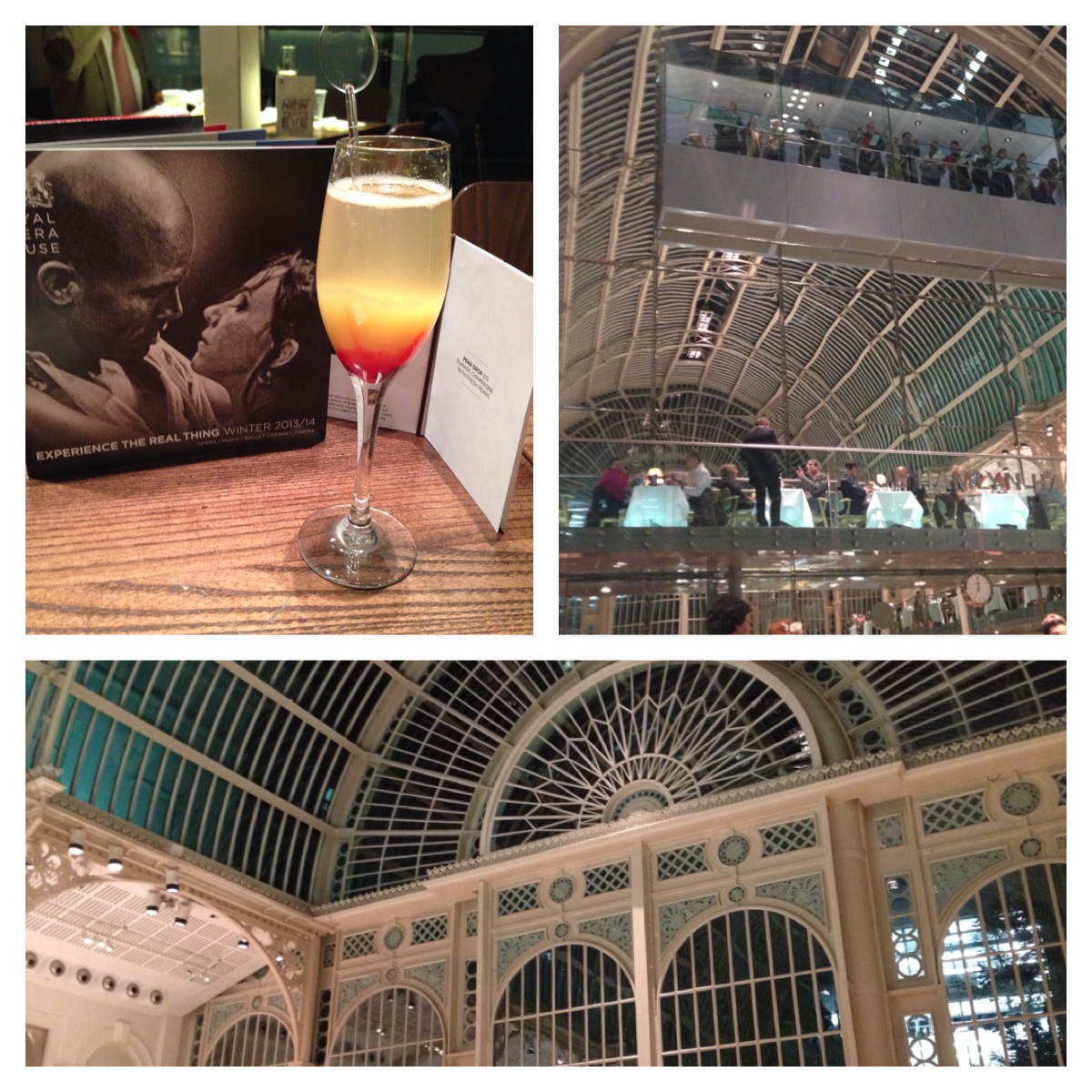
IMG_4157Oh and if you arrive a little early for any production, do pop up to the bar… incredible space!

Remember Remember the 5th of November

I’ve always remembered the 5th of November.  Not for the usual Guy Fawkes, bonfire or fireworks but because it’s my Godmother’s birthday.  However the 5th of November has a new additional memory etched in my mind since my second Phyllodes operation was also on the 5th November 2009!

But today is about my Godmother.  She invited me to be her +1 and visit Clarence House.

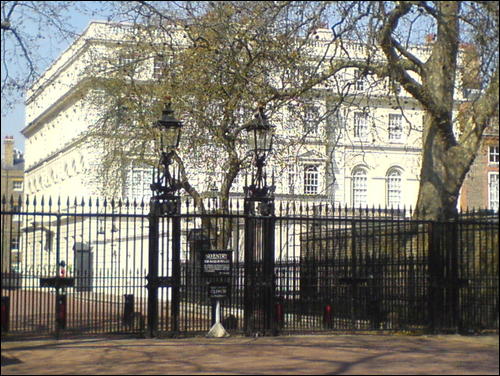
Clarence_House_royal_residenceOk so perhaps we’re not going for a cocktail party with Prince Charles but we do get to have a peek in a little bit of Clarence House, drink a glass of Highgrove bubbly and do some Christmas shopping… and all that for charity too!  Once a year Charles invites guests to attend a Christmas sale at Clarence House to raise funds for his many charities through The Prince of Wales’s Charitable Foundation.  There is a marquee (with errr solid walls) set up in the garden and leading from the house.  The marquee is stocked with lots of goodies perfect for Christmas gifts, table presents and stocking fillers.

What a wonderful occasion.  We had our allocated time slot and queued up behind others, including Jan Leeming, before our credentials were checked and we made our way into Clarence House.  Our route took us through a lovely entrance way filled with stunning antiques, pictures and photographs, down corridors with walls adorned with equine portraits and into a room that smelt of cinnamon and Christmas as the huge tree sparkled with baubles and reminded us that Christmas really is just around the corner.  A glass of bubbly was presented to us by a butler dressed in Clarence House livery together with a delicious mince pie.

On the other side of the room were a few stalls set up with some incredible handmade items including some stunning handcrafted jewellery and hats.  Then through to the main shopping event in the marquee attached.  The space was beautifully stocked with baskets overflowing with gifts, tables adorned with all things fabulous and special.  The team clearly did a wonderful job at displaying the items for us all to plunder and purchase.  Sadly no photos though as we were asked to turn off our phones and told no photographs.

I’d love to post more about the items I bought… but then again the Christmas recipients may well be reading this post!  Suffice it to say the The Prince of Wales’s Charitable Foundation has a few more £ in their coffers!

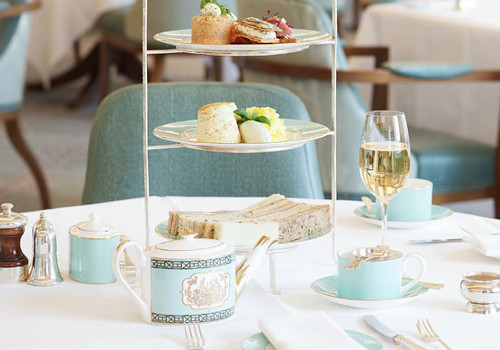
Clutching our Highgrove shopping bags we headed up to Piccadilly.  We’d booked a table for afternoon tea in the Diamond Jubilee Tea Salon at Fortnum & Mason.

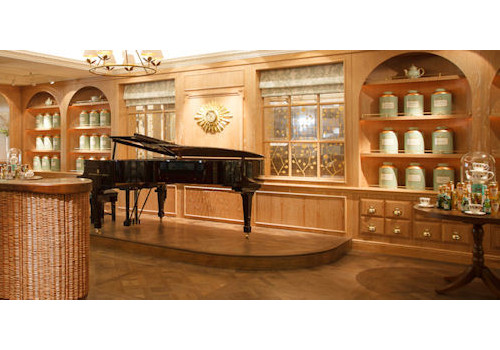
images-11We were greeted on the fourth floor by the wonderful sound of a baby grand piano being played beautifully.  fortnum1  images-12


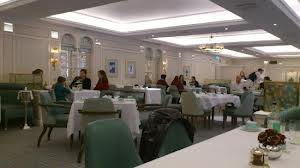
I loved that the restaurant was spacious and the tables set apart from each other.

It makes such a nice change to be in a restaurant where you can hear your companion’s conversation rather than the stranger to your right!   Also worth remembering if taking afternoon tea and wishing to be discreet or perhaps with someone of an older generation!

The menus arrived and I was staggered by the variety of teas available and the required choices that needed to be made.  Surely a little overkill and confusing for diners?  I got lost in the massive selection and we ended up choosing ‘safe’ teas.  Our afternoon tea arrived quickly, the teas poured and our waiters then took their leave allowing us to chat privately.

fortnum2The tea was delicious and plentiful.  We were offered a replenishment of any of the items as each layer (sandwiches, scones or cakes) was eaten.  For us it was plenty and I added a Fortnum & Mason ‘doggy bag’ (errr beautifully packed F&M box tied with a ribbon) to my shopping bags.

We laughed that I had not dressed appropriately to match my coordinated shopping bags.  Highgrove and Fortnums both share the same distinct blue/green.

Next year I shall go prepared!