NCIN (National Cancer Intelligence Network) – Cancer Outcomes Conference (Day 2)

Our second day of the conference “Supporting research” was introduced by David Ardron, Lay member, National Cancer Intelligence Network Steering Group.

David is passionate about advocacy and patient involvement at all levels.  It’s always a joy to be around David as he’s very good at inspiring you to do more, to get involved, to have a voice, to listen and to talk.

John Parkinson, Director, Clinical Practice Research Datalink
Clinical Practice Research Datalink – presentation

John reiterated the need for quality data “Extremely important that we monitor the quality of data”.  I loved that John informed us that the worst UK data is still leagues ahead of much of the global data, including the USA.

CPRD is looking at the quality of the data, setting and monitoring standards.  Looking at randomised trials with regard to the data and every day improving it and the standards for it’s retrieval and inclusion.  Currently they have 52m signed up in England and are adding another 12m for Scotland, Wales and Northern Ireland.

The data is accessible, searchable, cross-referenced and linked to many systems.  Thereby allowing the users to really determine patterns, information, requirements, costs etc associated with the data.  It’s aim is so that utilising this data becomes easier so do the results to predict AND address trends or increases in disease but also to be able to report on where something didn’t go as it should or can be improved upon.

Fascinating and I shall be watching the news with regard to CPRD.

Kerina Jones, Senior Research Fellow, Health Information Research Unit (HIRU)
The Secure Anonymised Information Linkage (SAIL) system: challenges and opportunities in health data linkage – presentation

Kerina’s presentation of the SAIL system once again highlighted many of the challenges idenitfied by others.  THey are however tackling many of them head on with this system.  Certainly worth watching for other integrated systems, how to integrate and why integrated data is required if we are to make headway in healthcare.

Kerina also showed us the MS Register which is being used to understand more about ‘living with MS in the UK’ and trying to make sense of MS.  As you know Mum was diagnosed with MS and although she lived a long and active life for many many years with the illness, it ended her life early.  She sought answers to why, what if, how since diagnosis and importantly questions such as how do I lessen the effects, deal with the side affects or get by day to day.  Perhaps this MS Register will lead others to the answers that Mum so desperately sought or perhaps the people currently providing answers will help a new generation to manage life with MS.  If you know someone diagnosed with MS, perhaps they would like to register and become involved?

Cathie Sudlow, Chief Scientist, UK Biobank
Research opportunities in UK Biobankpresentation

Are you part of the Biobank database?  I am.  So I found it really fascinating to hear more about Biobank from the aspect of how the data is being used, rather than the questions that I see and reply to.

It was a huge project to implement with over 500,000 UK adults taking part.  Questionnaire to be completed, physical health tests to take, blood and spit to be given and analysed and then the follow up processes.  As a participant I found the inclusion process very easy to do and well organised.

Cathie showed pictures of where samples are stored and also how they may be utilised for testing.  Her slides in the presentation and the information on the site itself show how the data collated and utilised on this scale really can make improvements in care in the UK.  It also demonstrates that projects, even on this large scale, can also be carried out efficiently and make a difference.  However it really does require our involvement – would you get involved?

————————————————————————————————-

We then headed to parallel sessions chosen by each delegate from the following:

Health economics
International focus
Co-morbidity and risk adjustment
Recurrence and late effects

I attended: International focus

The session was introduced by Dr Jane Hanson, Lead Advisor for Cancer, Welsh Government & Head of Cancer National Specialist Advisory Group Core Team.

There is something so fabulously refreshing and encouraging to hear from a group of clinicians and researchers about collaborative working across borders.  All the speakers in this section were able to demonstrate joint working, the reasons for it and also sourcing some results.  Excellent and I truly hope that other, perhaps insular projects, look to join forces with others.

Harry Comber, Director, Irish National Cancer Registry
Towards a European cancer information system; the EUROCOURSE project and beyond – presentation

EUROCOURSE was new to me.  It’s growing and the buy-in from a multiple level of sources and countries is growing.  The strict regimen for which data is accepted is being acknowledge and addressed (after many iterations and refinements).  The future, albeit, a great deal of work could benefit more than just cancer.  By sharing into a joint portal all european cancer registry, we will be able to not only improve healthcare but also to look at Europe being the choice and specialism for some cancers – and accessible.

Home (European Cancer Observatory)

There is a conference in September 2012 (that I’m not attending) IACR Conference 2012 at which it is hoped to define further registration methods, data quality issues, evaluation of clinical care, survivorship and survival and linkages with other data.

Dr Roberta De Angelis, Senior Researcher, National Centre of Epidemiology, Italian National Institute of Health
Cancer survival in Europe: first results from the EUROCARE-5 study

Dr Roberta De Angelis presented information for the first results that haven been drawn from Eurocare-5 study.  The Eurocare-5 study looks at the survival and care of cancer patients in Europe.

The project has been going for some years and has grown with each iteration.  Increases in numbers of patients included, numbers of registries participating and is now from 12 European countries with incidence and survival data available.

Because the data is now stretching back some years and has been validated and improved by some hardlined protocols and rules, they are now able to utilise the data for the purposes of good reporting.  There have been a great many results and documents produced from this data and is accessible on their website, including reports with reference to the relative survival in Europe for breast cancer patients.

Dr Martine Bomb, Programme Manager, Cancer Research UK 
The International Cancer Benchmarking Partnership (ICBP)

The ICBP is a unique and innovative global partnership of clinicians, academics and policymakers.  Dr Martine Bomb was terrifically excited to be able to let us know that there were 4 papers about to be published (currently in final review) relating to their findings.

They have been particularly working with breast, colorectal, lung and ovarian cancer.  The collaboration of their work spanning 12 jurisdictions in 6 countries and 3 continents and trying to establish WHY cancer survival rates vary between countries and jurisdictions.

I think its also important to note that the first phase of this project was funded by NCAT (National Cancer Action Team in the UK) but the next phases are to be funded by each jurisdiction contributing to the cost.  Hopefully this will not mean that things will slip due to funding issues but that the impetus of the work already undertaken and published will keep the project going and growing.

A link to some of the ICBP publications can be found here

————————————————————————————————-
Dr David Brewster, Director, Scottish Cancer Registry introduced the first afternoon session
Data visualisation

Alan Slater, Cancer Research UK
Using data visualisation to engage the public and to communicate the messages to cancer research and control – presentation

Alan Slater, as always, gave an engaged presentation relating to data.  I know it’s a little difficult to imagine how data can be engaging but really it is… I think I love it so much because I know how the experts, analysts, clinicians and researchers are improving the quality of the data, the breadth of where the data is retrieved from and then how the data can be interpreted to make a difference.

The first few slides of Alan’s presentation was using design and infographics from Facebook to show how the presentation of data can be deceptive.  He then presented the data in a different way and then a further method – same data but a very different visualisation and view.

His presentation and many different ways of presenting data, highlighted that it is terrifically important to know and understand your audience.  To present data accurately and specifically for the audience but not in a way that it appears to be false or inaccurate but perhaps simplified or indeed in depth.

He also provided a list of good tools that could be used for data visualisation tools.  But importantly he also confirmed what we all know (we being involved patients or patient advocates) is that data is important in a patients decision making processes and the patients should be empowered with information provided accurately and told well.

David Ardron, Lay member, National Cancer Intelligence Network Steering Group
What s a Kaplan-Meier Plot anyway? – presentation

David’s presentation into what a Kaplan-Meier Plot really is was a very personal one.  He used the case of his father to demonstrate the need for patient involvement, the value of choice and quality of life.  It also spoke of learning from examples past and present.

Sarah Stevens, Eastern Cancer Registration and Information Centre
Insight Track; a new tool for visualising and following the patient pathway – presentation

Sarah’s presentation related to ENCORE data.  A great deal of the issues that she spoke of with regard to data input, transfer, value and use had been covered by a great many previous speakers.  However one line she said really did resonate we should use data registries such as ECRIC in order to “Fight cancer with information”

————————————————————————————————-

The final and closing plenary session was chaired by Richard Stephens, Chair, National Cancer Research Institute Consumer Liaison Group.

Simon Davies, Chair of Cancer52 – representing 57 cancer charities that focus on rare and less common cancers
Less is more!  The way forward – presentation

Often when we’re talking about cancer data, information and resources, we hear only about the ‘main’ cancer types.  So it was very refreshing to have Simon Davies speak at the closing of the conference about the importance of data with regard to rare or less common cancers.  53% of deaths in the UK are attributable to cancers that are defined as rare or less common.  However the difficulty is that of those 53% there are many different types of rare or less common cancer types!

Simon spoke of Cancer52 which now represents 57 cancer charities and work together to ensure that rare and less common cancers are on the agenda for research, discussion, information and support.

Mike Richards, National Cancer Director for England
National cancer intelligence: where now; where next? – presentation

Mike advised that the NCIN is to be moved into Public Health England.  What this should mean is that is has more governance within the health arena in the UK.  He spoke of where the information was obtained, where it should be accessed and how it should be used.

We also learnt that there is to be a new collection of genetic information added to the NCIN dataset in the near future.  It is hoped that this will lead to better output, better and more accurate commissioning and all this in a time effective period.

Mike’s final point was “Most importantly – cancer intelligence will be THE primary driver of improved outcomes – as a lever in itself and as the bases for other incentives (e.g. financial)”.

My conclusions of the conference.  Data is valuable.  But it’s only as good as the input data in order to accurately be used.  There needs to be buy-in from multiple levels of people, organisation, jurisdiction, continent and countries.
NCIN (National Cancer Intelligence Network) – Cancer Outcomes Conference (Day 1)

Ray Murphy, Chair, National Cancer Partnership Forum, opened the conference and welcomed delegates in attendance.

Ray had a couple of questions that he posed in advance of the conference starting:

“If we are to equal the European rates, we need to save an additional 5,000 lives a year by 2014/2015” – I’ve heard that number before and I can’t help but quiet down the nagging voice in my head that lets me know that the number will be much greater than that – Europe are imrpoving their cancer survivorship numbers too and 5,000 will only equal their numbers today. We need to try much much harder!

“How far are we away from the best cancer (useful data) in the world?”

Chris Carrigan, Head, National Cancer Intelligence Network
The evolution of the Networkpresentation

Jem Rashbass, National Director for Registry Modernisation, National Cancer Intelligence Network
The vision for cancer data in England

Data should allow personalised and stratified medicine. What we’re discovering and confirming is that no one person’s disease is the same as the next. Recently there’s been the discussions about how many types of breast cancer there is, for example. This means the surgery and treatment thereof should be tailored according to the type of breast cancer AND the person diagnosed.

By providing a personalised care plan the patient is further empowered in their own decision making of their own health and life plan.

A great example of a patient portal is the Brain Trust

We should be able to “predict” services availalbe to patients and clinicians based on the statistics and indeed we’re starting to see trends for this purpose emerging.

Dr Mick Peake, Clinical Lead, National Cancer Intelligence Network
Using data to change clinical practicepresentation

Ciaran Devane, Chief Executive Macmillan Cancer Support
Is data really benefiting patients?presentation

Ciaran spoke of data (good data) being critical in commissioning.  Data can identify where all are diagnosed for the purposes of treatment, followup, survivorship and end of life care.

By collecting and managing this data we are able to call upon the commissioning at the right time and in the right location ie local for anyone diagnosed with cancer.

42% of deaths per annum have had a cancer incidence however we have to consider that the numbers of cancer patients WILL go up.  Not because there are more people diagnosed but because people are surviving cancer.  Therefore the need for more survivorship and end of life care is critical.

More is being written about survivorship than mortality however we need to ensure there is a shift in the care for patients (and carers) to be able to manage survivorship.

Breast Cancer Care have been able to utilise data to evidence the need for more resources surrounding secondary breast cancer patients.  Crucial changes to the care for breast cancer patients that comes from data being gathered, analysed and acted upon.  See Breast Cancer Care’s paper ‘Spotlight on secondary breast cancer‘.

Macmillan are trialling a tool which it is proposed will assist people diagnosed with cancer to choose the right treatment and care in a location that near them, or their family.  At the moment the tool is being trialled for colon and rectum cancer in England.

————————————————————————————————-

We then headed to parallel sessions chosen by each delegate from the following:

Early diagnosis, screening and prevention
Patient experience and reported outcomes
Epidemiology
Cancer Audit

I attended: Patient experience and reported outcomes

The session was introduced by Dr David Cromwell, Senior Lecturer, London School of Hygiene and Tropical Medicine.

Robert Whistance, University of Bristol
Patient-reported outcomes (PROs) of colorectal cancer surgery: a systematic review of outcome measures – presentation

He spoke of the difficulties of patient reported outcomes and data in some areas, particularly with regard to obtaining the information when a patient has left hospital or for the followup appointments or indeed a patient’s perception of pain, for example.

The problems surrounding standardisation of trials, questions and information gathered.  However he was also able to evidence that although the earlier periods of classification and clarification can be trying, the results were critical to getting the care right.

He also pointed us to The Cochrane Collaboration, whose tag line is ”
Working together to provide the best evidence for health care”.  I would urge you to take some time to review the site and content.

Dr Anas El Turabi, Cambridge Centre for Health Services Research
Variations in satisfaction with involvement in decisions about cancer treatment: analysis of the National Cancer Patient Experience Survey 2010

Dr Anas spoke of the research that they had been conducting in to the variation of the patient experience resulting from the 2010 survey.  We know that there are several influences such as socioeconomic, ethnicity, age, sex etc however their task was to evaluate it further with a view to being able to draw out what is actually required to change in each area.

There will always be variables and therefore the task is to allow for the variables but to ensure that issues are not overlooked or perhaps addressed to heavily because of the variables but indeed that these variables are managed.

It was evident, more than any other aspect of the survey, that a “Shared decision is an important aspect of cancer care”.  Certainly I know from my own experience and conversations with others, that being part of a decision about ones own healthcare is empowering and healing.

Natalie Blencowe, University of Bristol
Which outcomes are important to patients and surgeons? Core disclosure prior to oesophageal cancer surgery – presentation

The team chose to look at the oesophageal cancer surgery which has the largest morbidity of all NHS surgeries.

What information and how much is good and right for cancer patients?

First there must be a ‘Core Disclosure Set’ established and added by patient belief, expectation or needs.  This Core Disclosure Set once developed would then be used in surgical consultations prior to oesophagectomy.

The methodology and iterations are best detailed in the presentation prepared by Natalie, however I think it’s very evident that the process is long and drawn out but as it should be in order to gain the best possible questions and answers, to be asked and answered in the best possible language and wording.  Each list of questions in any ‘surveys’ or questionnaires must be tested and revised many times by both the clinicians, patients and lay representatives.  Terminology is new to those entering a procedure but old to those who have practiced it for years!

Natalie also referred to the The COMET (Core Outcome Measures in Effectiveness Trials) Initiative (Web and twitter @COMETinitiative) which aims to set standards and agreed measures for this type of work.  If agreed standards and measures are implemented then the iterations of future work may be reduced.

————————————————————————————————-

Dr Mark Davies, Medical Director, NHS Information Centre introduced the first afternoon session

Using clinical information to improve services and outcomes

Professor Julietta Patnick CBE, Director, NHS Cancer Screening Programmes

Information to improve cancer screening services

Julietta’s presentation related to the screening programmes that were underway in the UK.  The importance of these programmes, the cost and the benefits.  She spoke of the difficulties in getting people to take up new programmes, particularly those such as bowel cancer screening… however she was also able to demonstrate that screening programmes do work and do pick up signs of cancer early.  They may ‘stand-alone’ as being an expensive option however evidence indicates that by picking up the early signs of illness, most cases are treatable and therefore more extensive surgery or treatment and long term care avoided.

Julietta also spoke of the ‘celebrity affect’ that sees peaks in screening being undertaken. An obvious one was regarding Jade Goody and the sudden increase in cervical cancer smear tests.  At these times the service is hard to manage due to the numbers of tests being required at short notice however many cases were identified at a time when they would have otherwise potentially have been missed with the patient not attending the regular screening.

We therefore concluded that more emphasis was required to urge people eligible for screening, whether it be cervical, bowel, breast or prostate to attend clinic and keep the appointments made for them.

Di Riley, Associate Director, Clinical Outcomes Programme, National Cancer Intelligence Network

Information to improve clinical servicespresentation

This presentation was relating, more particularly, to the commissioning aspect of cancer care in the UK currently and also with reference to the changes that are taking place in the NHS structure.  Di, once again, demonstrated the need for data, it’s analysis and, of course, the imperative requirement for the data to be entered and managed in a good standardised format.

She also explained further the decisions that are made at a clinical level but also with regard to the cost and distribution of services, hospital beds and medication etc.  I guess we are often quick to say that drug A isn’t available or there wasn’t a hospital bed when it was needed or indeed we’re told the cost of something means that it’s too much for our care… but all these factors ARE considerations and hard decisions do need to be made by someone and the buck stops with them.  I can’t imagine the task in hand or the times when they must consider that perhaps they’ve got it wrong or allocated funding to a necessary place when they also know it’s needed elsewhere.  But that’s reality.   It think this presentation really showed other considerations that aren’t usually discussed in the public domain but perhaps should be.

Di also showed us through some of the pages of the Cancer Commissioning Toolkit which is online and available to health professionals, allied healthcare and of course commissioners.  It was fascinating to see the depth to which the system goes and how it can be utilised to assist with ‘best’ decision making at a local level.  The presentation shows many pages and search profiles to give you an idea of the system if you’re unable to create an account.

Like most of the discussions today, this highlighted once again the importance of good, clean data, accurate inputting and standardised information.  Sharing information and accessing information and data for joint decision making.

————————————————————————————————-

The afternoon’s parallel sessions where again each delegate from the following:

Staging
Access to medicines
Less Common Cancers
Information for the public
Supporting commissioning

No surprise here, I attended: Less Common Cancers

The session was introduced by Baroness Morgan of Drefelin, Honorary President, Cancer52 and Chief Executive, Breast Cancer Campaign

The focus of the introduction was really expanding what we already know that although each individual ‘rare’ cancer may well be small in numbers, unfortunately together they make up over 52% of the deaths from cancer in the UK each year.  It is terrifically difficult to research or support each of of the individual rare cancers but together we can ensure there is a voice, advocacy and pathway to secure more funding and projects.

We also know that some of the ‘rare’ cancers may switch places on the ‘league table’ of cancers with others that are currently reducing in numbers.  Always a positive mark for those that are being reduced in numbers but not necessarily for those that are increasing and not funded for research!

Matthew Francis, West Midlands Cancer Intelligence Unit
Patients with Soft Tissue Sarcomas of the Limbs: who treats them? – presentation

Matthew spoke about the reasons why specialist centres are required in the UK, why a specialism will assist patients in the future and indeed improve the care and quality of surgery.  It’s obvious really, if a team perform an operation repetitively they should only improve.  They should find  a new better way of doing things.  There should be less room for error.  However there is also the difficulties of specialist centres not being as accessible as a local or district hospital to consider.

Some brief statistics to demonstrate the rarity of soft tissue sarcomas as well as the variety in age and anatomical site were shown.  Around 2,800 diagnosis in England and approximately 1% of all malignancies diagnosed.  However over 100 different types of soft tissue sarcoma.

Matthew spoke of the absolutely critical importance of the Improving Outcomes Guidance (IOG) which includes a recommendation that ‘patients should undergo definitive resection of their sarcoma by a surgeon who is a member of a sarcoma MDT which treats 100 or more cases per annum’.

Perhaps selfishly, I considered my own Phyllodes case and those of my fellow English people diagnosed – rarely can any of us say that we have been referred to a specialist surgeon who is a member of a sarcoma MDT and who has treated 100 or more cases per annum!  If ever.

On the fifth page of Matthew’s presentation he identifies that there are only 5 centres in England that treat both bone and soft tissue sarcomas.  15 centres that treat soft tissue sarcomas and another 20 diagnostic centres around the country.  The purpose of these are to provide specialist help on sarcomas for GP’s generic information on sarcoma.

The second part of Matthew’s presentation “Where are patients with soft tissue sarcomas treated surgically?” he provided some statistics from the information/data available.

Matthew was able to demonstrate that there is a lack of accurate recorded data in a number of areas and stressed the importance of this information being included.

He showed us the validation and methodology in his referencing and analysis and then was able to show where treatments were in fact carried out.  Only 51% was carried out in specialist centres.  More shockingly were the figures that identified that there was no HES (Hospital Episode Statistic) record for patients diagnosed or indeed surgery recorded as relating!

There will be some instances where surgery isn’t an option (because of other health issues, at the request of the patient or because the outcome wouldn’t warrant the surgery) however the figures don’t seem to stack up.

There is still a great deal more analyses required to be done, together with encouragement by bodies such as NCIN, NCAT and NHS to ensure that data is input correctly, time efficiently and accessibly.  More information regarding staging of sarcomas should be included as should the discussions held at MDTs and more specifically sarcoma MDTs.

Admissions to specialist centres for surgical treatments are increasing but need to increase further. There’s still substantial amount of work to do for sarcoma and rare cancer reporting however having attended this conference last year and spoken with Matthew at each conference, I am confident that headway is being made, and we should thank them for this.  This evidence will aid the case for investment into rare cancers.

Tania Tillett, Royal United Hospital
Evaluation of a Cancer of Unknown Primary Service; the first two years – presentation

Cancer of Unknown Primary (CUP) is something that is rarely spoken about.. even more than rare cancers!  It was hard enough to be diagnosed with a rare cancer but to be told that you have a cancer but the medics don’t know where it started from or where the primary site is, must be even more frightening.  The question must arise so often – why don’t they know?

Tania is part of a service that has been going for the past two years and is utilising data to try to establish some evidence why CUP cases exist and indeed can be do something better with the data and records to assist with the identification of a cancer primary site.

Tania spoke of some of the difficulties in the project, not least that often by the time a CUP is reported it is because it is metastatic at the time of diagnosis and unfortunately higher in mortality levels.

Despite the lack of clarification or reporting, Tania was able to report that there have been improvements in the care  of CUP cases, that there are cases where specialists have been involved at a much earlier stage in the care and that there is far more optimism for CUP than previously.  There was however more than needs to be done with services, research and classification.

I came away from this presentation a little buoyed by her work and hopeful that Tania and her team will be able to assist more people diagnosed with CUP.

Lucy Elliss-Brookes, ASWCS Cancer Network
Routes to diagnosis for less common cancers

Lucy spoke about some collaborative work to set up standards and specific routes for diagnostic tools.  She identified again the need for better more conclusive data.  She also spoke of shared data and working WITH other health professionals and bands to ensure that a cohesive reporting structure can be found together with standards for asking, receiving and inputting data.

NCIN Cancer Outcomes Conference 2012

I am privileged enough to be invited back to this year’s NCIN Cancer Outcome Conference in Birmingham over the next few days.  I attend in the capacity of patient advocate involved in the many groups, boards and committees as well as moderator for our Phyllodes Support Group.  As always, my aim is to learn as much as I can about different aspects and to report back to the many others who are interested in learning more.

NCIN by way of reference is the National Cancer Intelligence Network and “is a UK-wide initiative, working to drive improvements in standards of cancer care and clinical outcomes by improving and using the information collected about cancer patients for analysis, publication and research.”

In short, they are joining together different data collation systems, ie hospital records, GP records, chemotherapy records etc.  Doing some work with the data input sites (ie hospitals and clinicians etc) to ensure the data is good, clean and accurate.  Then analysing the data many many ways.

This analysis will lead us to identify trends in cancer, perhaps geographically, perhaps by age or even occupation!  We will also be able to determine if there is a bottleneck in good outcomes, perhaps at the GP level or perhaps lack of information and awareness about symptoms.  We can see see where surges in screening have taken place and then work out why – such as the Jade Goody effect for cervical cancer screening.  The data will also be able to identify if there is a better patient outcome if treatments such as chemo/radiotherapy are given for different cancers and at different times.  The data could perhaps also tell us if the quality of life and survival is acceptable IF prolonged with additional treatments.

I know the next few days will be inspiring, rewarding and enlightening but I also know that I have two days of data and information coming straight at me.  Don’t bother asking me my name by Friday night!

Flow Rate Clinic

I returned today to visit the Flow Rate clinic at St Helier Hospital.  Oh what joy this has all become and I hope you can each understand how these endless appointments seem to be weighing me down.  The good thing though is that I’m no longer embarrassed in anyway about talking about symptoms or tests… is that a good thing?  I’m not sure actually.  I think the English reserve is still there but I’m just so tired of it all, it seems the ‘normal’ thing now.

Anyway I digress.  The point of this appointment was so that I could pee and from the rate at which I pee, they determine whether the damage caused by the nurse in 2009 is still causing me problems and presumably, what they can do to fix them.  I dutifully drank glasses and glasses of water before my appointment and turned up with a full bladder (imagine a big night out drinking and not being able to find a toilet or getting to the loos to discover a long long queue and only one cubicle working!).  Fortunately and very kindly, the nurses had let me bring my appointment forward and be seen at the end of their lunch break so that I had plenty of time to get into town and onto my train to Birmingham for the Cancer Outcomes Conference, so I didn’t need to wait that long!

I then (in the privacy of a special toilet facility) pee’d into a pot!  Left the toilet area and the nurses scanned my bladder.  The nurse then looked at a computer printout which apparently is a record of my pee’ing!  I then left with an envelope to take to my next appointment at the hospital in July.

The oddest thing though… for once I really felt like I’d had a good pee!  And no blood, so perhaps the last round of antibiotics have worked… I truly hope so and, for once, am looking forward to seeing the urology team with, hopefully good news and no surgery or interventions required.  We’ll see.

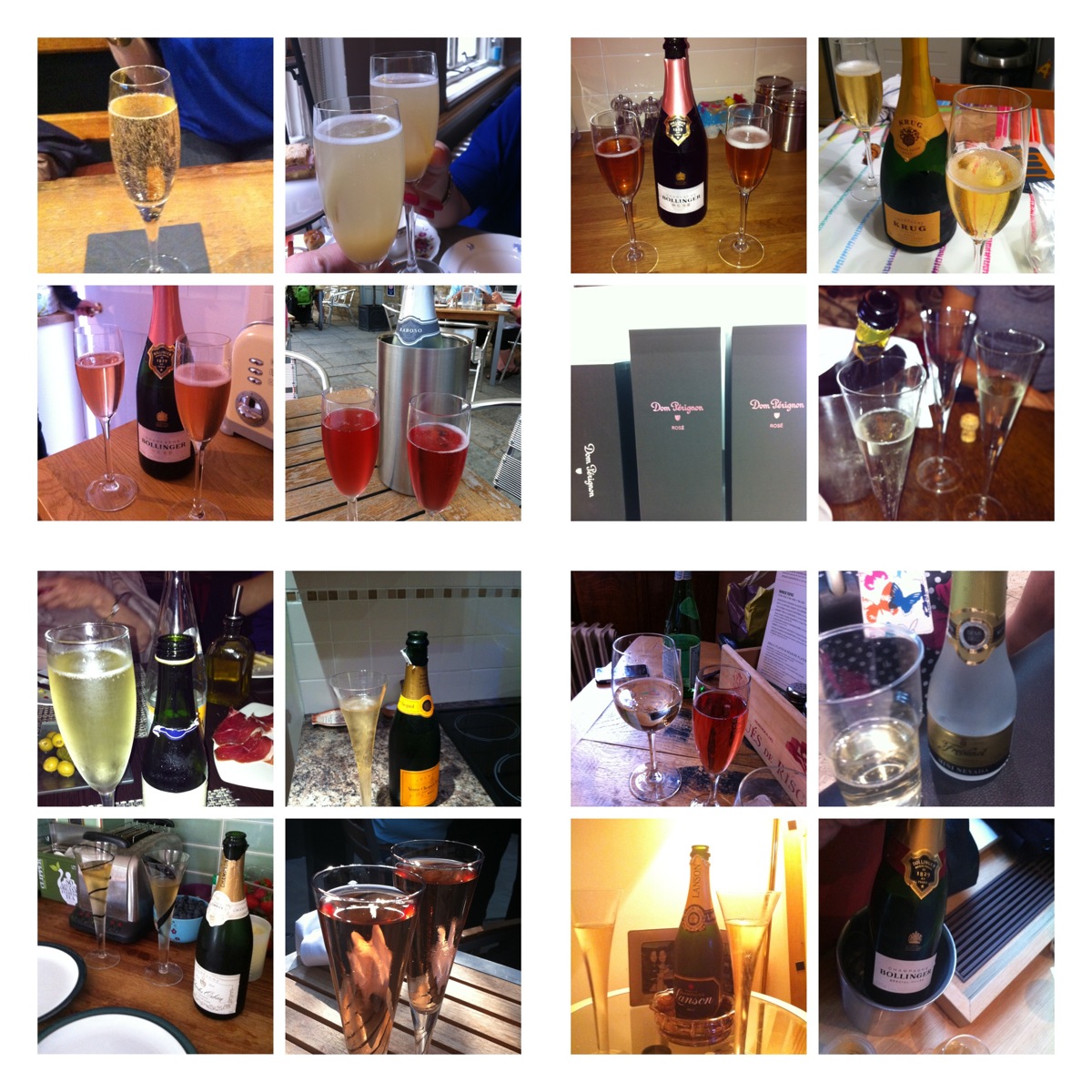
Bubbles

“I only drink Champagne when I’m happy, and when I’m sad. sometimes I drink it when I’m alone. when I have company, I consider it obligatory. I trifle with it if I am not hungry and drink it when I am. otherwise I never touch it – unless I’m thirsty”
Lily Bollinger (and me!)
Why?  See post 16/08/2011

Pimms anyone?

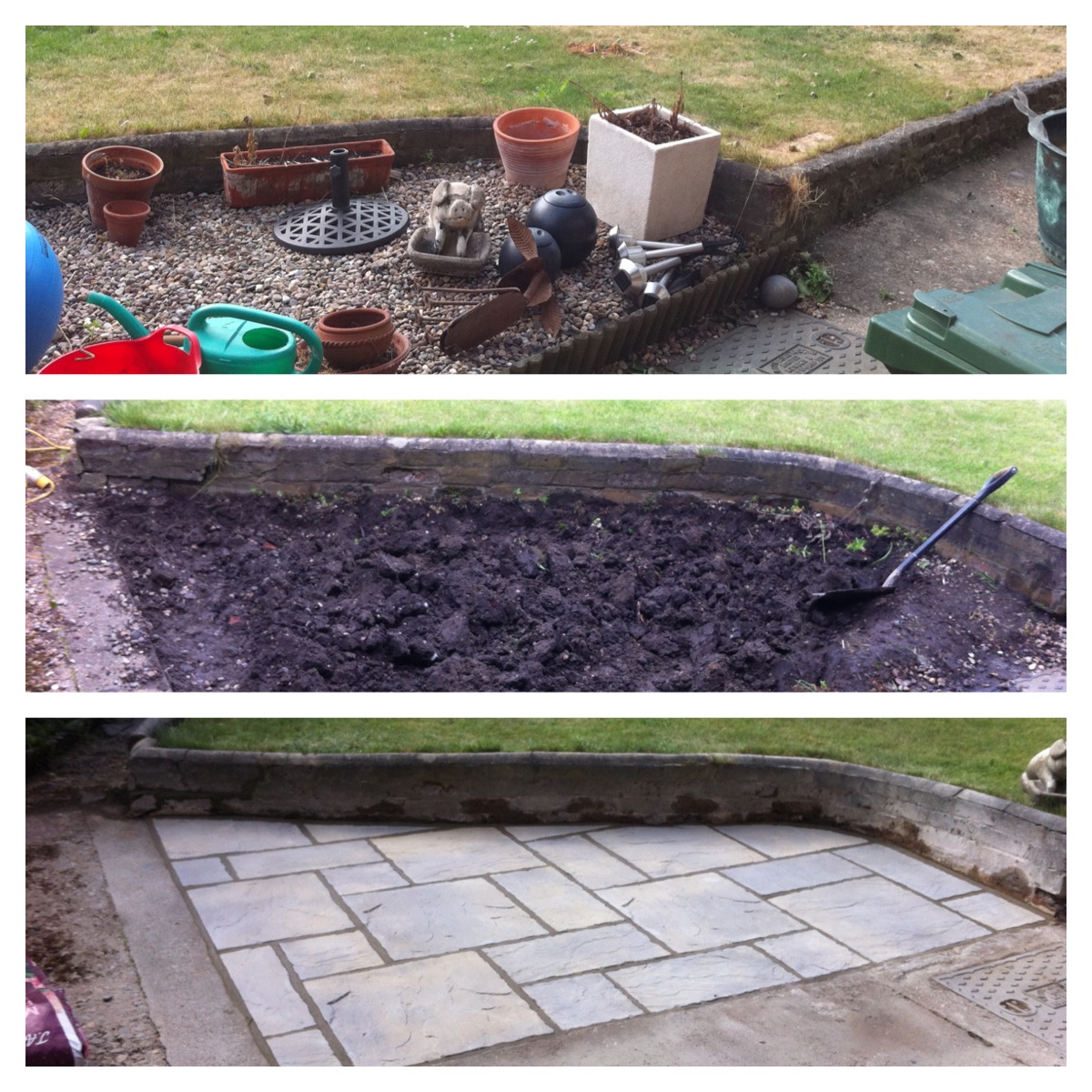
Very short entry today… just had to let you know about something very very exciting.  I’ve been waiting an age to finally find some people to  help me create a patio area in my garden and today some lovely Polish chaps have worked really  hard.  They dug out about 25 big bags of rubble and replaced it with hardstanding and then some fabulous patio slabs…

Oooh so can’t wait for it all to be dry, to finally get the table and chairs out, for there to be a touch of sunshine and then together with some wonderful company enjoy a few Pimms!

Hanging out with friends during chemo

Today, I joined a friend first diagnosed with ovarian cancer in the hospital whilst she had her chemotherapy. I first met this fabulous lady at a fundraising event 18 months ago when she was in remission from her cancer. Since meeting we have been in touch regularly and together with another dear friend who sadly passed away last year, formed the ‘champagne and shoe girls’.

This merry band of crazies would meet up for a fun and laughter filled day, often with a glass of champagne (despite any drug regimen) and find the most outrageous shoes to try on and buy! Oooh we found some crackers and I have a selection of crazy pairs that although I know I’ll probably never wear, I love just because they were part of a day out with the girls. You see although we know each other ‘because’ of cancer, sometimes we just want to do something silly, something that’ll have us all in stitches of laughter, something that others may look at and question. I find it particularly hard when I overhear someone questioning why we’re giggling away when we must be cancer patients as one of the group is in a headscarf or their hair is just beginning to grow back… but sometimes we also want to have this laughter with people who ‘get it’ and with whom we can casually drop a ‘concerned remark’ into conversation whilst discussing the importance of sequins and colour on a pair of 5inch heeled shoes!

My friend’s cancer has spread and she’s now having chemotherapy to get rid of this little lot. She’s doing brilliantly. Her count continues to go down and we have a couple more sessions to go. My ‘support’ is easy… I get to hang out with my friend and natter the day away, perhaps go out and purchase food treats or a different coffee/tea to that served from the trolley… but mainly it’s just us catching up. The only difference from normal is that we have to wear our own shoes and there’s no champagne! Strangely a day spent like this goes so fast and we’re always left saying ‘oooh you haven’t told me about X or Y’!

Chemo wards aren’t scary you know… they’re just a room filled with fabulous people who are attached to drips for the day. Each of those people are there for a similar reason but each have a different tale to tell and stories to share – I’m not talking of cancer but of life! Before I’d entered a chemo ward, I thought it would be full of people with no hair who were semi-conscious. I thought that it would be a sad place of people ‘fighting’ to survive and being pumped with toxic drugs. I thought it would be a place that people didn’t talk and there would be a silence only punctuated by the glugging sound of fluids being pumped into them. And I don’t mind saying that I was anxious the first time I was invited to spend time with a friend on their ‘chemo day’.

In reality it’s like a coffee shop or bar. Lots of people from all walks of life, all ages, both sexes and, of course, different stages of cancer sharing their time. They ARE sitting there plugged into the drip machines but what you don’t hear or see is sadness. What you see is an eagerness for the chemo to be finished so that they can move on with their lives but what you also see is a camaraderie that’s so inspiring. You hear other people’s conversations and they must hear ours too.. you hear people discussing what they’re going to have for dinner or which film they’re off to see at the movies. Preparation for a birthday party or a trip overseas…in fact the conversations really are akin to the conversation you’d hear in the coffee shop and if you close your eyes, you could so easily be there.

BUT that said, a day in hospital is a long day without friends or company. So if you’ve got a friend having chemo or spending time in hospital for anything, do think about whether you could share an hour of your day with them and instead of that long phone call to finalise plans for a party, pop in and talk to them there. It’s not scary. It’s not frightening. And your friend (and the others in the ward that you have little chats with) will appreciate the company… and I’d put money on it, you’ll have a great time too.

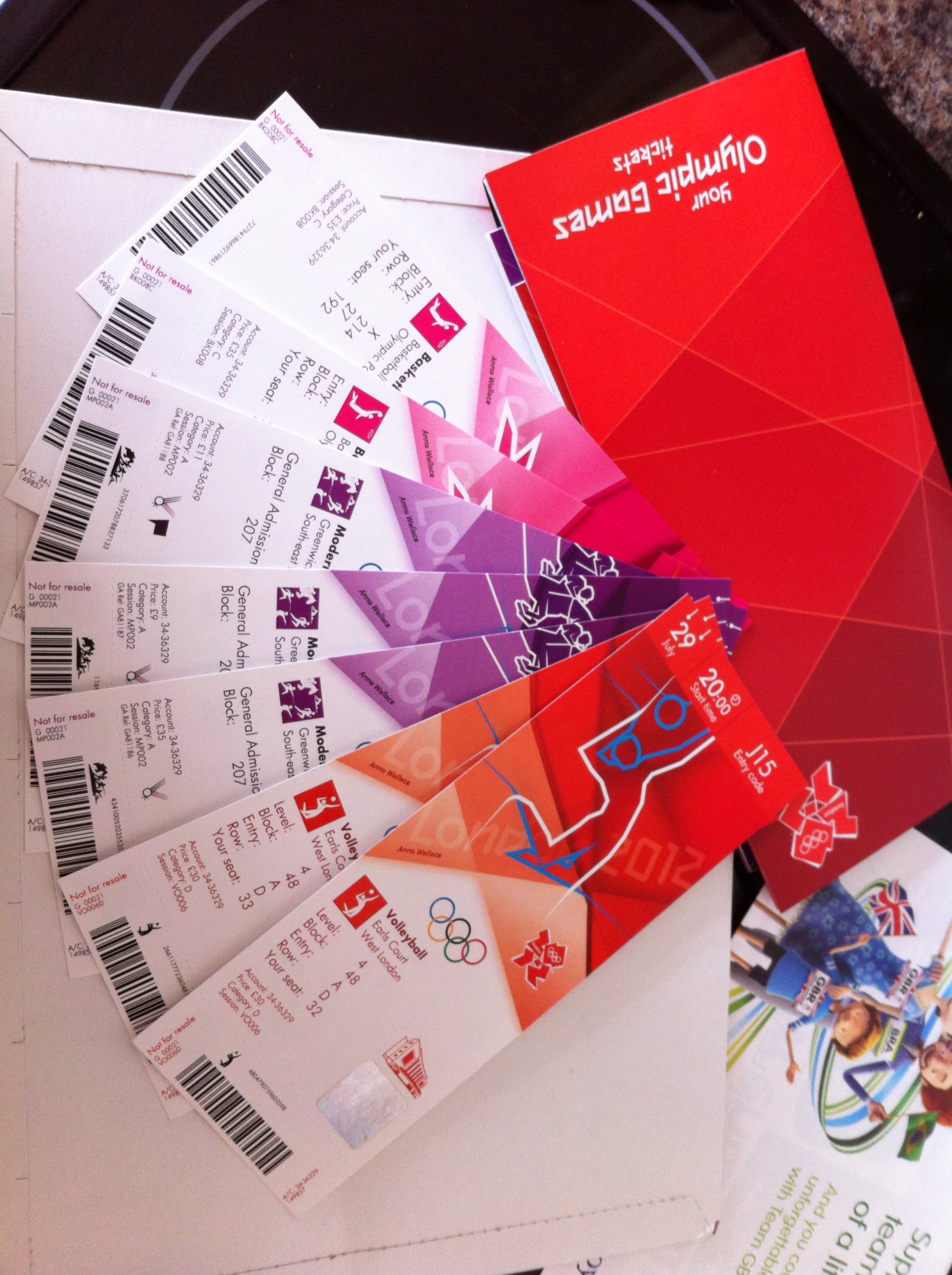
Olympic tickets have arrived

I am very very excited about the 2012 Olympics being in London.  Woah, I can hear the sharp intake of breath from the readers here… or perhaps the confusion?  No really, I am.  If you believe everything you read and see in the media, I’m the only person who IS excited however.

Despite what’s in the press about the cost, about the transport, about the _____ (fill in the gap), I truly truly believe that hosting the Olympics will be fantastic for the UK.  I also believe it will be (or should be) an inspiration to this and future generations to know that no matter what, you can achieve your dreams.  You can do it.  You do have the confidence and capability to do ANYTHING you put your heart and soul into.

I’m not sporty (or not these days) nor do I watch a great deal of sport or know all the rules. What I do love about sport though is the ability to work as a team or in solo sports the determination and drive.

In 2000 I was fortunate enough to be living in Sydney Australia and attend their Olympics.  Even there (where they are soooo much more positive) there was negative press and media before the Olympics started.  However as we all know now the Sydney Olympics were simply awesome.  The Olympic village and facilities that remain are used by schools, sports clubs and adults.  There’s a legacy of youngsters coming up through the ranks knowing what it means to be a part of the Olympics and I’m quite sure in London this year, we will feel their drive and enthusiasm as the Aussies reach for gold.

In Sydney, despite only getting a couple of tickets via their ballot, I was able to attend 8 events in the end as guests of others or buying tickets from friends who didn’t want or couldn’t then go.  I didn’t mind.  I was happy to go to as many events as I possibly could.  Each of them were amazing for so many different reasons.  The location.  The sport.  The laughter.  The inspiration.

So, it was a no-brainer that I was to apply for tickets to the London Olympics.  I was fortunate enough in the ballot to receive tickets to 3 of the 7 events I applied for.  The tickets arrived today.  Yippeeee

Now I just need to work out the logistics in picking up and dropping off my nephew and niece who will be joining me for two of the three events.

If you’ve got the chance to get to the Olympics or Paralympics, whether it be at the event itself or watching it on a big screen with others, please please please do it.

PS  Oh and if there’s anyone reading this that has a spare ticket to ANYTHING, I’m your gal!

Danza Contemporanea de Cuba

Our world season of dance continues with a trip to Sadler’s Wells for Danza Contemporanea de Cuba.  Tonight’s show promised an exciting performance set to a Cuban beat, a frisson of suggestive movement to connect the story to the dance and music and an energetic modern finish to the run at Sadler’s Wells.

Certainly the energy was truly visible as the dancers twisted, turned, jumped and were thrown into the air.  The music was there but somehow missing the crescendo entirely and the show ended with more of a fizz than a bang… you could tell by the delay in the audience applaud whilst we worked out whether it was indeed over!

The evening’s show was split into three parts, each part with their own style and interpretation.  I can’t confess to understanding the storyline of each or perhaps there wasn’t one.  Why were they all wearing boxing gloves for one part?  But how could they do the jumps and catches to cleverly whilst wearing them?  At times I wondered if I’d wandered into a gymnasium rather than the esteemed Sadler’s Wells theatre.

I think I would summarise the show by saying it was ‘interesting’.  There were parts that left us wanting more and there were parts that left us simply, wanting.

Telegraph review – 8 June 2012
Guardian review – 1 June 2012

Thank heavens for the Director of Fun

I can’t tell you how close I was to tears following my assignation with the consultant at St Helier Hospital.  Fortunately I had no time to come home and hide under the duvet, I had an appointment with the Director of Fun!

Those of you who know me, will know that I can’t resist a little mischief and fun when it’s on offer.  Some of you refer to me as the ‘yes girl’ because given an invitation to do something, I’m there with a big YES.  True form tonight was due to my ‘yes girl’ behaviour.  I was chatting to a friend about what she was doing to celebrate her birthday and also take some time on holiday.  She had planned to go to Italy for a couple of weeks – one studying art history in Florence and the second R&R elsewhere in Italy.  She suggested that I could join her and we started plotting where and how it would happen.  Sadly the crazy cost of flights and accommodation over the weeks that we wanted put paid to overseas mischief (and as it turned out, enabled us to avoid the earthquakes on those particular weeks).

However, a call to her at the end of last week established that she was going to enjoy the UK, more particularly the Oxford area.  She suggested I join her at a fabulous little hotel for one night, prosecco and beautiful dining…. hmmm ‘YES’ was my very quick answer.  Thank heavens as I needed some mischief after the hospital appointment… so quick change and in the car.

Sadly the car was playing up and I was starting inclines at 70mph and ending them at 20mph with my foot on the floor.  Anyway I finally limped my way into the hotel just in time for a bath before dinner.

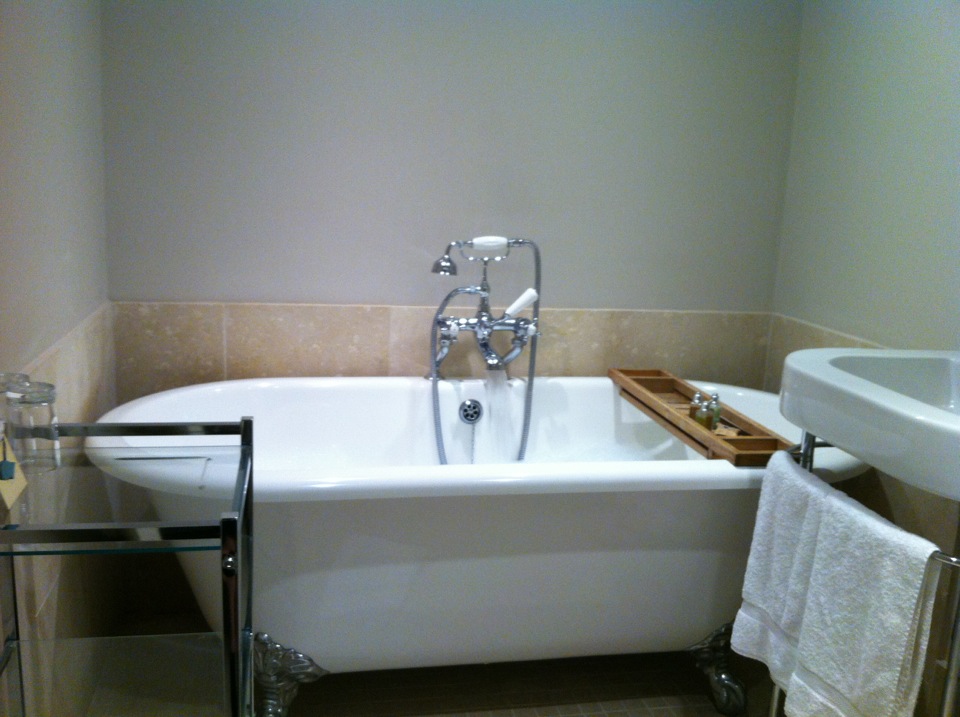
Shame I only had 30 minutes to enjoy the fabulously deep bubbly bath!

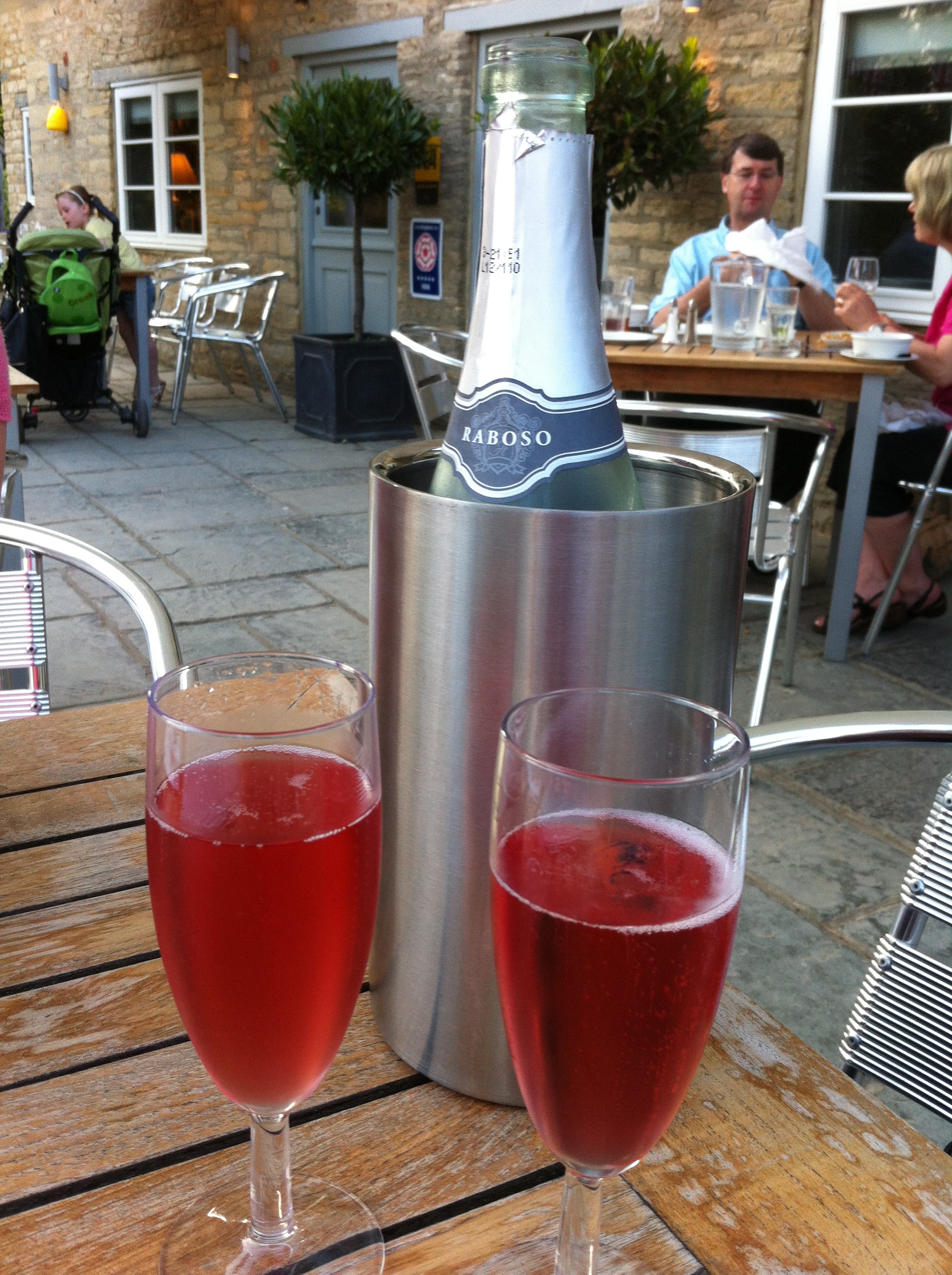
Oooh and then on to my favourite sort of bubbles… and the sun was shining!   I almost forgot the afternoon that I’d had and that my car was somewhat ‘dumped’ in the car park.

We had a fabulous dinner and caught up on all sorts of gossip (the car and hospital long forgotten).  After a nightcap we both headed off for a good night’s sleep.

The next day, I managed to get my car checked into a VW garage for the ‘damaged’ valve to be replaced.  They however weren’t going to be able to get it fixed until Friday which would mean my scooting back to London by train and coming back down to Oxford on Friday to collect – but hey they could fix it!

There was another added surprise bonus to my car problems.  The garage was at the end of the street of friends who had just come home with their first baby boy, Gorgeous George, a few days earlier.  Any excuse for an Auntie Anna cuddle!

Car booked in; baby cuddled; it must surely be time for lunch?  

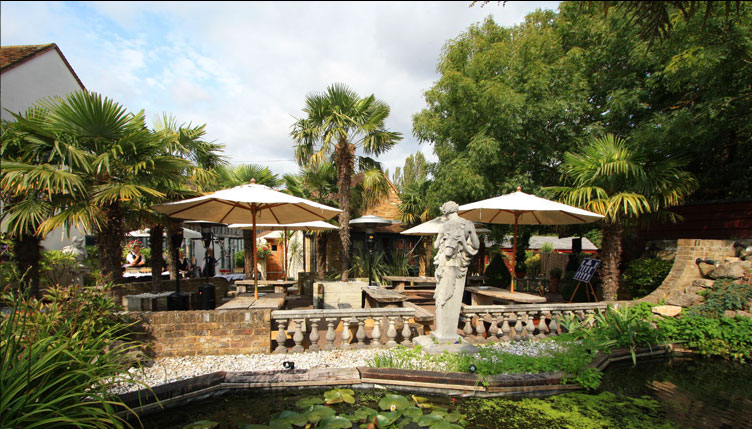
I thought I’d introduce MC to a favourite place of mine, The Crazy Bear at Stadhampton.  The sun was shining and we were able to dine alfresco before a wander round the farm shop.  I then introduced MC to another fabulous place, Waterperry Gardens.  Worth an amble and particularly fun during Art in Action.  We then headed off in search for all the ‘Bartons’ (have a look at Oxfordshire on your map and see how many there are!), we realised that it was already late and the ‘Yes girl’ was going to stay another night!  Oooh bubbles, dinner and bed (sound familiar).

Our final day we decided that we should really go for a walk along the Thames and found a fabulous spot starting from The Trout, Wolvercote, which you may recognise from the series, Inspector Morse.  A spot of lunch and then I picked up my fixed car.  Bless them they’d finished it a day early.  Quick dash back to London to take up my Auntie Anna duties for Alex and Naomi.  Fortunately bathtime and bedtime went fabulously – only 5 bedtime books read and then they were out for the count.

Oooh I’d best explain the Director of Fun.  MC is the Director of Fun and leads me astray.  I however am now the Director of Mischief and ___________ _________ __________* (I shall leave you to complete!)