My very special Christmas Tree

I don’t usually bother with a Christmas tree in my little London flat.  Most years I’m heading out to family, too busy or ignoring Christmas entirely.  This year though I’ve really entered into the spirit.

Christmas cards have been made by hand, written and sent.

Christmas presents bought and wrapped.  With those that needed to be mailed have been sent and received by the recipients ready for Christmas.

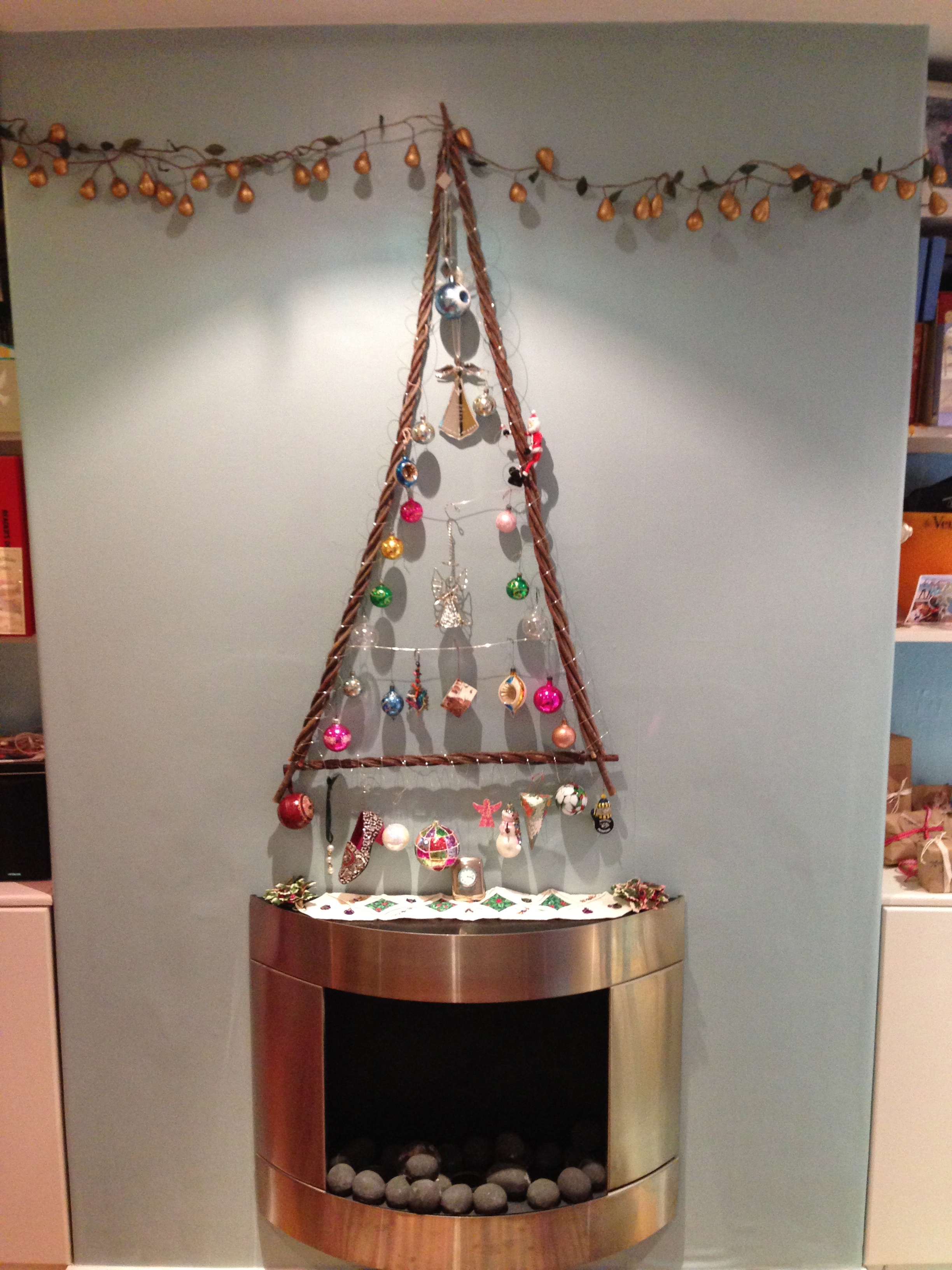
A Christmas tree has been made too and decorated with some very special ornaments.  I chose some canes wrapped in willow for the ‘tree’.  I’ve then wrapped silver wire around the canes to represent the branches.  From the silver ‘branches’ I’ve hung decorations that are very special:

  • Some were Mums and had hung on her Christmas trees over the years.
  • Some were made by Mum from old Christmas cards.
  • Some have been received from around the world from my Phyllodes ‘Sisters’.  Each year our Phyllodes Support Group host a Christmas Ornament exchange between members.  Names are selected at random and distributed.  Decorations are bought and sent by mail around the world.  Over the years I’ve received some truly special ones from some amazing people who’ve also been diagnosed with this rare sarcoma cancer.  Some ornaments were sent to me from ‘Sisters’ who are no longer with us.

IMG_7560

It may not be straight or have perfect symmetry in the decorations but it’s super special to me.  Suffice it to say that I love my very special Christmas Tree.


Genetic Testing

In August 2011 one of my co-administrators in the Phyllodes Support Group posted in the group a request for 1,000 people who had been diagnosed with sarcoma to be part of a sarcoma research project on 23andMe.  The project was sponsored by 5 charities, Beat Sarcoma, Sarcoma UK, Association of Cancer Online Resources, Sarcoma Foundation of America and Sarcoma Alliance.  The aim was to genetically test 1,000 people who’d already been diagnosed with a sarcoma and see if this testing would find a link between us all.

A spit sample with the aim of producing a valuable research outcome that may help thousands of others in the future.  Of course, I registered immediately.

As part of the testing process each participant received their genetic test results free of charge.  I’d never considered having genetic testing so for me the test results were an added bonus.

Between my spit sample being collected by a DHL courier (who looked horrified when I had to declare the content of the package being sent to the US), and my receiving the results I found myself wondering what I would find out, whether I should even read the results, what I would do IF it told me something I’d not like to know.

At the time in the UK the process for genetic testing was to be referred by your Dr and to have counselling as part of the test.  The counselling is carried out before, during and after your test results to ensure you’re able to cope with the results and what you would do should they not be what you expected.

However as I was participating in a project run via the US, counselling was not offered and I’d not thought it would be of concern when I signed up.

Me being me, decided that I should do my own ‘counselling’ and, as far as I’m able, ensure that I’m in the best mental state to manage any results – good or bad.  I made myself consider what it would be like if I opened the email to discover that I was high risk of an illness, what I would do, who I should tell etc.  I made myself not only consider it but imagine that was the result.  I needed to know how I’d cope and what I would do in those circumstances.

So when I received an email “Your 23andMe Results are Ready!‏”, I felt prepared.  Although I confess to not opening the email for an hour or so whilst I paced and reconsidered what I’d do.

I was fascinated when I opened up the results.  How could a little bit of spit identify that I had blonde straighter hair on average, blue eyes and if a smoker, likely to smoke more!  All correct although I’ve now not smoked for years.

Within Disease risk, I discovered that I’m slightly higher at risk of coronary heart disease, ulcerative colitis, breast cancer, celiac, Crohn’s and Lupus.  But these are all relative.  On most of them I’m only very slightly higher and still it’s only 0.5% chance where the average population is 0.2%.   I can see however that one might read that as over twice the risk of the average population rather than 99.5% risk of NOT having the disease.

With all statistics and numbers it’s difficult to interpret them without emotion and to understand percentage risks in a way that’s meaningful.

I was however angry when I read my results for multiple sclerosis.  Mum had MS and my Aunt was diagnosed after Mum in the early 90s.  I remember Mum telling me that as MS is something that generally passes down the female line, according to her Dr I had now a 50:50 risk of being diagnosed with MS.  I’ll admit that this has weighed heavily on my mind since then and has infuenced decisions I’ve made in my life.  One of my school friends, Belinda, was diagnosed in her 20s with MS and passed away a few years after diagnosis.  And I’ve watched Mum become less able and eventually pass away from MS.  So when the results of my 23andMe genetic testing indicated that my risk of being diagnosed with MS was less than the average population, I was livid.  I was furious that I’d spent 25 years worrying about it.  Every time I had numbness or tingling in my fingers and toes, when my eyesight was playing up and many other ‘symptoms’, I’d wondered if it was the start of MS.  Ironically over the years I’ve never thought that they could have been wrong… 25 years ago they knew far less than they now know!

So what else did my results show me?  Actually I’m quite healthy!  For the most part I’ve a typical result or one that isn’t far off the average population.  I also know I have an increased sensitivity to Warfarin… so should I ever be prescribed this, I will know to tell the Dr that I need a decreased dose!  Nothing of note within my Carrier Status.  Only disease risks that are more than double the average population are melanoma (3.6%), celiac (0.7%) and lupus (0.5%)… but they’re still only very small percentages so I’m not going to worrry about them.

Since my first registration I’ve received regular updates from 23andMe when new research comes to light and my results are re-assessed.  I’ve been fascinated to read them.

Within 23andMe you are able to link your results to others and many of us from our Phyllodes Support Group who took part in the trial have done this.  We thought it may be interesting to see if there were traits/risks that we could identify between our small cohort group.  Sadly we couldn’t see anything that stood out with the exception that many of us had higher than average auto-immune disease risks.

So why this post now?

23andMe have just launched in the UK.  This means that anyone is able, for a price, to obtain their own genetic testing via 23andMe and without genetic counselling.  It’s a service accessible via the internet.

Germany are considering 23andMe being available there.  This week I was asked my views on it and asked to record a piece for their TV channel ZDF.  You can see it here from about 4.10.

Inevitably there’s been lots of discussion about whether it’s a good thing.  Whether genetic testing should be allowed without counselling?  Whether the results provided by 23andMe are accurate enough and using up to date data?  My view, is ‘Yes’ but with caution.  Anyone undertaking genetic testing needs to consider why they’re doing it.  What they want to know/understand from the test results.  How they’d deal with the results being good or bad.  Who they’d tell.

I wouldn’t have had my genetic testing carried out were it not for the Sarcoma Community Project.  However I’m pleased I did.  I feel I know more about myself, my health and my risks than before.


Clinfield Conference – speaking!

10404448_789643887750582_1387633799265075330_n

The Clinfield Conference provides an opportunity for research nurses, allied healthcare professionals and all research practitioners to get together in a formal setting.  The Conference programme is put together with care to provide sessions to share good practice, things that worked and didn’t work, speakers talking about their career development pathway, patient advocates talking about their experience with research and how they can assist the researchers, debates and also invaluable time for networking.

I have previously been invited to attend this Conference twice by Kelly, who also leads our PPI Clinical Trials Group at Cancer Research Imperial.   In April this year I received an email, from Kelly, asking if I would like to do a session, as a patient voice, for either a panel or a debate on the use of social media for recruitment to clinical trials.  Of course, I said ‘yes’, put it in my diary and forgot all about it!

Conference Agenda

09:30-10:00 Registration

10:00-10:10 Welcome Professor Janice Sigsworth

10:10-11:00 Why clinical trials and the people who run them matter. Key Note Speaker: Mr Charles Sabine

11:00-11:15 Inspiring the next generation through student placements.  Mary Harrison

11:15-11:45 Coffee

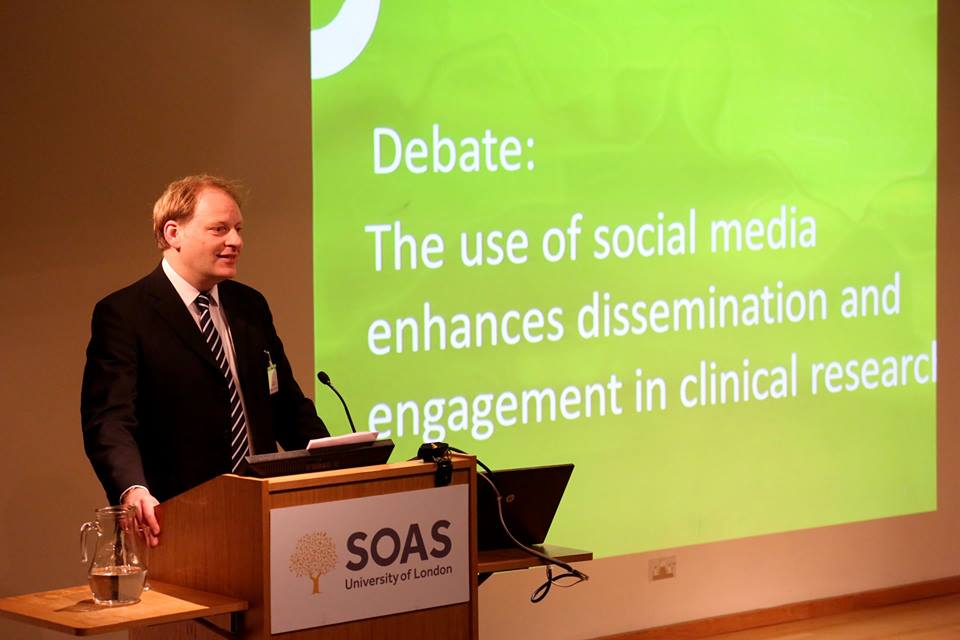
11:45-12:45 The Great Debate:  The use of social media enhances dissemination and engagement in clinical research.

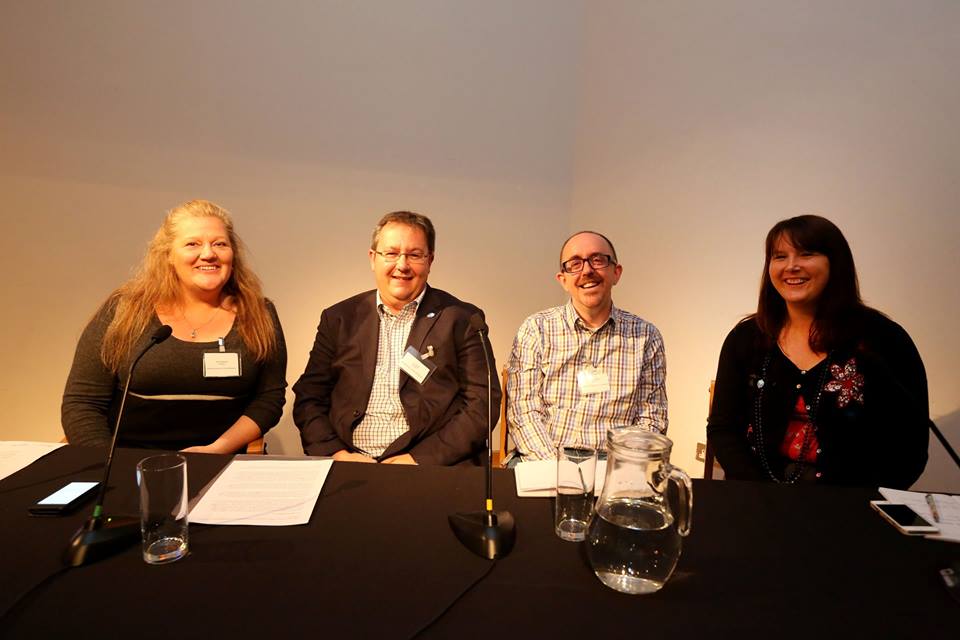
Chair: Gordon Hill Debaters: Teresa Chinn- We Nurses, Matt Ballentine, Dr Les Gelling- REC Chair, Anna Wallace- Patient Representative

12:45-13:00 Considering a Masters in Research? My experience so far. Stuart Gormley

13:00-14:00 Lunch

14:00-14:25 Stratified Medicine:  the challenges and ethical dilemmas genetic testing brings to research.  Professor Martin Wilkins

14:25-14:45 Can I retweet please? Health research recruitment and the Twittershpere. Professor Heather Skirton

14:45-15:15 Coffee

15:15-15:30  Regret in patients with acute and chronic conditions recruited to stem cell clinical trials Katrine Bavnbek

15:30-15:45  Beyond Research Delivery to Design and Dissemination- Extending the Role of the Research Nurse Caroline French

15:45-16:00 Closing Remarks and Award Presentations Professor Christine Norton and Kelly Gleason

The whole conference was inspiring but none as moving as Charles Sabine’s presentation.

1795551_789641734417464_2230807931952918319_n

Charles spoke candidly about his career as a TV journalist where he spent many hours and years reporting from war-torn parts of the world.  No doubt an incredible career and something that few of us would be brave enough to do.  But then he spoke about something way braver than his time in journalism.  He had the whole audience hanging on his every word and, at times, wiping a tear away.  Charles’ father was diagnosed with Huntington’s disease (AKA HD).  He watched as his father ‘disappeared’ before his eyes.  From an intelligent, articulate and ‘alive’ man, he became reliant on others for everything.   HD is a progressive and hereditary disorder for which there is currently no cure.  Charles and his brother have had genetic testing and both tested positive.  Charles’ brother, John, an incredible successful lawyer, is now battling this fast moving and progressive disorder.  For the moment, Charles has no signs.

Charles, like so many of us when we are told ‘there is no cure’ ‘there is no research’ or ‘you’re unique’, uses his experience in journalism and as a son, brother and person affected by HD to a different use.  He is now a spokesman for freedom of scientific research, and sufferers of degenerative brain illnesses (including HD).  He has been talking about his experiences at conference such as this, raising awareness, rallying and organising groups of people affected by HD to speak up and get involved.  He spoke of HDBuzz, Huntingdon’s Research News.  He also spoke about The Huntington’s Disease Youth Organisation (HDYO) where younger people diagnosed with HD are able to get together in person, online, via social media to support one another but also to push for changes and research.

Charles’ presentation without any hesitation was moving.  I wasn’t familiar with HD.  I am now.  But what I also see is the impact that a patient voice (albeit one from the tellybox) can have on improving awareness, patient care, support and, the everso needed research.  Charles’ experience with HD is similar to other rare conditions and diseases and what Charles demonstrated was that by using social media, by using our voices we CAN make an impact.  Research may not be within our lifetime nor may it make a difference to our own health but to KNOW that we  have made a difference for future generations and that, particularly in the case of hereditary disease, our children or grand-children will have the benefit of our involvement now.

10846392_790106051037699_2635527295278756224_n

I felt for Mary Harrison, the next speaker on the podium.  How could anyone possibly follow Charles’ presentation?  She did, brilliantly.

Mary is clearly passionate about encouraging and enthusing the next generation.  About engaging all new students in research so that it becomes part of their ‘everyday’ no matter which medical field they end up in for their career.  Research should be second nature to consider for each and every person, patient and non-patient.  Without research medical advances cannot be made.  Healthcare improved and a better and longer quality of life gained.

It was wonderful to hear some of the initiatives and working methods that have been implemented and that Mary is championing.  I hope that others attending the conference were able to go back to their workplaces and implement similar projects.

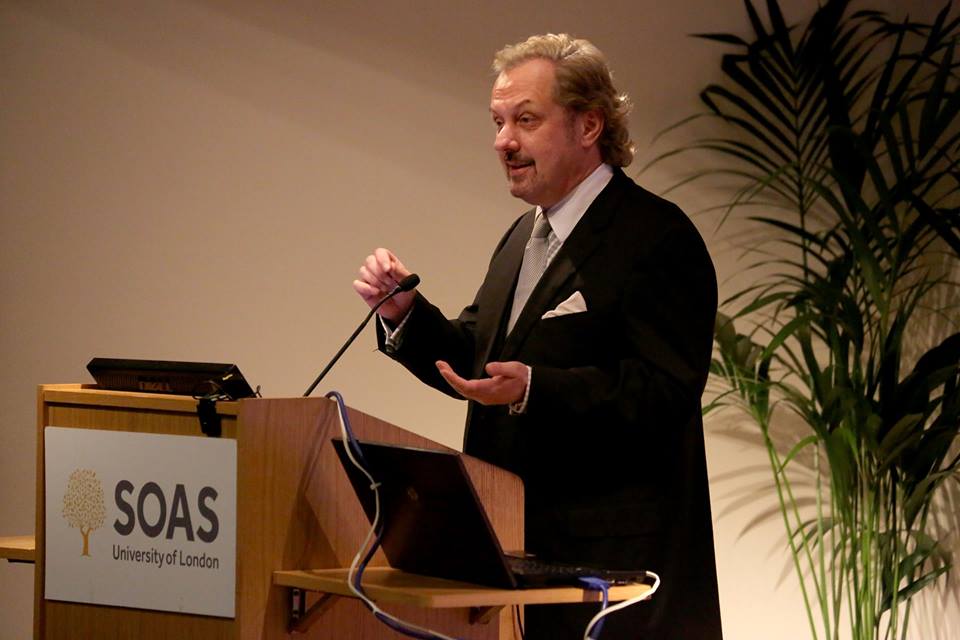
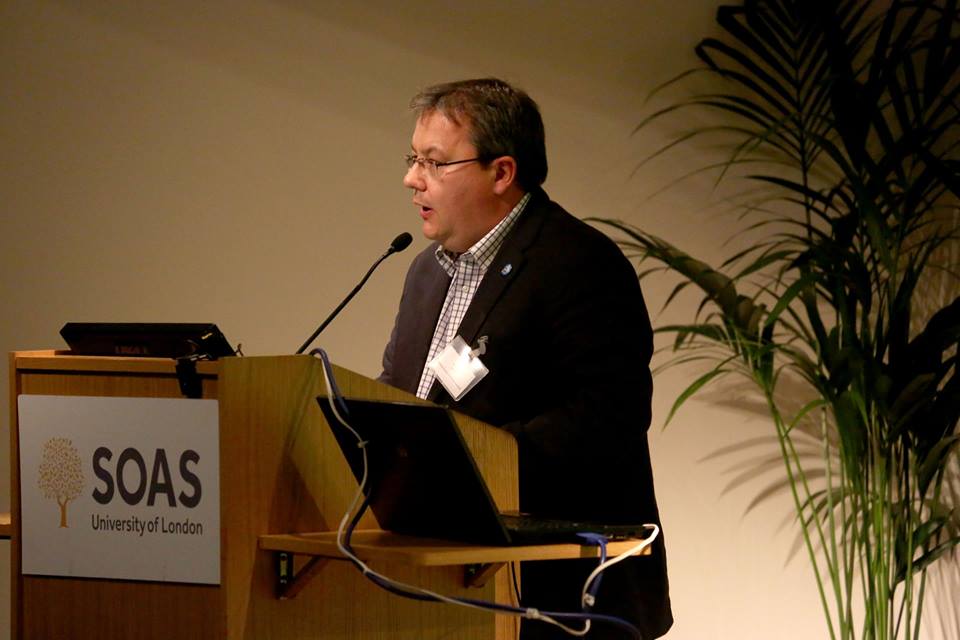
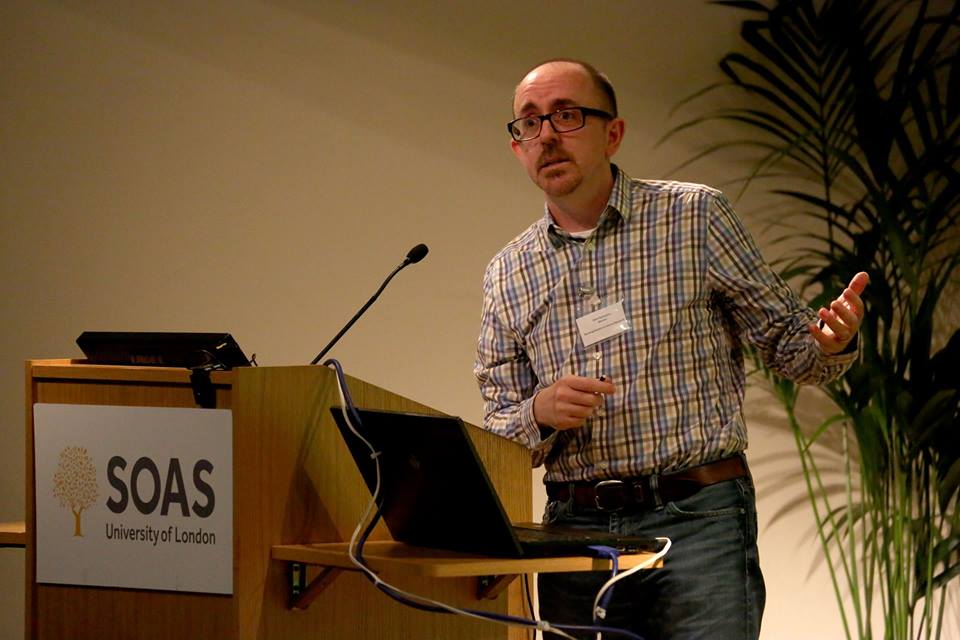
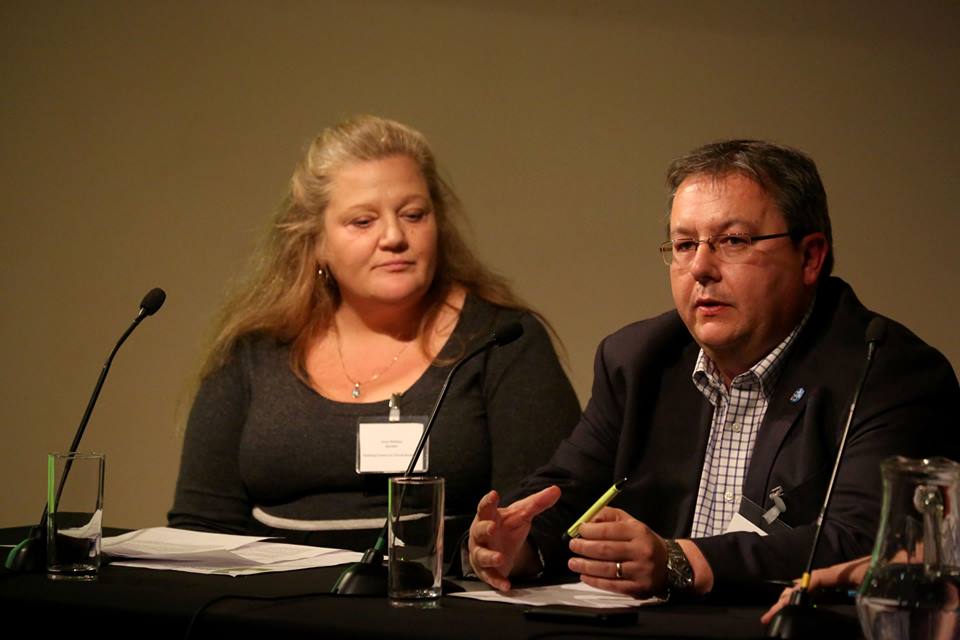
10690252_790103731037931_4089365723065417337_nAfter a short coffee break, it was time for the Great Debate: “The use of social media enhances dissemination and engagement in clinical research”.  I was on the stage!  We had four debaters, 2 for the motion and 2 against.  My job was to debate against the motion.  The chair for this session, Gordon Hill, introduced the debate and asked for a show of hands for and against the motion.  There was one lonely hand waving ‘against’.

10687141_790104117704559_3378078328530090806_n10421999_790103884371249_2477100869151685393_nTeresa Chinn, @WeNurses, presented her arguments FOR the use of social media.

Compelling arguments and we could see a great deal of nodding from the audience.

Dr Les Gelling @Leslie_Gelling was first to present his arguments against.1932271_790103911037913_2057804842392007702_n

Again I looked out at the audience and saw nodding and acknowledgement of the points Les raised.

10351655_790103937704577_40107761402128731_nMatt Ballantine @ballantine70 stood next to argue FOR the usual of social media.


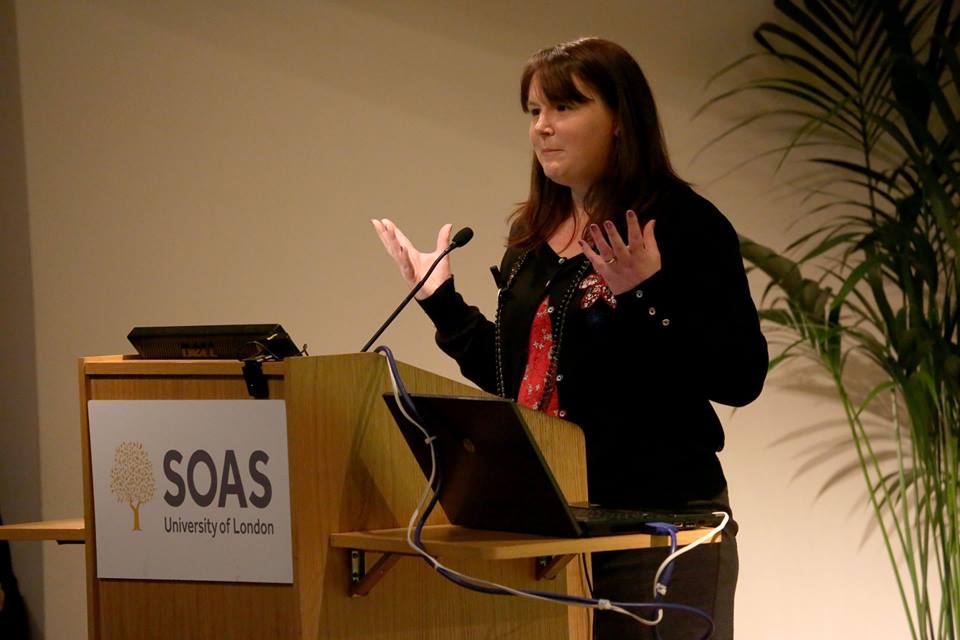
1538625_790103957704575_6793728141737878822_nLast to speak was me.  I questioned if you could really engage people with 140 characters and provide enough information for them to make an informed choice.  I queried the use of acronyms to reduce the character size reminding the audience that patients and carers don’t yet know what these acronyms mean.  I was also able to mention ‘Phyllodes’ in my short presentation 3 times… hehehe a room full of researchers have now heard of our rare cancer!

Without a doubt the debate was difficult.  All four speakers are active users of social media and see the value of the medium for dissemination of information.  Les and I had discussed before the debate how it was difficult to sound passionate about  an argument you didn’t believe in.

In the summing up, Les did a wonderful job of putting doubt into the audience’s mind.  About ethics, confidentiality, understanding, interpretation and audience.

1486625_790104004371237_6015179206767551081_nThere were some very interesting questions from the floor and even some examples of where the use of social media had worked already.  Namely when recruiting young mothers to a trial via MumsNet.

Finally a show of hands from the audience to see who was now FOR and AGAINST the motion.  Les and I had won the debate – there was now no longer a lonely arm waving but a large number in agreement with our arguments.

I must admit to despite winning the argument feeling a little disappointed.  I am in favour of the use of social media for dissemination of information.  However what was highlighted in the arguments and questions was that perhaps we’re not quite there yet.  Not everyone feels comfortable with social media.  Not everyone uses it.  We’re not yet au-fait with using social media effectively nor do we know the true impact of using it.  Social media is still in its infancy and as such there is still a great deal to learn.

It should be something that is used for some aspects now.  It is somewhere that we can learn more and engage and encourage people to become active in research.  It is somewhere that can clinical research trials can be advertised or links to recruitment programmes be discussed.

I think the debate was wonderful as it clearly made the audience think more closely about their use of social media.  It will hopefully mean that it can be used as ‘part of’ a recruitment project but with consideration for confidentiality, ethics and understanding.


The afternoon sessions at the conference were fascinating.  It was wonderful to hear from various people about their passion for research, inclusion, consideration of patient side effects and quality of life but mostly about the willingness to share with others their experiences (good and bad).  I know that all those attending this conference will have left with a new understanding of some aspects of research and I’m quite sure many will have been implementing changes or looking at the way they’re currently operating to improve the research landscape.

I’m passionate about research.

It should be part of everyday conversation.

Sadly most of us only think about research when we or a loved one is ill.

Research is also conducted on people who are well with the use of surveys, spit or blood samples.

Research doesn’t have to be invasive or require the taking of medication.

YOUR involvement in research could make a difference in the future.

A novel way to celebrate 5 years since diagnosis

When Greig Trout, the author of 101 Things to do when you Survive, messaged me to let me know he’d nominated me to take part in a BBC documentary, we had no idea that the filming would take place today, my cancerversary.

I’ll be honest and say that I have been more than a little nervous about doing it at all and the idea of ‘putting myself out there’ for all to see on the tellybox has induced more than a few sleepless nights.  Greig had been asked to do the show and would, no doubt, have been brilliant.  But the lure of more travelling, proving there is life after not one but two cancer diagnosis, inspiring others and raising awareness was too great for him and he jumped on a plane to Broome in Australia instead!

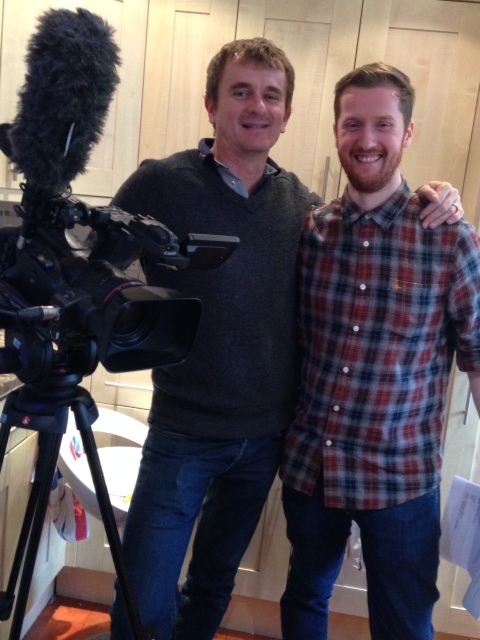
I can’t explain too much about today’s filming as the BBC want, of course, to have an impact with the show when it’s aired in January.  My day started at 7.15AM when a taxi arrived to take me to the first filming location in the City of London.  Stupidly I wondered how I would recognise the team I was meeting… until I walked in to a coffee shop to see cameras and lights set up and waiting for my arrival!  (blonde moment).  Nervously I was interviewed on camera.   All the time worried about how I would look, whether I would do a good enough job and trying not to be emotional.

The next part of our day was crucial.  I was to conduct an ‘interview’ on camera.  I needed to be polite but to needle.  I needed to enquire but to listen.  I needed to ensure my questions would inform and that the answers received were useful.  I needed to be Robert Peston but hope that little old me was an OK substitute.

The final part of the day was about me and filmed at home.  ‘About me’ is never something I’ve been particularly comfortable with.  I’m usually taking the photos or choose to hide at the back of group pictures.  Unsurprising then that when asked by the BBC to find some holiday snaps of me, I had diffuculty locating ones with me in them!  Ironic to think I am spending the day being filmed!  I was interviewed on camera about my diagnosis and experience with having cancer.  Having been in control of my emotions all day, I wonder if I might seem emotionless on camera.   We also filmed me doing normal things at home, meeting a friend, juicing, writing this blog, looking at holiday photos etc.  All to set the scene about me in the documentary story and why the topic is so important to be aired.

BBC Crew(In my kitchen!)

A very long day (11 hrs) and I was exhausted and emotional by the time the crew had left.  Ironic in so many ways.  Not least that the filming was taking place 5 years on from when I heard that dreadful phrase “You have cancer”.  A milestone I marked with telling my story to camera.  Hopefully the film will achieve changes in an industry that takes advantage of those who are living with a long term condition.  Hopefully it will raise awareness of the issue and signpost those affected to the right place at an affordable price.  Hopefully it will also raise awareness to Phyllodes by the mention in the piece.  Hopefully this mention will mean that others diagnosed with this rare cancer will not feel alone and find others in the Phyllodes Support Group.  Hopefully I did the piece justice…

Let me know : Rip Off Britain being aired in January.

PS  Apologies about the ill-fitting jeans… my excuse – I’ve lost weight and got dressed in the early morning darkness!

Five years has passed….

Hi Mum

I can’t believe it’s been five years since you left.  Sometimes it still feels like yesterday when we watched you close your eyes and go to sleep. Sometimes it feels like forever since I heard your voice.

So often I find myself reaching for the phone to tell you something or just to have a chat – I wonder when I’ll stop doing that?

As I start a new chapter in my life, I’ve been sorting through some more of your things and found some great pictures and cards.  My home phone also broke recently so I plugged in my old one only to discover a whole heap of voicemail messages from you.  How strange to hear our voice after all these years and to know that I won’t hear it again.

Five years since you passed is also significant for me and my health.  I found the lump on the morning of your funeral.  Gosh it’s been a strange five years.  Five years is so significant in cancer terms as most are able to consider it to be the point of ‘all clear’.  As mine was a special/unique/rare/whatever variety, I get to continue the regular checks beyond the five years.  It’s so odd to think you knew nothing of this part of my life, the cancer bit!

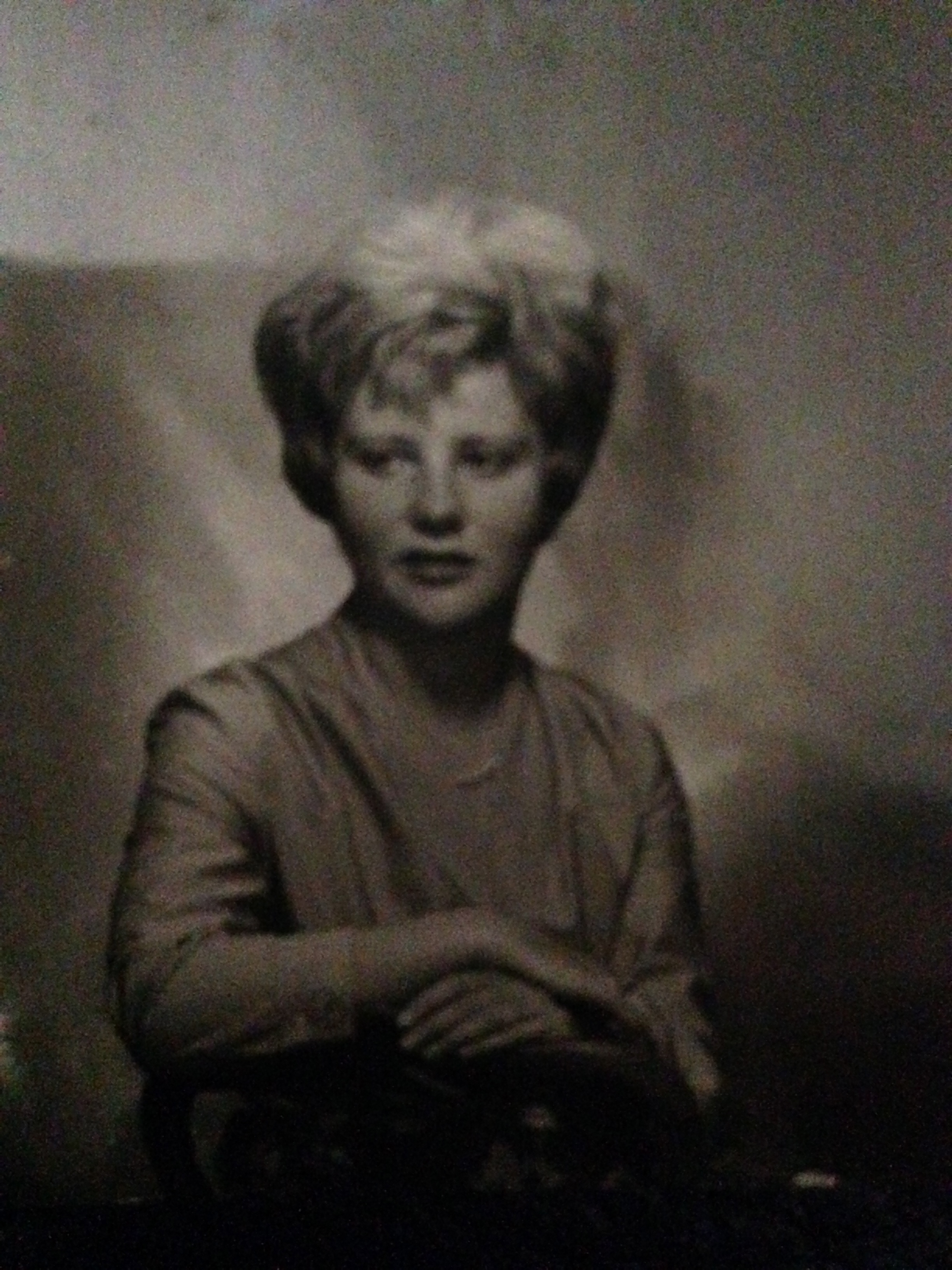
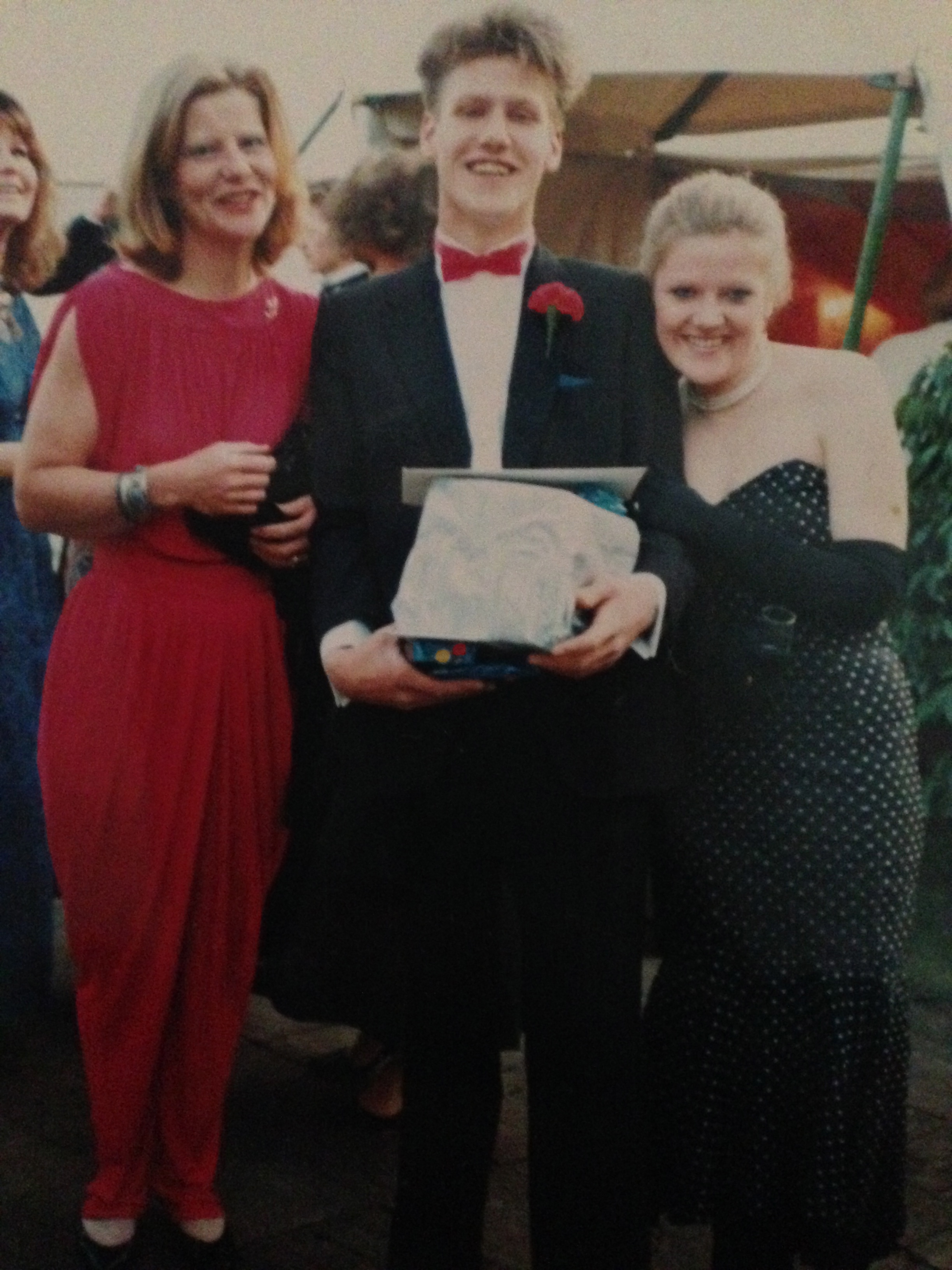
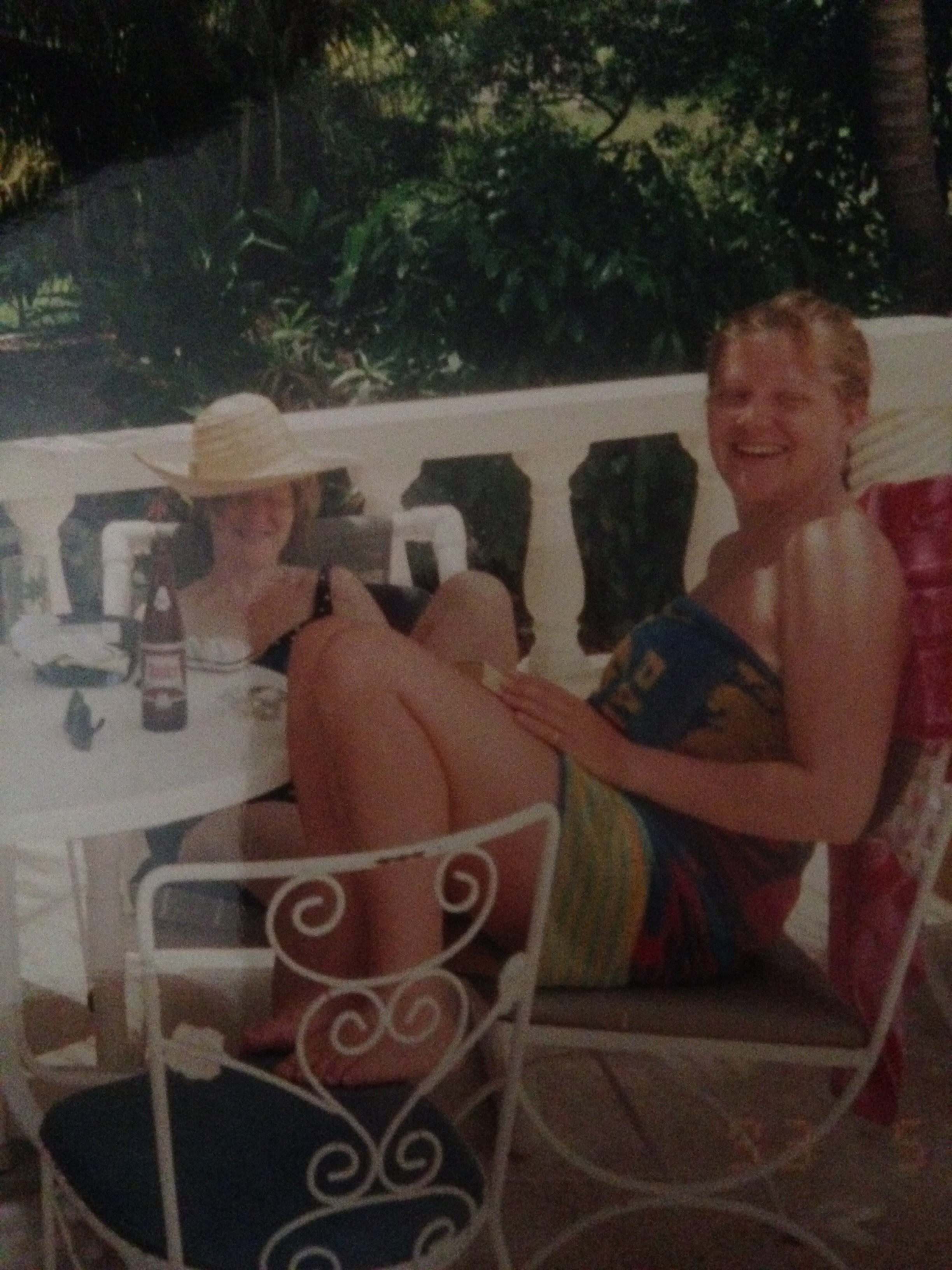
Anyway, thought it was time to post some more pictures of you…

Mum TennisSherborne School House Cup Winning Team of 1956

MumGlamI wonder why this photograph was taken?  Looking v glam

21and18Mum at our birthday party celebrating my brother’s 21st and my 18th

BarbadosHolsMum and I chilling in Barbados

MumPartyingBrilliant!  Love that I’ve found a pic of a squiffy Mum with a ciggy!

Miss you Mum

x

Mammogram time

You’ll remember I recently went for my six monthly scans which are all part of the follow up regimen following my diagnosis with malignant phyllodes and DCIS.  You may also remember that they had ‘forgotten’ to book my annual mammogram.  I’ve had some truly frustrating phone calls and several tears whilst trying to ‘remind’ the team what was agreed as a good regimen to monitor my health.

My appointment letter was received a few days ago and today I went into the RMH for my mammogram.  Unlike when I was there a few weeks ago, the clinic was virtually empty and I was seen immediately.  It’s crazy when I think about me having to chase and WANT a mammogram.  They’re usually painful and as my breasts get more lumpy with age and scar tissue they are becoming even more painful.  The mammographer was kind and tried to be as quick as possible but needed to take quite a few scans covering lots of tissue and angles.  Part of me wishes I didn’t need to do them at all as the pain is so bad (today was truly dreadful) but I also know that these are the best way to identify changes and see any Phyllodes appear.

Next stop is my appointment with the sarcoma team (and I presume a new consultant) for the results of the ultrasound, chest x-ray and now mammogram.  Only a few more sleepless nights…

The Great Debate: Should we use social media to recruit patients in clinical research?

Eeek the Agenda has been published for the annual Clinfield Conference for Clinical Research Staff.

Guess who’s speaking and part of the panel debate? Meeee….

“11:45-13:00 The Great Debate: Should we use social media to recruit patients in clinical research?
Chair: Gordon Hill Debaters: Teresa Chinn- We Nurses, Anna Wallace- patient representative, Les Gelling- Ethics Chair”

As always it will give me the ability to mention ‘Phyllodes’ and this occasion to a room full of people at the coalface of clinical research.

As you will all know from this website social media has played a huge part in my finding other people diagnosed with Phyllodes; sharing experiences and supporting one another; researching medical/scientific papers and sharing them with the group; discovering clinical trials around the world and again sharing them with the group; and so much more.

I know that when we’ve discussed clinical trials and research within social media, the thirst for knowledge, how to sign up and get involved and interest in any results and findings from group members is enormous.

Using social media as a way to recruit patients into clinical research is a no-brainer.  It should also be used to educate and inform patients on what research is; what and how you could be involved; why it’s important for medical advancement for you and others; etc.

My ‘journey’ would have been a very different one had social media not played a part.

I’d love to hear your comments.

Strengthening public and patient engagement in biobanking – developing plan of action – Cancer Biobank Conference in Cardiff

Strengthening public and patient engagement in biobanking – developing plan of action
Masonic Hall, Cardiff – Wednesday 18th June 2014

~~~~~~~~~~

Sadly due to problems on the M4 I missed the introduction to the day and part of the first speaker’s presentation.

~~~~~~~~~~

Dr Kirstin Goldring
UCL Biobank and NIHR BioResource Coordinator
Public perception of research – where are we starting from?

Kirstin presented some of the findings from recent research as below:

Findings:

  • Majority of respondents want to take part as long as the research has been approved by the research committee.
  • Involving patients in the group helps with research and information written in a way that can be understood by the non-medics. However our research showed that patient involvement in the research project didn’t make any difference to their involvement.

Findings: Eurobarometer

  • The term “Patient involvement” was not clearly understood either by patients or practitioners.
  • But once understood what it means both practitioners and patients appreciate the involvement of patients.
  • Communication was central to the better outcomes however practitioners are aware that they perhaps don’t have the time to do this well.
  • Patients need to feel empowered to ask questions and get more involved if they need to do so.
  • Practitioners worried about giving alternatives as it may dilute the patient’s focus.
  • Chronically ill patients tend to have more awareness of treatments and self-monitoring their wellness.
    Younger patients had higher expectation of their own involvement but were more reluctant to ask questions.

Findings: The Wellcome Study

  • Participants in research showed overwhelming support for the return of health related findings particularly when a condition is treatable and serious. Feedback throughout the process.
  • Respondents valued the role of a health professional or those they already had an existing relationship with during the process.

Findings: STRATUM

  • There is a high level of public support for biomedical research and willingness to donate NHS for this purpose.
  • More information and interaction they have with the process the more people are willing to be involved.
  • There was concern about where samples may be used. It was essential to provide good consent information.

Public Perception of Research

  • Public are interested but need more information, understanding and communication… Begin the conversation.
  • PPI needs to be considered before you start the process of putting a study together. Involve patients before the study is even designed.
  • Heading in the right direct but need to keep involving, developing and evolving.

~~~~~~~~~~
Amir Gander
Lead, Tissue Access for Patient Benefit

  • Falling between the cracks
  • Power of patient involvement
  • Linking across many hospitals over the north and east of London together with NHSBT transplant pathway.
  • Started out setting up and putting in questions about research and consent to all patient questionnaires. This evidenced that most people would give consent but those that didn’t had a doubt as to how their tissue was being used. Simply speaking they weren’t aware of the ethics and rules.

Amir was part of the team who set up a Big Bang Fair which is the largest celebration of science, technology, engineering and maths for young people aged 7-19 in the UK.

During the Fair they were able to speak with the young people about organ transplantation and donating tissue for research.  They also set up questionnaires before and after the process to gauge option on organ transplantation and tissue.  The kids were dressed up in lab coats and participated in many ways including an interactive iPad game and an anatomical model.

What’s next:

  • Going into schools
  • Organising events in neutral locations ie football, community centres etc
  • More Big Bang Festivals
  • Take this format around the country.

~~~~~~~~~~

Alison Parry-Jones
Manager of Wales Cancer Bank

Introduced the next section of the conference with a slide from NCRI.

How others raise awareness and increase understanding – case studies

  • Cancer Research Wales
  • Organ Donation Wales
  • Clinical Trials in Wales
  • GE Healthcare
  • How Tenovus use social media
  • Lay / Volunteer consenting for biobanking

~~~~~~~~~~

Liz Andrews
Director for Cancer Research Wales
Proud to support the Wales Cancer Bank

Totally dependent on the donations that are given by the public to Cancer Research Wales.

How do they generate and raise awareness that leads to donations:

  • press releases
  • radio adverts
  • social media
  • annual open day
  • newsletter monthly
  • website blogs
  • shops
  • community events

They’re also keen to say that all money raised will be used within Wales for research.

Every January they open the doors to our research labs so that the supporters can come in and meet the researchers and have a tour of the facilities.

Cancer Research Wales have a dedicated library for cancer. It is staffed by an excellent team who are able to research and provide specific information to medical professionals, charities and organisations thereby aiding the process.

Using the monthly newsletter to include a story about the research projects. A story on the researchers which includes details on the projects but also some detail about the researcher themselves. In addition to fundraising projects and fundraisers. The emails these generate from the public is very positive.
They track all the links on the newsletter so we can see how many people read which links. This helps them to know what is important to the public.

~~~~~~~~~~

Pat Vernon
Welsh Assembly Government
Organ Donation Wales

There is to be an Opt-Out system for organ donation in Wales.
How do we communicate the change to the public? It’s to be implemented in 01/12/2015.

Organ Donation – why we need to think about it?
The problems – societies’ view, myths and reality

Organ donation:
… is a final act of generosity
One person can save or transform up to 9 other lives by organ donation.
The most successful and cost effective treatment for many.

We have a chronic shortage of organs across the whole of the UK

People who could donate are not becoming actual donors

High rate of family refusal to consent to donation often because we do not know what our relative wants.

People are dying waiting for a transplant – 36 died in Wales in 2012/2013 waiting for organ donations.

What’s stopping us?

  • 9 out of 10 people support organ donation in principle
  • Around 60% never discuss it or get around to doing anything about it.
  • 1m on the Organ Donor Register in Wales but what about the other 2/3rds of the population
  • Reluctant to think about death
  • Faith and culture?

Get informed about organ donation:

  • Age is no barrier
  • Health conditions may NOT preclude organ donation
  • All the major faiths support organ donation
  • Organ donation is a very rare event, 30,000 people die each year in Wales but only around 250 in the way in which donation is possible.
  • Organ donation does not affect the quality of care you are given at the end of your life.

What’s being done in Wales:

  • Changing the law to a soft opt out version. This will happen until 1 December 2015.
  • Means you’ve consented to organ donation unless they’ve said otherwise.
  • Families will still be involved and be able to say if they know their relative didn’t want to donate.
  • Expected to deliver a 25-30 increase in the number of donations or 15 additional donors… which each one could save 9 people!

Awareness raising:

  • All the things above
  • But also the two year period until it is to become fully effective. They need to understand the choices and decisions. If you want to be a donor you can make an express decision to be a donor. Or do nothing and it will be deemed to having no objection to organ donation.
  • If you DON’T want to be donor you can register as that.

Encourage people to talk about organ donation. We know that most people don’t talk to their families about these things and it’s imperative that these conversations take place

The awareness and campaigning will need to continue so that new people to Wales understand their consenting and also so that people are reminded of how they can update their wishes.

~~~~~~~~~~

Barbara Moore
Communications and Engagement Manager
National Institute for Social Care and Health Research Clinical Research Centre

Clincial Trials in Wales

  • Cancer Research UK funded nurses and the research body at first. It’s now funded by the Welsh Govt.
  • NISCHR CRC have research nurses embedded within the NHS staff
  • Involving people through training and also payment.

Cancer Research UK do still fund some clinical research nurses at public promotional events in Wales.

Patient understanding of clinical trials is low. A campaign that was carried out is ‘It’s OK to ASK‘.

~~~~~~~~~~

Alyson Ayland
PR & Organisational Communications Specialist
GE Healthcare

GE provides tools and machinery to pharma but isn’t a pharmaceutical company.

5 step approach to engagement strategy:

Vision:

  • Be clear about your strategy. What outcome are you looking for? A little like a business strategy.
  • It takes time to build relationships and they develop over time with interaction.

Mapping:

  • Prioritise stakeholders
  • Focus internally and externally so that people understand what your strategy is.
  • Partner with other organisations
  • Programme of public speaking events. Prepare a speakers toolkit and ask your supporters to advocate/speak for you.

Media

  • Your people are your best advocates. Make sure they are all informed enough to talk about it.

Tactics:

  • Launch campaigns
  • Showcases
  • Strategic partnerships
  • Site visits from MEPs and people of influence
  • Guest speakers events
  • Photo opportunities and cross pollinating events
  • Newsletters (hard copy as it stays on desks longer)
  • Personal emails and letters
  • Networking events
  • Awards

Keep looking for conversations about what you can do

Milestones:

  • Keep projects energised.
  • Have events and remind people what you’re doing and why. Space them out so that they keep momentum but not too many.
  • Visit from health minister to show and tell about products and aspirations.
  • Signing of Memorandum of understanding with the local universities. Looking for synergies and collaborations.

~~~~~~~~~~

Will Barker
PR & Digital Officer
How Tenovus use social media

There’s a huge amount of people using social media however there’s also a lot of noise. We need to be heard above it.

Tenovus use Facebook, Twitter, Instagram, Youtube, Vine and LinkedIN

  • Want to tell stories of people we support. This increases awareness and also share the work that we do, research , support fundraising and awareness.
  • We want to be heard. A voice of professional opinion and comment.
  • We want to be the voice of cancer patients in Wales.
  • Talk to people that matter to Tenovus in the place that they’ve chosen. i.e. those who are on FB anyway will interact without having to change location
  • Not just broadcasting it’s about having a conversation.

Social media allows your organisation to get what it wants out of it. You can choose how to use it and how to interact.

Social media is a great way to drive people to our website where we can put much more information than we can on a post or tweet.

Must represent all people. Not just pink and female!

We use videos in blogs from researchers to show the ‘face of research’ to the public. A brief introduction but then if someone is interested, they can link through to more information available to them.

~~~~~~~~~~

Dr Balwir Matharoo-Ball
Operations Manager, Translational Research and Biobanking, Nottingham University Hospital
Lay volunteer consenting for biobanking

New biobank in Nottingham. Set up 3 years ago.

Patient Public Involvement in Consenting for Biobanking.  The use of language should also determine the level of the patient public part:

  • Participation – You take part
  • Engagement – You’re on the periphery
  • Involvement – From start to finish involvement

The public voice is really important to learn from and why all should listen.

Process of taking consent for inclusion in biobanking should be sensitive and involve the person and family

Asking for PPI involvement, NHSB produced a job application, training by the hospital trust, give them an honorary contract from the trust and also sign a confidentiality agreement.

As they are also facing the public they need to go through the necessary checks.
The PPI advocates are also taken through the whole process full life cycle of biobanking touring the histology labs and receiving an overview of the NHSB clinical/sample storage.
Annual appraisals for the PPI advocates.
Recognise and acknowledge the number of years given to the Nottingham Uni Hospitals by the PPI advocates.

~~~~~~~~~~

We broke for lunch during which time we were entertained by a wonderful group of singers from the Tenovus Choir.

~~~~~~~~~~

AFTERNOON SESSION

~~~~~~~~~~

Dr Bridget Wilkins
Experimental Cancer Medicine Centre Network / NCRI Pathology Networking and Biobank Lead
Swipe here to donate

Would a ‘swipe to donate’ card work for signing up for giving consent to use your tissue for research?

  • Same as a loyalty card, it might be presented to the person with instructions about how to active online. Once online the person is able to personalise the card, say what they would and would not consent to. Additional information about patient groups in the area, current research studies that are local.
  • Your consent would then be added to a database and the card would be the key. Information is updated if you had a hospital episode of someone has done.
  • You could incentivise someone by doing online research or updating it regularly.

Would need to be prompted to check in and update.. perhaps by email, text or on a letter.

You could also say how you wanted to be contacted i.e. by text/email/post. This communication could be used to send additional information or new trial information.

You could also keep it updated with other information such as recent blood tests.

Record mood, wellbeing, lifestyle information, weight/height etc. Enriches the dataset of your tissue which makes it of more use to the researchers.

A simple interactive tool to volunteer our use for leftover tissue samples.

Counter-argument against swipe cards

What happens if I lose the card? Can’t remember the pin number? Website.
I’m happy you can use my tissue, don’t bother me again.
Personal information about me, how will I know it’s secure? Where is it held?

~~~~~~~~~~

To close the day there was a round table breakout session to come up with action points and an implementation plan to raise understanding and awareness of research.

  • How do you get more public awareness into biobanking?
  • What is biobanking?
  • Would you attend an open day at a biobank?
  • How can biobanks or the CCB address challenges of public engagement in biobanking?

Discussing a number of challenges:
Appropriate communications, avoiding jargon, plain language.
Unfamiliarity about biobanking.

ST – Posters in waiting rooms in GP surgeries, A&E clinics etc
Start conversations about medical research and biobanking at different levels:
School, W1, community groups, Unis, Rotary, soap opera, magazines.
Divorcing fro own personal health but being part of everyday conversation.

ST – develop toolkits to give to resources so that these conversations can be had at appropriate level, professionals, patients, general public.

Trust – make this type of complex and emotionally laden topic accessible to all, accessibility = transparency = trust. Seeing is believing – tours of biobanks.

Looking at what we can do internally within biobanks.
Getting Biobanks managers and boards to understand the difference between involvement/engagement/consultation. Involving actively or engaging passively.
Sharing best practice with case studies from biobanks.
Research studies to demonstrate the impact that public and patient involvement can have on biobanking.
CCB could set up and provide a professional program to train biobanking managers on how to to do it, engage, involve. As part of CCB membership additional ‘kite mark’. Which will also build trust and transparency.

How can the CCB most effectively translate the findings of biobank into health development.
How do you engage Govt to develop a policy? Incentive?

~~~~~~~~~~

An incredible thought provoking day discussing biobanking, tissue and organ donation and also looking at the small amount of people who actually participate and discussing why.

I hope the notes from the above may get you asking questions, perhaps signing up but more than anything having a conversation about it all and letting your friends and family know your wishes.
Regular scans

You listen to me every 6 months talk about the follow up scans, the scanxiety and the results.

Well it’s that time again.  It explains why I’m more than a little antsy too.  No matter whether I’m thinking about it or not, somewhere in the depths of my brain is a little voice saying ‘maybe this time’.  With every twinge or pain that I get in my boobs (and believe me I get a lot) or my back, I wonder if it’s related.  I still get shooting pains which apparently is from the surgery and when I’ve previously discussed the pain with the consultants, I’m told that perhaps this is ‘normal’ for me.  But what IS normal?  How can I differentiate what would have been there anyway and what is because of the surgeries or phyllodes?

I digress but perhaps you might understand why I get anxious.  So last Friday I trotted along to the Royal Marsden.  Appointment card, request for a chest x-ray and letters making and changing my ultrasound appointment firmly in my hand.  I hadn’t received a mammogram appointment letter but presumed that this would be booked in when I got there and that the letter hadn’t yet arrived – previous experience of my receiving the appointment letter after the appointment had taken place fresh in mind!

The waiting room for ultrasound is full but we’re seen quickly.  I’m greeted by my usual lovely sonographer and introduced to a trainee sonographer who is due to qualify into the Marsden in a few months.  I mention that I’ve not received a mammogram appointment.  The trainee does the first exam.  It’s painful as she goes over lumps and bumps (I presume scar tissue) and on occasion stops to have a closer examination of areas.  It’s a little off-putting watching her face as she thinks she see something and hasn’t quite mastered the poker face yet – I guess that’s part of her training.  Then my usual sonographer takes over and they discuss their findings – “usual ‘oddness’, scar tissue and lobular neoplasia” but nothing unusual for me and apparently nothing to worry about.  I’m reminded that I should follow up for a mammogram appointment today.

Next stop chest x-ray.  This is such a quick procedure.  Stand in front of a black panel and breathe.  All done.  I was keen to get this x-ray today.  I’ve had a weird ‘catch’ in my breath and occasional wheezing of late… I’m hoping it relates to the virus I had a few months ago and nothing more sinister.

Now to head to the Outpatients Reception to see if I can find out about the missing mammogram.  I’m given a telephone number for a sarcoma CNS.  I call internally to discover the team are all in an MDT meeting.  Disappointed I head off and leave the Marsden.

I’ll get my results from my consultant at the next appointment which is in 5 weeks time.  It’s ridiculous that the results appointment is so long after the scans – more scanxiety!

Yesterday however I managed to speak to the sarcoma CNS.  She wasn’t sure why I hadn’t had a mammogram appointment and went away to check.  My consultant has now left the Marsden and apparently I’m now under a different consultant but my mammograms are under the breast cancer team.  WHY???

According to whomever she spoke with, I don’t need mammograms in my followup and that an ultrasound and chest x-ray is enough.  Aggggggh the agreed followup was for annual mammogram and six monthly ultrasounds and chest x-rays because Phyllodes doesn’t always show up on ultrasound until it’s grown bigger.  I explained this as calmly as I could… and then promptly burst into tears when I hung up the phone.

The Marsden are great.  They’re a centre for excellence for sarcoma.  BUT I’m waiting for an appointment that actually goes according to plan.  A time when I don’t have to run around the hospital chasing up something or booking in to a different location or calling up to find out what’s going on.  Truly I’m not sure but assume that within the hospital they have a multitude of non-communicating IT systems.  If only the realised the anxiety that these inefficiencies caused to their patients and carers.  I know I’m not the only this happens to as am often having my ear bashed in the waiting room listening to someone else’s anxiety.

So I guess I’ll have to wait for the sarcoma CNS to call me back.  And then wait for the mammogram appointment.  Or perhaps wait until my consultant appointment in July for the results of the ultrasound and chest x-ray.  Discuss with the consultant in July about my having a mammogram, get that booked in, turn up for another appointment and then have to have a further consultant appointment for the result.  Just as well I’m not in full-time employment with all these days off.

I wonder who my new consultant is?